PLAYLIST PRESENTED BY

War Stories from the Trenches of Entrepreneurship Through Acquisition


Description
A broker, lawyer, and fractional CFO share unfiltered war stories from hundreds of closed deals, covering human chaos, messy financials, tax fraud red flags, add backs, and the cash handling mistakes that blow up SBA-financed transactions. Essential listening for searchers, operators, SBA lenders, and QoE firms working through real entrepreneurship through acquisition deals.
Recent Videos





Transcript
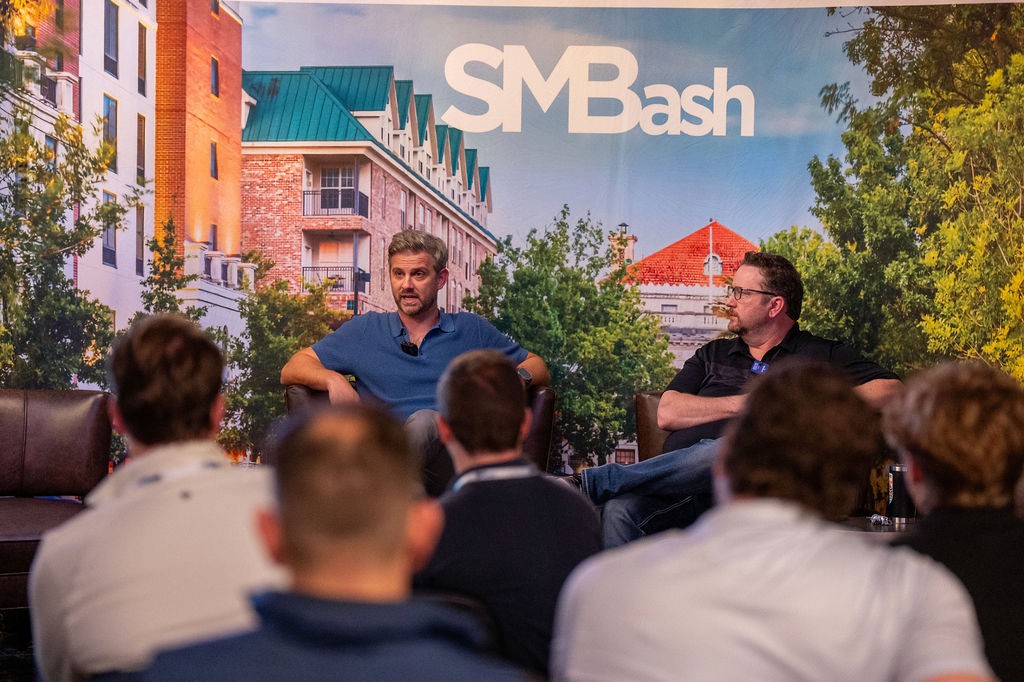
What better way to do that than an entire panel telling stories, like actual things from the trenches? Obviously principles-based. We hope you take some actionable advice away from here. But rather than talking theory, "Here's why you should do it this way," make it very clear, "Here's why you should do it this way, because your deal will blow up spectacularly like Joe." Insert story. Feel free to ask questions.
I won't do full bios. Maybe I'll just give each of you a second to introduce yourselves. This is a service provider-focused panel, mostly because we have the most war stories. I'm from S&B Law Group on the legal side. As you all saw last night, we've done pushing 400 deals now, which has generated a lot of great stories, good and bad, on the legal side.
Jackie Hirsch: Hi. Jackie Hirsch, Crown Atlantic. I've been selling companies for 28 years almost now, since 1998, and sold about 400 companies over that time. I have all sorts of stories, and it's all really personal. I have my own shop. I also sell on the Dealonomy platform. I'm an LP on a number of searcher deals. I also invest in funds. I'm a Mines Capital investor. I do some venture and some other stuff. I didn't inherit it or marry it. I didn't win it. It's all money that I've made over time, and I started with nothing, so I really relate to a lot of my sellers. I'm out of Orlando, Florida, but I sell companies nationally.
John Hannum: John Hannum. I currently have PPS Solutions. My background is in corporate finance as CFO of some companies that did roll-up strategy, took a few companies public, been with some private equity. I've been sold and bought a lot of times. I thought I would do that forever until I realized that there was this thing called a fractional CFO. Started a fractional CFO firm that led me ultimately to diligence, because I couldn't find anybody to do small deal diligence. My firms do fractional CFO work, QoE specifically, and modeling and support through the transactions. We make sure that the loan actually gets processed. I talk with a lot of the banks directly. And over the last couple of years, I've bought a few CPA firms. So I've been through both sides of that now myself, buying and selling companies with other people's money, and now my house goes away if they're not successful.
In thinking about a theme and realizing the stories most involve some level of chaos, chaos creates good stories. A well-ordered, organized acquisition would be a pretty boring topic. So we coalesced around the idea of having chaos as the main theme, from different places, whether it was a broker, a lawyer, or a CFO. Jackie will address human chaos. I'll talk about the finance focus. Bad financials are never actually just bad financials. There's always other components associated with that. And then Kevin can talk about the deal focus and making sure you're really covered for all of the chaos that can come out of your deal.
HUMAN CHAOS
I always want people to remember that the deals are made up of people. It's not just numbers. People are messy. There was a deal I did last year that there were nights I didn't sleep over because it was so unbelievably involved. It hit the market in February. We put it under LOI pretty fast. I kept a very small process. It was a natural products distribution company. Girdley had it on his podcast just because I sent him my teaser, and they couldn't figure out what it was. They're like, "Is this weed?" It was not weed.
The seller was getting a divorce. Chaos number one. We had a broken deal by July, and another buyer swooped in. The former buyers were threatening me physically and legally. "I'm going to come to your office." I'm like, "That's why I keep it locked."
There was a divorce, then a broken deal. We had landlord difficulties at three different locations. One of the buildings was owned by two partners, unrelated, who died during the ownership of the business, and then it went to seven heirs. The heirs were nephews, cousins, and second wives. All unrelated. Messy. And they all think, "Oh, we can just kick out the business, and then we can just sell this building for $10 million." That wasn't the case. Another location, they were trying to sell the building and didn't want to renew. A third location, the guy owns a REIT, and he's on his yacht all the time.
Then you have an absentee owner. People want this absentee owner, but the problem is the absentee owner doesn't know where anything is. They don't have passwords sometimes. They can't remember logins. They don't track metrics. Their systems don't jive together. And they're like, "Oh, my bookkeeper has it." Well, that was fine until the bookkeeper was sleeping with the head of procurement. So the bookkeeper was fired because they decided they needed procurement more. That involved a green card. There was another green card situation. Everybody was legal, but there were just issues.
Then we had a non-Harvard attorney and a Harvard attorney. That basically means the non-Harvard attorney hates the Harvard attorney just by the fact that they breathe. No injustices served. Nothing happened. And so I was mediating all these relationships throughout this time. The buyer was fine for the most part until one of his family members was murdered. They disappeared for 10 days, rightfully so. He told me, "I got to take some time off." I sent him this book called "Letting Go" by Dr. David Hawkins. I think that should be required reading.
Why am I telling you all of this? It's unusual to have this amount of drama on a deal. When you're buying a company or when it's your company, I want you to always think about what the other party's dealing with when you can. That will get you a long way. Something will happen, they're like, "I can't make that meeting," and you're like, "They need to be at that meeting." Maybe just take a step back and think there might be something big happening in their life. Deals always take longer than you think.
Jared and I were talking earlier about this deal where he was able to get it done so fast because the deal fell apart, and then he got in on it, and it was all put together. That's when you get a fast deal. You don't get the fast deal the first time when they're squeezing out blood from a stone, trying to get a document. Think about chaos and human chaos, and not be disappointed by it, but really just kind of let it pass through you and digest it, and be supportive as much as you can without losing your mind. And it did get done.
How many are first-time searchers here that haven't acquired? A handful. How many of you are searching full time? One of you. Your sellers are selling part-time, of the part-time, of the part-time. They're working 50 to 80 hours a week in the business still, which underscores the human element. Even if none of that other stuff is going on, your asking for a laundry list of 78 documents in the next 48 hours for your QoE is literally the last thing they want to be doing, even though they really want to be selling the business. I see that psychology butting heads all the time. "This seller just doesn't even care." He or she is really, really busy. Especially if you're searching full time, you're like, "I sent that email three hours ago, and he hasn't responded yet," because he's plunging the toilet that clogged up in the office.
You want the sellers to actually be operating the business. If they're giving the documents to you and that's their primary focus, they're checked out anyway. It's a hard balance because you need it to get the deal done, but you don't want a checked-out seller.
FINANCE FOCUS
There's no such thing as finance focus. Everything is caused by human chaos. Jackie's story is pretty much a guarantee that that company had some chaos in their books. When you look at a company that has clean books, you can rely on the fact that the rest of their processes and systems are good. They don't happen by accident. No good accounting happens by accident. Everything that happens within the business winds up in the books, so you can see the story through the financials.
It really starts with just being prepared. One of the few times I've gotten called in on the sell side, it was a broker in New York trying to get rid of an HVAC company that really wasn't making any money. Family of eight people running it, all treating it like a personal piggy bank, so the add backs were massive. They had several CPAs. They didn't want to pay more than $500 for anything, so they had several CPAs over four years try to put the books together in different ways. Everybody had made adjustments to retained earnings differently, so it was a mess. I gave them my price, they said "No, we'll pay half that," and we parted ways. Three months later they called back and we did the deal. They had unreasonable expectations for a price just based on the number of add backs, but they realized that this mess was because they were cheapskates. If we don't invest in what we're doing to run the company, bad financials pop out of that.
The thing that actually got me into this business: March of 2020. I had just left a company that I took public in 2018. It was March 7th that I finished consulting with them and went to the theater that day for the first time. We saw people for the last time in a year or so. All the new jobs, all the things I was thinking about doing just kind of evaporated. When a friend called and said, "I need you to help this small company," I said, "Okay, I have no reason to say no." I would've said, "A $13 million company, that does not sound interesting to me at all." Had nothing to do that Tuesday, met with them, and literally it changed my life.
What I realized is that small businesses do things they absolutely should not. They make decisions because they just feel this way or that way. "Let's write a $2 million check because I feel like it today." Part of it works, because gut of an entrepreneur, you got to trust your gut. But if you add finance to that, it's better.
It was a partnership dispute that had been going on for a number of years. One guy invented the product, and it was his enigma and his persona that was the company. The other two organized it in early times, but got kicked out of the business because they were trying to take it. This guy had been running it, not really a good operator. His personal life was kind of a disaster. Low credit score, constant cash issues. Couldn't really buy out the other two partners, but they still owned 66% of the business. Not a controlling interest because the management agreement required 67% to make any changes. They were friends from high school. They had gotten such animus with each other that they were making death threats on Instagram. Part of the court record was literally Instagram posts where people were making up songs about running over each other with their cars.
I walk in with my finance hat thinking I'm going to fix it. Really, it's a cultural problem. They had let things get out of control. The only way out was a buyout. It couldn't be the people that didn't have the name. If they lost the founder, it would be bad for the image of the company. It was very difficult to get to the deal. A very unconventional deal, but we made it work. It took two years of working with this company. We went to mediation and almost therapy through the whole process, and that was really quite useful. We finally negotiated an actual settlement. We got the SBA loan in place. Everybody got paid the correct amount, and now there's one owner.
LEGAL FOCUS
On the legal side, what's my role? It's to identify risk. Very similar to the financial side. Interestingly, a lot of the risks we identify end up not being necessarily legal risks. They're still financial related, for example. But you still have to understand how to account for those in your transaction.
Legal risks almost never tank deals. If your earnings are off, if John runs a QoE and determines SDE is actually 800,000, not a million, on four turns of EBITDA, you can't overpay $800,000 for the deal. You've got to renegotiate the purchase price, and you've got a high likelihood of that deal falling apart. It's a lot different with legal risk that we may uncover. "Oh, we discovered this in the legal record." We'll add a contract provision, and it's not a big deal. What we're always looking out for are the red flags.
True story. A year and a half ago, roughly a $1.5 million EBITDA business. Significant purchase price, going to be SBA financed. I got a call two weeks after engagement where the client says, "I finally got ahold of the tax returns, and they show that the business has broken even for the past three years." That should be an immediate red flag. There's always going to be some discrepancy between your financial statements and your tax returns, but there is almost never a million-and-a-half-dollar difference between a million profit and breaking even.
He digs and comes back: "The seller's been accounting incorrectly." They had been spending $300,000 a year in Google paid social media ads. A whole bunch of things started connecting because one of the weird things about this business was that we were buying seven entities, all selling the same products into different channels. One sold on Amazon, one was direct to consumer on their website, one sold to whatever. I'm like, "Is this guy an idiot? One company can sell to seven different channels." It turns out he was accidentally taking $300,000 of marketing and advertising spend and deducting it against each of the seven entities, $350,000 each. He was spending $300,000 a year in marketing and deducting a million and a half dollars.
My seller's asking me, "How do we contract around this? What can we put in the indemnity to protect myself?" My answer: nothing. You can't fix it. You can't contract around fraud. That's the biggest takeaway on the legal side. There's a difference between something happening that exposes me to risk legally and inheriting fraud. If someone is willing to defraud the US government under penalty of perjury, 110% of the time they are willing to defraud you. If you have some contractual issue or some historical organizational thing wasn't documented correctly, you paperwork around that. You add a provision to the agreement, you clean it up before closing. If someone's committing fraud against a third party, 1000% of the time they are defrauding you, and you cannot do that deal. Sure enough, this deal tanked.
Let me temper that. I bought a business from someone who I discovered had been convicted of fraud 20 years ago, and that was a big part of my diligence process. It was probably the most uncomfortable conversation of my life, sitting face to face with someone and saying, "Tell me about your prison sentence for fraud." What was the difference? He had a story. It was 20 years ago. He was very open about it. He wasn't hiding it. He literally has a social media channel where he talks about his battles with addiction while he was on Wall Street and how it landed him in prison. We were able to vet it and confront it head-on. So it doesn't necessarily have to be a deal killer in the right scenario. If he had been convicted of fraud six months ago for something in this business, you'd be an idiot to close. If you discover he's deducting $1 of marketing spend seven times across seven entities, you're an idiot to close.
Be really smart as the final decision-maker about what level of risk you're willing to take. When someone is indirectly screaming at you who they are, just believe them. No amount of contracting around that level of wrongdoing is ever going to save you, especially when it involves taxes.
ADD BACKS
It's so common. When you look for a company, you're going to get the SDE, you're going to get the SIM. There's a number called add backs, and it's a magic made-up number. Add backs as a percentage of your SDE is usually like 100% because they run the companies ingrained with their personal life. I had a construction company in California, but the guy lived in Florida and was buying jet skis in Florida, and that was cost of goods. He runs a construction company. There's no possible way. $35,000 worth of tax fraud, relatively small in what we see.
Those are the scenarios where the judgment calls come in. The wife's Lexus being deducted against the business. You can't do that. Does that rise to the level of this guy's a criminal? Probably not. There's a lot of judgment that goes into that. Taking on the risk is a little different too because you're taking on a risk in an asset sale versus a stock sale. You're not inheriting that tax liability in an asset sale, depending on how much you want that person involved post-close. You don't necessarily want somebody involved who doesn't have integrity.
That's the kicker. This always comes up with tax fraud. "Well, I'm doing an asset deal, so as long as I do it correctly, I'm insulated." If they're that blatantly defrauding under the penalty of perjury, I-can-go-to-prison level of fraud, there's 100% 10 other things you don't know about. That's just the one you know about because it happened to be in a tax return.
There was a roofing contractor, and they built a boathouse for their North Carolina property. Two stories. A room and a bathroom on the water, the boat went under. It was amazing. A quarter million in the cost of goods deducted. We're like, "We can't add that back." They're like, "Sure you can." There was probably labor that was siphoning off. You have to really put your foot down. No bank's going to accept it, and if the bank's not going to accept it, why would you? If they're like, "Well, the bank's too conservative," I'm like, "I appreciate that, but they're going to be funding me, and I need to be on the up and up." Some sellers think they're saving tax dollars, but really they're reducing their purchase price by a factor of four or five, or in some cases, eight to 10.
Another place I see that is unreported cash. How do I handle this? A company does $4 million a year in revenue, but they only report $3 million because a million of it is cash. QoE: if it's unreported, generally it's not documented. If it's totally off the books, there's not even invoices that QoE can identify. The long and short of it: if they're not booking it and not reporting it anywhere, but then turn around and want to be paid a multiple on that cash, that's a really tough conversation.
Undeposited cash is different than unreported cash. I have a deal where they don't deposit their cash because sometimes banks charge you hundreds of dollars a month to deposit large amounts of cash. This restaurant reports everything. Their books are super clean, but they don't deposit the cash. We had to disclose that bank statements will be missing the cash. You'll see it in the POS, and it all lines up, but they take the cash home because they didn't want to pay the money to the bank. As a lawyer, I still hate it, but you can go verify it. You can go to the safe and count the cash. The cash exists.
For those of you that take investors, please, for the love of God, be careful what you do with cash. The amount of searchers I hear about who close businesses, raise 20% capital, then start playing fast and loose, "Oh, I remodeled my house with profits out of the business, and I don't deposit cash." The minute you take a dollar from a third party, you're going to get yourself sued eventually if you're not doing things cleanly.
That feeds into tax as well. In a lot of structures you have to make distributions in a certain way. With S corporations, if you take on investors that are people, not corporations, you have to distribute in a way that is equitable based on the equity structure, or you will lose your S election. There are consequences. Be really careful with your corporate governance.
As an investor, I've invested personally in an S corp. I've invested in one of my LLCs. I've invested in my trust on one side, and then invested in the trust on the other side. When we go see our accountant, the first thing I do is apologize for all of our crazy stuff. Our trust had been created but not named. So know that your investors have different needs and different structures, and you're going to have to answer to that or lean on the professionals to answer those questions.
Q&A
Q: One thing I've noticed is that there are several family members or additional parties with unrealistic expectations, like seven family members all pushing the business. How are you getting these family members on the same page so the deal can actually close?
Direct communication. People with unrealistic expectations have to be told, "Your expectations are unrealistic, and here is the reality. You're going to lose the deal." You have to have very frank conversations. A CFO, fractional CFO, somebody that goes through diligence, you have to have some really difficult conversations. You can't be afraid to just say, "This is the way it is." Look it up. Google it.
When there are that many parties involved, on the sell side I'm usually proactively telling the client, "Go solve that problem first." Collect all seven people, figure out who's going to be responsible for this deal and what the parameters are. Put a resolution in place that delegates authority to Jackie and John to go get the deal done on these parameters. If we can't transact in those parameters, we'll come back. Particularly from the sell side, if you've got seven different disaggregated family members, call a meeting before you're even listing the business. "We're going to list. What are we comfortable with? Between three and a half and $4 million." No one's really going to hate extra money, but at least three and a half million, X, Y, Z terms. If it's in those parameters, Jackie, knock yourself out.
I try to manage my deals the same way I parent. I try to manage expectations. I try to underpromise and overdeliver. I look at it as a tour guide. You don't yell at them or lose your cool. I always think, would they rehire you for that parenting job or the deal-making job next year?
I had one divorce deal where they had this business that was unbelievable, and I could've sold it in three seconds. But I said, "Let me ask you guys some questions. Do you trust each other?" I prefaced it with, "Is everybody wearing big boy and big girl panties?" You've got to break the ice. Sometimes I'll say something mildly inappropriate to break the ice. I said, "Can you trust each other business-wise? Are you parting ways because you just don't enjoy each other's company? Would you still work with each other?" They said yes. I instructed them what needed to be done, and they kept that business. They're both remarried, and they still have it. Not everybody can do that. I've also had times where people start fighting right away, and I'm like, "Okay, it was great meeting you." You have to know what you can work with.
Q: One theme is messy accounting and discrepancies in QoE. You mentioned lack of investment along the way leads to that. What is it about not investing along the way that leads to messy accounting?
Investing in the processes and systems that make the business run, and therefore the accounting better. If your QuickBooks is over here and you only look at it once a month, and you use all the rules to post things to it, you're not really looking. CPAs get in this mentality too. What are the books good for? Tax return. Everybody thinks tax returns. The main value of the numbers is actually running your business. If you close your books every month, have a good process for knowing how much money you made on an accrual basis, not a cash basis. We talk a lot about cash basis for financing because your cash flow drives everything, but accrual basis financials every single month. Look at them, know your numbers, and run your business. You will have a much more successful business. That's the investment, just making sure you're actually doing the accounting and getting some value out of your numbers. I called my company PPS Solutions because I couldn't think of a more creative name on a Tuesday. People, Process, Systems. Has to be in that order.
One of the companies I sold had their inventory in one spreadsheet, their equipment in a separate area with no realistic depreciation schedule, payroll in another system, then QuickBooks. The QuickBooks was missing all these other elements because the systems didn't connect. That's when the books are a mess and you haven't invested. You might need a part-time CFO to go in there and put those together. It's painful. That's why people don't do it.
One common thing is people use their bank statements to clear QuickBooks. When you do your payroll, your direct deposits come in and you put them to salaries. The tax payment, which actually includes a lot of pay because most W-2 people are paying taxes, they put to tax expense. It's not wrong, but it looks way wrong. It looks like your taxes are 50% of your payroll when they're really not. Just running simple books, you can tell something is close to a good system by that entry in particular. Reconciling the bank is the minimum baseline for investment.
Sorry we only had time for a handful of stories. Hopefully you learned something.