PLAYLIST PRESENTED BY

The Self-Funded Search Bubble and the Zombie Deals Nobody Posts About
Description
Jacob Hall of Cando Capital and the McCombs ETA program closes SMBash 2026 with a candid look at the self-funded search market: the real addressable deal pool, the echo chamber driving outdated underwriting, and the rise of debt purgatory among recently closed SBA-backed acquisitions. He breaks down the four horsemen of ETA failure (max leverage, overpaying, hockey stick projections, going it alone) and the timeless practices that still separate great searchers from those stuck servicing 10 years of SBA 7(a) debt.
Recent Videos
Transcript
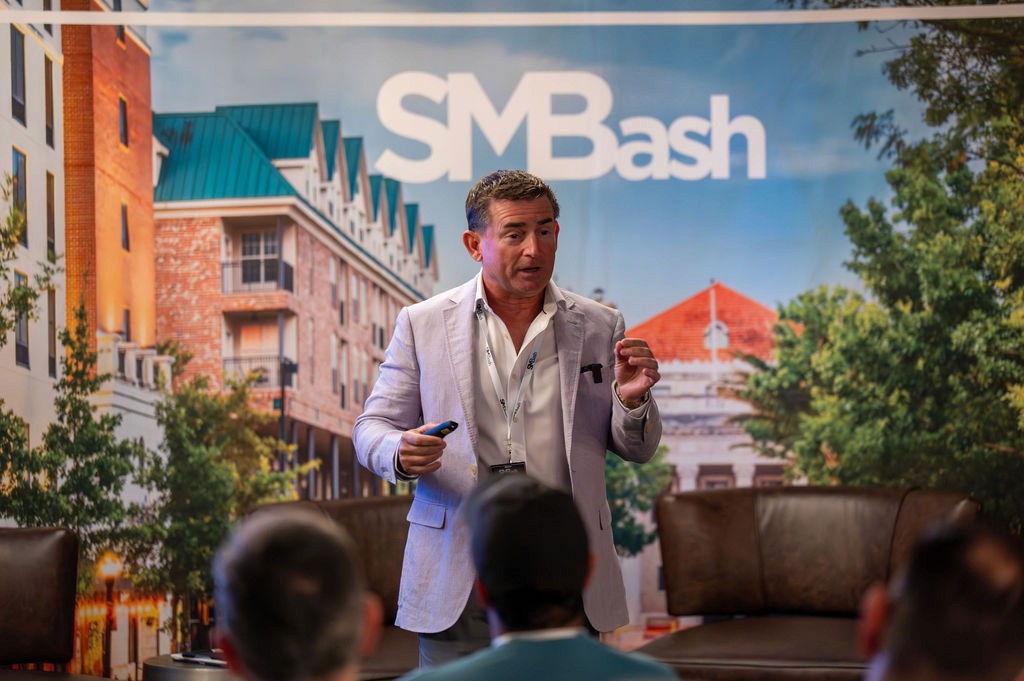
Really excited to introduce Jacob Hall as this morning's keynote and final keynote of SMBash 2026. Jacob's had a fantastic career, previously leading decision analytics for Chevron Technology Ventures, and also served as COO of Sooner B&B Energy. After a great corporate career and several decades of investing, operating, and analytics roles, he raised capital with Cando Capital, where he's now investing in America's small business community and knows this community really well. In addition to running Cando Capital and being actively involved as an investor, he's also an educator. Jacob's been on the MBA advisory board at University of Texas McCombs Business School, where he has led and been part of the ETA and Search Fund program there for many years, culminating this year in McCombs' first ever ETA course, taught by, I think I can say even if it's adjunct, Professor Hall. So with that introduction, please welcome to the stage Jacob Hall.
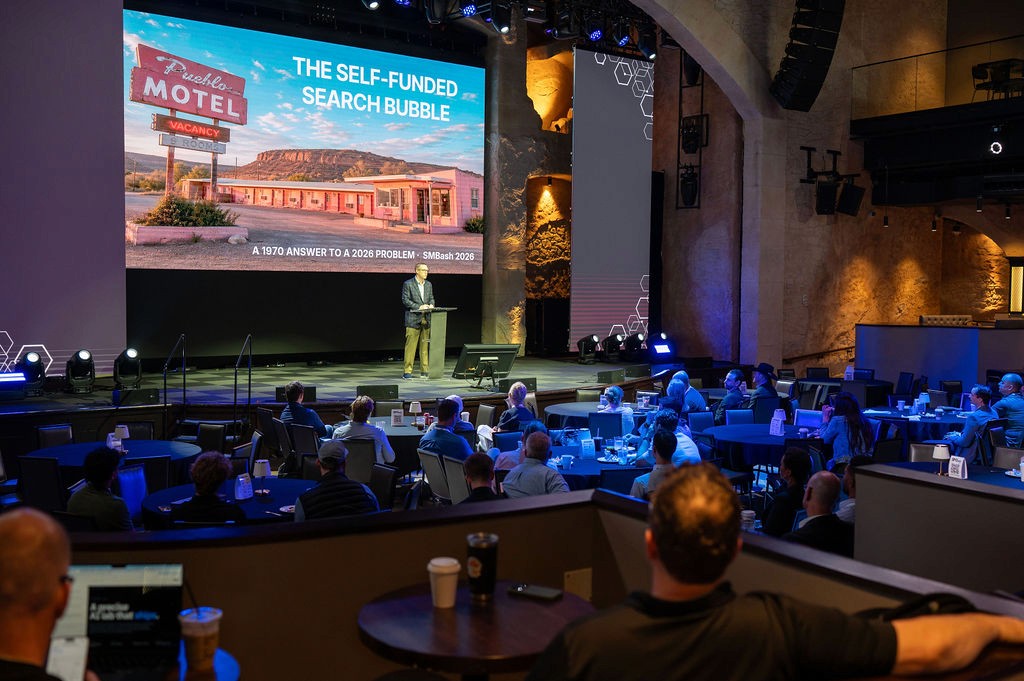
Thanks, Kevin. In the summer of 1970, in a small town in Aztec, New Mexico, a woman walked into the office of a nine-room motel called the Pueblo Motel. It had been built in the 1950s in pink stucco. Out front, a little neon sign buzzed and flickered. The kind of place your grandparents stayed on their way to somewhere else. The owner had run it for years. He was ready to retire, even if he didn't know it yet.
The woman sat with the man and his wife over coffee and discussed their plans for the motel. They talked about what life might look like after they retired and the ups and downs of being a proprietor. Over the next few months, they had many more conversations like this. She asked him about his guests, his regulars, what he was most afraid of when he thought of moving on from this thing that he had built. Countless visits, many hard discussions. Through those conversations, she built rapport and trust with the seller before price ever came up. She first had to prove in his mind, and in her own, that she could run the place without breaking it.
Finally, the day came. They shook hands. The deal was completed with a little bit of money down and what we would call a seller's note today, although it probably more closely resembled an IOU. No lawyers in the room, no quality of earnings, no discussions about EBITDA multiples, growth levers, multiple expansion, or holdcos.
What she did in 1970 didn't have a name. It didn't have a classroom. It didn't have a robust network of service providers, lenders, and investors that understood what she was doing. In fact, in 1970, she didn't even have access to the same banking services and loans just because she was a female. This woman was a single mother with two young boys, aged seven and 13. She had a high school diploma. No degree, no MBA, no books on how to buy a business, no podcasts to listen to, no internet gurus or LinkedIn posts. She ran the Pueblo Motel for 25 years by herself every single day. She was also my grandmother.
56 years later, searchers have all the resources that I mentioned and so many more. As both an investment fund manager and a leader of the ETA program at the McCombs School of Business, I spend my days supporting others who have that same dream of ownership that my grandmother did all those years ago. Which brings me to the thing that you have been staring at on the slide behind me for the past few minutes: the self-funded search bubble.
Yes, it's real, and yes, I think it's going to hurt some people in this room. But it may not be the bubble you're expecting. I'm not going to sugarcoat it, and I'm not going to tell you it's exaggerated. I'm not going to tell you we'll all just be fine if we believe in ourselves. So let me tell you what I see, and at the end of this hour, I'll bring us back to my grandmother, because I think that what worked for her in 1970 has more to say about 2026 than most of what is being sold to you today.
Let's start with something everybody in this room has heard. Three million baby boomer businesses worth $10 trillion in aggregate value, 10,000 boomers hitting retirement age every year, the silver tsunami. You've all heard those statistics quoted in every newsletter, podcast, course, and Twitter thread that has ever pitched someone about buying a small business. It's why a lot of people in this room, including me, first got interested in ETA. The number is technically real. It comes from a real place, and it's not made up, but it's the wrong number for what we're actually doing.
Not every boomer business is a target. The vast majority of these three million businesses are subscale. Sole proprietorships, side hustles, owner/operator shops doing a few hundred thousand dollars that aren't transferable in any real sense. The owner is the business.
Here's a more relevant number for what this room is actually doing. According to the NAICS data, the total number of US businesses generating between two and a half and $10 million per year in revenue, the zone where many self-funded search deals actually live, is roughly 350,000 total in the entire country, across every industry and every age group. A fraction of the number that's in the headlines. And of those 350,000, a much smaller number will ever actually transact in any given year. Industry estimates are that only 30% to 40% of owner-operated businesses ever sell to a third party. The rest shut down, transfer informally to a family member, or just quietly close when the owner is done.
So the actual addressable pool of small businesses available to acquire in any given year, the real denominator in the deal math, is in the thousands. Not millions, not hundreds of thousands. A few thousand spread across every industry, every region, and every deal size in that range.
Now let's layer on what's happened on the buyer side. The number of people searching has exploded. I don't have a precise count, and neither does anyone else. But every MBA program has a bigger ETA club than it had a PE club 10 years ago. Every career change forum has a thread about buying a business. There are more social media posts and influencers than I can really keep track of. Every week, there are hundreds of new self-identified searchers reaching out to investors and brokers.
Private equity has moved down market. Firms that wouldn't have looked at a one to two million in EBITDA business five years ago now run dedicated lower middle market funds, actively bidding against the searchers in the room who used to win those bids uncontested. Independent sponsorship has exploded. Every former PE associate with a list of contacts and a LinkedIn page is now an independent sponsor. More capital, more creative structures, more reasons for the seller to shop the deal. Family offices have discovered entrepreneurship through acquisition as an asset category as well.
So we have this small pool of actually transactable businesses and a dynamically larger pool of buyers chasing them. That's the math. That's what's producing the deal dynamics you're all living in right now.
Whether that qualifies as a bubble in the classic sense, an asset bubble that case studies will look back on, is a debate reasonable people are having right now. Some think the market is heating up but fundamentally healthy. Some think it is a legitimate bubble. Some think it's working exactly as intended: more buyers, more sellers, more liquidity entering a historically illiquid asset class. I'm not here to settle that for you today. What I am confident about is the math it is producing inside actual deals. Multiples creeping higher than the fundamentals support. Leverage that doesn't leave room for a bad quarter. A lot of shortcut thinking in an endeavor that has never rewarded shortcuts.
That's the surface of what we're all feeling, and underneath it, there's a second kind of bubble I want to spend the rest of our time on. Not because I can point to a chart, but because I sit with searchers every week and I see the same playbook being run by most of them. And the playbook was written for a world that doesn't exist anymore.
The bubble in thinking that I want to describe has a name: an echo chamber. An echo chamber is what happens whenever a group of people sharing information with one another, reinforcing each other's conclusions, develop a collective view of reality that just quietly drifts from reality itself. It's why investment bubbles form and keep inflating past the point where anyone involved can see clearly. And it's why a playbook that was written for one set of conditions is being run full speed by smart people into another set of conditions, long after the original conditions are gone.
That's what's happening in ETA right now. We're running a playbook that was largely written in 2019, 2020, and 2021. And the world those years were built on just doesn't exist anymore. But the playbook hasn't updated. The story we're telling each other is the same old story, but the reality we're operating in is the 2026 reality. The gap between those two things is what I mean when I say there's a bubble underneath the bubble.
The people in this room and in this echo chamber are not stupid, they're not lazy, and they're not greedy. A lot of them are very smart, hardworking, and well-intentioned. They're running a playbook that made sense when they picked it up, but it just doesn't work anymore.
To understand why, you really have to understand where the playbook came from. The reason is partly cultural and partly specific to the last five years. Think about the last 15 years of the consumer economy. Same-day delivery, one-click checkout, app-based gig work, Zelle, Venmo, DoorDash, robo-advisors that let you buy stocks from your couch at 11 p.m. Every friction that used to exist between a human being and the thing they wanted has been smoothed, eliminated, or abstracted into a button.
Think about the last 15 years of the markets. Zero interest rate money. SPACs that let you skip the scrutiny of a traditional IPO. Crypto that promised 10 years of compounding returns in six months. NFTs. Retail traders outperforming professional funds on meme stocks. A generation of people has been conditioned systematically for years to believe that the next hard thing will and should also be made easy for them. The conditioning is not our fault. It's in the water we're swimming in. I'm swimming in it too.
And then 2020 happened. The easy button conditioning alone didn't produce this bubble. If it produced conditions, COVID is what lit the match. Think about what happened to white-collar work during and after the pandemic. Millions of people working from home realized that their commute was part of a deal they had never signed up for. They got three or four hours a day of their life back. They saw their kids in the middle of the afternoon. They got control of their calendars in a way they'd never had before. When companies started calling them back to the office, a meaningful portion said, "No, actually, I'm not giving that up."
At the same time, layoffs came in waves. Tech layoffs, finance layoffs, hundreds of thousands of mid-career professionals pushed out of jobs they'd assumed would be stable, now looking for what came next. And underneath it all, a lot of people spent 2020 and 2021 watching people they had known and loved get sick or die. Parents, neighbors, friends. And they came out of this experience asking questions they really hadn't asked before. Is this the thing I want to be doing with my life? Is working for someone else and building their dream instead of mine the way I really want to spend my next 20 years?
Into that moment, the largest voluntary reassessment of careers in modern history, walked entrepreneurship through acquisition. ETA answered every single one of those questions. Autonomy, ownership, financial independence, flexibility, skin in the game, something you could point to at the end of your life that had your name on it. It was the perfect product market fit for the moment that the country was living in. And the engine to fuel it? Twitter, YouTube, podcasts, courses, cohorts, coaches, Slack groups, service providers. They all rose to meet the demand almost overnight.
Layered on top of that, zero interest rate money. For the first few years of this wave, debt was nearly free. SBA loans were cheap. Deals that penciled at 4% didn't pencil at 9%, but that didn't matter because the rates hadn't moved yet. The 2019, 2020, and 2021 entrants bought into a market with cheap capital and modest competition. A lot of them did well, and those successes got broadcast loudly.
Which produced what I'd call the false confidence effect. The next wave of searchers looked at those early success stories and concluded, "That will be me," without pausing to ask whether the conditions those early searchers bought into were the same conditions they were about to enter. Spoiler alert: they weren't. Interest rates nearly doubled. Competition has increased exponentially. Multiples have crept up. The cheap debt that made a lot of early deals work is now gone.
So we have an old playbook being run hard in 2026. That is the echo chamber, and that is the bubble underneath the bubble.
And the easy buttons haven't stopped coming. AI is just the newest one. Every other talk at every other conference this year is going to tell you AI is going to eat knowledge work, writing, coding, research, analysis, financial modeling, customer service, content creation. Notice what's missing from that list. The handshake across the kitchen table. AI is not coming for the seller who needs to know that you'll take care of his 42 employees. It's not coming for the 2 a.m. call when a pipe bursts. It's not coming for the trust that gets built in month seven of a nine-month courtship.
Will AI help? Yes, absolutely. Use it for memos. Use it for sourcing. Use it for models. Use it for checklists. Smart searchers will do that. But AI is a tool you apply to the work. AI is not the work. AI is the newest easy button. It is not the answer to a bubble caused by easy buttons.
The content ecosystem around this world makes the bubble worse in a very specific way. Because an echo chamber doesn't just distort what people believe, it controls the information that gets in. The ETA narrative online suffers from the worst kind of survivor bias. The searcher who closed a deal posts the deal on a Twitter thread. The 16 searchers whose deal died that month do not. The podcast guest on episode 247 tells the story clean and edited, with their month 18 nervous breakdown totally removed from the story. The charlatan is selling you a dream of no money down, absentee passive ownership, and untold wealth because they cannot sell "This is going to be harder than anything you've ever done." Nobody buys that course.
But here's what survivor bias misses in this industry specifically. The worst outcomes in ETA are not the failures. Failures at least teach a lesson. The failures get written up. The failures come out as cautionary tales. They at least end. The worst outcomes are zombie deals.
A zombie deal is the searcher who closed three or four years ago and has another six or seven years to go before the SBA debt is paid off. The monthly payment gets made because the personal guarantee demands it. The operator has no choice. The operator draws a modest salary. There's nothing left over for growth, nothing left over for investors if there are any, nothing that resembles the outcome that got sold to them on the Twitter thread that pulled them in originally. Those operators don't post about it. Why would they? Nobody writes a thread that says, "I'm in year four of my 10 year mortgage." So they disappear from the content cycle, they disappear from the conference circuit, and they go heads down into their business, into the monthly SBA payments, into making it to the end of amortization, where maybe, just maybe, they can recover.
Fellow investor Adam Markley calls this debt purgatory. Not failure. Failure at least ends. Debt purgatory is what you get when the deal didn't fully crack, but didn't deliver either. The searcher's still standing, 10 years of SBA payments between them and daylight, and nothing that resembles the outcome they signed up for.
Let me tell you what that life actually looks like. The operator works 60-plus hours a week, pays themself $100,000, which is not nothing, but it's not the life change that they moved their family for. The capital doesn't get returned. The preferred return doesn't get returned. Everyone is in purgatory with them, including the spouse who signed the personal guarantee, the investors if there are any, and the friends and family who wrote the first equity checks. They all spend 10 years earning nothing. When a zombie deal eats the operator, it eats everyone on the cap table.
There's a growing population of these deals right now, closed in 2023, 2024, and even 2025, with max leverage by operators who believed the viral narratives. Invisible to the content cycle and out of the podcast rotation, heads down making those payments, waiting for year 10. And the next generation of searchers is coming in right behind them, reading the same triumphant Twitter posts that pulled those operators in three years ago, with no awareness that a growing population of zombies exists just outside the frame.
The echo chamber runs on the posts of the survivors and on what the zombies don't post. That's the deeper bubble. That's the echo chamber. That's why it happened.
The next section is about what it produces inside individual deals. The four shapes the outdated playbook takes on when a smart person runs it into a world that's already moved on. Before I walk you through this, a disclaimer. Many of you are self-funded searchers, which means you're carrying the weight of this work personally. Your savings, your spouse's patience, your SBA personal guarantee. I'm not standing up here trying to point a finger at the room. I know what you're carrying because I work with searchers every single day. What I'm doing right now is naming the trap specifically so that we can talk about how to work around it.
I call these the four horsemen of ETA failure. But I want you to hear something before I name them. These are not four different mistakes. They're part of an outdated playbook the world is moving on from. Every one of them made sense in 2020. None of them make sense in 2026. The playbook hasn't updated, which means smart people running the same plays that used to work are walking straight into outcomes those plays can no longer produce.
The SBA 7(a) loan is one of the best financing products in the developed world for small businesses. 10 year amortization, no balloon, no covenants. Up to $5 million. A gift, and potentially a trap. A historically typical self-funded SBA capital stack is 80% senior debt, 10% seller note, 10% equity. Personal guarantee and DSCR minimum of 1.25, which by the way is a floor, not a target to shoot for.
A max deal leaves zero room for one bad quarter. Zero. One key customer leaves, one key employee quits, one working capital miss, one insurance renewal that comes in 40% higher than modeled. Any one of those and the company goes into the red.
Why do people max the leverage? Because the playbook they picked up in the cheap money era said it was fine, and maybe in 2020 it was. Prime was at 3.25%. SBA loan rates were in the mid-single digits. A searcher could take on 80% senior debt and still service it comfortably on a modest operating improvement. The math worked.
Today, prime is around 7%. Your SBA rate is somewhere between 8% and 10%. The math that worked in 2020 doesn't work in 2026, and yet the capital stacks I see coming through today are mostly unchanged from 2021. The playbook hasn't been updated. Max leverage is the old playbook run in today's rate environment. Leverage is a magnifier of outcomes, both positive and negative. Respect it or you will pay for it in more than interest.
Hot brokered processes, bidding wars, strategic premiums on businesses that have no strategic anything. Add backs waved through. Logic that assumes the winner is the one who stretches. A one-turn overpay on a $1 million EBITDA business is a $1 million mistake before you've run the business a single day.
Why do people stretch on price? Because they've been through this process 10 times already, watched nine deals die, and every instinct inside is screaming that walking away now means starting over. That the next one might take another 18 months. Their savings can't float them that much longer. Their investors won't wait. Their spouse won't wait. So they stretch a quarter turn, a half turn, whatever it takes to win.
That impulse isn't new. Searchers have always felt that pressure. Anyone who's spent months or years searching just to watch their LOI die knows exactly what that moment feels like. Stretching under that pressure is one of the oldest mistakes in this business. What's new is the math around giving into it.
In 2021, when a searcher stretched a half turn on price, cheap debt absorbed most of the pain. Interest rates were low. Tailwinds were lifting multiples at exits. A deal someone slightly overpaid for still worked. The stretch was forgivable because the environment forgave it. In 2026, the environment does not forgive it. SBA rates approaching 9% to 10% mean that half turn stretch that was absorbable in 2021 now sits directly on the operator for 10 years. Same psychology, same moment of desperation at the negotiating table, but entirely different consequence.
Overpaying is the cheap money playbook colliding with today's math. The desperation is timeless, but the price of giving into it today has gone up. And here's the part that really stings. The stretch to win might buy you years of debt purgatory in the end. You saved yourself from starting over, but you might have bought yourself 10 years of just barely hanging on.
The math doesn't care how long you've been searching. It doesn't care about your investors' patience or your spouse's patience. It doesn't care that this deal really feels like the one. At the wrong price, even the right deal is the wrong deal. You don't make money on the sale. You make money on the buy.
You know this slide. You've seen it. Some of you have drawn it. Year one, 8% top line growth. Year two, 10%. Year three, 12%. Margin expansion on top. Operational improvements in the first 90 days, and the part that really tops it off, multiple expansion at exit. Buy at five, sell at six, because we'll be bigger and cleaner, and the market will reward us.
Where did that slide come from? It came from watching the early success stories. Some of those searchers did grow 15%. Some of them did get margin expansion. Some of them did exit at a higher multiple, often because they caught a tailwind that the broader market was riding. Low rates, capital flooding in, post-COVID rebound demand, less competition for deals. The multiple expansion at their exits wasn't always something they controlled. It was something the market supported. And the playbook mistook that gift for a strategy.
The next wave picked up that playbook and forgot about the tailwind. Interest rates have flipped. Multiple compression in the future might be just as likely as multiple expansion. The tailwinds are often now headwinds. But the growth assumptions in the model, same as they ever were.
Let me give you the line I want you to take with you whenever you leave here today. Don't mistake the possible for the probable. 15% growth is possible. Margin expansion is possible. Multiple expansion is possible. Are any of them highly probable in today's rate regime, competitive environment, and at today's multiples? Not without specific, nameable, and defensible reasons. And most of the time, these reasons don't exist, or they exist for one of the three, not all three stacked together in the same model to make the numbers work.
Searchers are setting themselves up for failure when they allow their optimism to drive suboptimal decision-making at the time of purchase. A realistic base case today is boring. Low single-digit revenue growth, expenses rising with inflation, exit multiple equal to entry multiple, a J-curve in year one. That's the model that gets funded. That's the model that survives. That is a more typical outcome in today's world than the one I described above.
Hockey stick growth is yesterday's playbook built for yesterday's tailwinds. Underwrite the realistic base case. Let the upside be the upside. Leave yourself and the others the opportunity to be pleasantly surprised. If your model needs three things to go right to pencil, your model doesn't pencil. Don't mistake the possible for the probable.
This next one is the quietest of the four. The other three are loud. Everyone can see a max leverage deal. Everyone can see a deal that someone overpaid for at six or seven times EBITDA. Everyone can see a hockey stick model. You can argue with any of them. You cannot argue with the fourth one, because by the time it shows up, it's already too late. The fourth horseman rides along the first three and makes all of them worse, and nobody notices until the damage is done.
The fourth horseman is going it alone. Many people in this room have never bought a business before, and that's not a criticism. That's just a fact. Under the old playbook, going it alone on your first deal was very survivable. Competition was modest, diligence timelines were generous, multiples were reasonable. The margin for error was wide enough that a first-time searcher could make a handful of rookie mistakes and still come out the other side with a workable deal.
In 2026, that margin for error has collapsed. Compressed diligence windows, 10 bidders on every attractive deal, sellers' advisors who have run this process hundreds of times while you're running it for the first time. And yet the last playbook cycle still says you can do this alone. Read the books, listen to the podcasts, join the Slack group, pick a thesis, raise some equity, hire an attorney for closing, buy the business, and run it. When debt was cheap and competition was modest, that was maybe enough. It isn't anymore.
The searchers I've watched do well in this environment have one thing in common. They're not alone. They have partners beside them who've reviewed hundreds of similar transactions and closed dozens. They seek counsel from trusted advisors who have skin in the game and who are willing to speak candidly, even if that means they have to deliver bad news. Because the mistakes you can't see are the ones that kill deals, and nobody can see all their own mistakes, especially on their first deal in a market with this little margin for error.
Going it alone is the cheap money playbook run into a market that will find every blind spot you didn't know you had. And here's the cruelest part. By the time you realize you needed someone beside you, you've already made the mistake. The over-leveraged capital stack is signed. The overpay is in the purchase agreement. The hockey stick model that may never come is what you bet your entire future on. The damage is done, and now you're alone with it. Don't ride alone.
Four horsemen and one playbook. Four different behaviors that all made sense in 2020 but don't in 2026. Max leverage, overpaying, projecting hockey stick growth, and going it alone. Every one of them is a smart person running a reasonable play, but at the wrong time. Which means the antidote is one thing: stop running the old playbook. Go back to the work that was underneath it before anyone wrote that playbook down, to what got deals done back when my grandmother bought the Pueblo Motel, years before anyone had a fancy name for this. That will still be working in 2030 when the playbook most of us are running today has quietly been replaced by the next one.
That's what I want to spend the rest of our time on. I want to start by telling you what these next few minutes are and what they aren't. They aren't a new playbook. If I stood up here and handed you a better playbook than the one we're all currently running, I'd just be setting you up for the exact same problem in a few years: running my playbook long after the conditions I wrote it for had changed. That's the trap of playbooks. They date, all of them, eventually.
What I'm talking about is different. These aren't plays. They're practices. They're the things that worked at the Pueblo Motel in 1970, and they've worked through every cycle since. They've worked in a 4% rate environment, and they work in a 9% rate environment. They worked when there were two bidders, and they work when there are 12. They worked when ETA was an obscure niche, and they work now that it's trending on Twitter. Playbooks expire, but best practices don't. Four practices. None of them are shortcuts, and all of them compound.
I'm going to say this as directly as I can because I think this room deserves it. ETA is not for everyone. But right now, because of everything I've described, the conditioning, the COVID reassessment, the cheap debt era, the viral success stories, the marketing engine, a lot of people have convinced themselves that this is perfect for them. A lot of those people are wrong.
A lot of the people going into deals that are going to crack are the people who wanted the ownership, the autonomy, the financial outcome, without honestly asking whether they had the operating foundation, the temperament, or the preparation to deliver any of it. They skipped the self-assessment, or at a minimum, may not have been honest with themselves about it. The cheap debt era and the viral narratives and the flood of capital let them all skip it for a while without ever having to answer for it.
This is the practice that turns that statement into the work you actually do. The best searchers I've funded have one thing in common. They were honest with themselves early. They were honest about what they brought to the table and about what they didn't. They didn't talk themselves into it. They earned themselves into it.
What does honest self-assessment actually look like? It looks like this. Have you ever run a P&L? Have you managed and led people? Actually managed, not just coordinated activities. Have you ever had to lay someone off and tried to sleep that night? Have you ever had to tell a customer something they didn't want to hear and you were able to keep them as a customer anyway? Have you ever lived through a quarter where your revenue was down and you had to figure out what to do about it?
If the answer to most of those is no, the answer isn't necessarily don't do ETA. The answer might be not yet. Spend two years getting some of those reps. Take a GM job. Take a P&L role. Run a team. Work inside a search-acquired company to gain that valuable experience. Build the foundation before you bet the house on being able to do it. And if you do conclude this isn't your path, that's not failure, that's judgment. There are many paths to autonomy, ownership, and financial independence. ETA just happens to be one of them. It is not the only one, and it is far harder than most people expect.
The people in the worst deals in this cycle didn't lack ambition or intelligence. They lacked an honest answer to the question that you're sitting with right now.
The biggest mistake new searchers make is copying the last searcher. Same thesis document, same cold emails, same industry agnostic B2B services, recurring revenue, regional geography, $500,000 to $2 million in EBITDA. Sellers have seen it dozens of times. Investors have seen it hundreds of times. Brokers have seen it thousands of times.
You have an edge. Every person in this room does. It's your industry, it's your network. It might be your operating scar tissue. It's the problems you've solved and the people who will actually take your call. Most of you are not using your edge. Fix that before the cold email. Fix that before the deck. Fix that before you send another broker outreach. In a crowded market, the specialist beats the generalist.
This next practice cannot be automated, outsourced, or shortcut. And it's the one most people in this room will probably under-invest in because it doesn't really feel like doing work, and the progress is almost impossible to directly measure. Be honest, be trustworthy, be transparent. Set your standards high and try like hell to live up to it. Be an example for those around you to emulate.
Let's discuss how those actions affect various parts of your business. Start with the seller. Sellers in this asset class are not institutional sellers, they're people. Usually people in their 60s or 70s who might have built that business over the last 20 or 30 years. Usually people whose identity is at least partially wrapped up in what happens to that business after they're gone. Usually people who care specifically and personally whether the employees who have been with them for years are still going to be there six months after the deal closes. Those people don't always sell to the highest bidder. They sell to the bidder they trust.
Trust at this scale is not something you can generate in a two-hour meeting. It is built in phone calls and visits over weeks and months. In the questions you ask about the business that don't appear in the financials. In showing up twice, three times, six times, whatever it takes to build that relationship. My grandmother spent months building the relationship with the owner of the Pueblo Motel and visiting it before she bought it. Not because the financials required it, because the human on the other side of the transaction required it.
The seller's not the only person who decides whether your deal gets done. EQ, or emotional intelligence, touches every relationship in the ecosystem, and every one of those relationships has a consequence.
Sourcing. Brokers place deals with searchers they want to keep working with. Searchers who handle rejection well, don't renegotiate on stupid things, and close when they say they will. A searcher with good EQ gets five times the deal flow of one with bad EQ, even if their thesis is identical.
Winning. Sellers pick the buyer they trust. Investors back searchers they believe in. SBA lenders underwrite people they can get comfortable with. Every one of those decisions is an EQ call as much as it is a financial one. Usually more.
Closing. Every deal hits some moment where the whole thing could blow up over something that isn't in the LOI. How the searcher handles that moment, with composure or with panic, with the seller's interest in mind or with just their own, is usually what determines whether that deal will still close.
Running the business. The day after you close, you're managing employees who just lost their founder they'd worked with for maybe 20 years. You're on the phone with customers who want to know if anything is going to be changing. Every one of those conversations is a test, and a searcher who flunks them loses people, loses revenue, and loses momentum in the first 90 days, the period when the business is most fragile.
Whenever I'm deciding whether or not to back a searcher, I'm not looking for the smartest person in the room. I'm looking for the same things every single time. Communication, self-awareness, conscientiousness, coachability, and the demeanor to make every person in the deal want to keep working with you. Every investor in this room has their own version of that list. Maybe different words, but same list.
These traits compound. Over 24 months of searching and eight years of operating, a searcher who started with a modest EQ but kept working on it ends year 10 with more accumulated trust, better relationships, and stronger backing than anyone who started with more raw intelligence but treated those soft skills as optional. On a 10-year time horizon, EQ isn't a complement to IQ, it dwarfs it. People fund people. Sellers sell to people. Deals close with people. There's no machine in this equation. Don't lose sight of this.
One last practice, and before I go further, full disclosure: this is what my firm does. I'm an investor in self-funded search deals, and I'm about to stand here and tell you that working with an investor like me can be one of the most valuable things you can do. You should probably weigh that accordingly. But here's why I'm saying it anyway. The principle holds true whether you work with my firm or not. The best searchers who've come through this industry in the last decade rarely did it alone. Not always because they needed capital, but because they needed what came with it. And the ones that did do it alone often wish they had started the journey with more support, both financial and strategic.
The old playbook did more damage to how searchers think about this than almost anything else I've described today. That playbook treated outside investors as a last resort remedy for size. The thinking went, "Self-fund the equity if you can. Only bring in a partner whenever the deal gets too big to cover it yourself." Bigger deal, more capital needed, so reluctantly raise some outside equity. That framing treats investors as a capital fill tool. Check writers. Necessary when the check got too big for your pocket, but otherwise avoidable.
That framing is wrong, or rather, it used to work when the margins for error were wide enough that capability deficits didn't punish you. Now they do.
Let me describe what the right partner or investor actually brings, not what the pitch deck claims, what it actually is on a deal in 2026.
Deal evaluation. A good investor sits with you pre-LOI, pressure tests your reasoning, and helps you to see the deal clearly. They evaluate the company's ability to bear debt. They challenge you on your base case assumptions, the ones every searcher gets optimistic on. Is there a realistic J-curve in year one? Are your operating and financial assumptions defensible and reasonable? A searcher looking at their own model can talk themselves into almost anything. A partner who has reviewed hundreds of them generally does not.
Novel structures. Most first-time searchers know two capital stacks. The SBA 7(a) stack with 80% senior debt, 10% equity, 10% seller note, and maybe a conventional stack, 40% senior, 40% new equity, 20% rollover. That's usually the end of the conversation. A partner who's done this at scale knows the 20 structures in between. The seller note variations, the earn-out structures to align risk, the strategies that actually get a deal done when the vanilla capital stack doesn't pencil. Structure is where deals live or die.
Support for operating decisions and challenges. After close, you're going to run into things you didn't model for. A customer concentration problem that looked just fine in diligence. A key employee who leaves in month three. A system migration that cost twice what the seller said he thought it was going to. You need someone who's been in this business and seen those exact problems get handled before. Not a therapist, a trusted advisor who has skin in the game. Someone whose read on your situation is shaped by having watched dozens of these unfold.
Advisory board support and governance at the right altitude. Monthly operating decisions belong to you. You're the owner-operator. But macro decisions like major capital expenditures, geographic expansion, M&A activity, those benefit from a sounding board who've watched other searchers navigate the same choices. A good investor actively contributes at that level if they truly have value to add.
Resources. The network underneath an experienced investor takes years to build and compounds over a career. They have specialists who can handle problems you didn't know you had. Vendors who they've worked with and who have worked with other searchers at this scale. Introductions to operators in your industry. Back office firms that have supported similar businesses. None of this shows up in a pitch deck, and much of it doesn't show up in the first six months after close. It shows up in year two, in year three, in year five, when you don't realize you've been quietly pulling on a network you couldn't have built alone.
That is what an investor should do for you. The capital is just the entry ticket. The value is everything else.
One last note. Check the receipts. Ask around. Reputation matters when choosing who to partner with, and you should choose wisely. If they aren't someone you'd want to share a meal with, or if you get the feeling they don't really care about you personally, aren't ethical, or don't offer any of the things I just mentioned, keep looking for a better fit. My grandmother didn't have the option to have a partner in her court in 1970. You do.
I want to be honest with you about something before I let you go today. My grandmother buying a nine-room motel in New Mexico in 1970 is nothing like modern ETA. I know that. You know that. She didn't have a quality of earnings. She didn't have an LOI. She didn't have a capital stack. If she walked into this room with self-funded searchers today and listened to you talk about deals, she wouldn't know what half the words meant. So I didn't bring her up because she's a template. She's not. What worked for her in Aztec, New Mexico in 1970 is not a blueprint for a $7 million home services acquisition in 2026.
But I brought her up because of what she proves. She proves that buying and selling businesses has been happening for a very long time, long before any of us had a name for it, long before there was an MBA program that taught it, long before there was a Twitter thread or a podcast or a cohort or a coach who would sell you a course. People have been transferring ownership of small businesses to other people for as long as there have been small businesses, and what we do at its core is not new.
She proves that the thing that makes it work is not new either. She didn't have a single advantage that any of you don't have. She had fewer, actually. No degree, no network, no capital, no institutional lender who wanted her business. She was a single mother with two kids and a high school diploma, walking into a man's world in 1970 to buy a motel.
What she did have was the willingness to do the work that the gurus don't teach, the patience to spend months with a seller before price came up, the humility to ask questions she didn't know the answers to, the discipline to not stretch when she could have, the instinct without anyone having to tell her that the person across the table was what mattered. Not the multiple, not the terms, not the cleverness of the structure. She was scrappy. She was prepared. She was focused on the things that the modern playbook has quietly taught a generation of searchers to look past. People, relationships, preparation, the work itself.
You just sat through nearly an hour of things most people in the industry don't want to say out loud. The real size of the addressable market, the echo chamber nobody inside of it can see, the zombie deals nobody posts about, the four ways a smart person can run a good playbook straight into the ground. That's not comfortable. But here's what is. It's an edge.
Most of the people you'll compete against for the next deal don't know what you know right now. They're still running the old playbook, still maxing the leverage, still modeling the hockey stick growth, still going it alone because that's what the last cycle rewarded. You're not going to do that. You know what the traps look like. You know what the work actually is. The seller relationship that takes countless visits, the honest self-assessment, the right people on your cap table, the edge that's actually yours.
You know what my grandmother knew without anyone having to tell her, that the person across the table is the deal. That's not nothing. In a market this crowded, that is everything. Thank you.