PLAYLIST PRESENTED BY

Post-LOI Deal Issues: Legal Realities of Closing an ETA Deal



Description
SMB legal experts and a sell-side broker walk through the post-LOI issues that decide whether an entrepreneurship through acquisition deal actually closes, from LOI strategy and contingent seller notes to working capital pegs, exclusivity timelines, and managing inexperienced seller counsel. Real deal examples covering customer concentration, busted closings, SBA lender realities, and why the broker relationship often matters more than the highest offer.
Recent Videos




Transcript
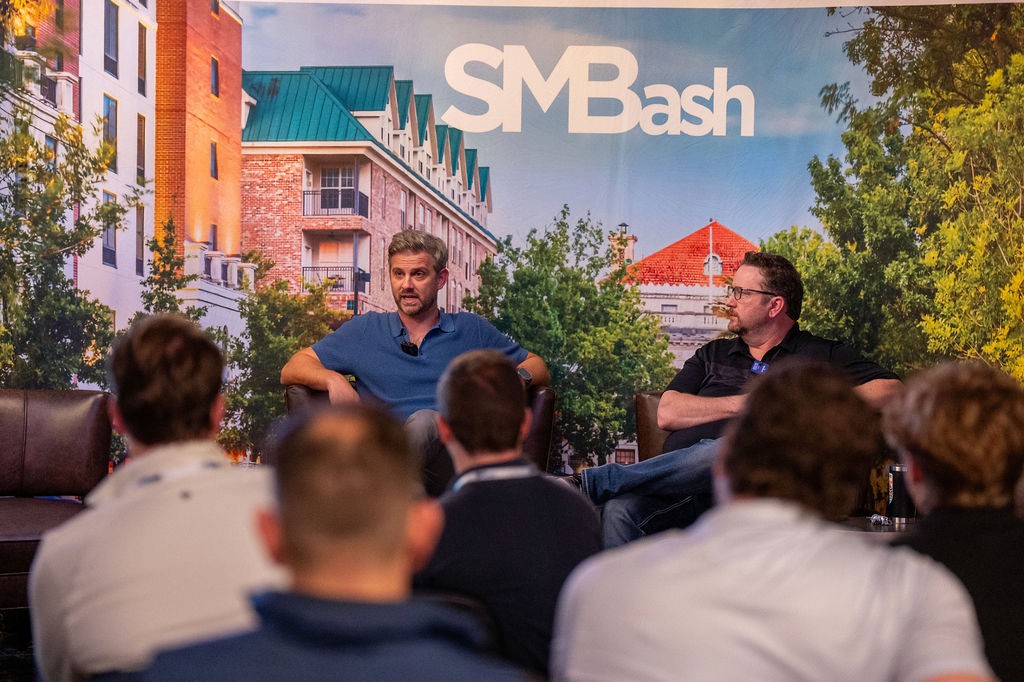
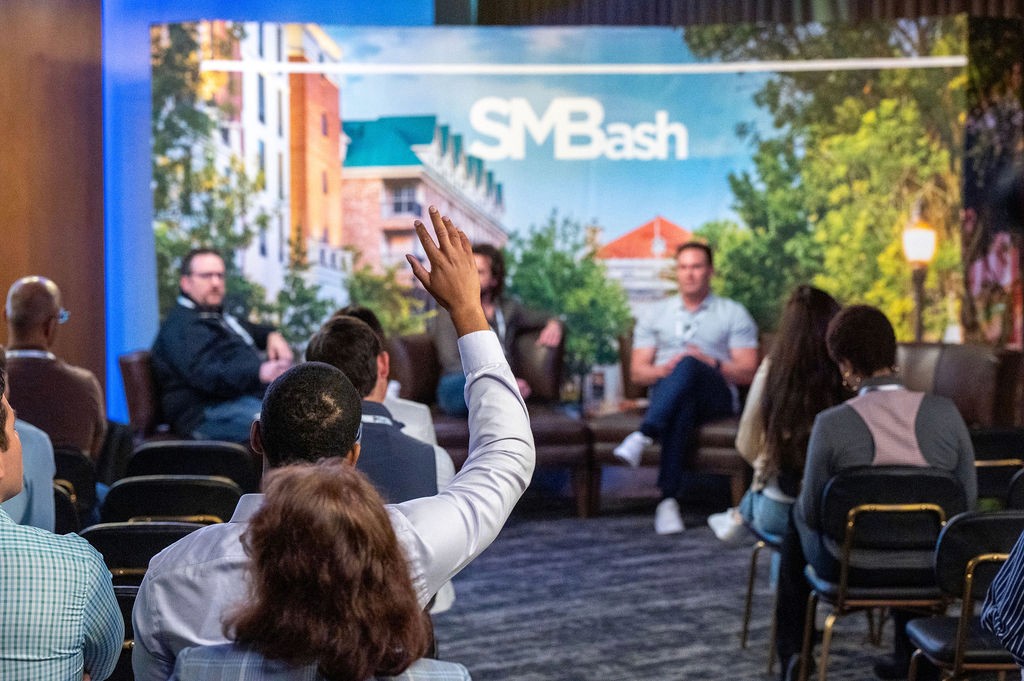
How many of you are looking to buy a business? We have three buyers. How many have already bought? And we have a buy-side advisor, an acquisition matchmaker who works with Athena, a commercial litigator, and a few others. Great mix.
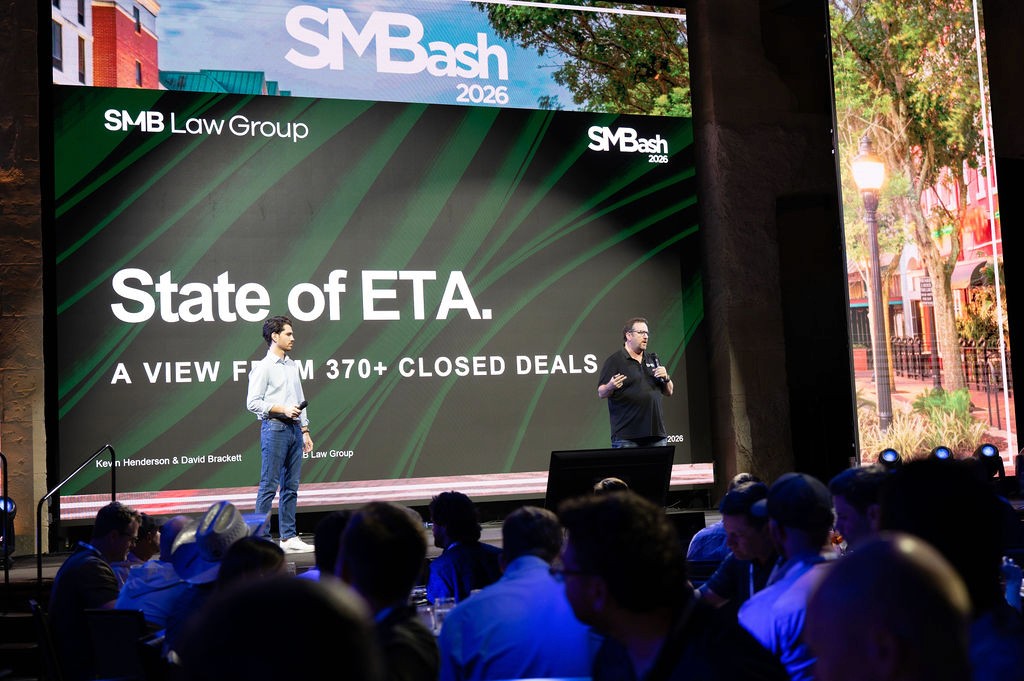
The thing we wanted to talk about today is probably our most well-received podcast episode from our fledgling small business M&A podcast (all 10 listeners are in this room). It was the episode we did on post-closing deal issues. So we can work our way through that, or we can do general Q&A. You've been here for three days, it's late, so let's just start.
**Q: On your LOI template, what are some alternate positions buyers could take to address seller concerns while still protecting themselves?**
That's a loaded question. There's no limit to the amount of issues you can find in a transaction. That's what makes this fun, as opposed to real estate where you're buying a box. Buying a business is a dynamic organization, and no two businesses are ever the same. So there's no limit to the bespoke issues you can have.
When drafting your LOI, it's great to start with our template. We've spent years refining it based on compounding data and feedback. But this is not a templatized thing. You're approaching a human being with a very unique circumstance, and what's important to seller A is going to be very different than what's important to seller B.
One thing we actually took out of our template this year was cookie-cutter language at the beginning that effectively said, "We're very impressed with the incredible business that you've built." We found multiple searchers were submitting that same template, which made you look robotic and insincere. That's a big problem when a 65-year-old has worked in their business for 30 years and is selling their passion project, or when the seller bought the business three and a half years ago and the intro talks about "the business you've built over the years." They're like, "Okay, bro."
So we replaced it with: say something sincere, something that creates a human connection. But that's just one element. From the front of that document to the back, you're going to run into sellers and advisors with different perspectives. We see things all the time like a sell-side advisor asking for a good faith deposit or refusing to take the business off the market. In a perfect world, you'd say, "That doesn't make sense." But in the real world, if you want to get a deal done, especially your first deal, you've got to be diplomatic.
So we don't have templatized A language, B language, C language. I cringe every time I see a post that says, "You should never..." Almost always not accurate, because there are 10 exceptions. Best practices are a statistics game. We fill our LOI template with best practices because more often than not, that's the place to anchor to. But there are plenty of times where even what's in our template isn't the appropriate starting point for this deal, this seller, this geography.
This is a people game, infinitely more than it's a numbers game. I've had a client use our template, submit it to a broker, and the broker responded, "I don't understand half the words in this LOI. I will not present it to my seller. You need to try again." Different broker, completely different approach.
Our job is to tell you the facts. Here's what we'd do in a perfect world, and you apply that in the real world. I have buyers all the time who say, "Eric, I don't really want to use this templatized purchase agreement. But I already own a pest control business. This is a really good one. I know I can run it. I'm willing to flex." Great. That's what you've got to do to get the deal done. My job is just to show you the forest and the trees.
I had one the other day where the buyer said, "I'm willing to offer 3.1 if they go under LOI by Friday, but if they go beyond Friday, I'm going to drop the price to 2.9 and adjust the note terms." I'm like, you're going to look like a jerk if you submit this. The seller's going to think you're being punitive. Let's massage the messaging, submit the right offer, and tell the broker, "If we don't get there by Friday, I probably am going to move on." That's perfectly acceptable communicated respectfully.
The flip side, more directly: it's not rocket science. How much do you know about a business when you're going under LOI? Three years of tax returns, three years of P&Ls. Maybe. You don't have a lot of time or information. So overdoing it at the LOI stage is not going to help you. It's probably going to hurt you.
The biggest mechanisms that come in are the contingent seller note, the forgivable seller note. 90% of the time, that doesn't come in at LOI. You're using that as a gap filler when you have financial diligence issues. QoE finds add backs weren't substantiated, revenue gets softened, earnings get softened, and the seller says, "I really think this business is worth three million." You say, "I can't get a bank to give me more than 2.5." Let's work in that gap-filling measure to keep the deal moving.
**Q: Do you see most contingent seller notes inserted post-QoE?**
I'm going to push back. I don't think it's 90%. I see a lot in LOIs.
If you've got a competitive business, how many offers are you getting? Jackie, you had one with 31 LOIs, 10 over asking. What happens if one of them has a contingent note? Dead on arrival. So Jackie tries not to present more than 10 offers because it's too overwhelming, and really tries to keep it to five.
Jackie sold me to Steve. I came out of the gate swinging in my LOI, fully contingent. She told him: "I'm sending you five buyers. Kevin and Terry are going to be your favorite. He's the most non-attorney attorney you've ever met. He'll show up in a black polo and jeans. He has a different perspective, he loves cars, his wife is a boss, they know every business in town." Steve wanted to personally like the buyer because he lives 10 minutes from the shop. Kevin's wasn't the highest offer. There were two higher ones, but they liked our guy because he's cash, no SBA.
The contingent note comes in 80 to 90% of the time post-QoE. I submit a lot of offers with performance-based notes rather than at the LOI. But they've got to be not competitive opportunities. You don't have a marketplace with 10 LOIs all contingent. The SBA is tethering most of this. Unless you've got a cash buyer or strategic, everyone's going to the same banks: Byline, Bruce, the same people. They're all in a pretty reasonable range.
**Q: What about the SIM exercise earlier where there's huge customer concentration? If you know that before LOI, isn't waiting till later a retrade?**
For sure. If you're intending to mitigate that risk with a contingent note, come right out of the gates with it. A reasonably competent broker is going to expect it. The top three customers are 70% of revenue. They've already prepped their seller: "Look, there's really only one way to mitigate this." If you come in swinging with "I only want three turns of EBITDA, and I want a 20% seller note fully contingent," probably go pound sand. It's not going to be a competitive scenario with 35% customer concentration because it's not going to be a very bankable deal.
**Q: Real deal example: restoration company, $4M enterprise, $1M EBITDA, asking $4.5M. Seller had three insurance relationships giving him 80% of revenue. I countered: $1M parked in escrow, work with me for six months, once relationships transfer you get $4.5M plus an extra half million. He said no, taking $3M all cash from PE.**
If that were me, I would not close that deal. That deal has such little buyer commitment, and the seller is taking such a huge risk on you.
The reality is contingent money like that, every seller is going to assume they're never going to see it. That's not to say they won't. If it's an earn-out, you have to be willing to close the deal underwritten to cash and assume you'll never see that earn-out.
I'll take the other side too: it might've been a great litmus test. They may not believe those relationships are going to transfer. So they take the bird in the hand. In that case, you absolutely don't want it either. Why not flip it? Give them all the money, and if you don't make the money, they pay you back. Both lawyers will tell you that's harder to enforce legally.
Don't take it as you're insane to offer that. If that's the best offer based on the risk profile and they said no, move on. Just because winning is difficult doesn't mean you have to fall all over yourself to win every transaction.
In the mid-market, what almost never happens on Main Street: we would go get those consents pre-closing. Talk to them before you close, sign the purchase agreement, have the conversations. If they say no, you don't close. In larger transactions, you might have 60 consents and require 80% to close.
But these are insurance companies referring claims work, not contracts. Many sellers worry that if you go have that conversation, the insurance company will pull the relationship. Scary.
**Q: How much are you doing post-LOI before spending money on QoE and the attorney?**
The broker's not going to love this, but the LOI is not binding. There's no gun to your head. Sign the LOI on the basis of limited information, then stage it out intelligently. Wait until later to bring the lawyer in. Wait to even bring the QoE in until you've gotten through gatekeeping issues. If you're worried about a specific risk, spend time familiarizing yourself with that risk first before spending money on a QoE, giving a bank a $10,000 deposit, and working with a lawyer.
Whatever you're staging out needs to be things that are out of your control. What would tick me off as a seller is if you're staging out something you could've done. You go under LOI and it's like, "Hey, before we kick off diligence, let me go talk to some lenders." You should already have lender relationships pre-vetted at the LOI phase, so the minute after LOI you can go into the stuff you can't control.
**Q: Expectations for closing and exclusivity timelines?**
For SBA, 90 days is pretty consistent, maybe a one-month extension. But put 60 in the LOI for exclusivity. You're not going to lose the deal because you don't get there by day 60, but you may lose the deal up front if you don't look like you're moving.
That said, I had a buyer lose a deal at the 60-day mark last year. Day 61, the seller got another higher offer that was all cash. That buyer knew there was a 60-day LOI and waited him out. Smart buyer tactic.
What I tell my buyers: do 60 days, and when you present an agreement, you get an extra 30 days. That's your contingency. Now you have 90 days, but you've made a step closer. Nothing ticks a seller off more than going under LOI and not showing progress.
Milestone-based is good. I don't like shortened milestones for non-deliverables, like "You've got 30 days for diligence or you don't get your deposit back." That's nonsense. But milestone-based for things like draft documents by day 30, bank commitment letter by day 60, that can be thoughtful.
Deals almost never close on time. I have one right now where we've had line-item indemnification for licensure problems, landlord problems, a bunch of stuff. The seller is pregnant, having a C-section on May 5th, so we've got to get the deal done. And the buyer just had to pull the plug on a major customer, which adjusted earnings. The deal will still close, but it's a winding road.
No lenders in here, so I don't want to offend anyone, but all these lender BDOs are salespeople. They'll tell you, "We're different, we close in 60 days." Nonsense. Deals take 90 to 120 days, steady as clockwork. There's one bank I'm on the second deal with that's railroading faster than any SBA lender, and the buyer and I are so sick of it because they're saying, "We're closing in two weeks, we need everything tomorrow." It has the opposite effect because we're not through diligence. You're putting the deal at risk by trying to move faster.
**Q: How do you deal with attorneys who don't understand the lower middle market?**
It's evolving. The efficiencies with AI tools and organizational tools are changing the game in real time. It's always been a practice of either somebody too sophisticated who's overdoing it and grinding the deal, or somebody who doesn't really know M&A.
In that latter scenario, we run the show. Every day we're directing the message. Approaching close, we create a paint-by-numbers scenario: "Here's what we need from you. You want to close on 4/29? We need these things by Wednesday, these by Monday, we'll meet Tuesday, close Wednesday." When milestones aren't hit, we hammer them.
In that messy deal, the seller's lawyer said in the first meeting, "How are we going to do this one? Are we going to trade redlines?" The buyer and I both thought, "That's a bad sign."
You have to be careful, because there's so many people to manage: the broker, the seller, your QoE person, the bank, your significant other, your lawyer, their lawyer. You need a lawyer who understands the lower middle market and can handhold. A 65-year-old sell-side attorney who doesn't know M&A, I can't call him out in front of everybody. The worst thing you can do is make someone on the other side look stupid. So be diplomatic.
There are signals in our documents. A handful of provisions I look at on an initial redline tell me almost everything I need to know. Then you adapt. Sometimes you win by steamrolling, capitalizing on the psychology that they know they're out of their depth. Other counsel I'll never have on a group call because I know I'd have to teach them M&A.
I just closed a $6.5M deal for a roll-up client. The seller's counsel made three comments to the purchase agreement, all dumb. Easy. But for every one of those, you've got a really tough personality with a lot of psychology.
In the day of AI, you can go to Claude and have it draft a purchase agreement. So what are you paying a lawyer for? You're paying for experience, for being a great ambassador for your transaction, for relationships with banks, for greasing the wheels. You want a lawyer who'll educate you: "Here's what we got back. It's about a 7.5 out of 10 in aggressiveness. Here are the things that matter. Here's the conversation to have with the seller off to the side. Here are terms that are never going to fly with an SBA lender." Your BDO will say it's no problem, then the bank's lawyer comes in at the three-yard line and says, "We can't do any of those terms."
Every time I get a markup clearly done by AI, I can bet money there are three or four changes 180 degrees contrary to the position the seller should be taking. They don't know what they're doing, so they let it fly. Things that make sense in first principles but don't make sense in M&A or SBA M&A. The big one: removing the seller from backstopping indemnification. Great provision. The bank is never going to go for it.
**Q: How do you address working capital at the LOI stage?**
It's tough because you don't have enough information to set a target. But it's important. Working capital is the business having enough net liquidity to operate in the ordinary post-closing.
I was referred to a potential seller the other day who said, "I'm not giving them working capital. When I started my business, I had to bring my own money." You can take that position, but it's not typical, and they're going to adjust for it in the net economics.
Our template says there will be a normalized level of working capital subject to seasonality and financial diligence, mutually agreed upon. There'll be a target, an estimate at closing, and a post-closing adjustment 45 to 90 days later. Then QoE determines the target.
We had a client buy a business with a $500K target that got negotiated to $200K, then at a last-minute give became $100K. Working capital-intensive business. 90 to 120 days post-closing, he was struggling, started using the seller's AR to fund the business, ended up $500K in the hole to the seller. Wasn't even my transaction and I was waking up at 3 a.m. thinking about it.
I'm a huge believer that education paralysis will keep you from ever transacting. Don't fall into the "I need to learn one more thing" trap. Working capital is the exception. If you're wishy-washy on what working capital is, how to determine it, why it matters, what conversion cycles are, you are 20 times more likely to bankrupt yourself nine months after closing. Use AI to teach you the concepts. Tell it, "Ask me questions until I understand working capital."
**Q: Any buyer protections post-LOI, pre-close, if the seller backs out?**
That's a big fear. But in our dataset of 500 transactions, it's sub-10% of busted deals. There's not a great fix. If you haven't signed a purchase agreement, you could sign one and structure a tail period where the seller can only walk away for very limited reasons: government enjoinment, business failure, mutual agreement. If you do sign and close simultaneously, your best bet is to run their fees up. Once they've got a bill, the brain encourages them to move forward.
One option sellers hate: build a fee into the LOI. If you're ready, willing, and able to transact and the seller terminates for any reason, they reimburse expenses or pay a number, say $25,000. I occasionally see that squeak through. Most sellers who lawyer up strike it. And there's almost no scenario where you'd sue to enforce it.
It's why, especially as a first-time buyer, the on-market brokered transaction is a better path than proprietary off-market. You could get a good deal off-market. But these deals are not a straight path. As issues come up and sellers talk to people in their lives, they hear, "Jim got six and a half times. You're only getting four and a half?" If they haven't run a process and seen 10 LOIs and realized the market for their business is this wide, not the home run they imagined, they're going to balk. Whereas if Jackie has put 600 hours into the deal, you'll get through issues.
Brent Beshore says every deal dies three times before it closes. We see deals come to a stop all the time. Usually I'm like, "It'll still close. They'll find a way." More often than not, it does.
That's a wrap. The schedule says closing remarks for 10 minutes, but we decided not to herd everyone downstairs. How many of you have attended SMBash in the past? Mostly first-timers. Thank you for your support. We pride ourselves on this being a different event than normal ETA events, really actionable. We mean it sincerely: tell us how to improve, even when the feedback is pointed. We want you back next year and want to keep evolving this event in a way that's productive for everyone. Thank you all for coming.