PLAYLIST PRESENTED BY

Attributes Over Experience: How Special Operators Hire for ETA


Description
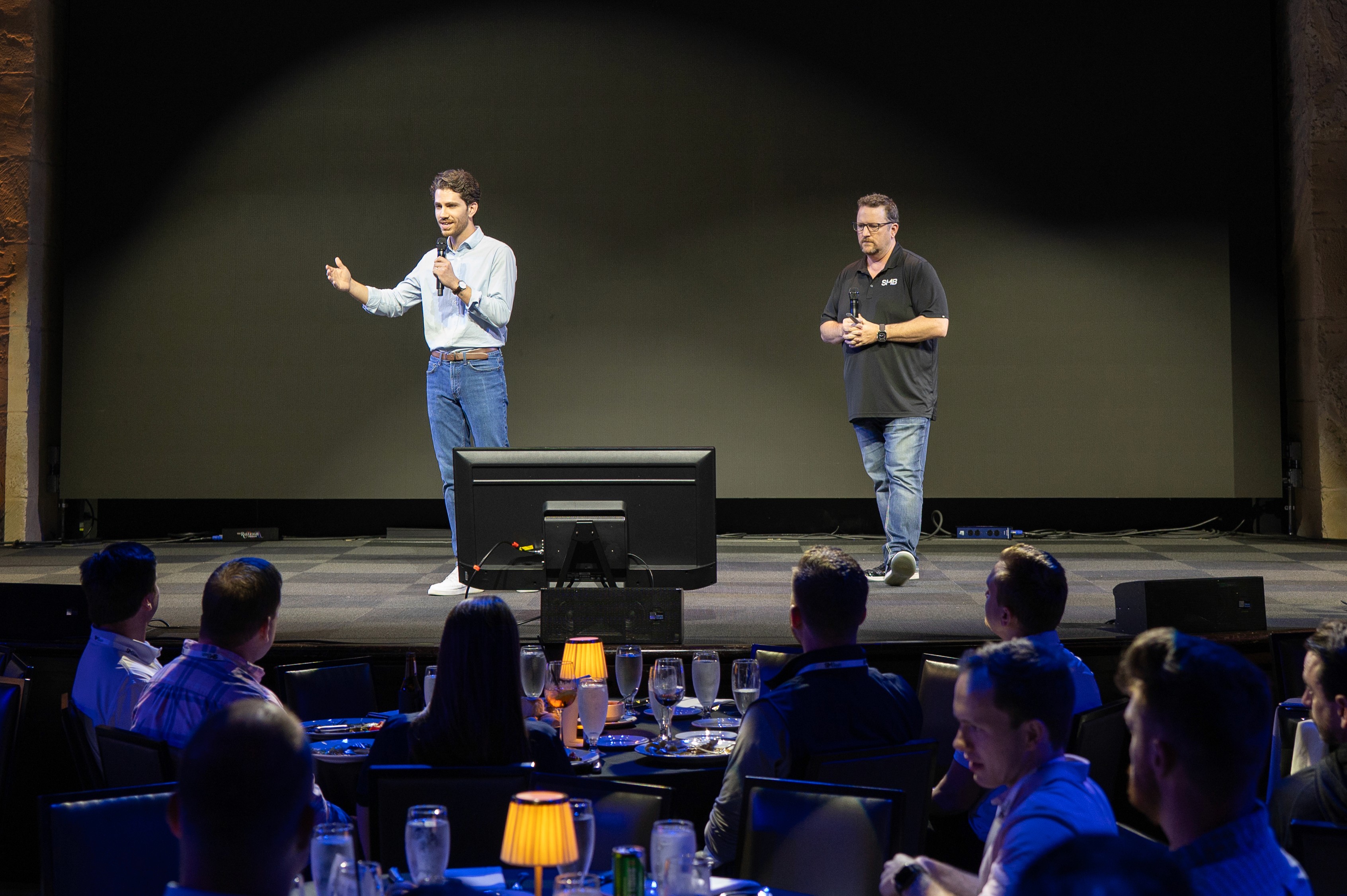
Christian Ruf (Uncommon Elite) and Jon Matzner (Sagan) draw on their Special Operations and national security backgrounds to make the case for attributes-based hiring in entrepreneurship through acquisition. They share concrete tactics for finding smart, hungry, coachable operators, building real training pipelines post-close, and giving GMs the room to run, with practical examples for searchers, holdco operators, and home services platforms.
Recent Videos


Transcript
**Christian:** I'm Christian Ruf. I run a company called Uncommon Elite. What I do is I put special operators in businesses. A lot of the ETA community, private equity, holdcos, need an operator, GM, or president. That's what I've done. My background, I spent 10 years in the military. Half of that was with the 160th, which if you saw the guys fly the raids down in Venezuela, those are the dudes I flew with. Been doing this for four years.
**Jon:** I'm Jon Matzner. I run a company called Sagan. I see lots of my customers in here, which makes me happy. I worked in the national security world, living mostly in North Africa and the Middle East for the majority of my 20s and early 30s doing counterterrorism and stopping the spread of weapons of mass destruction. Then I bought a small, difficult-to-run home improvement business. Ran that for a few years, sold it, and got good at hiring globally, directly, building systems, ops, all that post-acquisition stuff where you can add a lot of value. Started Sagan a couple of years ago with a co-founder, which is ripping.
So we're excited to talk about what Christian and I take very seriously, both because of our backgrounds and our current jobs, which is hiring, leadership, management. One theme that Christian and I share, which we want to tattoo on the forehead of a lot of people we work with: attributes over experience.
**Christian:** Who here is familiar with Alpine? Graham Weaver has this graph where his hypothesis is that over time, a person with higher attributes will beat out someone with higher initial experience. If you go to any of their home services platforms, what you'll see is all their general managers are former Marines, Green Berets, Navy SEALs, Delta Force, Air Force Special Operations, general military. They plug them into those GM positions, market president positions, basically all the way up the food chain. And it worked. They could take someone with the attributes to win and lead, and put them in these home services companies. I largely took that thesis and turned it into a business.
My familiarity with attributes over experience stems from my time in Special Operations. The 160th pilot from the Maduro raid got the Medal of Honor. He got shot on the target, kept flying the aircraft, bleeding out in the back of the helicopter as they exfilled. When he applied to the 160th, how good of a pilot do you think he was? Not very good. He was probably pretty bad. I was very bad. I had a couple hundred hours. It's an organization where all they do is fly at night, and I had flown at night for maybe 40 hours. Yet somehow I beat everybody there who had 3,000 or 4,000 hours. Because that organization believes in a core set of attributes that if you put them in a situation where they're going to get shot at over a target and they still have to fly the helicopter, they're still going to fly the helicopter.
They'll bring 20 or 30 guys in to assess over a week. By Tuesday you can smell the quitters. How much time do you think you spend in an aircraft during that assessment? Two minutes. I had two minutes on the controls. The instructor let me land the helicopter and made fun of me for how soft of a landing it was.
The way I operate my business is attributes will beat experience. Experience still matters. If you're hiring an HVAC install manager, you probably need somebody with HVAC experience. But when you put experience up against attributes and measure potential, attributes will win nine times out of 10.
**John:** What attributes ultimately do, in my opinion, is create great decisions in a fast-moving environment. Who here, either in their current business or moving forward, is thinking about AI?
Can Chris hire somebody for his company that has six years of stable experience pushing the ball forward with OpenAI or Claude for an accounting firm? Of course not. Nobody has that. So how do you hire into that need?
I'm going to read something my long-suffering managing director Vincy sent me over the weekend. A PRD is a document you give a software developer to create something. She sends me this over the weekend: "I had it generate like five PRDs today and it made it into a thing I can deploy to Railway, so it's like an app. It helped me set up a Google Cloud project so I am not a blocker for these PRDs. I want to host my Sagan Claude on a VPS, a virtual machine. I can let it run overnight since the token reset happens."
How many of you would like to have somebody like that in your companies? Vincy started with me for $3 an hour nine years ago. She is not technical. She is a bundle of kick-ass attributes. I don't need to tell her to play with Claude Code. I have to say, "Vincy, go to sleep." That is the power and promise of attributes-based hiring.
There is not a resume bullet that says "is innovating with OpenAI in a tree company." We're entering a chaotic environment, managing tariffs, managing pricing pressure, dynamic competitive strategy. You can grab somebody who's maybe underrepresented, they don't have the resume, and put them against a problem, and they're going to jump into it.
So we're going to talk about three takeaways: how to find it, how to train it, and how to set it free.
**Christian:** Generally what works really well is, how can you fabricate the reality of the role and test the person inside of it? If I asked Rich, "Tell me about a time you had integrity," what is Rich going to tell me? He's going to tell me about a time he had integrity, whether it's true or not. I'm going to get the answer I want to hear, not necessarily the answer I need to hear.
The game becomes how do you create situations and scenarios to make them think on their feet, that shows you through their behaviors what's behind the words. In the 160th, you have a week-long assessment process. It's absolutely miserable and has nothing to do with flying. I flew in a helicopter for three hours, touched the controls for about two minutes, got made fun of. What it was, was an opportunity to fail over and over again. There were interview questions, behavioral assessments like DiSC profiles, aptitude tests. But then it was mini case study after mini case study, where I was given a small amount of information but expected to give a big briefing on how I would solve it.
You can't necessarily do that in a commercial interview, but you can do case studies. Take the biggest problem this person is going to face, tell them nothing about it other than it's a problem, and have them come to you with solutions.
**John:** Christian said something really important. Does anybody know what falsification is? If you studied epistemology, theory of knowledge. It is very difficult for me to say Rich has high integrity, because 99 times he shows it and the 100th time he doesn't. It's the turkey who thinks he's safe, and then on the 365th day it's Thanksgiving.
Falsification is creating scenarios where you can affirmatively say this person does not have integrity. Falsification is a more robust form of knowledge. You cannot, I don't care if you talk to him for 100 hours, say this guy's trustworthy. But you know what you can tell in 15 minutes? This person's not reliable because they were late to their first interview.
As you're looking at hiring, you create scenarios where you're going to get a lot of data. You put them on a clock, you put them in the woods metaphorically, you give them different scenarios, and you can tell right away if they're a bad candidate. Falsification, elimination is 100 times more valuable than validation.
**Audience (Patrick):** Are you giving them prep time on the case studies?
**Christian:** Both. I talk to candidates all day long. Sometimes I just know because of their backgrounds. The ones I don't, I think about the role and the problems they might encounter, and on the fly come up with a question. One I like to use: you have six direct reports. Two are absolutely crushing it, two are kind of medium, and two are sucking the life out of the organization. What do you do? There's no right answer. I want to know how they think about it.
Outside of that, my favorite is to give them a case study, give them two days to prepare, then have them present it and ask questions. If you really want to mess with them, you change the information two hours before they present.
**John:** It depends on the job. Is this person an ops manager balancing HVAC techs rapidly? Then it's all about, "Hey, start whatever." Or is this person an accountant who cannot mess up line 43? Then I'd rather them be slow and deliberate, so I give it to them in advance. Mimic the scenarios in which they'll be making decisions.
When I was recruiting Jermaine, my only application said, "I'm planning a trip to Seattle. Please prepare something for me." I sent it to 10 different potential assistants. The first four asked me eight legitimate but annoying questions. Out. Three sent garbage ChatGPT one-paragraph answers. Jermaine said, "Hey, I went to your website, saw you like Notion, so I built it in Notion. Here's three different things. Do you want me to just go ahead and book this?" That's who I want.
The other thing we ripped off Christian: what does success look like in six months? How will you know they're successful? What attributes are required to be successful? Then how do I structure questions without telling them I'm looking for these attributes?
**Christian:** I see all these job descriptions that are just ChatGPT garbage. Don't send me your ChatGPT job descriptions. What do you want in 12 months? Give me the three to five outcomes in 12 months that are going to make you say, "That's the best hire I ever made." Then the three to five outcomes in six months. Then the three to five outcomes you want in 90 days. Then how do you measure it? In order to do that, if they're an accountant, the attributes would be attention to detail. Then you interview against those attributes.
You want every attribute: attitude, aptitude, tenacity, urgency, integrity. But what matters most for the role? For the 160th, it was integrity. In the application, you rank 20 attributes. If you don't put integrity as number one, you never get past the application phase. They don't tell you that. The two times I've seen guys kicked out of the organization were for integrity violations.
**John:** Our entire company was built off the back of smart, hungry, coachable. Every organization needs hundreds of smart, hungry, coachable people. Obviously you need somebody who's GAAP certified to close the books. But my entire organization does not have recruitment experience, does not have AI experience. If they're smart, they're going to keep up when I say, "Go watch YouTube videos and come back with how we're going to leave Notion for this new thing we're hosting on GitHub that plays nice with AI agents."
If they're not hungry, energetic, with that motor, you can't kick somebody out the door. You want somebody you have to rein in, not somebody where you're like, "Your mouse wasn't moving and you weren't green on Slack."
Coachable is, when they mess up, you say, "Hey, can I give you some feedback? You launched that a little premature. We've got to check our outputs before we send stuff to customers." If they're coachable and take that, I can invade a country with smart, hungry, coachable. I can teach them anything. We built our entire organization off it.
Ninety-five percent of you guys are running organizations or will be buying organizations where attributes are utility wrenches. "You're going to run my CSR team. You're going to run my CRM integration. You're going to stand up a new broker channel for referral partnerships." I flood my organization with folks like that because they become leaders, they become individual contributors.
**Christian:** I've been doing executive recruiting for about 18 months. Done 95 placements. One of them has had industry experience. Ninety-five placements at billion-dollar private equity companies, holdcos, one has industry experience. Why can they take that risk? They train.
So the second pillar: you find the attributes, then you train. Back to the 160th, our onboarding process is technically two onboarding processes. How long do you think? Forty-eight months. Four years. You can't do that. The first 12 months from the day you show up to the day you go to the actual unit to fly, every day is scripted. You know exactly what you're going to do every day, and more importantly, you know the expectation for that day. Could you do that for 90 days? Absolutely.
At the end of 12 months, they have a 95% success rate at producing a pilot you could put in the right seat of an aircraft in a combat environment with tier one dudes in the back. That 5% that doesn't make it gets peered out. It's never a performance thing, usually integrity or personality. I finished my 12 months, and two weeks later went to Africa on my first deployment.
**John:** The reason this is hard: in most subscale small businesses, you have an enormous amount of demands on your time. "Yeah, John, I get it, but I need somebody who can run calls tomorrow." Everybody says, "Anybody can learn Salesforce, but I need somebody right now who can use Salesforce." That restricts your talent pool. It's almost like the sugar high of paid media. You're going to get a guy who can run calls for seven weeks, then make a change. Then two weeks later you hire a sales guy with tree experience because it's busy season. Three weeks later when you say, "We're moving off QuickBooks Online to this new ERP," they break. You bang up against an organizational ceiling forever.
At some point you have to get serious. We have an executive, Brian Wilson. He runs our training department. All he does is run our training so we can become a learning organization. He runs debriefs when we mess something up. He runs a hot wash: "What happened? Why'd we miss that?" We update our training so we don't make that mistake again.
The big thing he's been doing, which is awesome: we hired actors to do role-playing with our team. They're $30 an hour. He uses AI to write scenarios. We run a training for our recruiters called Overly Picky Member, because we run into it every day. They get 10 or 20 reps with an actor who has a script saying, "I was really hoping this person could make cold calls and do my bookkeeping." Our recruiters run against the actor, then we debrief. "How'd that feel?" That's what learning looks like.
It also lets me hire people not out of recruiting. Our best recruiter right now was an SDR in his last role, because he's not precious. He came in, pressed the "I believe" button on our system, and we taught him everything he knows. Right way, wrong way, Sagan way. To get to that next level, I need moldable clay that's smart, hungry, coachable, comes into the system, gets mentored, gets assigned an onboarding buddy, runs training scenarios over and over.
**Christian:** It's easy for me to talk about how we had resources to train guys for 48 months. The reality is those first 12 months are well preserved, but the next 36 months, I was supposed to do additional training, I went to Africa instead. What remained was the expectation. I had to hit this point in 36 months, this point in 35, all the way back to zero. It was laid out on paper. If you see organizations that say, "We don't have time to train. You just have to go do it," that's reality for many small businesses. But if you don't frame it up with what the expectation is, you'll never harness the true power of those attributes.
**John:** A fantastic way to do this: take a lot of the workflows, plug Claude Code into Slack, call recordings, email chains, and say, "What would an 18-month training pipeline to get a full-charge accountant at my firm look like? What are some good monthly goals?" It won't be perfect, but it'll give you really good ideas. By the end of this month, you should be able to onboard a new client, off-board a client. AI can do a lot of the lifting.
**Christian:** If you have a deal under LOI, we've been building post-acquisition talent maps for people. You can take the CIM you're looking at and feed it into Claude and say, "What are the key roles, and what's some way to start building pipeline and training objectives around the key roles in this company I'm about to acquire?" So you can start doing that before you acquire.
Third pillar: setting it free. One of my mentors taught me, what it took to get you here is not what it takes to get you there. When you start running a business, you are going to be up somebody's butt because you don't have the cash flow, you don't have the expertise. If you buy a company and think you're going to stick it in GM hands making 85 grand a year, that's not what it's going to look like.
**John:** Especially with AI, makes it even worse. I can plug AI into every email my company sends and receives every day. I have a 100-person organization. What do you think that does to smart, hungry, coachable, ambitious people? They hate it. In the beginning you've got to be in there, but once you've got a training pipeline and clear expectations, you need to give them freedom, including freedom to make mistakes.
Setting it free is you as a leader creating an environment of high performance, cultures, expectations, end states, goals, and saying, "I'm going to let my new GM realize you need to send the schedule to the crews by 6:00 a.m." Let them learn. Is it going to put me out of business if it goes out an hour late? It's better that they learn because they're smart, hungry, coachable, rather than me at 5:00 a.m. calling, "Why isn't the schedule out?"
One of my favorite Christian stories. Talk about your mission and how many emails you exchanged with your boss.
**Christian:** I showed up after training, and in the first two weeks I deployed to Africa with SEAL Team Six to do stuff off the coast of Yemen. I had not met my boss. I got a phone call on a Friday while my girlfriend, now wife, was moving in. He said, "You're leaving on Monday." "For where?" "I can't tell you. Come in." I came in and disappeared. For six months, how many times do you think we exchanged correspondence? Zero. I came back. He went to Afghanistan. I went to Iraq, came back, and we finally linked up. He said, "Oh, you didn't mess things up too much."
**John:** And you're sitting here running a $2 million landscaping company saying, "I get 100 emails a day. I don't have time to build a training pipeline." These guys are flying SEAL Team Six in at night, landing a skid on the front, letting them jump off. His boss is like, "You got it. You're well-trained. Let me know if you need anything." If he had messed up, there'd be a congressional investigation. So it's a mindset of, if you're well-trained, if you have people with great attributes, you let them do their job.
**Christian:** My last deployment, I was walking into a yoga class on New Year's Eve at 7:00 in the morning, and my phone blew up. We got the text message that it was time to go. By 7:00 a.m. Iraq time the next day, we had five C-17s with aircraft loading up to do a hostage rescue, embassy evacuation, all those mission sets. From the time we got the text to the time it executed, the only question within the team was, "Who's getting the bourbon?" Because we had such a finite way of doing things and the expectations were so clear that we could just show up and execute.
That's 40 years of iterating. Every time you do that, you come back and say, "What went well? What didn't go well? How do we not do that again?" If you take the right attributes, put them against the right training, give them freedom to make mistakes but debrief and hold them accountable, you will continuously iterate yourself into a better organization.
**John:** My team kicked me out of Airtable. I kept breaking stuff because the organization had moved past me. They said, "John, we love you, you're the co-founder, but get out of Airtable. You're confusing everybody." At a certain point the organization says, "We got it, boss. We're not upgrading to enterprise. We understand." You have to have that discipline as a leader.
For you guys acquiring or running stuff, understand what phase of development you're in. Some of you are going to say, "John, great talk, I'm inspired," but somebody who works for you is going to mess up tomorrow. What we're talking about is what you're chasing, directionally. As you make a decision, do I take somebody more raw, smart, hungry, coachable, who loves tech, or somebody who can deliver on day one? If you have the ability to go with that person who's more attributes-rich, please do.
Rich Jordan, Marine, was an instructor in the Marine Corps, started with a small company, and it's now at a massive run rate. Rich, how do you think about attributes-based hiring in home services or trades?
**Rich:** It depends on the role and the scope of the role. A lot of people get it wrong. The scope of a role is too broad. "I need you to make cold calls and do bookkeeping and run HVAC calls." There's no one on the planet who does that. We see people trying to do that all the time in home service.
I recruited and hired a branch manager last summer. Took a guy who was an Army infantry officer, no home service experience. I was going to need him to run a branch, create and build from zero. He was going to spend four days with us. I gave him a two-page briefing, a five-paragraph order, and said, "In six months, you have to launch a greenfield in Southern Maine. Build your plan. What staff, what resources? Build the Gantt chart of how we're going to get there, soup to nuts. Brief on Thursday. You have access to anyone in the business." And he did it. His plan on Thursday wasn't great, but I didn't care about the product. I cared about how he interacted with the mentorship team all week. He did a great job and I hired him.
**Christian:** That's the perfect textbook case study example. Give them something they know nothing about, but it's going to be the problem they face, and go into it with the mindset of, "He's probably not going to give me the right answer." It's okay. How he thinks about it, how he approaches it, the questions he asks, that's textbook.
**John:** I'm probably spending 50% of my time on leadership and training development, and 50% on AI. We're building a ton of AI internally and for our customers. This is 100x more important with the dynamic nature of what AI is going to inject into all our businesses. Do you want to hire somebody who's not that good with tech but has six years of HubSpot experience? Then when you switch to AI, you have a company knowledge graph in Obsidian, which is a bunch of flat MD files, and you're hosting Claude skills on a VPS, and they go, "Yeah, but HubSpot."
Or do you want to find somebody who's going to wade in and say, "Got it, boss. What does VPS stand for? I watched some YouTube videos last night, I put it in NotebookLM, I've been teaching myself how offsite servers work." That's how you wade into this category. The people who are going to win are those with awesome attributes-based people who are anti-fragile. "Chaos? Let's go. Sounds like we're going to make some money." Not, "Well, they changed the way QuickBooks Online works." QuickBooks has an API. It has an MCP server. What are we doing differently?
This is 100x more hyper-charged because of the environment we as small and medium-sized business owners are entering. You cannot get these fragile, small, skill-based people who look good on a resume. You want a guy who was a GM at a restaurant, who's good at dealing with stress, who built a tool on the weekend for fun, whose dream is to have a Claude Max account so he can have more tokens. That's who I'm hiring by the dozen. Not a guy who's like, "I'm a Zapier consultant." Attributes.
**Audience:** How are you drafting the job description? How do you source these attributes-rich people effectively?
**John:** I write job descriptions like sales copy. You go to ChatGPT and think you're being clever, and you send me that, and I'm like, "This is vomit." I don't care if you're a restaurant manager. I don't care if you've never worked in a tree company. I care that you're smart, hungry, and coachable. Show me you care. Link below. Write a letter to that person. You send me a cut-and-pasted cover letter from ChatGPT, we notice.
The best sales guy I ever got, Rene, who crushed, incredible dude. I wrote, "What are we selling? Who gives a shit? This role is for somebody who wants to make a lot of money, who's going to be in an organization that's going to take care of you. I'll teach you what you need to know. Encourage to apply." He emailed me, "Dude, I'm in. I don't even know what the company is." The guy was a personal trainer before. I'm putting very specific bait to catch that type of person. It's not, "Join a fast-growing off-market deal sourcing platform with room to grow. Experience in M&A required."
**Christian:** I'm doing the largest search I've done yet, a CEO search for a big platform. I don't have a job description and I'm not going to get one. I found the ideal candidate, but he wasn't sure he wanted to leave. The guy engaging the search said, "Don't worry, I'm the best salesperson you'll ever meet." It's all sales. Do not put it into ChatGPT and hit enter. You're going to get people who respond the same way.
**Audience (Patrick):** I'm struggling to hire in our accounting firm. They have to have really good accounting chops because they're cleaning up messy new clients. My existing team members don't want to move into it. New people, I'm interviewing for, do you like consistent chaos, do you like cleaning up the mess? Accountants want the same client every month.
**John:** I'd write it like sales copy. You have to sex it up. The way they got people to serve in Africa for three years was, "That's where the real work happens." It's also where you get dengue fever in Côte d'Ivoire. Don't say "onboarding coordinator." Say "needed: SWAT team member. We're standing up a SWAT team only for..." I'd say these are the people who are the hard chargers, they make big money, they deal with big problems. Look for somebody who's an accountant who hates accounting but knows it.
**Audience (Jack):** How are you generating training for stuff you probably don't understand yet, the next phase?
**John:** The strength of the US military is senior NCOs. It's not the officers. It's not the white guys in the States, and it's not the $1,000 a month person from the Philippines. It's your senior Philippines person. You have to establish a senior middle manager cadre. I don't build training anymore. They do. Those are people who've been with me for three, four, five years. I say, "Hey, Vincy, we need a new outbound cold calling team." My job is to develop and mentor that level of leadership. They're the ones who crack the whip on culture: "This isn't a BPO. We don't clock in, but if you don't get the job done on time..." They're the culture carriers down to the working level in a fast-growing organization. I spend almost all my time developing my senior global leaders, not the white guys in suits, and not the $1,000 a month people who churn through quickly. We'll stick around in the back if anybody wants to talk.