PLAYLIST PRESENTED BY

What SBA Lenders Really Think About Your Search Deal
Description
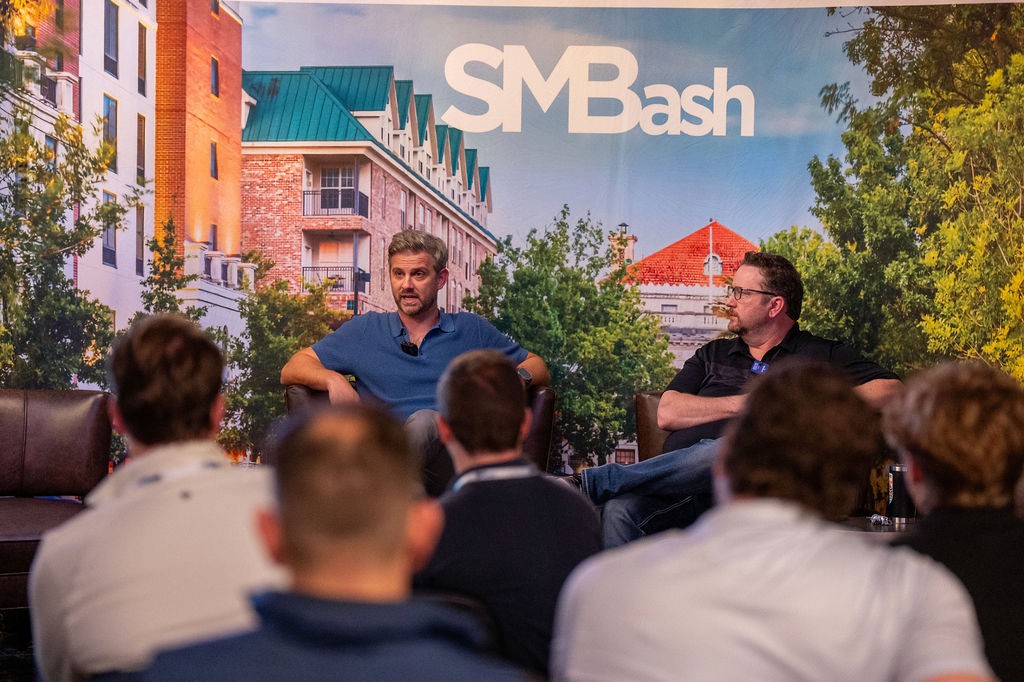
Three of the most active SBA lenders in entrepreneurship through acquisition, Bruce Marks (First Bank of the Lake), Matt Doheny (Byline Bank), and Lisa Forrest (Live Oak Bank), break down how they evaluate self-funded searchers, what rising interest rates mean for deal structuring, and how to think about pari passu, SBA 7(a) caps, and refinancing into conventional debt. A candid conversation moderated by Eric Pacchi of SMB Law Group on what separates fundable buyers from the rest, how lenders handle deals that go sideways, and where seller rollover equity is headed under the new SOP.
Recent Videos



Transcript
This is probably one of the best opportunities to ask hard questions to the folks who help us capitalize our deals. Eric, you want to kick it off?
Thanks for having us, Sam. My name is Eric Pacchi, SMB Attorney on Twitter, co-founder of SMB Law Group with a few of my colleagues here in the room. Excited to be with this panel of lenders today. I work closely and have closed deals with each of them.
I tell all of my clients that getting your deal done requires experienced and competent lending. SBA lenders come in different shapes and sizes and competence. There's a very core group of sophisticated search lenders that I think each of you should work with, and we have three of them on the panel today. I'd guess that between the three of them, they've done hundreds of panels, podcasts, and interviews. So I'd encourage the crowd to spice it up today. Let's ask tough questions and find out why we choose certain lenders over others.
We have Bruce Marks of First Bank of the Lake, Matt Doheny of Byline, and Lisa Forrest of Live Oak. Lisa, do you want to give a quick introduction?
Lisa: Hi, I'm Lisa Forrest with Live Oak. So happy to be here. I was at SMBash one, and it's amazing to see how it's matured. ETA has just exploded over the years. I got a question yesterday: do you think we're at the peak? No, we're not even at the starting point. The car isn't even turned on quite yet. This is my 37th year of SBA lending. At Live Oak we also do conventional lending for traditionally funded searchers, and nearest and dearest to my heart is the SBA program for our self-funded searchers.
Matt: My name is Matt Doheny and I'm with Byline Bank. I manage our self-funded search and M&A vertical. It'll be 10 years next month that I came back to the bank. I worked with them as an analyst and then came back about 10 years ago doing SBA 7(a) lending and companion conventional lending. Five years ago, I didn't even know what a search deal was. I accidentally stumbled into my first one, and now it's all I do. We're building a team. I have a junior lender starting on Monday, which will be nice to take some stuff off my plate.
Bruce: I'm Bruce Marks with First Bank of the Lake. Like Lisa, I made my first SBA loan in 1986, so a long time ago. I've closed well over 1,200 SBA loans during my career. I made my first search fund transaction in 2015 when a gentleman from Harvard introduced me to the program, fell in love with the model, and have done nothing since then. I strictly work with searchers. I've closed $360 million in the space over the past eight years.
Eric: Let's start with a softball. How do prospective buyers find you? How does your bank differ from other financial institutions?
Bruce: Searchers typically want two things: certainty to close and speed. Then they throw in, what's your interest rate? At First Bank of the Lake, I head up our M&A vertical. I worked for a private equity group for five years before this. We built the bank, grew it, and sold it. When I joined First Bank of the Lake, I was very clear with our executive loan committee that they needed to understand it was basically my decision, and they needed to support it because the deals they're going to see are the deals I think they should see. So they've empowered me to make the decisions.
We're a little different. I do not run up through credit like most lenders do. I have my own closing team, my own legal team, and my own underwriter. So if I look you in the eye and tell you I'm going to get your deal done, that is in fact what happens.
Eric: How do searchers find you?
Bruce: Most find me through SearchFunder, Twitter, LinkedIn, or other folks I've helped. We don't have a tremendous outreach. We don't have a huge marketing budget. We're a small bank. It's reputation and being able to deliver.
Matt: One thing that's important is that all three of our banks support the search community through a specialty in self-funded and traditional search. We all call it different things, sponsor finance or self-funded search and M&A, but to my knowledge, we are the only three banks in the country whose banks have said we're going to dedicate an entire vertical to this space. What that means for the searcher is that the bank understands what a typical search profile deal looks like. You'd be surprised how many banks are not comfortable with $5 million-plus airball loans or with 90% of the equity injection coming from investors. For us, that's commonplace. But most lenders are going to look at you cross-eyed when you start talking about those kinds of deals.
Lisa: There's plenty of debt out there even with rising interest rates, and that's good for the M&A community. It's about finding the right fit. Because we have dedicated verticals within our banks, that's important. Sniff around and find out how they make their decisions and who they work with. We have dedicated underwriters, analysts, and closers that do just search deals. That's important, especially when you have investors on your deals and these funky SBA forms your investors have to sign. You want to work with lenders who walk you through that process up front.
The other thing all three of us have in common is we're here to coach and mentor you, especially first-time buyers. We have cash flow templates, executive summary templates, and a lot of deal vetting resources. Personally, I want to know what you think. I want to help you get to your point of view as quickly as possible. You need to have your own voice and understand what your point of view is so you can coalesce all the professionals on your deal team. Especially when talking with the seller, it's really important you understand your point of view. That gives you the ability to decide to compromise or not.
Matt: Just to piggyback, I've heard other lenders, even colleagues at Byline, say they don't want to talk to a borrower until they have an LOI. That's the completely wrong way to go about building a relationship. I've worked with folks for 12 to 18 months and looked at 15 different deals, talking about cash flow and structure. When you get to an LOI, if you haven't vetted that out with your SBA lender, you may have provisions you're agreeing to with the seller that aren't even SBA eligible. Start having those conversations early.
Bruce: This is about you. It's not about us. You bring us in when you want one. There's a gentleman here today, Nick. When he first got involved in his transaction, he reached out and said, I really want to buy this business, I'm well versed in it, but I don't know anything about the lending process. It started with, do you want to submit an LOI? What does that look like? Where can I get a template?
Eric: Drill down for us. We're all very busy. There are a lot of searchers and a lot of tire kickers. What is really the best way for these folks to get your attention pre-LOI and actually get that advice?
Bruce: I'm sure all of us have worked with a searcher for 12, 14, 18 months. I can tell stories of beginning with a searcher and finally getting the fourth deal to the closing table after 16 months. So I don't make a determination at the beginning whether this is the right person to work with, because generally they're looking at deals and maybe that deal ultimately doesn't make it to the table, or they break up, or they submit an LOI and the QoE numbers don't flush out. I'm not judgmental of when or who.
Matt: When you talk about getting attention and being a real buyer up front, every single one of you is smarter than me. But every once in a while somebody comes to you and says, hey, take a look at this deal, but you can tell they haven't even thought through what the cash flow is, what the add-backs are, anything about structure. They're leaning on me to take this blank canvas and paint it. That's not the right way. As a searcher, you should have some idea: this is why I love this business, this is what I like about the cash flow, this is what I like about the industry, this is how my experience fits in. Sometimes it feels like somebody just got a CIM or a teaser from a broker and immediately called the lender. I'm not going to hang up, but it's good to have some idea of how you're looking at the deal.
Lisa: We talk to thousands of people every year. It's not a character flaw if you have to go through 24 pre-LOIs to find an LOI. That's the gig. But in order for us to help you, you have to be a certain level of prepared. What my lending partner Heather Endresen and I finally did is we put on office hours every Wednesday where people just talk SBA 101, and then we have a Thursday call where we share our cash flow model and executive summary templates. When you want to vet deals with us, we want your point of view first. Don't just send me the CIM. None of us has time to look at 50 pages. We give you a simple executive summary template so you can give us an overview of certain salient points. You get better at it as you go. The first one will probably be the one you get to tell us about customer concentrations.
Eric: Let's talk about interest rates. They're rising, creating complications in deals. Debt service coverage ratios are more difficult to achieve. What do we need to know about shopping for interest rates and what are rising rates doing to the SBA lending market?
Bruce: It's tougher for a deal to pencil out with much higher rates. A $5 million deal a couple years ago, your payments were $54,000 a month. Now they're $66,000. That's basically your salary as a typical searcher, $150,000.
A searcher approached me back in October 2021, eighth in the game, the eighth lender he spoke to. He had a QoE for 10 months. He was looking to buy this business for $5,250,000 on a 10-month QoE. There was no cash flow for 2020 or 2019. He had a 10-month QoE in 2020. He said, if I wait until the end of 2021 to get this deal done, it's going to be higher. The deal didn't pencil at 1.5, didn't pencil at 1.4, but based on what the business was going to do, we got it approved subject to 2021 numbers flushing out to make sure the debt service was at least 1.3 times. Today that business is doing phenomenal. He's grown it.
Yes, interest rates are rising and it's making deals tougher to get done, but my philosophy is, as the searcher, it's what you bring to the table, what you can do with the business, and how the business is going to look six months from now under your control versus six months prior when you weren't running it. I'm okay if I've got 1.3 times cash flow coverage and I know you are the right jockey on the horse.
Matt: When people ask me about interest rates, the first thing I say is ugly. Plan between 10 and 11%, because we still might get another 25 or 50 basis points. It does present an opportunity to model your deals based on 11% interest rates. The converse of what Bruce was talking about is going to happen, where you're going to model that $65,000 payment, and there's some reasonable likelihood that five years from now that $65,000 is going to be $55,000. I'd rather be the gal or guy that models it with that $65,000 payment at 11% interest, and then at some point prevailing SBA loan rates will be 5% or 6% again, and you're going to be really happy you modeled at 11. Businesses are still trading. The price hasn't really come down in conjunction with rising rates, at least that's my read so far.
Lisa: Maybe it's just that I'm old, which I am, but 8, 9, 10, 11% interest rates, that's actually stabilized around 8, 9, 10. Doing loans as long as I have, this is not crazy. 3% is crazy. For sellers that have just come out of their best 2022 ever, and now their company is worth less, not worthless, but worth less, because of you as their buyer. If you're getting an SBA loan, you are now at a cost of capital that the seller is just not digesting yet. My prediction is that in the next six months, valuations will be a lot more affordable for our lower-middle-market SBA-type acquirers. We're modeling a little more like 11 for a test. Interest rates are going to be at this level for a while. They will come back down, but hopefully not to the level of the last two or three years, because then you've got really huge disconnects in your economy.
I'm unapologetically the more conservative lender on this couch. We want a 1.5 debt service coverage in the last full year. That's been my lending standard for decades. There are obviously fewer deals that work at my 1.5 than at 1.25. It's all about the fit. If we're saying no, it doesn't necessarily mean it's not a good transaction. We've got a certain risk profile. Be patient and be disciplined. The last thing you want to do is buy a company that maybe only debt services in the last full year by 200% and never debt cash flowed in any of the other years. You've got to stay disciplined because the deals will come. I actually own my own small business. I've had an SBA loan. I've done the whole deal before, and I've got an enduringly profitable company. You have to be patient and stick to your point of view.
Eric: In one word, are you seeing more or less deals right now than at this time last year?
Lisa: There are tons of deals. Plenty of deal flow. Deal flow isn't the problem. It's just, is the deal affordable? Is it doable? Customer concentrations, dependencies on the seller, how is the sale actually generated, who's doing what in the company. There's so much that goes on in lower middle market.
Bruce: Deal flow is way more robust. That's expected. You've got a lot of schools introducing ETA. You've got the knowledge on Twitter and social media. When I went to school, it was get married and buy a house. Today it's buy a business. Deal flow is tremendous. The space is growing.
Eric: Banking meltdown. We've got a financial system in turmoil. What are you seeing behind closed doors?
Matt: I haven't seen that it's affected anything. Shortly after it happened, I called our president and said, tell me what's going on. We looked at deposit outflows and inflows. It hasn't affected our lending. Most SBA lenders didn't have deposits in cryptocurrency or significant deposits to a bunch of venture capitalists. I have not seen where it has affected the way we're going to lend or the health of the bank in any way.
Bruce: We're a small bank, but we had that conversation after SVB went down. Our portfolio is filled with SBA-guaranteed loans. We do conventional in conjunction with SBA. We only do USDA, SBA, anything government-backed. Our portfolio is very clean as a result. It hasn't impacted us at all.
Eric: Best buyers, worst buyers. What are the characteristics of buyers you see and you go, this is almost certainly going to be a yes, and buyers you see and go, I'm going to kill this deal no matter what?
Matt: Not that there's anything wrong with people that say, I'm industry agnostic. That's okay. My opinion is that the customers I've seen be the most successful post-acquisition, the ones I can really pound the table for, are people that come to me and say, I want to buy this business, whatever it is, a stamping company or a tool and die maker or a landscaping business, and this is why. When we go to credit committee, we spend more time discussing the buyer fit, how their skills are transferable to running the business, somebody really passionate about what they're buying. Those have been the most successful searchers in our portfolio.
Lisa: I'm okay with industry agnostic. It's how you prepare yourself for it and the research you've put in. Our folks who are most successful really understand how the sales process works. You're learning about an industry you know nothing about in most cases. Really understand what the seller does, how sales are actually generated, who does what. Sales are not automatic. Some people are doing things to make those sales generate. Understand the seller's role and that complementary skill set overlay.
The times some folks struggle is with this investment thesis of, I'm just going to put technology on it. The fax machine business. Or, I'm going to put it on Google. These companies don't work that way. Get a little more real about how difficult it is to just transition the company, then start growing it.
Bruce: What gave me pause was the word bad searcher. I don't think I've really had bad searchers. For me it's about background, schooling, experience, and what they can do with the business. I pay very close attention to the business plan. If you don't spend time on the business to understand it and what you are going to do with it, it shows. If somebody gives me a five-year projection and it's just a straight line up, I owned my own business for 13 years. I joke and say, do you think for 13 years it did nothing but go straight up? That doesn't happen. It goes up and down.
For me, I put a ton of emphasis on what you tell me you're going to do with the business and how you're going to make it your own. I'm a forward-thinking lender. You could bring me a CIM and say, this business did $3 million in EBITDA two years ago. If I lend to the wrong person, six months from now it's not going to matter that the business did $3 million in EBITDA. I had a searcher call me two weeks ago and say, Bruce, I bought this business back in June of last year, just wanted to call and say thank you for supporting me and believing in me. This has been phenomenal. I've grown the business. How is the rest of your portfolio doing? I said, yes, all my borrowers are like you, doing well.
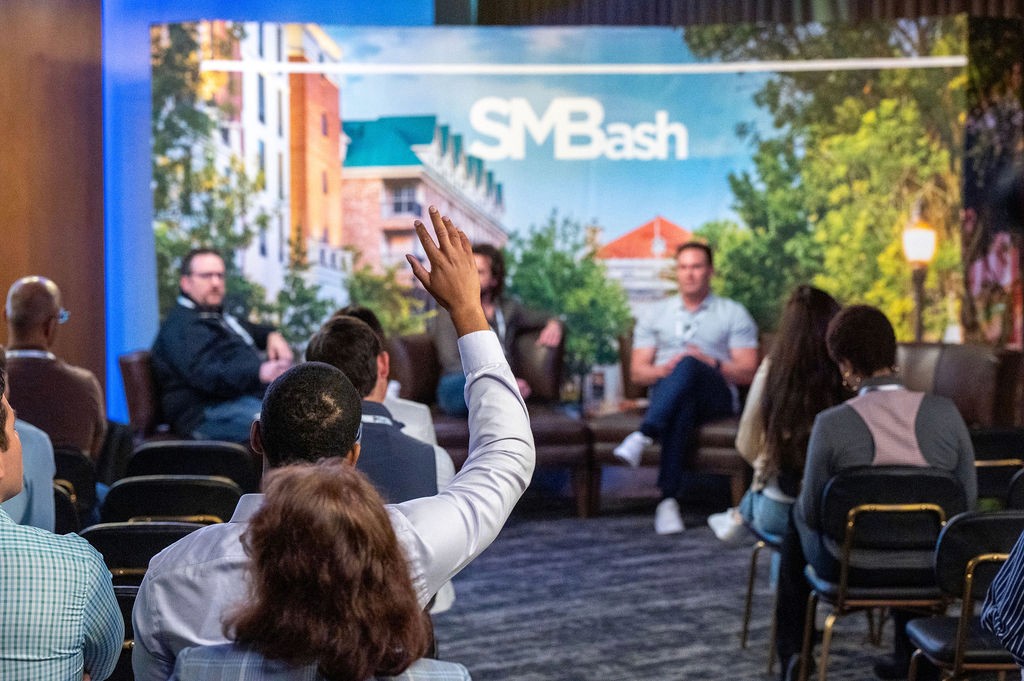
Audience question: How is the seller equity rollover changing?
Eric: SBA is changing the regulations. Up to this point, you had to buy 100% of a business and the seller had to go away. He could consult for 12 months but couldn't be an employee. SBA is in the process of changing those rules. We don't have the final guidance, but suffice it to say partial ownership will be allowed. Bruce, you had an interesting theory on the impact on employees and their ability to acquire these businesses.
Bruce: Sellers who want to put their business on the marketplace can now go to their employees and say, I'd love to give you the opportunity to buy this business. You've been working here for 10 years. I haven't paid you a lot, but I think you'd be the perfect person to take over. I'll roll the equity, you buy the business. Does that take away potential deals in the marketplace? Just an off-the-market thought.
The standard answer I've been instructed to give is the SBA SOP 50 10 6.1 is not yet out in writing. Once it is out in writing, that's when we'll be able to interpret what we think SBA means. Every lender interprets the SOP differently.
Lisa: From a lender risk perspective, lending to someone in the company who knows it and is probably actually doing the work, that's the least risky loan we can make. It depends on how much they're rolling. They're still going to need cash. I don't think it's going to take any deals out of your pockets. Especially in more blue-collar companies, employees just don't have the cash, and the seller's not going to roll out without significant dollars in their pocket. There's plenty for everybody. It might help the really small businesses Clint was talking about, the ones that probably aren't sellable.
Lisa: For our conventional transactions for traditionally funded searchers, rollover is in every single transaction. As long as it's not abused, it could be a real boon to making well-structured deals.
Audience question (Eub): Off the record, when things go sideways, can you give a frank discussion of the restructuring process? Do you move it to a different credit team? There are weird incentives in place, and the one thing we all hate is the PG. Can you talk us through the real risk profile of what we're doing?
Matt: I'm not an attorney, you might want Eric or Kevin to answer. We have people in-house. Every situation is different. There's no one-size-fits-all for how that's going to play out. Is there collateral in the business? What does your personal financial situation look like? Is the business salvageable if you put the loan on interest only for a period? Or are you just plugging a sinking ship? Every deal is different.
Lisa: Maybe I'm the only lender who'll actually say this: some of our clients struggle. Some are struggling in discretionary spend categories. Just because you're struggling doesn't mean you're going to automatically go into default. We have two CEOs in industries that seem recession-proof, and they're being hit with softening discretionary spend. We've got two situations where we have fraudulent sellers. Sometimes it's not even the fault of a bad operator; it could be a bad seller.
There are different departments. Stay in constant contact with your lender. If you start to struggle, if cash is king and your cash starts drying up and your revenue cycle is getting funky, talk to your lender immediately. Even if you think it's coming, maybe a key customer left. Customer concentrations can bite you. Don't be shy. The last thing we want you to do is file bankruptcy. It doesn't help anyone. There are clients in SBA portfolios who take years to pay their loan back, and they finally pay it back. Long story short, talk to your lender if you are struggling or think you might potentially be struggling.
Matt: The first president I ever worked for told me that if you're a lender that says they've never made a bad loan, you're not making enough loans. We've all done it. When we do an analysis of the portfolio, when we miss it's usually one of two things. The seller pulled the wool over all of our eyes and nobody caught it. QoE didn't catch it, we didn't catch it, attorneys didn't catch it. A very successful searcher customer of mine told me after the fact: you're buying the seller as much as you're buying the seller's business. If you think there's something not right as you're going through the purchase process, the best advice I could give is probably run, because it doesn't get any better when you give them 90% of their money at closing.
The other thing is, we bought into a buyer who just was not prepared to run the business. The buyer gets in and has an oh-shoot moment: I have no idea what I'm doing. Employees are walking out the door.
Eric: It's a real risk, but Byline Bank does not want your house. Byline Bank does not know what to do with your house. The bank's incentives are aligned with yours. It's circumstance dependent, and a default may not be as bad as you would imagine.
Last question: Derek Turner from Arizona. I did a traditional search and recently did an SBA-financed acquisition. As I look to other acquisitions, I've got $3.7 million in a 7(a) loan. The easiest way to make a deal pencil is using SBA debt. How do I think through the next acquisition: refinancing, being able to reopen that $5 million SBA cap to use it for the next acquisition? What tools are available when I still have an SBA 7(a) balance but want to tap into that $5 million cap again?
Bruce: You've used $3.7 million. All of us do pari passu. If you came and said you're buying another $4 million business, we could handle that because of the additional exposure plus the pari passu piece. We go up to $7.5 million in total debt. We could potentially look at a second acquisition. You typically go back to the lender you made your first loan with and provide them the opportunity. If they can't help, you reach out to another lender.
A strategy several searchers I've worked with have used: when you buy the business, the SBA loan is to get you over the hump. Then it's important to select a middle-market lender on a conventional basis that might be able to take you out of that, opening up the SBA option again. Once you build your business past a certain EBITDA level, you are middle market anyway. In Clint's slide, over $10 million in enterprise value, you should be with a middle-market lender.
Lisa: For Live Oak to do conventional, that's $3 to $3.5 million of EBITDA and above. Each lender has their own thresholds. The idea of refinancing out your SBA conventionally to free up your SBA, that 10-year money on the SBA loan gets you a lot of debt serviceability. Why it doesn't necessarily work to just refinance conventionally is that you're now at a five- or seven-year amortization. Sometimes those dollars don't work until you're a couple turns higher of EBITDA combined, and then you get into that conventional lane.
Matt: I'd echo both their comments.
Eric: That's it for the lenders. Bruce, Matt, Lisa, thanks for having us.