PLAYLIST PRESENTED BY

Think Like an Owner: Acquiring Inside Your Industry After a Search
Description
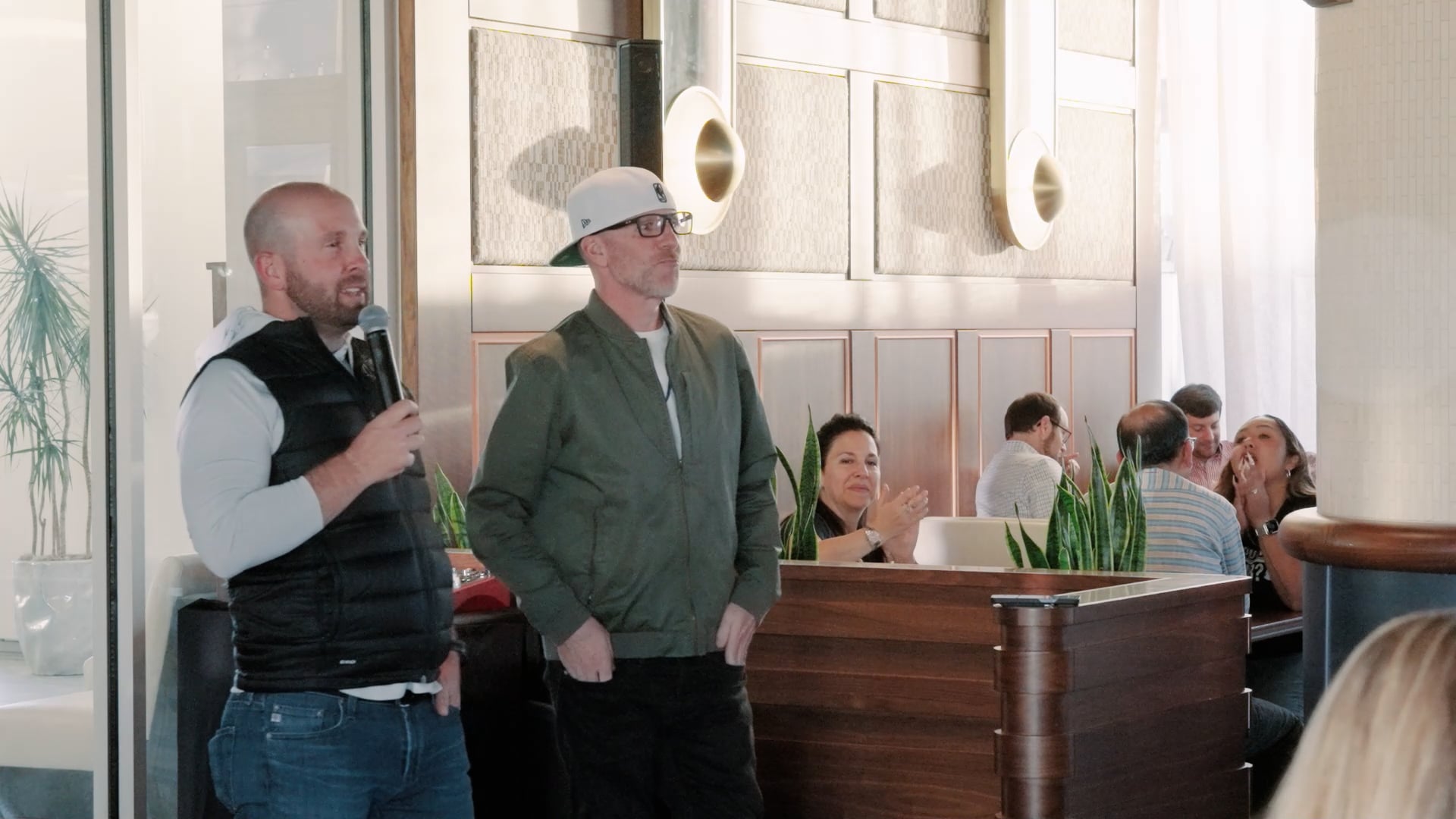
Clayton Collins of HW Media and Alex Bridgeman of the Think Like an Owner podcast unpack what changes after the platform deal: how to source add-on acquisitions in your vertical, when to keep a founder versus run a full transition, and why revenue quality, debt strategy, and management team depth determine outcomes. A candid look at entrepreneurship through acquisition seven years past close, with practical lessons on integration, chief of staff hires, and building leverage as an operator-investor.
Recent Videos
Transcript
**Alex Bridgeman:** I'm Alex Bridgeman, host of the Think Like an Owner podcast. It's a project I started in college in late 2018 during my senior year just to meet people who run small companies. Clayton hired me as a result of that podcast, so I'm happy about starting all that.
Clayton and I got to know each other about a month after last year's SMBash. We started chatting in March. We had a mutual love of media and data companies. I was pondering a media search, which in hindsight I'm glad I didn't do because there's so much I've learned in the meantime.
Our conversation today is going to focus on acquiring within your industry. Clayton acquired HousingWire in 2016 after a traditional search and then did two add-on media acquisitions. The most recent one I was part of last December was a data acquisition of Altos Research, which provides local market housing data. Going from a media business doing publishing to now media and data, and the flywheel between the two, has been exciting to dive into.
**Clayton Collins:** This feels like an incredibly full circle conversation. I had listened to Alex's podcast for several years before we spoke. About a year ago, I was at a conference in Boston with one of my investors and Alex hit my cell and said, hey, I'm thinking about searching for a media company to buy.
I'm seven years in since I bought my company. We've grown quite a bit and I've been investing more in the last several years in building the team around me to grow the business. We had been talking about hiring a chief of staff. Alex was asking questions about doing a search deal, looking at pretty small media deals. I said, Alex, can I twist your arm to join me for 24 months as chief of staff? You're going to see several acquisitions, you're going to work on sourcing, you're going to work on diligence. At the end of that time, go search or stay with us, up to you. It didn't take you but a few hours to make that decision.
**Alex:** It was pretty quick. From you calling me out of the blue while I was making lunch, offering the job, to signing was about eight days.
You mentioned an investor encouraging you to explore the chief of staff role. It's something I'd only really heard of from The West Wing or House of Cards. Now you hear startups talking about chiefs of staff, and it's becoming slightly more popular within search fund backed companies. What are your thoughts on what the role is meant to do?
**Clayton:** As our business has grown organically and through acquisition, every time we have excess margin or excess cash flow to invest in growth, I prioritized investing in another salesperson, another writer, another marketer. I probably overly delayed building out corporate functions and overly delayed building out support around myself to be more scalable as a CEO and able to work on more strategic initiatives.
I always thought, I can't spend the money on a chief of staff, can't spend the money on an executive assistant, can't spend the money on different roles on our finance team. I always prioritized putting resources as close to revenue as possible. But as we discovered our ability to create enterprise value through add-on acquisitions, my ability to operate the core business, manage 50 plus team members, and work on M&A was just killing me.
I had a lot more hair when we did our first acquisition seven years ago. In that time we've not only grown the business, but I've also had three kids. Life has happened. I was in full recognition that I needed support around myself to be efficient in sourcing deals, moving through diligence, and working with investors. That was the real decision to start searching for a chief of staff. Alex had the right skill set, the right interest. Listening to the podcast, you start to recognize he has incredible curiosity, which is really important in a chief of staff. You need them to ask questions, not just run a playbook, have a passion for understanding the business, and push the operator, push the CEO to be better.
**Alex:** A big part of my role from the get-go was focused on market mapping and looking at data companies and the landscape of housing data companies we could partner with or acquire. When you think about growth through acquisition, what are the reasons you might decide to acquire versus organic growth and hiring off internal cash flow?
**Clayton:** I'd answer this differently now than I would have when we did our initial platform acquisition. The term rollup gets thrown around a lot. We've done a couple of media deals, but we are far from a rollup play. Each of our acquisitions has been incredibly strategic, either adding a new audience segment, adding a new capability, or adding a new client segment that we've been able to scale and cross-sell against.
There have been some successful media rollups, but they haven't taken the complexion of what I'm trying to build with HW Media. They end up looking a lot more like media holding companies with distributed brands, distributed assets, teams that aren't consolidated and working together. That's not what I was seeking to build. Our M&A strategy has evolved as I've learned that about myself. We're not building a holdco. We're building a branded house media business. That takes a different approach. It changes sourcing. I can't just delegate deal sourcing to a corp dev team. I want to be intimately involved in identifying transactions and opportunities, and then have team members to help get to the finish line.
**Alex:** You talked about learning about yourself as a result of doing M&A more and more. How do you feel your personality or behavior around M&A has changed over time?
**Clayton:** Venturing into ETA, my wife and I were living in New York. When we acquired HousingWire, we moved to Dallas, Texas, where the business is based. For a few years, the mindset was, hey, we moved to Texas for a deal, all our family is in Florida, we'll be back in Florida before we know it. I learned a couple things about myself. One, I really enjoyed Texas. We put down roots in Dallas and decided to make a home there. Two, we had a bigger opportunity than thinking of this as a three to five year deal where we come in, improve operations, improve sales and marketing, grow EBITDA by a couple million bucks, and exit. We've set bigger aspirations. That's probably the thing that's changed most about my mentality.
**Alex:** Let's walk through the three acquisitions beyond HousingWire: Real Trends, Reverse Mortgage Daily, and then Altos.
**Clayton:** We actually did one really small one before Real Trends, a small reverse mortgage publisher we tucked in. No one ever sees the brand anymore, so I'd say successful on that front.
We acquired Real Trends in 2020. The idea culminated as we started to learn more about our audience and getting more audience intelligence on the core HousingWire business. We thought we were a mortgage publisher, and as we got to know our audience better, we realized 30 to 40% of our audience identified as real estate agents or brokers. We weren't monetizing this audience. They were coming and reading our content. We needed to figure out a way to serve this audience better and monetize.
I started market mapping the services and content businesses that serve the real estate agent and broker segment, and met the founder of Real Trends. We talked for 18 months before we got to the finish line. We started in 2019, planning to be in person in March 2020. COVID hit, and we decided it wasn't the right time. In March and April 2020, in some states real estate agents were deemed non-essential services and shut down completely. After seeing how the real estate market adapted to that short period of uncertainty, we got a lot more conviction on Real Trends and moved pretty quickly in the second half of 2020.
Real Trends brought in increased audience but also a new data capability. We sit on one of the largest databases of real estate broker, agent, and team performance information. We publish that through our own brands but also license it to other parties, and have a partnership with Dow Jones to publish that information in The Wall Street Journal, which has been a huge credibility boost for a small media company in Las Colinas, Texas.
Reverse Mortgage Daily was another relationship. There's a media group out of Chicago I've known since I acquired HousingWire, so four or five years at that point. They had an asset outside of their core focus. I got a text one Friday night: hey, you want to talk about doing a little carve-out? By the following Friday, we got a deal done pretty quickly. We actually got that one done the week after my second daughter was born. We had a COO at that point and he took it to the finish line for us while I was in the hospital and out on a very short parental leave. That was the first time I actually successfully delegated anything on corporate strategy.
**Alex:** When you look at a prospective target, what do you look for to figure out if this is a real opportunity or a waste of our time?
**Clayton:** We're looking for successful businesses, even for tuck-ins. I don't want turnarounds. I don't want to come in and fix somebody else's problem, even if the price is right. The opportunity cost is that our time is limited. I don't want to mess around fixing somebody else's mistakes. I'd rather pay a fair price and get something on the right trajectory that we can supercharge with sales and marketing and a better digital strategy.
Size is another factor. We get a lot of outreach and teasers from bankers for tiny tuck-ins. Business media is filled with tiny media companies with likely six-figure revenue profiles. It's not worth the time to fight for some of those small acquisitions. We've done deals ranging from half a million in enterprise value to over 10 million. I'll err toward the larger side every day of the week. I'd rather have to go raise capital than do small tuck-ins.
**Alex:** What other ways has your bar for acquisitions increased over time?
**Clayton:** An understanding of the management situation. With our platform acquisition, we helped the founders transition out. The CEO was with me for all of a month. He had grinded hard for a while, and after the acquisition really wanted to get back in shape. He took an Olympic weightlifting class and dropped 225 pounds on his right foot two weeks after the transaction. The doctor wanted him in bed with his foot elevated above his heart for four months. I said, give me the keys and I'll see you later. His co-founder did stay with me for nine months.
Our next two tuck-ins were a retiring owner and a carve-out. We knew we weren't getting management on either of those. Up until December of this year when we acquired Altos, all the deals we had done were through the lens of management transition, knowing I had to lead the business. With Altos, the founder stayed around because we wanted him. We pursued the deal in a big part because of the founder, and he's running that business as a business unit inside our company. He carries the title of president of that business unit. That's been a wildly different dynamic, a great one nonetheless, but wildly different from doing founder transition or carve-out versus keeping a founder around with significant skin in the game.
I wouldn't say that's something I screen for, but something I want to understand fully upfront. I wouldn't want to continue an M&A strategy where we attempted to keep every founder around. That would be noisy and probably not the right management team for what we're trying to do. But situationally, with Altos, an incredibly important component.
**Alex:** The team from the business you're acquiring is going to come over. How do you evaluate that team before acquisition to figure out if it's going to fit culturally?
**Clayton:** Since we're running an acquisition strategy in a tight vertical, we are housing news and information. We're not doing any deals with companies I don't already know. I've known Mike for six years now. I've reached out to him several times over the years. We had him join HousingWire as a contributing writer, so he was already blogging for us and contributing content. Our team started using their data product. I got a full glimpse into what he was about, his style, the team's style, before we were in acquisition talks.
I can't say it was 100% strategic. Some of it was fortuitous. But that is a thousand percent a strategy I'm going to carry forward: look for ways to do business or partner with the companies we intend to acquire down the road at an earlier stage. That doesn't work out of the gate in search. I couldn't have done that in 2016 when we acquired HousingWire. But now that I have a platform and I'm building in a vertical, there's no excuse to be meeting somebody for the first time and going right into deal conversations.
**Alex:** When you think about building future relationships with prospective acquisitions, what activities are required?
**Clayton:** The podcast is funny. I host a podcast called Housing News. There is no C-suite executive who turns down an invitation to go on a podcast and talk about their expertise and company. Podcasts are incredible door openers. I've built a lot of relationships by having guests on our Housing News podcast. It's great content, but also an awesome networking tool.
Outside of industry involvement, I'm involved in our Mortgage Bankers Association. I get to know other operators, acquisition partners. That's not even the main motivation. Most of it is biz dev. We're still running a business. I need to sell and see our clients. Industry involvement matters from that perspective, but it can carry over into deal sourcing and M&A. Getting involved in other executive organizations like YPO and EO has been a door opener and helps you get to know people in related areas and improve my network in Dallas, which is kind of an adopted hometown.
**Alex:** How would you design a complete disaster acquisition that would go horribly wrong?
**Clayton:** There are two different train wrecks. The last panel had a lot of talk about leading a team and leadership. That's probably one of the most overlooked components of early stages of ETA. The skill set of identifying an acquisition, closing an acquisition, and successfully leading a company are very different skill sets. If you don't understand that, you're coming in on day one and you have a seller bringing the team together either in person or on Zoom saying, team, it's been wonderful working with you for the last 14 years, please meet Alex, he's now the owner of your company and your new CEO. They're scared to death. You're fooling yourself if you think otherwise. Keeping the confidence of employees as you transition into leadership is one of the most important and under-discussed components of platform ETA and tuck-ins.
We've become really strategic about how we announce acquisitions, how we integrate team members, how we move them onto our benefits plans. Be 100% certain you cannot make their benefits or comp anything less than it was before. We keep getting better at retention and making sure that when we bring people into the organization, they stick around and are happy about it.
A train wreck would be not being prepared to lead the organization you're stepping into and having heavy attrition in important roles, whether sales, client success, or product. I'm constantly thinking about how we avoid an HR and people strategy train wreck on an acquisition. In the search deals I've invested in, that's the biggest thing I talk to searchers and new CEOs about: their leadership style and ensuring teams are confident in their leadership ability.
The second train wreck is not being honest with yourself about what you want out of entrepreneurship. I was pretty good about defining this to myself early on. Now seven years in, I never wanted to acquire a job. Success to me looks like being a CEO that can focus on capital allocation. We have excess cash, are we doing dividends, acquisitions, investing in organic growth? Then having a team that can execute on those strategies. If I actually get to drop all responsibilities and think about capital allocation all day long, I'm a happy guy.
A train wreck for me would be acquiring an incredibly small business that required me to wear 10 hats for five years, with the opportunity cost of not being able to focus on growth because I'm too focused on managing dumpster fires with HR or upset clients or trying to track down receivables. I want a business that has the scale to hire a VP of finance, VP of HR, and VP of sales very soon. Even on our platform deal, HousingWire was a pretty small business, sub $5 million in revenue, 14 employees when I joined. I spent a lot of time doing functions I wasn't most prepared to do. I probably wasted a few years trying to be an HR expert, an IT expert, building a sales function, when I should have invested faster in VP-level talent. A train wreck would be not having enough EBITDA, not having enough seller's discretionary earnings to surround myself with a management team in the first 12 to 24 months.
**Alex:** A lot of other panels today have talked about SBA debt and higher amounts of leverage. None of the deals you've done have used debt to that degree.
**Clayton:** I levered three times out the gate. Not SBA, but conventional financing.
**Alex:** How has your debt thinking evolved? With Altos, that wasn't a major component.
**Clayton:** That's another part of being honest with yourself about what you want out of a deal. I've learned I can run a business at a certain margin profile and grow it at a certain growth rate that's lower. I've been involved with businesses that run at 40% margin profile, but you're running so damn lean you can't grow more than 5 or 10% because you can't allocate resources into marketing and sales. Now I'm learning I can run at a slightly lower margin profile and grow at a faster rate. The limiting factor, if you want to choose between those two scenarios as an operator, is debt. Can you afford to spend down EBITDA to make important hires and invest in sales and marketing?
**Alex:** Any last pieces of advice for CEOs who want to acquire in their industry?
**Clayton:** Someone asked me earlier, I did a traditional funded search. There are plenty of events around the Stanford GSB search model in that community, and this community has a different flavor. They asked why I'm here versus there. I've stopped defining myself as a searcher and started defining myself as an operator of a media company in the housing industry and a data entrepreneur in the housing industry. Most of that is in my head, but when you talk to people, whether clients, prospects, or potential acquisition targets, nobody gives a damn that you run a search fund. Nobody gives a damn that you know about SBA. They care that you're good at the trade you're in.
There's a point where you've got to shed that ETA exterior and be the operator in the business you're in. Shedding that self-definition that no one else ever gave a damn about, but I did, was probably one of the more influential points in being able to influence outcomes with organic growth, with new clients, and how people perceive me in the vertical I operate in. With acquisition targets, it's confusing as hell for someone you're tucking into your business to want to understand the search fund model and Google it and read the primer. They don't need to know that. They need to know you run a successful business in the vertical you operate in. How you position yourself, how you tell your story, is incredibly important as a searcher and as an operator at any stage, whether you're six months or six years or 16 years in.
**Alex:** You've done both founder transitions and now keeping a founder. Direct thoughts on pros and cons of each?
**Clayton:** We're four months into this Altos acquisition. The founder who joined our leadership team, we have not had any major confrontations or issues. But it totally changes the management style and dynamic when you have someone who's rolled a big chunk of equity, taken a big piece of liquidity, and still has their core team reporting to them. We have major decisions to make in the next six months around brand alignment, team alignment. We're not trying to build a house of brands or a portfolio or a holding company. We're building one business. Having a founder in the organization who built the brand, built the website, built all the product, there are going to be tougher conversations to come. I can feel the marriage to a lot of the decisions made in the last 16 years.
When I closed my first deal, my investor told me, don't mess it up. I'm taking that mentality on this one. We're four months in, trying not to mess it up, but we have major decisions to make to achieve what we want in integrating this data business into the media business.
**Alex:** It's hard having a founder who's built this business in their own image for 16 years. That's a lot of habits, branding, marketing, and thought process to change.
**Clayton:** Even as chief of staff, there's stuff you came in like a bull in a china shop and said, let's change this now. I'm like, Alex, relax, man. We're in this for the long term. We don't need to reinvent the compensation model in the first 30 days after an acquisition. Some changes will come in time. That's the thing you and I talk most about in our chief of staff and CEO one-on-ones: Alex, document the ideas, get them in your notepad, get them in a Google Doc with me, but these things will come in time.
**Alex:** I have a lot of Google Docs ready. A big thing for me was the empathy part. You've done four acquisitions. I've been part of the Altos one and will likely do others. This might be Mike's only acquisition in his life. Terms, documents, discussions with lawyers, earnouts, rollover, may seem commonplace and standard to us, but he may never have seen these before. There's a level of empathy I had to learn in those interactions with Mike.
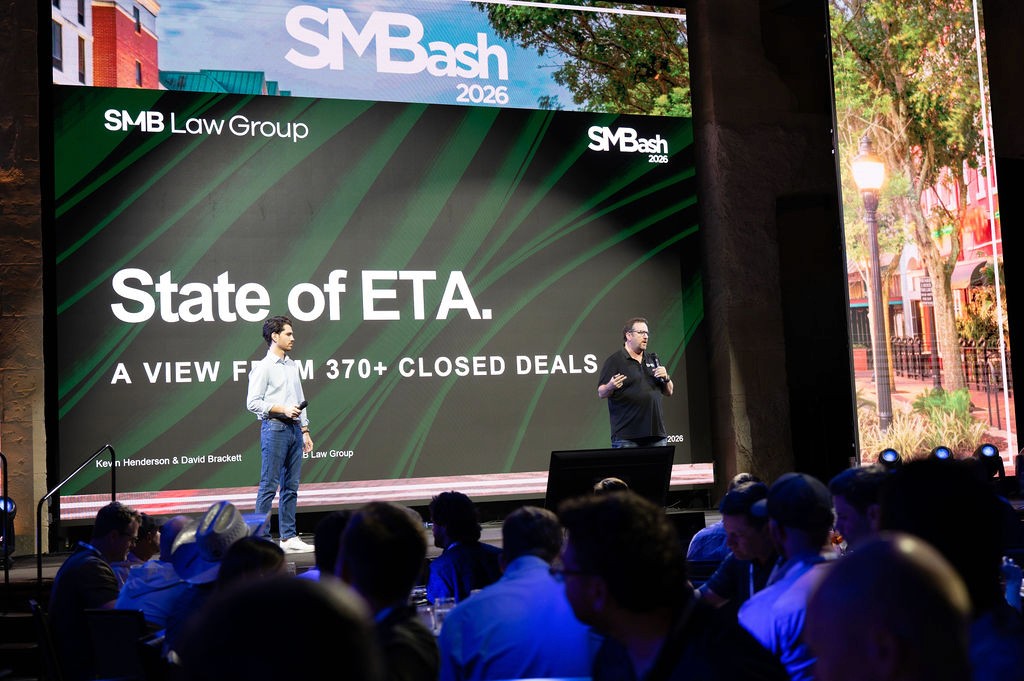
**Clayton:** You also have to learn it externally on deal teams. After the legal session, I joked with Kevin that I just went through a transaction lawyered up with a white shoe law firm, and I've had sellers working with their cousins or brothers-in-law. We have put deals at risk by over-lawyering at the wrong times, over-docking, creating deal structures unnecessarily complex. If you have a legal team or QoE team or internal management team who's overeager on deal process, it could put stress in the relationship.
On structural items, in the four transactions we've done, we've used rolled equity, seller notes, and earnouts. Each of those had a special place in those deals, and each worked in the respective scenarios. I don't want to say I'm anti-earnout or anti-seller note or anti-rolled equity. There are scenarios where all three of those would have sucked in our tuck-ins, but used at the right time, really appropriate.
**Alex:** How do you work through that with the seller? Mike has been a CEO for 16 years and is good at holding his cards close. You had to build trust so he could be more direct with you over time.
**Clayton:** In deal making, the less change there is in deal structure, the more transparent you are along the process, the better it goes. But there's always stuff that comes up in diligence and in capital raising activities. That was a deal I raised equity on, and you've got to herd the cats of investor interest with different structures they want to see. With Mike, we didn't hit any issues on structure. If he was ever stressed in a deal, it was because something was changing. The important part is communicating why something is changing structurally. Why are we pivoting from a deferred payment structure to an earnout, from an earnout to a seller note? Being really clear about the risks identified in diligence and why this deal structure makes sense.
**Alex:** You wanted to avoid a business that was too small to build a management team around. Tell me about struggles you've seen with peers who've bought businesses too small.
**Clayton:** I'm on the board of a search deal where the CEO is US-based and working night hours because he needed to offshore a team to Australia. He should not be doing that. He doesn't have enough resources, and now it's time but EBITDA is too tight to hire the ops team he needs to lead that process. The company's doing great, it'll be a successful deal, but it was a small deal. I'm seeing a CEO push himself to a point where it's putting stress on health, social life, and family. I wish he was working East Coast hours and not the hours of his offshore team in Sydney.
**Alex:** Can we hit on quality of revenue?
**Clayton:** Our platform business was all advertising revenue. I liked that for a while, then we bought a software business. I'm learning about the differences of recurring revenue and revenue quality. We have four primary revenue streams now: advertising, events, data licensing, and content subscription. Recurring contracted revenue gives you a whole new level of confidence in growth and confidence in investing in the business. I don't know if I knew what quality of revenue meant before I had a few different revenue lines of very different qualities. I'm loving the evolution we're taking now, going to more recurring contracted revenue versus the highly repeatable model I spoke so highly of for so long but have learned is not quite as repeatable as subscription.
**Alex:** Have you seen talent requirements with CEOs change as the company grows?
**Clayton:** That comes back to size. We're at a point where some bigger stress points with people on our leadership team are the challenge of going from a role where you wear five different hats to a role where you need to specialize. We have people who were on our team at 15 people, who were involved in every aspect of operations, and now feel left out or not involved in decisions or not in the flow of information. Part of that is by design. You need to create room for people to specialize and become incredible marketers or salespeople and not have to wear 12 different hats. That's the current space we're in, the evolution of talent. Some people we brought along and specialized, going from the fulfillment of wearing multiple hats to fulfillment as a specialist. With others, we haven't made that successful evolution and had to hire up at the VP level.
**Alex:** What have you learned about taking great individual contributors and getting them to become managers?
**Clayton:** It's a really situational question. Everyone's heard the adage of not making your top salesperson your sales leader. I've seen that done successfully and I've seen it fail miserably. Across the organization, when people ask about the transition to management, we're at a point 18 months in of having a director and VP of people, our first HR strategy. Now I'm not the only person having career path conversations. Developing thoughtful career paths and communicating that to team members has probably been one of the most impactful things we've done in the last 12 to 18 months.
Four years ago we had a massive growth year and a young woman on our team was promoted four times in a year. She went on to lead our customer service and client operations team in her early twenties. We celebrated that a lot and told that story in the hiring process, and it became an expectation. Other early career people joining said, I wasn't promoted this year, why aren't I doing what she did? They think there's a flaw, that the organization isn't looking out for them, or something is wrong with their performance. It was just super situational. I've learned the trap of celebrating outcomes that can't be repeated and the message that sends.
**Alex:** Chris Powers and I talked recently in Dallas about how they structure promotions. They have a manager track and a totally separate one for individual contributors, where you can progress in your career while remaining a contributor.
**Clayton:** We're working on that right now. We need to create a path where people can have significant income progression without moving into people management roles, paying the hell out of people who kill it as individual contributors so they don't feel a temptation to feel that success means leading a team. The result of that trap is people think career success revolves around how many direct reports they have. There's kingdom building, and instead of coming and asking for a bigger marketing budget, they come and ask for a marketing specialist. What does that do for us? Wouldn't it be better if you had a small team and deployed money into marketing campaigns and social media acquisition? That's been a major executive team talking point this year, especially as we focus on building a much leaner and more efficient organization. We can get a lot bigger without adding headcount. I think we can get a lot bigger while reducing headcount.
**Alex:** Let's open up for questions.
**Clayton (on integration):** Our platform acquisition was 2016, and the style was bring everybody into a conference room together, be there physically in person and be confident. Now we're a distributed organization, and that drives me nuts. With our Altos acquisition, we have team members in the Bay Area, UK, and India. Bringing that team together is not an option. Now I have to figure out how to digitally on Zoom and Slack and one-on-one phone calls make people feel the warm and fuzzies.
It's super situational. If you're buying a tree trimming business and can actually bring the crew together, that's a different approach than buying a digital business with a distributed team. One way or another, it's incredibly important to get one-on-one time with key leaders or all employees depending on the size of the company. Ensure there is no quiver in your voice, no fear, despite the fact you just bought a business, you might be the CEO for the first time, you might have a personal guarantee, you might have just raised a ton of debt and equity. You have to be confident in painting a picture that there's going to be opportunity for this team, not just stability but opportunity, because you're going to run the company as well or better than the past CEO. Give them credit for everything they've built, but create some promise that you're in this to grow and reinvest, not just pull all the cash out.
**Clayton (on his background going in):** I'm speaking with seven years of experience. This conversation would have been very different in 2016. I was 31. I hadn't been a CEO before. I didn't know exactly what part of entrepreneurship I'd find most fulfilling. I came from a banking and financial services background. I knew one of my competitive differentiators would be the ability to identify, negotiate, and close acquisitions. I knew from the beginning that M&A would be part of the story. I don't know if I realized entirely how stretched my time would be leading a 14-person company, and how the business we bought had outsourced to a local CPA firm doing month-end close and financial reporting, how handicapping that would be for not having a partner for modeling and financial diligence, and how important starting to build a finance function in-house would be.
I spent three years rebuilding the core. I've turned over 85% of my initial team. I think three people are with me today who were with us when we bought the first business in 2016. They're rock stars and we found the right place for them, but we built a management team essentially from scratch. It doesn't resemble what we bought in 2016. Now we're at the next evolution. The beginning of this year we went to a business unit structure. I have a GM running HousingWire, a GM running Real Trends, and a president running Altos. We moved marketing, finance, people, and product to the corporate level. My direct reports are VP of finance, VP of people, VP of product, growth marketing, and the three business unit leaders. We're only three months into that structure. It's been freeing and powerful for me, but there are some challenges in potentially siloing our teams more than I initially anticipated.
**Clayton (on equity dilution):** Our first two acquisitions we structured with cash and seller debt, no dilution, no additional senior debt on the balance sheet. Last acquisition, we raised equity to get to the finish line and had some rolled seller equity. That was the first deal we'd done six years in, the first time I had any equity dilution. Going back to my point on revenue quality, I'm now very willing to raise more money, even if it means dilution, to buy higher quality business lines and invest in data and recurring revenue businesses. EBITDA is approaching a place where we are talking about big multiple outcomes. I'm feeling like I can't be stingy with the equity. I need to raise the money I need to scale this company as fast as possible. We can't be wimpy about it.
**Audience:** What's the better business, a podcast or a newsletter?
**Alex:** Podcast by far. It's so much more natural. With the print magazine I don't run anymore, the process of creating an article was an ongoing interview with somebody on the phone or over email, just clarifying things. It might take four or five months for that interview to get fully through our process and get published. I love the ability of a podcast and the voice to have that emotional inflection. There's a lot more you get listening to somebody than reading something they wrote. It's so much more simple from an operations standpoint. It feels like the most fun, scalable, and interesting niche business to run.
**Clayton:** I remember your first podcast with Trish in the mall.
**Alex:** That came full circle. The mall I recorded my first podcast in with Trish, you can hear people pushing their chairs back and kids screaming in the food court. The building is the same building where Pacific Lake's office is. I went back to Pacific Lake as part of the chief of staff program because Clayton listened to the podcast and hired me and brought me into that program. I walked into the mall and said, this is super familiar. There's the Blue Bottle Coffee, there's the food court that was quiet enough we could record in. That was a cool full circle moment.
**Clayton:** I don't know if you realize, but we have a lot of employees in the 25 to 28-year-old range. It's funny for me to hear how intimidated people are by you coming in as chief of staff and running a six-figure side hustle. They're like, who is this guy?
**Alex:** Our new executive assistant said, I'm so excited to meet you. I said, what do you mean? It's not that impressive. The chief of staff role is a funny title for a role that helps on projects. I don't have an MBA, I'm not a lawyer, I don't have any special credential that would get that kind of response. That was surprising to me.