PLAYLIST PRESENTED BY

The Legal Playbook for ETA Deals: Asset vs Stock, Reps, and Indemnity
Description
Eric Pacifici of SMB Law Group breaks down the legal mechanics of entrepreneurship through acquisition deals, from LOI through closing. Covers asset vs stock structures, the SBA rule changes driving more stock deals, reps and warranties, indemnification against a promissory note, QSBS, 338(h)(10) elections, and the legal traps that catch first-time searchers and operators.
Recent Videos




Transcript
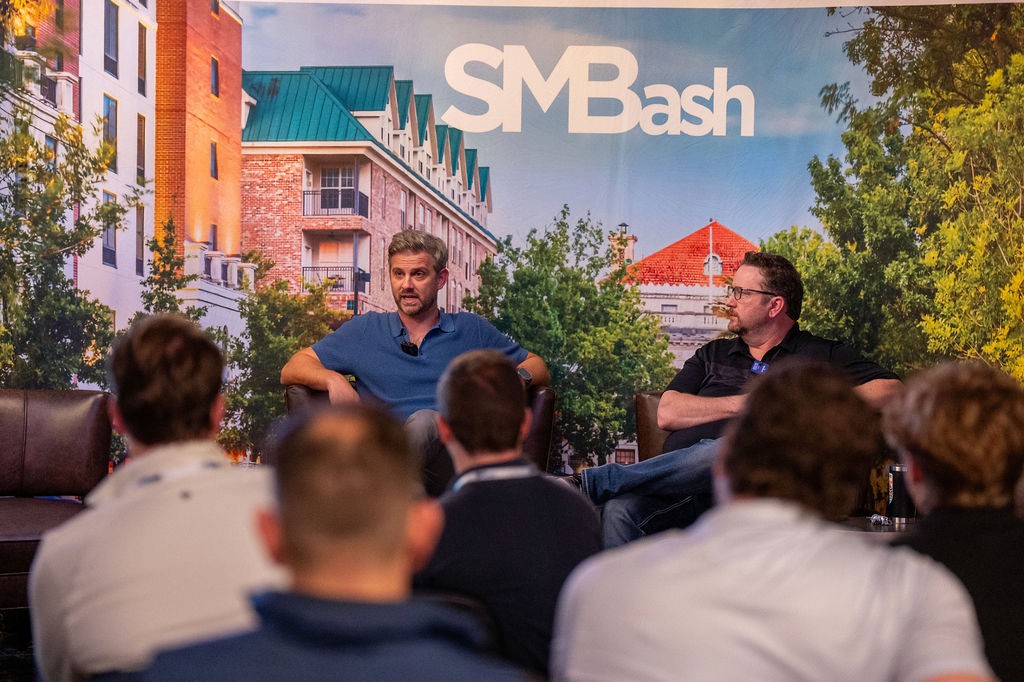
David: Eric has been part of some of the world's most prestigious law firms, working with top clients like Amazon and the Dallas Cowboys. A couple years ago he came down market to the SMB world and co-founded SMB Law Group with our partner Kevin, who you saw on stage earlier. Eric also does some investing and other tangential work in the SMB space. We're really excited to have him here presenting on SMB legal. Eric, take it away.
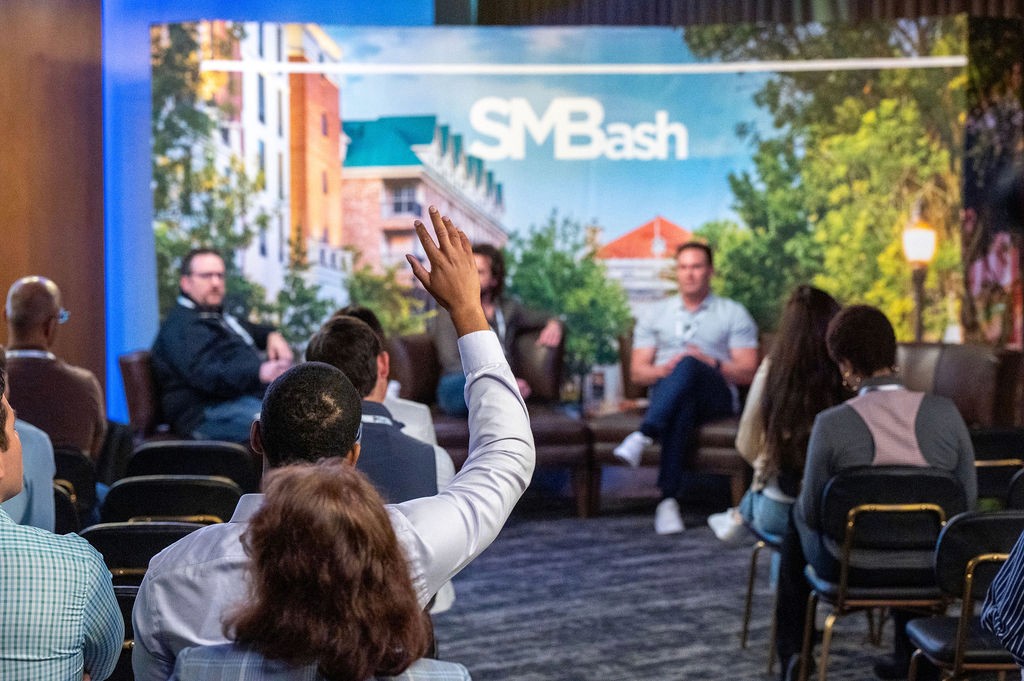
Eric: Thanks David. It's a pretty intimate room, so feel free to ask questions as we progress. Quick PSA, there's a really good presentation happening right now with Denise and Evelyn on the main stage. They bought a business with us a few years ago and had significant challenges post-closing with a seller who was competing. So if anybody wants to leave now, feel free, I won't be offended.
My name's Eric Pacifici. I'm one of the founders of SMB Law Group. We're a boutique transactional firm that started operations in May of 2022. We're all former big law trained, top 14 educated attorneys who decided to come down market and do smaller SMB or premium main street deals.
We came down market, fell in love with the space much like many of you, and started networking. Ultimately a lot of people came to us saying, "Hey, we need a good lawyer for a 2, 4, 6, 8, 10 million dollar deal, who do you know?" When we went out to find people for those deals, we realized it really doesn't exist. You've got high quality big market attorneys that don't want these small transactions, or you've got main street lawyers who will take your deal but aren't well equipped to do it. In our first full calendar year in 2023, we did about $950 million in total enterprise value acquisitions, and we've done well over a billion dollars in closed transactions since.
Classic disclaimers: I'm an attorney, not your attorney. Consult a good attorney. Everything we talk about today is educational and informational. We're licensed across many states and do transactions nationally subject to ethics rules.
**Transaction Overview**
The number one question we get is how does the process work? At a high level, you're going to search for a business, talk to brokers, see what's listed, and submit an LOI. You'll match with a bank, do your due diligence, and work through a purchase agreement.
**What Does a Lawyer Do?**
Number one, we're here to manage legal risk. We see a lot of transactions and we get the question, "Eric, should I buy this business?" We are here to help you mitigate risk, quarterback the deal, negotiate documents, and handle due diligence, but we're not here to vet the transaction. We're here to work with the other players: the seller's lawyer, the bank's lawyer, the landlord's lawyer, the franchisor's lawyer. What we don't do is valuation or business risk assessment. We're one of the only people in the deal incentivized to tell you the truth. We're not there just to get your deal closed like your broker is.
**Should You Form a Search Entity?**
You can form an entity. It's low cost, a couple hundred dollars per jurisdiction, and gives you a level of professionalism. Operating under "Car Ventures LLC" looks more sophisticated than signing things in your own name. But you don't have to. The legal risk for not forming an entity is limited. You'll sign a lot of NDAs, and if you sign LOIs and don't consummate the deal, there are some legal implications. If you're signing those NDAs and LOIs in the name of an entity instead of individually, in the event of a lawsuit, the other party can only access that shell entity and not your home or personal savings.
**NDAs**
You're going to sign a lot of NDAs. Read them. Don't spend a ton of time negotiating them unless something is really material. If there's a non-compete that says you can't work in landscaping outside of this transaction for the next five years, you'll want to cross that out. Anything short of that, be diplomatic at the NDA stage. The most important thing with main street deals is to be diplomatic with the sell-side representation. Brokers get hundreds of inquiries on good businesses, and if you look like a pain, they'll set you aside.
Audience question: Have you seen anyone actually try to enforce an NDA?
We haven't seen any NDA enforcements. I don't even know if it would be enforceable on something like a circumvention clause saying if the seller doesn't pay broker fees, you have to pay them. Spend time with it, save it, know what it says, look for big picture stuff, but actually marking it up and scratching things out is probably a waste of time.
**Legal Diligence**
Process-wise, you sign a non-binding LOI, then you start legal diligence. There are three buckets: business diligence (which you'll do), financial diligence (your QoE, hire a QoE provider, don't DIY), and legal due diligence.
Most of these deals are structured as asset deals. When you buy assets, the business is a machine made up of contracts, people, and goodwill. You take it apart and move it to a new entity. When you do that, you sever off 90% of the historical liability. All the dumb stuff the seller has done is left behind in the prior business. So you don't have to diligence the hell out of the business when it's an asset deal. If it's a stock deal, you have to turn over every stone because you're buying the actual business and inheriting all that historical liability.
We start the deal by doing a short form legal due diligence request list. Diligence in these deals is delicate, you don't want to over-diligence and upset the apple cart. Even the short form list has 20 categories: governance, employees, contracts, suppliers, vendors, everything.
Audience question: If you're buying assets and cut off most liability, what are you doing in legal diligence?
In an asset deal, structurally 90% of the historical liability is severed. I say 90% because there's a few categories like tax, employment, and employee benefits where you have aggressive state agencies. If you buy a business where they haven't paid income taxes in a decade, the IRS will probably still come after you under the doctrine of successor liability. Look closely if the business involves environmental, employment, or tax issues, especially in states like California or Colorado.
With the asset structure, if there's a default under a contract pre-closing, that default stays with the seller. The third party comes to you and says, "Pre-closing you did X, Y, and Z, we're suing you." You say, "I bought the business in March, this is a completely different business, take that lawsuit to the seller." With a stock deal, you inherit it.
We've seen a huge uptick in stock deals because of changes with SBA requirements. A few years ago, buyers loved stock deals because they're easier administratively. With an asset deal, when you close, you're on hold with Comcast for three months trying to get service moved over. With a stock deal, everything stays in place. But buyers came back two years later saying, "If we're going to do a stock deal, we need a 25% discount on the purchase price" because of the additional risk.
Why would you ever do a stock deal? If taking that machine apart is too hard or too risky. A great example: a physical therapy clinic where 70% of revenue came from payor contracts with Blue Cross Blue Shield. The Blue Cross Blue Shield contract said if you sell and assign the contract, you need their approval. The seller said, "We're not doing that. They'll say no, and it injects too much risk." So your options are to buy as an asset deal and take that risk, or buy as a stock deal. In that instance, you'd buy as stock.
**Reps and Warranties / Indemnification**
No matter how much diligence you do, you're not going to find everything. How do you make up for that as a buyer? Reps and warranties and indemnification.
Reps and warranties are statements the seller makes about the condition of their business at the time of sale: it's properly formed, they own it, they have authority to sell, the contracts have no breaches, employees, environmental, tax, brokers. This is where you'll run into trouble if you use templatized stuff from the internet. If you hear nothing else I say, hear this: this is the only thing that's going to save you if after closing there's a problem.
Real example: you show up, buy the business, and the trucks aren't even street legal. The employees say, "The seller said you'd fix all these trucks." Now you have an additional $100,000 in trucks to buy. You turn to the rep on the assets, that the assets are in good working order and sufficient for the purposes of the business.
The seller will try to carve out these issues. If they have good counsel and they're prepared, they'll go to that sufficiency of assets rep and say, "We're not repping that the assets are in good working order, you're taking them as-is." They'll also try to schedule all breaches in advance. If they disclose during the process and schedule that those trucks are an exception, after closing you cannot bring an indemnification claim for those trucks. This is the most important part of the negotiation.
**Indemnification**
Indemnification is a contractual dispute resolution mechanism. Without it, you'd have to go to court and prove up disputes. Very expensive. So you hardwire an indemnification provision into the contract that spells out what happens. You run the rep breaches through the indemnity mechanism and follow the path to get your money.
Even with tight reps, getting money from a seller isn't easy. Seller takes the purchase price, pays off their mortgage, and is on a catamaran in the middle of the ocean. You have a great contract but it's not worth the paper it's printed on. The most common way is a promissory note. Some portion of the purchase price should be in a promissory note paid over the coming years, and you set off against that note. Trucks were $100,000, plus inspection costs, plus legal fees, all written down against the note.
In larger m and a you often have an indemnity escrow. That's not well accepted in main street m and a; sellers demand it be done against the promissory note, not in cash. Really important that you have a promissory note in your deal.
Audience question (Simon): Do you have other examples of fundamental representations that someone might breach?
It extends to everything in the contract, including covenants. A covenant is a promise to do or not do something. The biggest is the non-compete. If they compete post-closing, you turn to indemnification.
A real example that turned into a lawsuit we won: $10 million purchase price, B2B sales business selling primarily through Amazon. The Amazon account had 4,500 five-star reviews, enormously important. But it was in the seller's personal name. He said, "I tried to talk to Amazon consultants, I gave it the old college try, I can't transition it. I'm just going to shut it off." We said, "You cannot do that. We purchased that Amazon account."
In an asset deal, you're buying everything. Your contract should say you're getting all of the assets of the business except for what's explicitly carved out. A trap sellers' counsel will try to set: itemizing or scheduling what you're buying. You don't know this business; last thing you want is to walk through the factory figuring out what you need. You're getting everything except for what they tell you you're not getting.
Our contract said we're getting everything related to the business, whether held by the business or the individual, in the name of the business or not, tangible or intangible, now existing or not. The seller's lawyer, an old boomer guy, said, "I've never seen a contract where assets held by the individual are purchase assets." We went back and forth, went to court, and won.
It also touched the further assurances covenant: when they sell you the business, if any components won't transfer, they continue to do what they need to make sure you get the benefit of those assets, or create an economically feasible relationship to support those assets.
Audience question (Sean): What about representation and warranty insurance at this lower middle market level?
Rep and warranty insurance is a popular mid-market product. Instead of recovering against the seller, you recover against an insurance policy. Everybody loves it. We haven't found a good analog widely used in small business m and a. CFC is developing a product. They've had a sell-side product for two or three years and have just released a buy-side product specifically for the SMB market, anything below about $20 million.
This is why you hire a good lawyer. Post-closing, when a buyer calls and says, "I have these issues," I go right to the purchase agreement, right to the reps, take the facts, and see if we have a rep to cover it. If you don't, you're out of luck.
There are mass-produced document companies. One in particular has buy-side templates for $8,000. Their templates don't have survival for their reps post-closing. You have great reps, but they expire at closing. Reps should survive 12 to 24 months at least for lower priority ones, and statute of limitations basically forever for higher priority ones.
A trick: there's a well-worn path for what reps should survive and how terms should play out. Most lawyers in this space don't know m and a well. You can get really favorable terms. With ordinary reps like sufficiency of assets, you can try to turn it into a fundamental rep. Instead of surviving 12 to 24 months, it survives five years or statute of limitations. Really important in stock deals. We have a roofing business right now with a 10-year statute of repose and five-year automatic warranty in Florida on roofing work. In a stock deal, all that warranty stuff is yours.
**Asset vs. Stock Default**
Audience question: How do you know whether to default to asset or stock?
Always default to asset. The marketplace was 90/10 asset deals. Two years ago, the SBA changed rules on partial rollovers. Up until late 2023, you had to buy 100% of the business and the seller had to leave (could consult for 12 months but not employment). The SBA changed that, you could buy less than 100%, but it had to be a stock deal. We saw an explosion in stock deals and went from 90/10 or 95/5 to 60/40. They've now changed those rules so you can do the rollover as an asset deal.
In your LOI, default to asset deal with language that says if we discover reasons we'll flip to stock. Brokers will often tell you upfront if a stock deal is necessary, like the Blue Cross Blue Shield situation, or for tax purposes. The biggest tax reason is qualified small business stock (QSBS). If you're not familiar with QSBS, Google it. Powerful tax strategy clearing up to $10 million in capital gains, but you have to sell as a stock deal.
Audience question: Are sellers giving discounts on stock deals?
Not really, unless you find off-market deals, which are very risky. But you can do tax strategy. In an asset deal, you get a stepped-up basis in the assets. In a stock deal, you inherit historical depreciation and amortization. You can make an election in a stock deal to have it treated as an asset deal for tax purposes, called a 338(h)(10) or F reorganization. That should be market, but it has to be in your LOI upfront.
Practical tip: make sure the seller appreciates their tax considerations early. Too many deals are 100 days in, 15 days pre-closing, and the seller talks to their CPA and realizes their $6.5 million purchase price is actually $3.7 million net of tax and broker commission. They suddenly don't want to do the deal.
Audience question: For a C corp, how do you structure to get QSBS advantage?
QSBS has to be original issuance. You start a C corporation, issue stock, start a five-year timer, and it only qualifies for certain types of businesses. If you buy an existing C corp, I suspect you'd need to move the business out of that existing C corp into a new one.
Adam Webster (audience): I'm not an m and a tax guy, but my understanding is there are ways to do it, but it has to be specifically and intentionally structured at the time of the transaction.
Sean (audience): What about deferred sales trusts?
It sounds too good to be true, but evidently it's been audited 50 times by the IRS at the federal level and 30 times in California. The idea: when selling, you first sell to an intentional grantor trust. The trust takes ownership and you purchase from the trust. Proceeds go to the trust. Only when proceeds are withdrawn and distributed to the seller do they pay taxes. I'm the newest member of SMB Law Group and I use it in my LOIs for businesses I'm acquiring.
Anytime you can help the seller tax-wise, that's a good way to make sure your deal closes. Especially with rolling equity, anytime you roll equity they become your partner, and you don't want a marriage on a bad foundation.
Audience question: This QSBS only works if it's a C corp?
Correct. If buying an LLC, it would not be QSBS eligible unless they made a C corp election.
Audience question: How do you ethically test that early in the deal?
In an LOI it says it's going to be an asset deal, and you encourage the seller to understand the implications. If I were buying tomorrow, I'd want the seller to talk to their CPA before I put down a deposit with the lender, before I'm doing $25,000 of QoE, before I'm investing meaningful money in legal. I'd backdoor that through the broker.
Audience question: On the lender side, you've got bank debt and seller debt. How does the intercreditor subordination work?
When you underwrite upfront, the bank tells you what promissory note terms you need from a cash flow perspective. There has to be subordination of seller debt to bank debt, and that takes the teeth out of the seller debt meaningfully. There's a standard SBA subordination agreement. The vast majority of these businesses won't sell unless they sell on SBA debt. SBA creates the liquidity for the whole marketplace. I tell sellers: "This isn't a buyer problem, this is a problem with your business size. If it were bigger and the buyer could get conventional debt, you'd have leverage."
The only time the SBA lender cares about offsetting against the note is if it's used for equity injection. With an SBA loan you put down 10%, but you can reduce to 5% if the seller does a standby note (5% deferred for 24 months or 10 years). If the bank qualifies that for equity injection, some institutions say you cannot offset against that equity injection note. That's a trap. Hire a lawyer who doesn't know this and you'll get deep into the deal thinking you have an offset, then the bank's lawyer tells you at the three-yard line that you don't.
Final audience question: On the warranty issue, customers don't get the warranty on the roof if the business is sold?
They can recover against the seller, but the seller has probably emptied that entity. Recovery against a shell company. State statutes govern the 10-year repose, and there's the doctrine of successor liability. That's why I said 90% of the time it's separated. That 10% is the law saying we care so much about environmental, tax, or employment that we don't care about your deal structure.
David: Thank you Eric. Eric will be around for the rest of today.