PLAYLIST PRESENTED BY

Night Stalker Pilot on Leading Through Chaos in Combat and Small Business
Description
Former 160th SOAR pilot Christian Ruff shares how the principles that kept his Black Hawk crews alive in Iraq translate directly to leading the team you inherit when you buy a business. A practical framework on focus, accountability, consistency, and expectations for searchers, operators, and anyone navigating entrepreneurship through acquisition.
Recent Videos
Transcript
All right, everyone, thank you for sticking through to the end. These are the ones. If you think back to Paul's keynote last night, he wasn't teaching rocket science. What he was teaching was the basics. And the mistake everyone makes is not seeing it through long enough. This group right here is the group that I know are going to be successful business owners. Everyone else piecing out early, destined for failure, not going to make it.
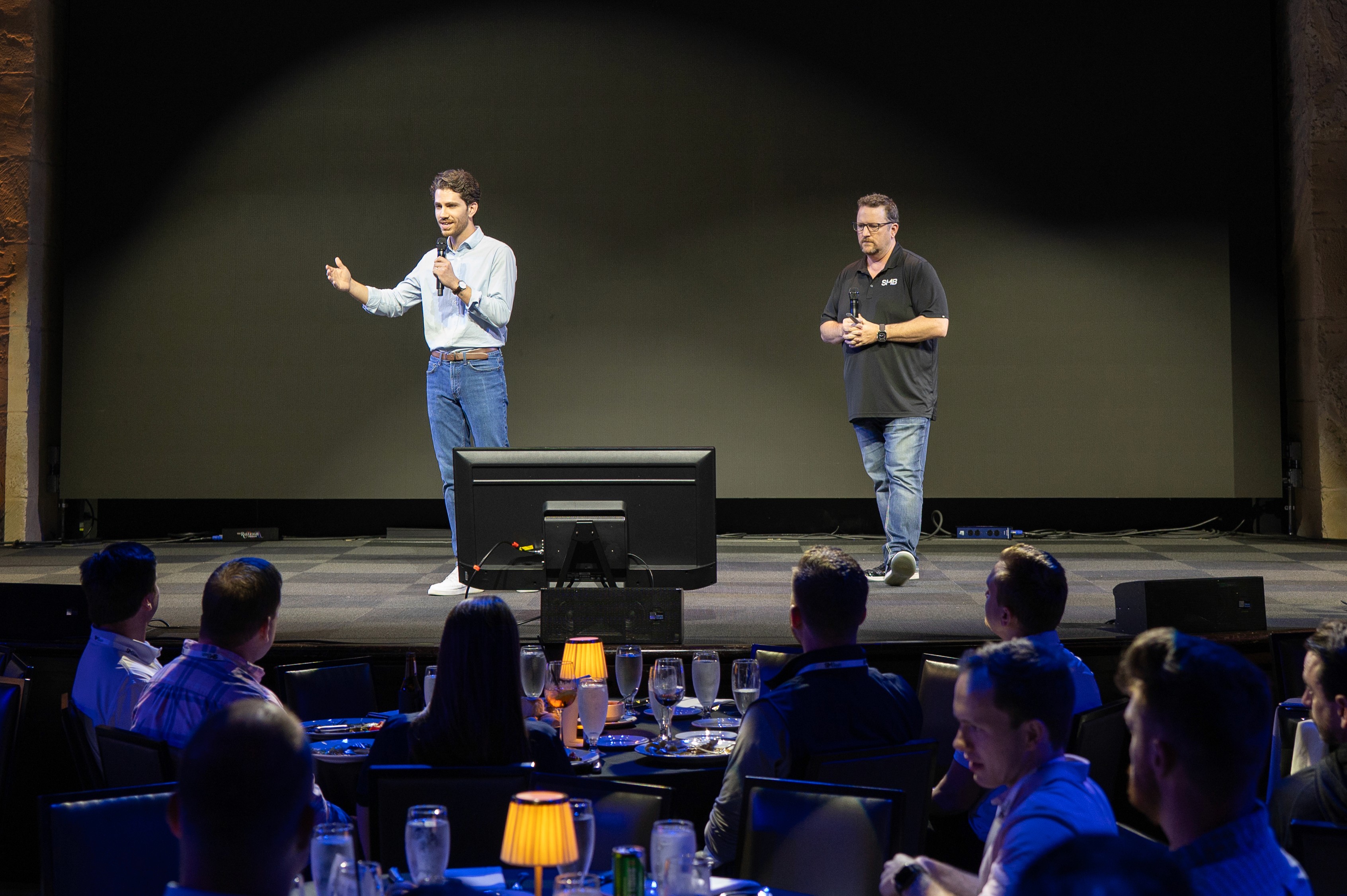
Thank you so much for coming. What a great year. 2025. Our biggest SMBash yet, and we have great ideas already for an even bigger, better, more productive 2026. For those of you that didn't see the email last night with a schedule rundown, we'll follow up with another message. I mean it sincerely when I say we want all the candid, helpful feedback to improve. We like to tell people SMBash is the conference put on by entrepreneurs running businesses, not gurus running conferences. We don't do this professionally. We're figuring this out as we go. We just want to deliver really impactful, high quality content and experience. So if you have feedback, please send it to us.
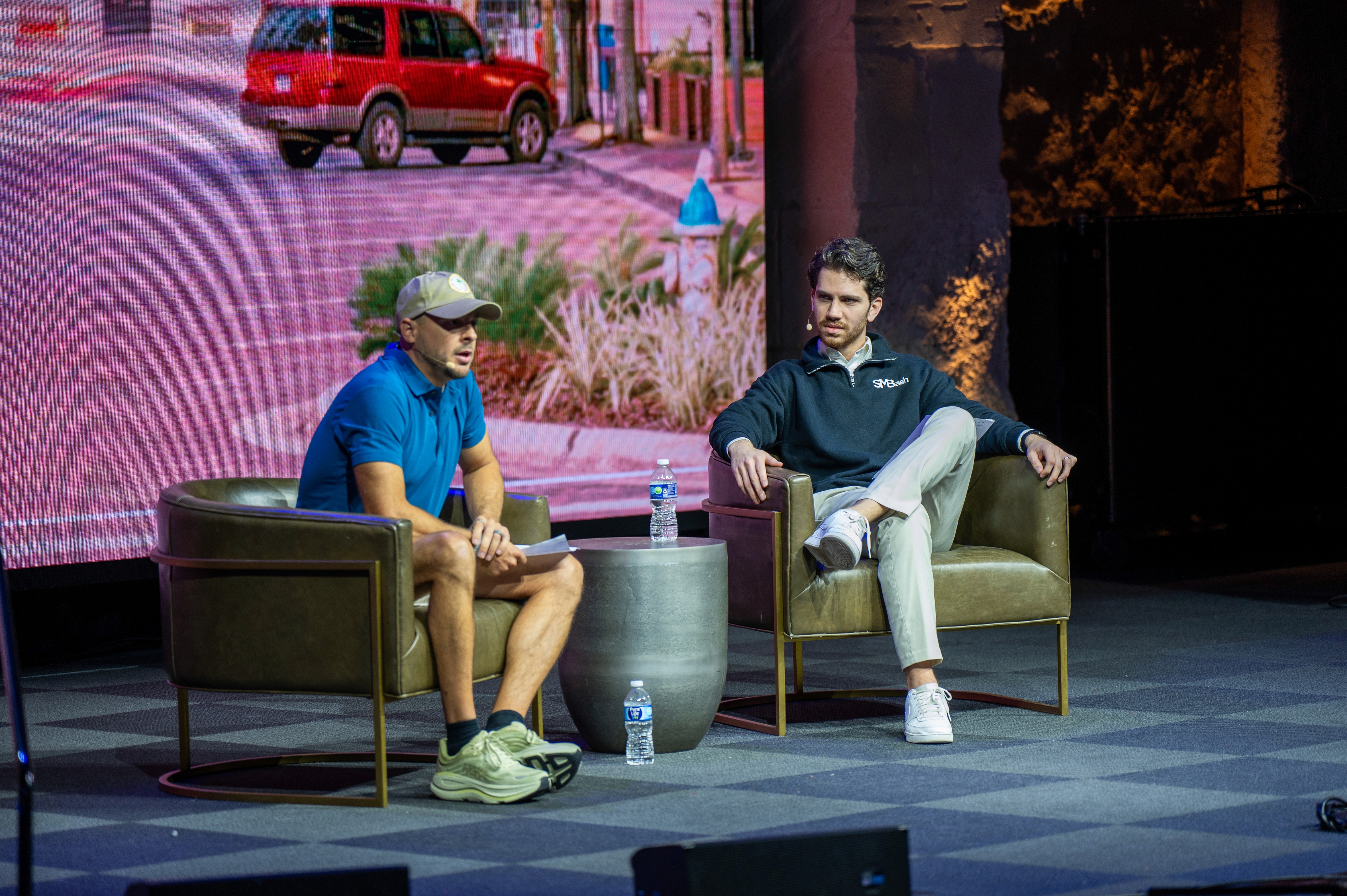
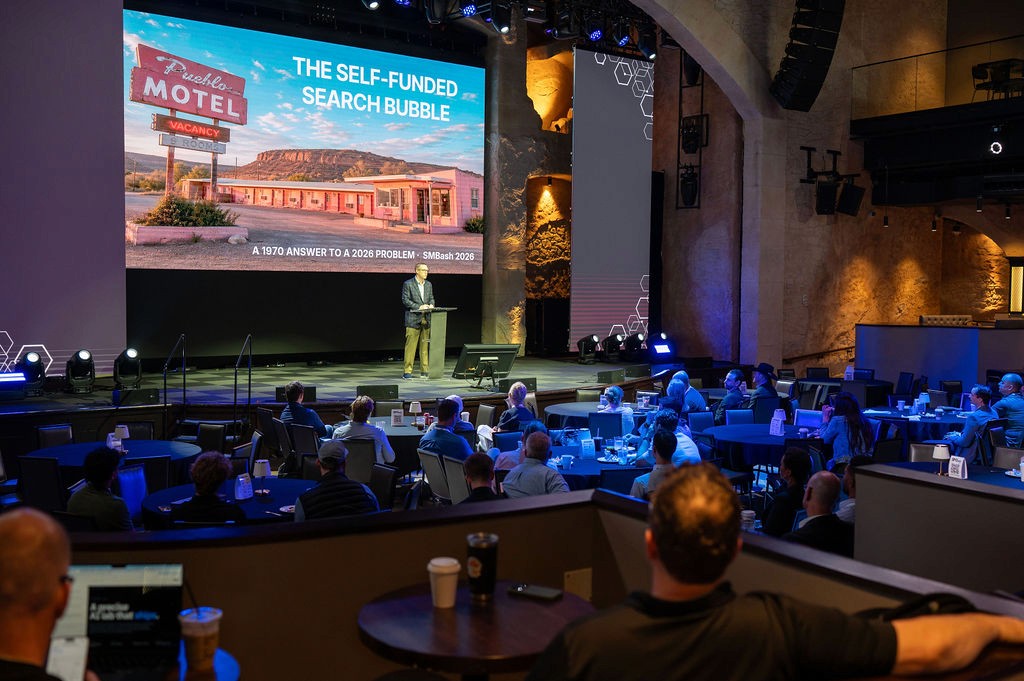
We will wrap things up tonight after our last speaker with a couple of final thank yous. Without further ado, our last keynote speaker of the night, a good friend. The greatest thing about the entrepreneurship through acquisition community is this is a person that was a Twitter personality first. Someone I saw come on hot on Twitter, thought he was super cool, then had a discussion, thought I was way out of my league. Then doing a little coaching together, learning from him. Now I can say good friend, even business partner, just an all around incredible guy. If you don't know him yet, you're in for a real treat. Christian Ruff, come on out.
---
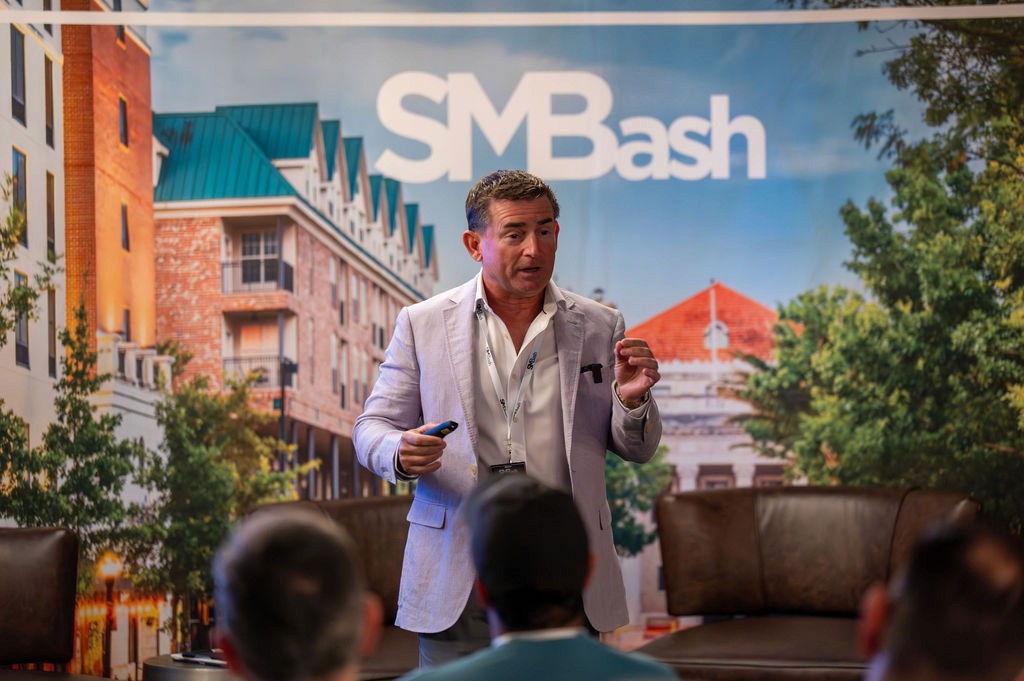
Thank you everybody. I do quite a bit of these, but this one's especially challenging to think of what to talk about, because generally my audience is more of that corporate crowd and not necessarily the entrepreneur. Being an entrepreneur myself and getting punched in the face every day, I wanted to make sure I was providing something that was relevant to everyone here, not just theory and war stories. If you have questions, I encourage you to just ask them at any point.
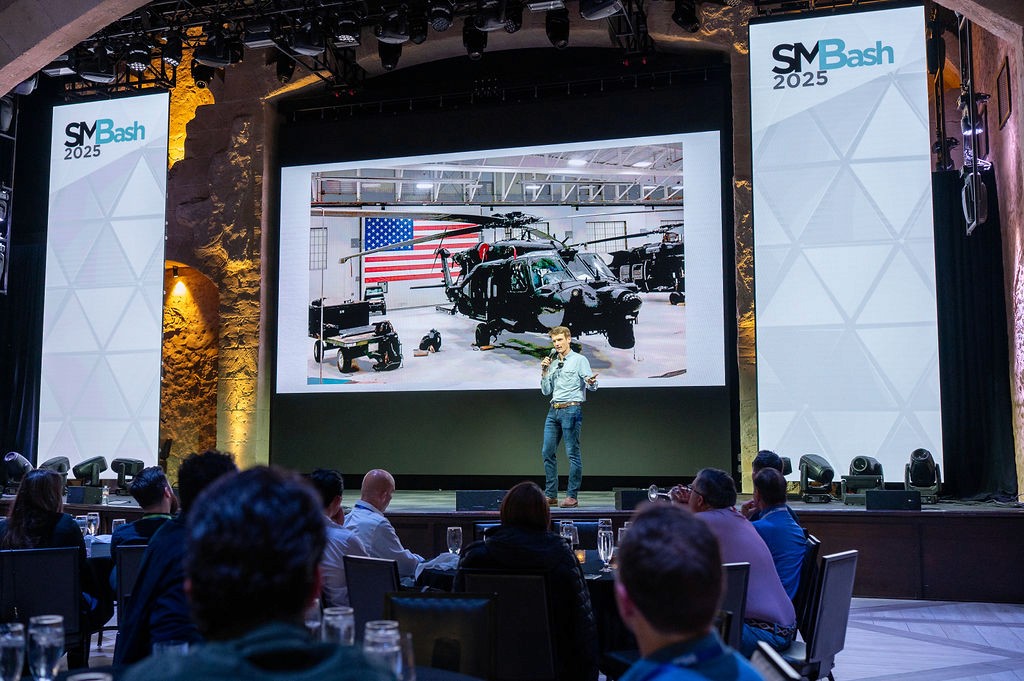
A little bit of my background. I spent 10 years in the military. The last half of it I was with an organization called the 160th, commonly referred to as Night Stalkers. They're responsible for providing rotary special operations assets to other special operations units. Think SEALs, Green Berets, CAG, Rangers, MARSOC, basically any other special operations entity. The aircraft I flew, which is behind me in that picture, is called the MH-60M DAP, which is the acronym for Direct Action Penetrator. The Army actually for a while stopped letting us refer to it that way because of it, and then finally we brought it back.
If you're familiar with the Black Hawk helicopter and the Apache helicopter, we married the two and made this ugly, but yet so beautiful baby of an aircraft that has more fuel, ammo, and weapons than really any other military helicopter in the world. There's only 10 of them. So I had the absolute privilege for five years of having a team of 70 guys and 12 aircraft. We deployed around the world. We primarily provided close air support to two tier one organizations. The lifestyle was: White House presses a button in the middle of the night and we get a text message, we wake up and we go disappear to whatever godforsaken place we had to go to. My wife Grace was very supportive of it, up until a point.
Being a 26-year-old skinny captain with a little bit of leadership experience and being thrust into the number one helicopter unit in the entire world and being in charge was definitely a couple years of getting punched in the face. I can equate it to later on stepping into a small business and being the new leader, yet again getting punched in the face and just trying to figure it out. Through that journey, I picked up different ideas, theories, and actual practical applications of how to navigate all of that. A lot of it stems from flying that thing.
During the five years I was there, I did a number of deployments, mostly clandestine operations. My daughter Ella was two at that time. I had the absolute privilege of working with some really exceptional people, all attributes first, skills second. You can teach a monkey to fly. When I think about what that means for a small business: leadership is the hardest technical problem to solve. It is the greatest burden you can take, whether you're in the military or in small business. For those of you that own businesses or are about to buy businesses or are leading businesses, what you're doing is not for everybody. It could be leading in an aircraft, in urgent care, in an accounting practice. It doesn't matter. It's the hardest thing you can do.
So what do I do? I largely do three things. 50% of what I do is I work one-on-one with small business owners, helping them navigate through different leadership challenges and how to build a high performing team. The second is companies come to me and say, "I need an operator," and I literally find them a no-s**t former operator to go run their HVAC or plumbing or whatever business. And the third thing, I tie it all together by bringing people together. I'll do events where I bring in 10 to 15 people: operators, entrepreneurs, owners, investors, all the different flavors. We will go into the mountains and do cool stuff.
Sometimes people reach out to me and say, "I've got a pool business and I need a GM. I need somebody who's not risk averse, who's open to challenge, who can figure it out, who I can give a playbook and they can operate." What I really want to do is just send them this picture, because these are the type of dudes that I put in businesses. And if special operations does one thing really well that is comparable to what makes a really talented entrepreneur, it's having the attributes to succeed. No skill in the world will get you past tenacity, urgency, integrity, attitude, and aptitude. So you as an entrepreneur, if you have that, you will be successful.
Lastly, I wanted to congratulate everybody here on just being here. No sane person wakes up every morning and says, "I'm going to risk everything I have for this upside," which I may perceive as money, but it actually isn't money. Because you'll get to that point and you'll buy that company and you'll get there and you'll say, "Made it." And you'll pause for a second and then you'll go buy the other one and you'll buy the other one. The money's going to come. But that's not the score. The score is having that internal drive and ambition that you're constantly feeding over and over again. Because you can have all the money in the world, but that won't satisfy the drive for a challenge.
This photo is from May of 2011. This is from the bin Laden raid. I was a junior in college, in ROTC. I saw the thing happen, I heard about the guys that flew it, and I said, "That's what I'm going to go do." I probably was a little drunk at the time because we were slamming shots of Jack Daniels watching the news go down. But I said, "That's what I'm going to go do. I'll do whatever it takes to get there." And then eight years later I was.
This aircraft is a rather aggressive aircraft and takes a type of lunatic to fly it, because you end up flying very close to the target with minimal break distance. All those weapons, while they may look like they're outside of the aircraft, all the concussions and the chemicals come into the aircraft. You end up essentially puking on yourself for the entirety of the flight. When I think about going and making the decision to do that, I can't help but think about what I'm doing now. Why risk everything I have for a little bit of upside, or a good amount of upside, when money isn't really the score? For the same reasons I went and did that, every single one of you and the people I work with take on that challenge because they have the clarity and conviction that they could do something more or better than what they currently are.
How many people here are in a leadership position? How many people want to be in a leadership position? How many people understand that leading people is really hard? I bet if I asked everyone here to write down the biggest challenge they're facing as a leader today, there's going to be a theme. It's people. Doesn't matter the industry. Every problem is a people problem.
So how do you navigate that? You try to build a team. There are certain things you do when you build a team that will help alleviate all those stressors, even though they're always going to be there. I had the 20 best attack helicopter pilots in the world. Do you think I had people problems? Every day. Personality issues, big egos, small egos, egos that wanted to get bigger, quiet guys. But there were areas I did not have to focus on because we had the systems and processes in place that removed that gray area that so much of leadership is based off of.
Because Kevin decided to let a pilot talk on the last thing of the event, and I deployed a couple times, of course I'm going to tell a war story. I promise it's relevant. This was December 31st, 2019, right before COVID happened. My wife was a month pregnant. We just did our first joint Christmas where her family came and my family came and everybody got drunk and people started yelling. It was an absolute disaster. We were finally enjoying some downtime. I was not on the deployment cycle. I had a couple months off before I was going to go to Afghanistan. Everybody had left. I said, "I'm going to go to hot yoga, because I'm secretly a hippie inside."
I woke up, went over to the hot yoga studio in East Nashville, seven o'clock in the morning. The thing about that hot yoga class is you can't bring your phone. The thing about the 160th is you must always have your phone. If you're on vacation, you have your phone. If you're on your honeymoon in Croatia, you have your phone. You're glued to it because if a text message comes, you have to enter the compound and figure out what's going to happen. Lo and behold, I'm like, "All right, well, I can't bring my phone into class, but I have this smartwatch." Tossed the phone in the car, walked into class, my watch starts buzzing. You'd look for a certain series of numbers, and if you had a certain series of numbers, it meant whatever you're doing, you have 45 minutes to get to the compound to be prepped to go pretty much anywhere in the world.
Being that I wasn't on call, I left, I called my wife, I said, "I have to go up to the compound. We have to cancel our New Year's Eve plans. I have to get the guys out." Being one month pregnant and fretful with all the hormones associated, she's like, "Well, you're not going, right?" I'm like, "I'm not going. I'm not on the list. I'm going to go up to the compound." What do you think happens? I'm going. Because I, for whatever reason, decided I wanted to get to a certain skill level as a pilot in the organization. Because of that, that basically meant if something happened, Christian's going.
So I call my wife again and I say, "Grab my bag. Meet me at the Chick-fil-A. There's a Chick-fil-A outside the compound. Please." Already I'm thinking, "I'm going to have to buy a lot of jewelry to recover from this." She's like, "Oh, you're going." I said, "Well, you know, I'm just so good they have to take me." But secretly inside, this is what we live for. You spend years, countless days and nights training, prepping, training, prepping, executing for this type of opportunity. This is what we do better than anybody else in the world.
We meet at that Chick-fil-A. I had a little bit of a break while the guys were loading the aircraft. She's pregnant, so she's hungry, and we're sitting there, she's bawling her eyes out. It's New Year's Eve at a Chick-fil-A off the highway in Kentucky. You have all these people looking at me and my wife who's bawling, and I was thinking, "They all probably think I'm dumping her on New Year's Eve at a Chick-fil-A in Kentucky." We say our goodbyes. With this type of thing, you leave and there's no set time. It's not, "Hey, I'm going to be back in two weeks," or, "I'm going to be back in nine months." It can be anywhere from three weeks to a year. I realized I hadn't taken the Christmas tree out, so I'm triaging through my head, "How am I going to get the Christmas tree out of the house?" But here we go.
What was happening on the other end of the world was Iranian-backed militia were starting to form outside the embassy in Baghdad. If you look back to Benghazi, a bunch of militia went outside an embassy in a country. My guys were sitting on a bird in Italy waiting to go, but whatever decisions were made in the White House kept them there. The current administration did not want to have a repeat of that. So they were essentially saying, "We're going to flex a force over there to get ready to do, whether it's a high value target or embassy evacuation, whatever it is, we're going to reposition this force over there."
When this happens, we turn that aircraft basically into a Tetris game. You break it all down, you get enough ammo, fuel, and supplies for 90 days, and you play Tetris. You put it in the back of an airplane, and you have a set amount of time. There's no dilly-dallying. From the moment the text message comes, you have a clock, and the clock is a certain amount of hours. Every 30 minutes of that is accounted for. At X amount of minutes, these have to be broken down. At X amount of minutes, they have to be on the ramp. At X amount of minutes, we're bringing everybody in to do a talk. It's a detailed process that everybody has either from memory or in their pocket, literally on a piece of paper, so that when you get that text message, whoever on the other side of the world is waiting for us, whether it's a bad dude or a hostage, we know we're going to get them anywhere in the world plus or minus 30 seconds. And plus or minus 30 seconds means plus or minus 30 seconds, because of systems, processes, and training.
You show up and people aren't sitting around, people aren't asking questions. Everything is like clockwork. Before you know it, you have everything broken down and you're shoving a bunch of Black Hawks into the back of the C-17. As an officer, you're required every week to send a PowerPoint of what you guys did that week. You kind of get hit on if you don't have pictures. So meanwhile, we're getting ready to go blow out to do a hostage embassy thing, and I'm like, "I have to take pictures because I have to send it up to some general so he sees what we're doing during the week." You can never escape the BS.
The guys are gone, we're on time, and like clockwork at hour X, C-17s just seem to appear out of the sky and land so we can load the things up. While we're doing this, there's a tier one unit over in North Carolina doing the same thing at the same time. There are a couple C-17s in Charleston, South Carolina taking off to come meet us, so that according to timeline, we can all meet at the same place wherever it is in the world with predictability and no wasted time. Miraculously, the Air Force shows up on time, which is a first. We have a packing list. Everybody has a packing list. I know exactly how many boxers and shoes I need to bring wherever we go. Part of that packing list is a Pelican case full of Jim Beam.
We disappear in the middle of the night, load the C-17s, and where we ended up going was Iraq. Within 15 minutes of us landing at the base in Iraq, President Trump had ordered the drone strike on Soleimani, the Iranian-backed general. That happens literally as we're pulling the chains on the aircraft and pulling them off the C-17. Now we know something spicy is about to happen. People are p****d. We're now here. They probably know we're now here. Something's about to happen.
We folded all the blades, took off all the guns, and now we have to put the blades back out and put the guns back on. Like clockwork, we have a certain amount of time by which the ramp of the C-17 goes down and that aircraft is supposed to be built up and ready to fly. Ramp goes down, no dilly-dallying, everybody's ready to go. We get the birds up and running, and then we wait. We waited for a couple days. At a strategic level, they're trying to gauge what's going to happen with Iran, what's going to happen at the embassy. We're making plans to do evacuations. We're also making plans to go do follow-on targets.
What do we like to do the most? We like to go work out. One night we're in the gym, myself and my three air crews, so five other pilots, a bunch of crew chiefs, and some guys that work on the guns. One of my crew chiefs, who for whatever reason decided he wasn't going to work out that night, comes in yelling, "We have to go, we have to go, we have to go." He's wearing a uniform. That was my tell, because most of the time, unless I was actually in the bird flying, I was wearing flip flops and Lululemon, and this guy's in a uniform. Immediately I'm like, "Okay, he's probably legit. I'm going to stop my workout."
We go to our planning area, and in there are the operators we were with, a bunch of intel guys, the commander, and the senior pilots. We're trying to get a sense of what's going on. Then it's just dead silence. The commander at the time puts out a very simple brief and says, "Take all the guys, bring them to Baghdad, come back, pick up the operators, and get out of here." We're going to take all the non-essential personnel, all the staff, support staff, evacuate them out to Baghdad, which is about an hour and a half away. Come back, take all the operators, the tier one dudes, and get out of here. Because they had intelligence that Iran was going to slam our compound. Credible intelligence that Iran was now p****d off and they were going to launch a bunch of whatever at us.
In my mind I'm thinking, "All right, cool, sweet. I fly gunship, I have all the ammo, I have all the fuel. We're going to take off, escort the flight, make sure everybody's there. If anything pops up in the way, we'll take care of it, we'll come back." Lo and behold, we had too many people, too few aircraft. So now I have a fully loaded gunship that I have to put people in. There's not a lot of room for people in there. You have the two pilots up front, two crew chiefs in the back, that black tank back there is auxiliary fuel, and what's in between all of that is these massive magazines filled with ammunition. But because of the situation, we had five extra people we couldn't fit on the other aircraft. They're looking at me and saying, "You're going to take them."
Any pilots in here? What's the max gross weight of a Black Hawk? 24,500 pounds for that one. If you know anything about aviation, there are limitations to the weight that you can take off based off the structural integrity of the aircraft and also environmental limitations. If it's really hot out, you can't take as much weight. If it's not as hot out, you can only take the weight allocated by the structural limitations of the aircraft, which for this one are 24,500 pounds. I have five extra people, and I'm already at 24,500 pounds.
Now I'm faced with this dilemma. I have five people that absolutely need to get out of there. There's nowhere else to take them because of the threat. I have a fully loaded aircraft, I'm in charge of the aircraft, and I have a crew who's looking at me, doing the mental math, saying, "Hey, this isn't going to work."
The thing about entrepreneurship in this situation: there are no rules. There's a book that tells you that you can't take off with more than 24,500 pounds. It says it right there in the book. You can't do it. In entrepreneurship, you could read EOS or Scaling Up or whatever business book you want, and it'll tell you, "This is what you have to do." But how many of you small business owners are faced every day with something you don't have the answer to and there's no playbook to figure out how to do it?
There are no rules. If there were rules, it wouldn't be entrepreneurship. Your decisions as an entrepreneur are based off the risks you can mitigate and the risks you can accept. When there are no answers, when there are no rules, it's: what is the risk? What can I mitigate, and what can I accept? In this situation, the risk was: I take off with extra weight and something goes wrong, or these guys stay here and something goes wrong. The thing that could go wrong if they stay here is you have this impending attack. I made the decision that in the absence of any rules or playbook, the risk I was going to accept is that I would rather be at fault for something going wrong than leave it up to another country.
I went to my crew. I had this one guy with me, it was his first deployment ever, he was my co-pilot. He was supposed to just be the spare pilot in case we had to ferry an aircraft somewhere. Sure enough, here he is, never deployed before, been in the unit for about three months. Now he's looking at me and I'm like, "Dude, we're going to go way overweight on this thing. You good?" He didn't know what answer to say, so he just kind of shook his head. The other crew chiefs, they're down for it. We load up the bird and get ready to go.
The thing about the aircraft I flew is, because we're now the protector of the flight, the rest of the flight is relying on us to be able to navigate around and shoot anything that happens. Because of that, we take off last. You have five Black Hawks, two Chinooks (the really big one, like two palm trees with a dumpster in the middle), and then me and the other two attack aircraft, my two sister ships staying back in case something happens close by. So I have seven aircraft in front of me taking off. Flying in the back of the formation, you inherit everybody's dirty wind. Your efficiency taking off is a lot worse.
They start to take off and the lead aircraft calls up and says, "I'm taking off," and everybody else starts moving forward. Because of my weight, I couldn't hover. I had to essentially take off like an airplane. Imagine just trying to glide down the runway, get as much speed, and eventually try to convince magic to let the thing leave the ground. I've got these two giant aircraft in front of me. They start taking off and finally I'm like, "Okay, I've got the space, I can do this. I can start to break ground a little bit."
The lead aircraft, flown by this one gentleman who's the senior pilot of the entire organization, arguably the best Black Hawk pilot in the world, comes over the radio and says, "Hey guys, I have to land. I forgot to shut my door." He slows back, starts to set down because he has to shut his door. The aircraft behind him start to slow back and land. You have these two big palm trees in front of me, they're slowing down. The thing about the takeoff I was doing is once I begin to break ground, there's no coming back down. I'm about a foot off the ground. I've got two palm trees in front of me, getting closer and closer. I can't stop. I can't hover. My choices are to either crash into the two aircraft in front of me, or somehow seemingly get myself over the desert floor without hitting the desert floor and take off.
My co-pilot is just sitting there like a bag of sand. I don't think he knows what's going on. I basically said, "Steve, don't touch anything. Just sit there. Please. You did a great job." He's actually a very talented guy now. We got in the aircraft and I said, "Dude, just sit there, don't talk, don't touch anything, and if I need you to write something down, I'll let you know."
These aircraft were getting closer and closer to me. In that split-second decision, I decided to aggressively bank the aircraft to the left, kind of the only option. I banked the aircraft out to the left. Now we're kind of over the desert floor. You have this refuel probe that sticks out beyond the aircraft about six to eight inches above the ground. I'm trying not to scrape it. Slowly I'm pulling the guts out of this thing. There's a computer in the aircraft that will yell at you if you're pulling too much power and overheating and over-torquing the engines. She's just casually reminding me that I'm over-torquing and pulling in too much power, and I'm trying not to kill us all. Steve's sitting there next to me, and the crew chiefs are dead silent in the back, which is never a good thing. Somehow we manage to get just enough forward airspeed where we start to extricate ourselves out of that predicament.
That moment for me was the ultimate. That was 10 years of trying to become a pretty solid pilot, all converged into one moment of having to make a decision where I trusted my gut. A lot of this is not that much different. There are no rules to anything you're doing. You may have industry best practices, and for us it was, "Don't put too much weight in the aircraft." But at the end of the day, you have to make decisions on your own. You have to make decisions in the absence of rules, and you have to mitigate the risks and commit to something.
We took all the staff to Baghdad, came back, loaded up the operators, and then we went out into the desert, found a piece of ground, and just sat. We sat and sat and sat to the point where we're getting beyond our normal duty day. In those certain instances, we're given Dexedrine, which is basically an amphetamine to keep us awake. We start distributing it to the crews. We're not really sure what's happening. We're not given a lot of intel. Eventually it was 1:32 in the morning, somebody calls up over the radio and says, "Hey guys, all clear. False information. There's no threat anymore." We're like, "Okay, all right, that was exciting."
Everybody's coming down off this adrenaline high. Threat's gone, whatever, we get to go back, maybe finish the workout. We're waiting to hear the next steps. It was a beautiful night. You could see all the stars in the sky, no clouds. All of a sudden you see these shooting stars coming from the east. Shooting stars don't travel in trios. Those are intercontinental ballistic missiles. These ballistic missiles are coming out over the horizon and they're going, and we're watching it happen because you cannot miss them. They disappear to the west and the whole sky lights up and more come. Lo and behold, they lobbed a whole bunch of ballistic missiles at our compound.
So now we're sitting there in the desert really wondering what's about to happen. We have limited information. You're sitting in this aircraft in the middle of the desert. In my mind I'm thinking, "Well, we just started World War III and I'm probably not going home." That sort of acceptance is interesting. Reflecting on it now seems sort of natural because you're in the moment. But we legitimately in the aircraft thought, "All right, we're about to be here for a very, very, very long time."
Finally, the guy that said it was all clear comes back on the radio sheepishly and starts putting out information of other credible threats that may be occurring. We wait just a little bit longer, get everybody organized, come up with a very brief plan, disseminate it. At this point, crews are all over the desert. Everybody's decentralized. We take the attack aircraft and take off first to go back and survey the damage and see if there are any threats. There weren't at the time. We're flying all around our compound and the base itself, trying to see if there's anything that needs to be paid attention to. We see all the crater holes. One of the craters was exactly where my aircraft had been parked about 12 hours apart. I took that picture because I was like, "I have to put this in a PowerPoint someday."
It was a beautiful picture. I remember sitting there watching the sunrise, thinking how beautiful it was, and feeling legitimately fortunate that we have another day. That black heap of metal, that's a Black Hawk. There's another National Guard base outfit right next to us. A lot of our stuff was spared. They demolished our gym, which we were really p****d about, but the rest of our planning area was unscathed. That National Guard Black Hawk got completely decimated. It's a medevac aircraft. Fortunately, no one died during these attacks. There were other conventional units still there who were unable to leave because they didn't have the intel. Those poor dudes literally just got woken up in the middle of the night to a bunch of missiles.
If you look in the upper right hand corner, somebody was doing deadlifts and didn't rack their weights, which is really unfortunate. If you're in the market for an espresso machine, Phillips has finally launched a US variety. This thing made coffee for 250 people, and then the ceiling fell in on it because of the blast, and then it proceeded to make coffee for 250 people a day for another three weeks. That thing's designed to make like six cups a day. Highly recommend it. You can see the handprint on top from where the guy had to pick it off the ground.
Meanwhile, my wife's at home. What happens when a US base gets attacked? It makes the news. She's at home, her dad sees it first, lets everybody in the family know, "Please do not reach out to Grace and ask her how Christian is, because we have an idea of what's happening." And we all have that one cousin, right? We all have that one cousin that just likes to talk. What does she do? She calls Grace and says, "I'm so sorry to hear about Christian." Yeah. I bought a lot of jewelry after that trip. A lot. I wanted to give her some sort of proof of life, so I had Steve take that picture. She didn't think it was as funny as I did.
Through all of that, there were no huddle-ups. There was no, "Hey guys, we have to do this thing today." The communication stemmed from the beginning of the story: "Hey guys, we have to take the dudes to Baghdad. We have to come back, we have to get the operators and go to the desert." That was it. There's no big plan, no big PowerPoint briefings, no, "Call me on this radio if you have any questions." No, "Let me pull you aside and make sure you're good to go. I'm going to coach you through this thing." The commander literally said those words, and that spurred all of this all the way back to where we got back, put the coffee machine in, and moved the gym to the new hangar. If you're in the market for gym equipment, I highly recommend Rogue, because the Rogue equipment was the only equipment that survived the attack. I wrote them a very nice letter. I was hopeful that maybe I would get some sort of sponsorship or affiliate link, but I did not.
What made us high performing? Chris Williams, what do you think made us high performing? Trust. Okay, but what is that trust built on? Really good people. Okay, so if we're all really good people, we all trust each other, there's something deeper. Very clear definition of expectations. Yes. Who else? Training. You think this was my first time loading a C-17? No, I was terrible at it. Whenever I showed up to load up the C-17, I had the nice warrant officer who was like, "Hey Captain, you need to go work on that PowerPoint deck, I got this. Don't worry." Yeah, training, and also knowing who the subject matter experts are. What else? Being well prepared. Having a plan, having something to execute off of. Focus, accountability, consistency, expectations.
We had a very clear definition of what we needed to do. We had to get the people out of there, and we had to go to the desert. That was it. If you come all the way back to getting that text message in the middle of the night, what are you doing? You're going to the compound. You're not breaking up with your wife at Chick-fil-A. You're getting the birds in the aircraft and you're gone.
Accountability: in order for me to make that decision of compromising the integrity of this aircraft from my crew, I could not do that without understanding that my guys were going to fill their roles without me having to ask them to do it. The actual hero of the night was this 20-year-old kid from the Nebraska National Guard who, in the midst of all of this, when everybody else had fled to their bunkers because they knew something was happening, this 20-year-old kid was out there refueling aircraft. The air traffic controllers actually just up and left their little building. This kid was doing the job he knew he had to do, and nobody had to ask him to do it.
Consistency: there's only one way to put two Black Hawks and a little bird in the back of a C-17. There's literally only one way, and there's only one way to do it so fast that you can show up and be out of where we are in less than 20 hours.
Expectations: when we showed up to load the aircraft, there's no talking, there's no trying to tell everybody what to do. Everybody knows exactly what's expected of them, how to do it, and who they're going to look to to accomplish it.
90% of the issues I see in small businesses or challenges with leadership stem from any one of those, and you can't have any one without having the three. You can't have focus without understanding what's the expectation you have to achieve. You can't have accountability without having expectations to base them off of. You can't have any of this and grow without doing it consistently.
Focus: break it down. If everything is important, nothing is. Your objective and having definition around your objective is going to serve you better than any plan. As soon as you commit yourself to a plan, you have committed yourself to a sequence of actions rather than having the internal flexibility to say, "I'm just going to figure it out."
Accountability is one of the harder things to do as a leader because it's often viewed as, "I'm coming down on you for not doing what was expected of you." A good leader never gives an expectation without the conviction that they can actually do it. So accountability to me is: if I'm going to ask you to do something, it's because I have the conviction that you can. If you're not doing it, I'm coming to you and asking because I have a belief that you can, and there's a gap we need to solve. Rather than focusing on what hasn't been achieved, focus on what is the gap. What is the gap to gain, and how am I as your leader going to get you there?
Consistency: chaos thrives in randomness. There have been many nights where you've been over a target and, "Yeah, guys, this is going to be a pretty easy one. We're just going to show up, knock on the door, get the guy out, and leave." Then all of a sudden the entire world is blowing up around you. People are running everywhere, bombs are being dropped, people are shooting back, and your plan just went to s**t. How many people have felt chaos in their small business before? I did this week. I got 20 roles this past week. I'm a one-man shop for this recruiting thing, and I got 20 roles. Most recruiters get 20 roles in a year. So yeah, being a little bit chaotic. Where do I default to? Systems and process and training. Results emerge from patterns and rhythm. When everything goes to s**t, fall back to what you know, and that's your systems and processes. Chaos thrives in randomness.
Lastly, expectations. Expectations need to be specific, shared, and supported. Specific: if I tell you to go work out this week, is that a clear expectation? No. If I tell you to go work out four times in the next seven days at five o'clock in the morning and follow this program, is that a clear expectation? Better. Shared: why are we doing it? Why am I asking you to go work out? Why am I asking you to take people out of this compound? Why am I asking you to wake up in the middle of the night and disappear? Understanding the intent behind it not only gives them situational awareness, but in your absence, it influences their ability to make decisions without you. If I understand the expectation is for me to work out five days this week because I need to lose weight, well, okay, if you're not here to give me the plan, I can make a decision on my own and still accomplish it. Supported: are all the training resources and tools provided? I wouldn't take a new guy and say, "Go put this Black Hawk on a C-17," without showing him how to do it, telling him why we have to do it, and providing him with the resources to be successful. That guy Steve, the sandbag dude sitting next to me on that flight, we were there for about another 45 days. I didn't touch a set of controls the entire time. He flew every single flight we had from that point on, because I saw the gap he had. I saw where he needed to be, and I made him fly until he was crying, until he didn't want to fly anymore. And then I made him fly some more.
So what does it all mean? Everybody remember what this is from? COVID. Chaos. After that deployment, despite the jewelry I purchased for my wife and the promises I made, I got out. It just wasn't a sustainable way to raise a family. Being gone for 270 days a year for five years had taken a toll. My wife said, "Christian, I think it's time to get out." I was kind of ready for something different. She said, "Go find a nice job."
I found a job running an urgent care during COVID, which I would argue was much harder than anything I had done in the military, because now you're in an environment where you're not necessarily surrounded by the same type of driven entrepreneurial people you are in a small business. I got hired to be the integrator, for those familiar with EOS, for an urgent care practice in COVID. It was a doctor, great dude. He just had the self-awareness to know that he was not going to be the person to lead. If you remember urgent cares in COVID, they got a lot of business. He saw the opportunity to grow it but didn't have the structural or operational mindset to do it. So he hired me.
When I came into the organization, you had a lot of great people. You had that trust Chris was talking about. But there was a lack of expectations and accountability. As a function of that, we had 30% more staff than we needed. With the ups and downs of COVID, that changed every week. One week you needed to hire 10 additional people, next week you needed 20 fewer people. We quickly realized what was lacking was focus, accountability, consistency, and expectations.
It wasn't just me. I was just the soapbox, like I am right now, hammering on focus, accountability, consistency, and expectations. We went from one urgent care with a tent to four urgent cares in about eight months. It was brutal. There was a period of time where we were trying to get people to just show up, because they were making more on unemployment. I was like, "I have an idea. Give me a bunch of $50 bills, and every day for every person that shows up on time and does a full shift, I'm going to give them a $50 bill." For four weeks, all I did was drive through the four different locations giving people $50 bills for showing up on time. It was an accounting disaster because you're giving them the cash but you have to account for the taxes. I delegated that to the accountant, because I'm good at delegating.
The talk earlier on KPIs saved us, because we would watch the amount of appointments getting booked. You could see, "All right, we have 100 appointments, 120 appointments, 140 appointments, we need to hire some people because we're not going to be able to service all this work." Then you go hire all those people, and what happens? You go do 130, 110, 90, and you're sitting there thinking, "Wow, I have three more people than I can afford. We're going to burn ourselves out of cash." That KPI talk, please share the slides. It will save you, but it will also tell you how you're going to prosper.
We eventually got it to a point where we had enough of a playbook that we could just go open an urgent care based off the playbook. We had expectations for every role. Every single person had a number, a KPI they owned and were measured on. We were able to get rid of the 30% of staff that were not a cultural fit. Now we got to compete on culture. We saw three times the amount of patients with three fewer people across four different locations because we focused on how do we build a culture of focus, accountability, consistency, and expectations, and how are we ruthless about how we assess and retain our people.
There's EOS, there's Scaling Up, there are all these different books and principles and ways you can operationalize and put systems in your business. But having done both that in an urgent care setting and in the military, it all comes down to this: How am I driving as a leader? How am I creating focus? Are my priorities shared by the rest of the team? If their priorities don't mesh with mine, we're moving in different directions. How am I creating a culture of accountability? Holding your direct report accountable as a leader is really challenging. The golden goose of leadership is when you can get your people to hold each other accountable, not you. That's leverage. Consistency: if it happens more than three times, where's it written down? Is it done the same way? Lastly, expectations. The question I ask myself with whatever type of client I'm working with or with my own team is: are my expectations specific, shared, and supported? If not, I'm not setting them up for success and I have no basis by which to hold them accountable.
The last thing, and this will resonate with the entrepreneurs here: if you try to wait to get 80% of the information, you're never going to find it. If you try to get 100% of the information to make a good hire, you're never going to get it. If you try to wait for 80 to 100% of the information to offer a new service line, you're never going to get it. If you try to get 100% of the information on a deal or business you want to buy so you're 100% sure, you're never going to do it. So when I'm starting or trying to make a decision, the question I ask myself is: what is the minimum required information I need to get started, not to finish? Because you'll never finish. What is the minimum required information I need to get started? That comes down to intent (why am I doing this), clear end goal and expectation (what is it I'm trying to achieve), and lastly, how am I communicating through it? What's the feedback loop? The rest is left to: just go ahead and figure it out.
To the people who are already leading a business, I salute you. You're absolutely crazy. For the people who are trying to go buy a business, you as well, crazy. Fewer than 1% of the population are crazy enough to do this and enjoy the upside that is always having a challenge and something to commit to. Thank you all for your time.
---
One more round of applause for Christian Ruff for finishing it up tonight. The quality of people, not just speakers, not just sponsors, but really attendees this year, I know we keep saying this is the best year of SMBash yet, but in terms of the quality of attendees, without a doubt, the best year of SMBash yet. From the bottom of our hearts, thanks again for being here. Enjoy the rest of the night.
I appreciate you guys coming out. This has been incredible. I feel like we have a lot of momentum building into next year, and I can't wait to see what all of you do between SMBash 2025 and SMBash 2026. Last round of applause should be for you guys for coming out, for spending the money. I know it's not cheap, but you did it. You're here. We went through two days of content. I hope you learned something. I hope you had a good time. Round of applause to you all. Thanks to everyone.