PLAYLIST PRESENTED BY

Building a Holdco the Hard Way: Lessons from Chenmark and Decata Group
Description
Palmer Higgins of Chenmark and Chase Murdock of Decata Group share a decade of lessons building self-funded holding companies through entrepreneurship through acquisition, including why they abandoned shared services, how they recruit and develop CEOs, and the tradeoffs between C corp structures, partnerships, and outside capital. Honest perspective for searchers, operators, SBA lenders, and capital providers on what it actually takes to go from a first acquisition to a multi-company portfolio.
Recent Videos
Transcript
Good morning. Our next conversation is going to be very popular because it seems like generally most folks who go and buy their first small business have this dream of being a holdco killer one day. So we're going to chat today about how easy it is to be a holdco owner and operator. All you do is buy businesses, plug in operators, and you're ready to go.
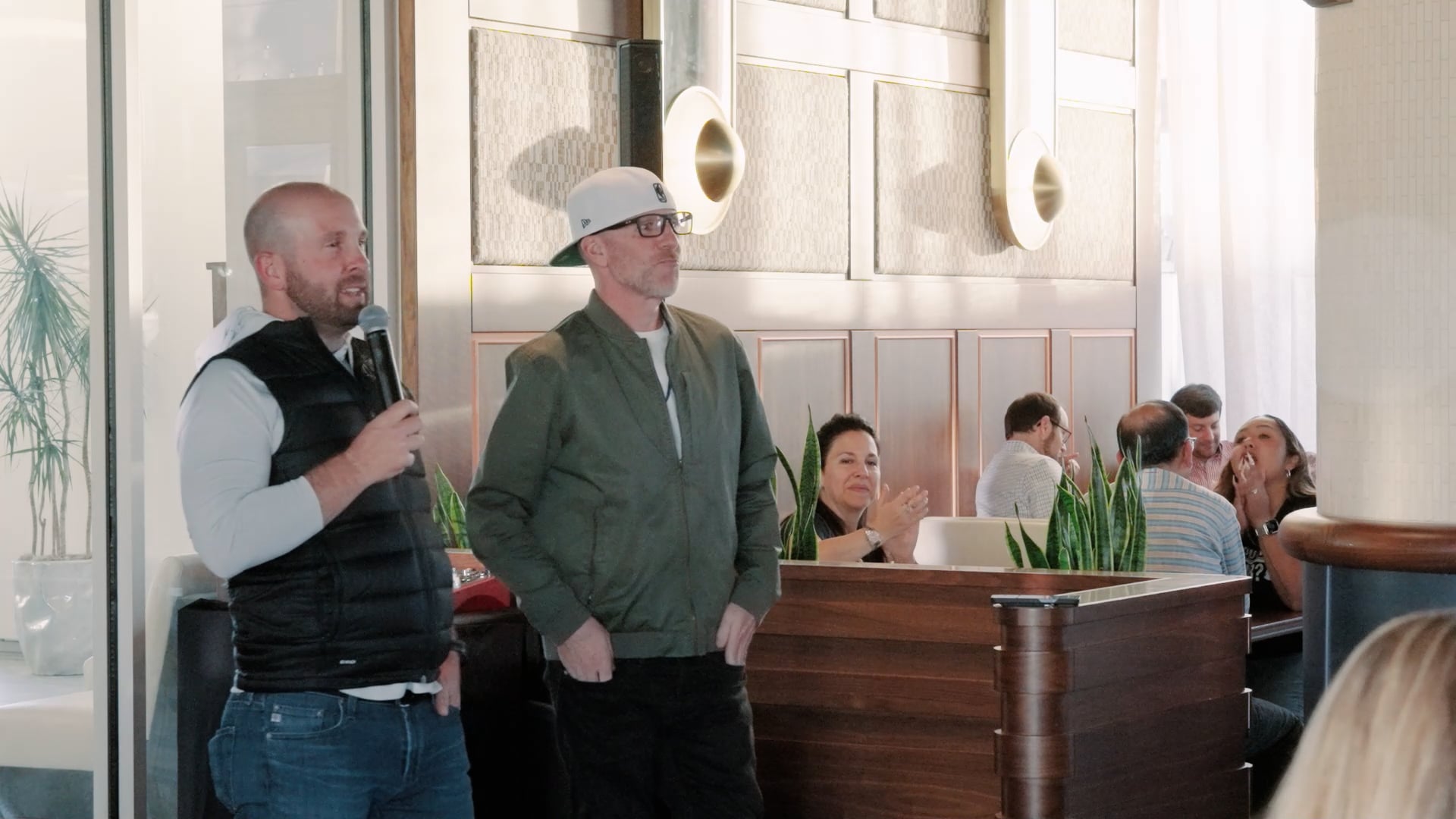
My guests today are hopefully friends. They're also great storytellers. They've been in the weeds, so they have great experiences. Chase and Palmer, just a quick intro.
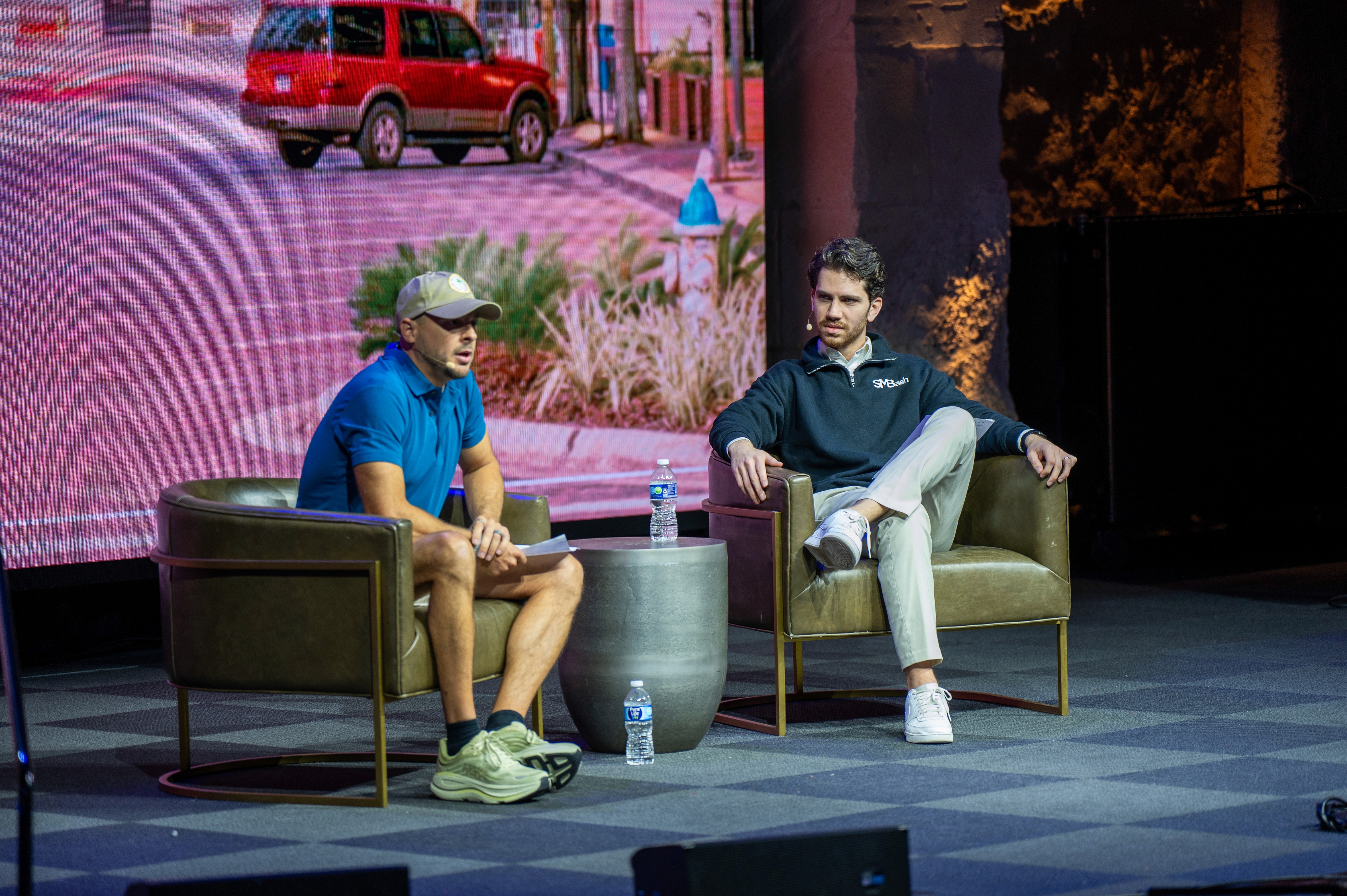
Chase: I'm Chase. I run Decata Group out of Salt Lake City. We're a boutique, lifestyle holding company. I say lifestyle because we're self-funded and kind of accidentally in the holdco game. We started our first company nine years ago this week and parlayed that first company into a second acquisition and so on. Today we're operating five discreet, independent, decentralized companies that are all owned by majority controlling interest of Decata Group. Our focus is multi-decade, hence the name, permanent ownership, where we acquire, start, grow and steward great companies in the Utah area.
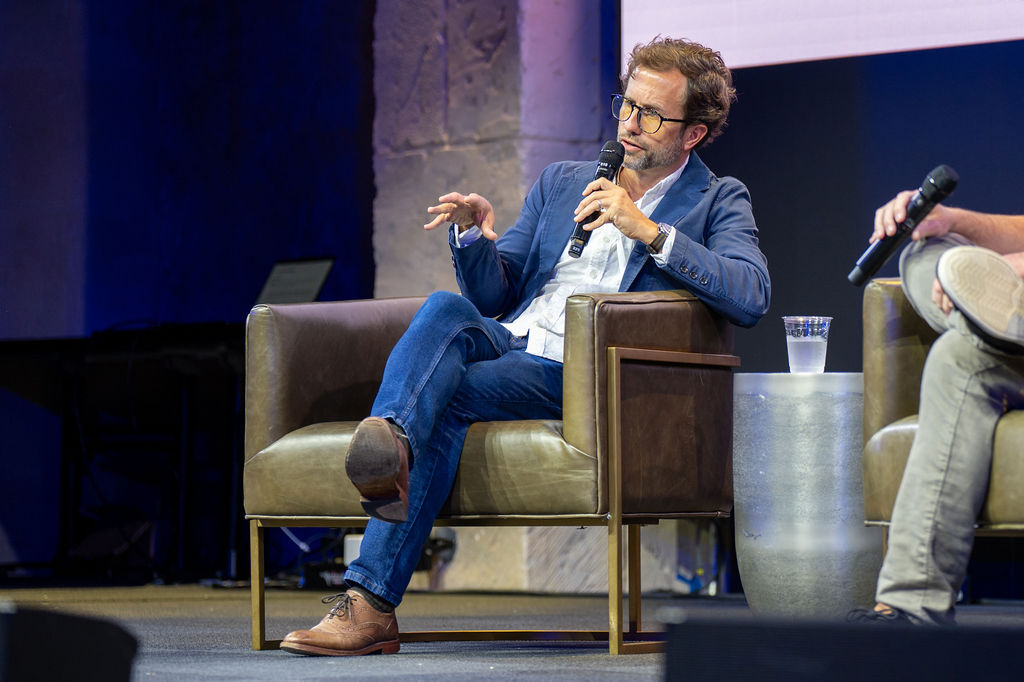
Palmer: Palmer Higgins. Along with my brother and sister-in-law, we started Chenmark 10 years ago. Similar timeline. Also accidental holdco. 10 years ago that terminology didn't exist. What we were doing was tangential to search and not private equity. We were kind of the black sheep, didn't have the full structure fleshed out at the time. We just bought a first deal, then a second one. We've got 14 now in a number of different industries: manufacturing, tourism, industrial controls, agriculture. Geographically agnostic as well, Maine down to Florida into Western Canada. Certainly when I'm talking to owners, the thing I highlight the most is that we're not a private equity company. We are self-financed. The cash flows of the companies we own fund the future equity checks of future acquisitions. We don't have any outside investors, so the only shareholders in Chenmark are employees of Chenmark.
Host: Take us all the way back to the first acquisition you did. Tell us age range, phase of life, mindset going into that first business, and what you bought.
Palmer: 10 years ago, James, Trish and I were searching for a business. We all got our start in more traditional finance. We were living in Greenwich, Connecticut at the time. Couldn't wait to get out and said, wherever the first one is, we're gonna move there. It took us about nine months to find that first one. At different times we were moving to Reno, Jacksonville, Nantucket. Ultimately we bought a commercially focused landscape company in Portland, Maine. Moved to Portland, bought it from two brothers, had them roll equity. They were going to stay on and run it. Spoiler alert, didn't go great. So well that we tried to do that two more times and it didn't go great either. Honestly, a lot of our mistakes were in the first chunk of deals.
They rolled equity and seller financed, so we didn't take any traditional financing, no SBA. Didn't know what we didn't know. The one story we tell a lot: first day post-closing, we're trying to send or receive emails and it's not working. We find out it's because their email or router and internet service was still 256k, literally like the AOL from your childhood. Day one we had to upgrade the internet before we could actually send or receive an email in the shop. That kicked off a long journey.
It didn't work out great with the owners. They ended up basically saying they didn't want to do this anymore and just left. We tried to replace them on a really tight timeline because they didn't give us a lot of heads up, so we hired someone who was also not a great fit. We made a lot of mistakes in that first one.
Chase: We fell into this very accidentally. We started Tailor Cooperative, our custom clothing store, nine years ago this week. It was almost a fever dream invented on a long hike in southern Utah with me and Adam. The things we were talking about were nothing related to acquisitions or holding companies. We were in the zero-to-one venture-backed tech or tech-adjacent space, lamenting how frustrating it is to have to raise capital so early and get so much dilution. Naively we thought, why don't we start a small business? We'll hire a GM on day one and siphon cash off, and even if it's a few thousand a month, it'll extend our runway so we don't have to raise capital in our first year or two.
We ended up starting Tailor Cooperative, a high-end, swanky, New York-style custom suit shop in downtown Salt Lake City. We were wrong about pretty much every part of the premise. We couldn't recruit a good GM on day one. Adam was running it. It actually grew faster than we expected, doing a million bucks a year in revenue 18 months later. It was profitable truly every single month. But not so much that we were siphoning off cash. We came to realize we loved the tactile hands-on nature of building a small profitable company. Running a company that's profitable is actually really fun, as opposed to one where maybe in seven years we could sell it or IPO and who cares how much we're burning.
COVID hit right as we had some capital packed away to open a second location. The NBA shut down, the world shut down, and we put the kibosh on opening location number two. Then we were presented an acquisition opportunity. That was the first time we had really thought about acquiring companies. The way we underwrote this first deal: the business kind of isn't that great, only been around two years, teeny tiny, but if we just buy the building, even if the business fails, at least we'll have the real estate. Let's proceed.
We had this inkling that the playbook we had built for our first operating company was maybe a little bigger than that business. We were excited to apply what we could to company number two. This was before I was even lurking on Twitter about ETA and search. We formed a holding LLC, and I think we uttered the word holding company after we actually had a holding company.
Host: There was a bunch of uncertainty in the early days. Many of us go out with a goal of something bigger than that first business, but nothing is more important than the success of that first business in building the holdco. What were the businesses on your back burner that almost caused you to go elsewhere?
Palmer: One I thought was really cool was in Reno, Nevada. It was a tattoo equipment supply manufacturer. They made the power supply chassis that you plugged the tattoo guns into. Those power supplies need to be very good at providing very continuous power so the needle is going in and out very precisely. They were a premium US-based provider of that. It was smaller. That sent me down the rabbit hole of tattoo supply.
We met with the owners, husband and wife. They asked, you're really into tattoos, how many do you have? Collectively, none. They asked, are you thinking about getting one? Not really. The interesting stat I learned: of the people that have a tattoo, on average back then they had seven. I was floored. If you have a tattoo, on average you're going to get more.
Charleston was a concrete polishing company. Owner was a nice guy. We went drinking and had fireball shots. But it weirded me out when he was packing a Glock in a secret compartment of his car because a lot of his jobs were in areas where this was essential. That turned us off. I don't want to have to strap up to go to work.
Jacksonville was a parts assembly company. They made hoses that went into propulsion-type equipment, basically rubber and metal connectivity, but more sophisticated than that sounds.
Host: At the very beginning you were geographically agnostic, willing to go wherever it took. Chase, you've generally been the opposite, willing to stay in Salt Lake. And on size, you were willing to buy or even start something smaller, like many of us in the crowd. How did you get comfortable buying or building only in Salt Lake and smaller? Did you never have a grander plan, or was it incremental?
Chase: The grander plans started to get articulated as we were on path to close on our first acquisition. We started to realize, hey, if this works, we could maybe build a career doing this. We kind of felt like we had invented the private equity model for a couple of weeks. If it works on one, why doesn't it work on 10?
We weren't daunted by a small size because, first and foremost, that's all we could afford. We were throwing off several hundred thousand in free cash flow after paying ourselves, which felt like a good amount, but on a small business it doesn't feel that durable. It felt like we could sneeze and it would all go away. We didn't want to go buy a cabin and get comfortable, but we also weren't necessarily thinking about doubling down on this one company. Acquiring this art school felt like a good middle ground where we could put good capital to work on a new opportunity.
The way people might misunderstand Decata Group is we've only been around four or five years from our first acquisition, but we're truly a nine-year journey. We couldn't have approached our first acquisition had we not had this company throwing off excess cash. When you're coming at the ETA game from a startup perspective, we were entrepreneurs, we were operators. Having some size was better than having no size. What we liked about ETA or small business M&A was if you buy right, they've proven product market fit. I had spent years trying to find this ethereal product market fit. Even if it was small, if they had found product market fit and lacked the expertise, capital, wherewithal or energy to scale it, that's what we felt we could bring to the table.
We ended up 4 or 5x'ing in year one, 4 or 5x'ing again in year two off a very small size. We've been slowly trying to graduate to bigger tiers. The strategy is not to go buy micro small businesses. The strategy was, what can we afford and continue to keep that constraint of not raising outside capital, not using a ton of debt, and responsibly putting our free cash flow back to work when it makes sense.
Host: Let's pivot to capital raising and structure. You guys have very different structures. Palmer, tell us about your C corp holding structure and your decision not to take outside capital.
Palmer: We didn't have this structure to start. We did go deal by deal initially and then realized this is going to get really messy really fast. We went C corp holding company. The holding company is a C corp. It owns 100% of all our operating companies. In our mind, that is a really efficient long-term capital compounding machine. It is a really inefficient dividend distribution machine. So it depends on what game you want to play.
The pre-con question is, how do you handle the double taxation? What double taxation? Easy, we don't take dividends. Problem solved. That is actually a really good filter. We did try to raise capital early on. No one liked the terms we wanted to transact and the terms they were willing to transact on we didn't like. We never found any kind of fit. The C corp was a good filter. For a lot of people who claim they were long-term oriented, that doesn't fit the dividends they want to take.
We have one investor that will remain nameless who is super happy to be long term, but said, I need to know I'm going to get my money back in seven years. Fundamentally different definition of long term.
We give our employees an opportunity to buy stock in the holding company based on their incentive compensation. They earn based on their performance in their operating business, but if they believe in the Chenmark compounding potential and want to buy into that, they can. Everyone owns the same type of stock. There's no preferred, no special voting. The same shares I own as anyone else. The idea is that's probably the most valuable asset we have. Even if you're killing it in your business, Chenmark is compounding at least as fast as the fastest compounder that makes up Chenmark. It allows us to play on one team, all rowing in the same direction.
It also allows us to create a market in our stock to solve the liquidity problem. We value our stock once a year. Buyers buy at that share price and sellers who own shares can sell. That's how we solve the fundamental question of how do people monetize this thing if you're not public, don't plan on going public, and don't do dividends.
Chase: Adam and I are 50/50 partners in all things Decata Group. Decata owns either 100% or the vast majority of the cap table. The only exception is at the opco level. We have an almost bipolar view on opco leadership. One, it's really hard to get a great leader at the helm of a company. Sometimes you have to kiss a lot of frogs to find the right person that meets the hard Venn diagram of what you need at that role and meets the moment and size of the company. We're naturally hesitant about who we welcome into the cap table. On the flip side, once you've found someone that fits that criteria, we view our job as doing everything within our power to ensure they can make a boatload of money with us, get in the cap table, see economic upside, build alongside us long term, and give them enough space to write their own hero's journey within the Decata parameters.
We have a couple of operators that have equity at the opco level, but at the Decata Group level it's me and Adam and probably always will be. I hesitate to say that because we've changed our minds on a lot of things over the years. We've seen a lot of good things come from operators being laser focused on their operating company and excited to grow equity value of that operating company.
One thing I like about Chenmark and Palmer's model is, as we build this ecosystem, sometimes an operator is enticed by the idea of taking on an acquisition with Decata Group and moving outside their current operating company. We've talked about how we can buy them out at the opco level and put them into a new role at a target acquisition, or let them keep their equity in that opco and incentivize them on the new company. A cool opportunity over the next few years is how we leverage the holding company structure to build leaders and let them grow their careers inside the portfolio.
Host: Five years ago when we were going to first test the badge, I remember talking to Kelsey and Bill D about their holding companies. I just assumed when you have a holding company, you centralize as much as possible, you have a beautifully articulated shared services model with every core function of the business, and you're buying subscale and providing the service from the holdco to the opco. Did you start there? Where are you today? Maybe a story around how your now decentralized approach came about because you screwed up.
Chase: This was our genius idea at the beginning. I remember we had a phenomenal marketer at our first company who we were paying as much as we could, who got an offer from a tech company down the road for 40% more. He said, sorry, I can't not take this offer. I remember thinking, man, it's so hard for small businesses to compete in that dynamic. It would be cool if we could fractionalize this guy and pay for his salary off two companies. That was the genesis of the idea. What if you have five to 10 companies and at the Decata Group level there's a head of marketing, a head of finance, an attorney, and we can fractionalize that. It makes so much sense on paper.
What we found is in our evolution it's been hard to execute that in the details. Great CEOs don't want to lean on a shared services model that's split, especially in our very diverse industries. The marketing and go-to-market is different in these companies. In an ideal world, you have buyer personas and ICPs that you know really well, and that gets hard as you stack companies. Same on the finance side.
We've now evolved our view where at Decata Group our jobs to be done, our foremost responsibilities, are acquire great companies, plug in great leadership, and support them in the way they need to be supported, often giving them autonomy to run the company the way they want. Stay in our lane and not try to be this agency conglomerate across marketing, finance, legal, and HR.
A lot of it was easy to push back into our operating companies. Over the past four years, we've tasked our operators with, as you can afford to replace Decata functions, we'd charge back Decata's shared services team and try to get to a market rate, and invite them the second they think it makes sense from a competitive edge or economic standpoint to replace Decata. Today we still have some semblance of shared services. The higher end of finance, controller and fractional CFO, has been important to keep at the Decata level. When there's an HR need, we're very involved. We have two attorneys, not on staff but that we use across the portfolio. A lot of the day-to-day functions we were excited to test, we found haven't played out the way we wanted.
I was chatting with Brent Beshore yesterday and he mentioned, I can tell where someone's at in their holding company journey based on their relationship with shared services. The second we got rid of shared services, a lot opened up in terms of what's possible. I don't think we're alone in thinking shared services is this genius idea that could scale with a holding company structure.
Palmer: We would have said from the start that we were sort of decentralized first. The big two things, where does payroll land and where does accounting land, for us that was always at the operating company. You're going to keep your own books, process your own payroll. We're not going to centralize that. A lot of the day-to-day of getting business done is at the operating company level.
We do have some shared services. I think of them as internal consultants. We have a director of marketing who's working with our CEOs and their marketing teams to be another set of eyes and ears with the agency or examining work product. We have a director of technology innovation who's a full-stack engineer. He's the guy who can help build solutions on one-off projects. We tell them, you can't take anything that's a day-to-day responsibility because then you're not going to be available for any of our other 13 companies.
We have a number of landscaping businesses. We took a ton of heat for a while: Palmer, why aren't you bringing these together, the synergies. I get it, but accountability is hard. When you centralize stuff, who's in charge, who's making the decision, who's making sure the outcome is commensurate for the money you're paying. We have these landscaping companies, all run independently, three different brands, but they all buy some of the same stuff. They all buy mowers. Let's go buy mowers together. Seemed super simple.
We met with all the major mower manufacturers and struck a deal with Exmark, a national account deal. It felt good, BrightView's got a national account deal, we do too. It was mayhem from the start because no one actually was an Exmark mower user, but Exmark had the best line that approximated what everyone else was using. People said, that's red, I don't like red, yellow or bust, these controls aren't like Walker controls, the dealer in my area for Exmark sucks, I really love my Husqvarna dealer. It lasted for a year. The discount we were getting on mowers was not nearly enough to compensate for the headache. When one of those mowers broke down, well, corporate's making us buy Exmarks. That's not what we want here. Do your own thing for mowers.
If that worked, we had a plan. We were going to do mulch the same way. We were thinking about how to get a barge from Chile or somewhere where salt comes from. We were going to buy salt in bulk and barge it up to Mississippi and then train. No, we're not doing that. Call Morton Salt, it's going to be fine.
Host: My first experience with this was when we were buying a fence business. The seller said to all of his people, I dread the day corporate's HR person shows up. As soon as that happened I said, we can't do this.
The punch line in your evolution has been, while it might be nice to share some services, at the end of the day to grow quickly and structure enough acquisitions where you don't have to be super involved, you have to decentralize. Which begs the question, who runs them. Talk about your philosophy and how you execute, finding training and placing leaders, incentivizing them.
Chase: The relationship and attitude we've found we need to have with our operators and operating companies is delegate authority, power, and support. It's really hard to do if you're trying to be prescriptive on what color lawnmower or where they should be buying from.
We've evolved a lot on the operator front. Internally we've coined an approach using three titles: general manager, president, and CEO. If it's a general manager, we expect Decata to be the one to set the vision, articulate the plan, develop the budget, and ask the general manager to execute. On the other end, for CEO, we expect them to do all of that, understand the industry, articulate their proposed plan, develop a proposed budget, and leverage us almost as a board of directors to bless that. President is some hybrid in between.
We had to come up with that because when we were acquiring smaller companies, it's ridiculous to use the title CEO on a one or two million dollar revenue company. We didn't have the P&L space to hire anyone really capable or wanting to develop a three-year roadmap, develop a plan for next year, know how to create a budget or revenue model. We've had to grow our operators into that, or have a succession plan to bring more experienced operators in.
We've had a lot of change in our operator seats over the past four or five years. The average Decata Group company grows about 65% in its first year. We play a very hands-on role in year one, pulling levers, working alongside them. As your company is growing fast, so too do we as leaders of our companies have to grow. If the company grows 30% a year, your leadership has to grow 30% a year. That's the challenge: if you're fortunate enough to grow at a good clip, how do you grow with it.
There's no one-size-fits-all in sourcing a good operator. Sometimes it comes from within the business. We've sourced externally off the streets, off Indeed, off LinkedIn. We're currently overseeing an operator transition. We put a listing up and got 200-some-odd applicants. We also reach out to our network. We're building a roster of folks in the Utah area we'd really love to work with. We try to keep them around as we look at deals. In an ideal world, long term, we're almost a matchmaking service where a deal comes across our desk and we say, this would be perfect for Palmer, let's go grab lunch.
In the meantime, we go buy the best leader we can afford off the P&L of that company, work our tails off to support them and help them develop as a leader and give them a track to do so, supporting them on their journey toward that CEO role where they're largely autonomous and empowered to run the ship without us.
Palmer: We're definitely looking for CEOs, in part because we're looking at businesses that can support a CEO, that have P&L capacity for that. This is probably the most major area that's evolved since we started. In the beginning we didn't have the holdco structure, but we knew we were going to buy multiple businesses in multiple geographies and different industries. Solving a leadership challenge is one thing we've had to evolve, and it's basically a result of trying everything else and not having that work for us. We tried to work with owners who were going to stay on and run their businesses. Tried that multiple times, didn't end up working out in every case. We tried to hire people off the street, didn't work out in multiple cases.
The only other way we hadn't done was bring people in and try to develop them internally. Because they're CEOs and we're asking them to be fully CEOs, setting the vision, setting the direction, not asking me, James or Trish, can I do this, or even bless this budget, we're not blessing budgets. You're running the ship. We really need to make sure we're getting that fit right. Being able to work with them and have them work with us before getting into that seat has been really helpful. That's been ramping up over the last five or six years. It's been super successful. We call it the Generalist Vice President program, but it's basically a CEO development program. Bring people in, get them exposed to our world, get them exposed to small business, get them working in a small business in a non-CEO capacity so they can see what it's like to actually try to get stuff done, as opposed to modeling stuff on a spreadsheet or making a nice PowerPoint. Then get them in the seat.
Host: What does that actually look like?
Palmer: We guide people one to two years per step, but we're not artificially looking to restrict people's capacity to get into a CEO seat. Two years ago I was up here with one of our GVPs, Sean, who went from GVP to CEO in 12 months. He's stellar and deserved that.
It's three phases. You come work with us in Portland, or soon we're opening up an office in Nashville, which Sean is running, working on search and M&A type functions and ad hoc company projects. Honestly, that's a bit of a vetting stage. Did we hire who we thought we hired? Did they join the company they thought they joined? Get them exposed to small business in a light-touch way where they can't do a ton of damage, get a lot of reps seeing a lot of stuff, but not necessarily as an individual contributor. No one's reporting to them.
Step two is they go into an operating business in a non-CEO senior leadership team capacity: general manager, head of sales, director of growth, chief of staff, CFO. That's when they really get a real course in what it's like to be in a small business but not be the CEO where the buck stops with them. They get as close to the action as you can get without being the actual person in charge. Then from there, CEO.
Host: Do you go try to acquire the next SME with a GVP leader in mind, or do you find the business first and look at your bench?
Palmer: We're not placing people. SLT roles come available when the CEOs of those businesses have a position they want to fill and they're open to filling it with a GVP. It might not be solely a GVP position. They might be interviewing external candidates. Their job is to hire the best person for that role. If that happens to be a GVP candidate, fantastic. If GVPs have an interest, they're raising their hand saying that's a role I'm interested in. It's the CEO's decision to bring them into that role or not. Similar for a CEO role. We get a company under LOI, we're going to need to backfill the owner-operator, this is going to be a CEO position, are you interested? People who are interested raise their hand, and if multiple people raise their hand we figure out who's the best fit.
Host: Inevitably you have multiple of them. One is always going bad. What do you do, and have you ever had to jump in to run one to fix it?
Chase: We joke that we are at our most involved when things are either going really well or really poorly. There's a lot to like about the holding company model, but one of the scarier, less fun components is the tendency where it's easy to put good money after bad and good time after bad. We try to be cognizant of that.
Getting into the weeds is part of our job description. We fancy ourselves operators. We're not finance capital allocators at heart. At our heart we are operators and we love supporting operators and speak in their language.
A year and a half ago we were struggling in our general contractor construction company. This was a hard time for that business. We were growing quickly, getting into larger projects. We had a CEO trying to decide if he wanted to stay with the company, if he was ready to start his next journey. At a moment where we were in a bit of an existential crisis, he decided he had to take a two-week vacation to Costa Rica. He came back with my desk in his office. I had to play a co-CEO role with him for six months, get really hands on, help the business revisit the fundamentals, ensure we had the right management team, get the company moving forward. That's the reality of it.
When things are going really well, Tailor Cooperative is opening a Chicago location right now, we're about to open two locations for our fine arts school, we're highly involved. That's the advantage of the group model: we're there at your side when you need it, in good times or bad. Rarely is it an operator that's really struggling. We've all got companies, there's curveballs, sucker punches, sometimes you find yourself midway through a year working on something you didn't expect to be working on, not growing at the rate you thought. We view our job as having that bird's-eye view where we're stewards of the multi-decade trajectory, and we delegate stewardship of the day-to-day, week-to-week and year-to-year to the operator. Sometimes we need to come bring the business back in line with that multi-decade trajectory.
Palmer: Before we had the GVP program, the leadership challenges are probably the hardest ones. We had plenty of missteps in not getting that leadership correct. In one case we had a lawn care business that we bought, owner-operator was selling because he was retiring. We hired someone directly off the street to run that business. It didn't go well. It took a while to find that out, too. We bought that business at a specific time in their season where a lot of the early season was baked into the cake. It took a while for some of his decisions to play out negatively. Then it became clear when we started seeing turnover. Finally, one of the more senior people came to us and told us, this is a dumpster fire, this guy's pissing everyone off.
We realized we needed to move fast. We didn't have anyone, so it was me, James and Trish at a table saying, one of us has to figure this out. I was leading up our search efforts. That was the easiest thing to shut off. It was easiest for me to stop doing what I was doing. I remember distinctly nine days after that meeting, I was introducing myself as the CEO of this lawn care business with no lawn care experience, basically saying, I had a hand in hiring this person, that person was obviously not the right person, I'm super sorry, I'm going to be here and work like hell to try to fix it. I ended up running that business for four years.
Host: Had you ever run a business before that happened?
Palmer: No.
Host: What advice would you give to a first-time searcher, business owner, business operator?
Palmer: I've only been out of running a business, well, I ended up running another one of our businesses for an interim period, bridging from one CEO who went to run a different one of our acquisitions, his wife wanted to move to a different area, and waiting for one of our GVPs to be ready. So I've only actually been out of running businesses for two years now. 50% of my time at Chenmark has been running one of our businesses.
We disregarded most of the advice people gave us early on, and a lot of that was good because a lot of people told us what we were doing was wrong and not going to work. One piece of advice we definitely got was, you should run your first one. I would agree with that. That was advice we probably should have followed. That is advice I now give people, knowing full well I didn't actually follow it. I had to retrace steps a bit.
Chase: I was talking with my buddy Rich Jordan. He tweeted recently about how when things are boring, that's probably a good sign to press on, you're onto something. Don't let your ADD or entrepreneurial excitement get the best of you. You get one business, okay, then off to the next, let's go acquire another. There's something really important about that first deal and getting to operator mastery. Really understanding how to run a company and not trying to move too quickly from company one to company two. We were in the trenches for four or five years before the acquisition came to us. It's not like we were knocking on doors trying to find acquisitions. We could have moved a little faster with hindsight, had we been attending conferences like this.
Palmer: Three things that are interrelated. Run a business. Even if you don't ultimately want to be an operator, it gives you invaluable context, gives you credibility, makes you a better searcher, a better deal maker, a better advisor to CEOs. I think it's very valuable.
I talk to a lot of people who have grand ambitions of starting a holdco and they haven't bought a single business yet. Just start with one, see how it goes. Maybe that one is amazing. I talk to some people whose vision was build a holdco, they find a really good business, and it's scaling way faster than they thought. The plan was to buy multiple businesses. Dude, we don't have a single business growing as fast as that business. Just stay there. In five years you're going to have as big a business as your holdco might build.
Host: What about diversification?
Palmer: I'm a big Carnegie believer of put all your eggs in one basket and watch the hell out of that basket. Technically there's diversification in Chenmark's different businesses, but they can move similarly. We're seeing softness in some businesses. Tariffs are going to hit a lot of our businesses. Stuff's going to happen.
The biggest thing is, people view holdco as a shortcut, and that's dangerous. Get comfortable with delayed gratification. There's a lot of different ways to go about it. We bought our second business way faster than four or five years. We had long stretches of digestion. James, Trish and I all lived under one roof for a long period of time. Their first kid was conceived while I was living with them. We didn't pay ourselves for two years. It was very scrappy. We were all very comfortable with delayed gratification.
That sort of gets lost in the arc of, well, here we are 10 years past. In the beginning it was very much like a startup feel. We were looking at a business in Kentucky and we were meeting with him over Derby weekend. Flights were outrageously expensive. We rented a car and drove 30 hours overnight to meet with this owner in a Starbucks, probably an hour and 15-minute meeting, then got back in the car and drove home. That's what we did.
Chase: You have to really enjoy the process. I'm not convinced that building a holding company is strategically the best way to compound capital. It's probably not. A roll-up or a very focused strategic effort in one vertical or one business is probably a much better way to compound capital. We're a little unique in that we're not finance background. We don't have outside capital. Mine and Adam's North Star is we want to build a day-to-day we don't want to retire from. We're enjoying it, learning new businesses and industries, advising sharp people, surrounding ourselves with people we enjoy, building this collective greater good dynamic.
We could make a hell of a lot more money if we picked one or two of our winners and tripled down on those, as opposed to spreading our time, energy and capital thin. Sometimes good money does have to chase mediocre opportunities in a diversified holding company structure. If the name of the game is to optimize IRR or make as much capital as you possibly can, a diversified holding company is not the way forward. We have come to love this balance of having our foot in operating and being close to the day-to-day, but also having our foot in capital allocation. It's incredibly fun. It hasn't always been this role. It's been a lot more operating, firefighting, and problem solving.
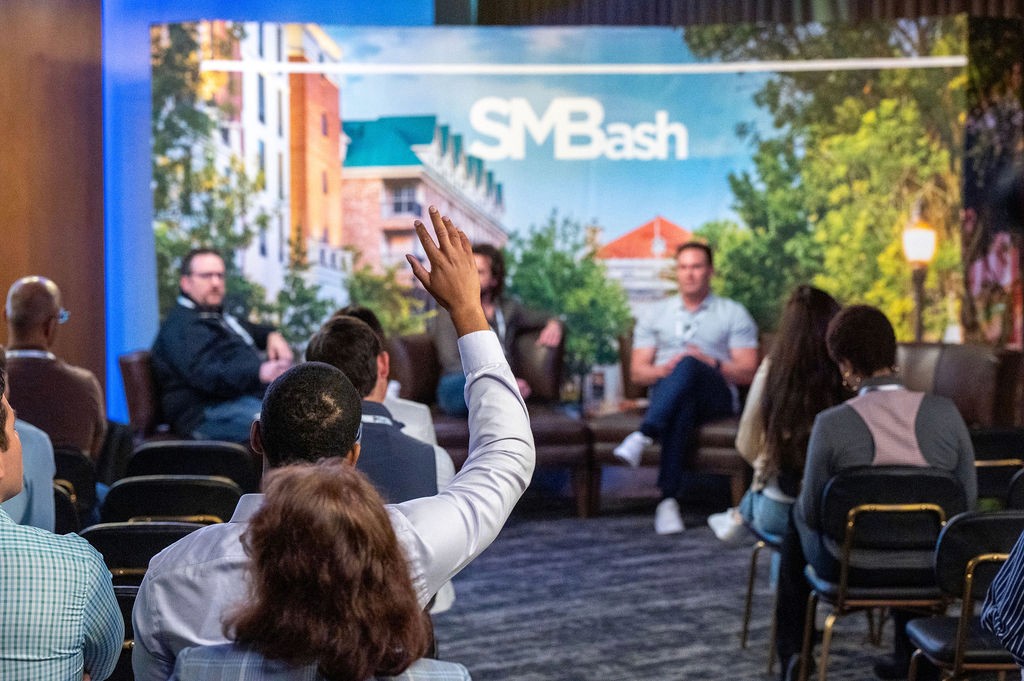
Host: Let's open it up to questions.
Audience: It sounds like doing this as a partnership is best. Could you have done this alone?
Palmer: No chance.
Chase: I feel the same way. Yes, it's a lot of economics to give up. The times where those economics have been dwarfed by tremendous value and upside have been those Friday afternoon beers where it's me and Adam and we're like, whoa, that was a week. The ability to tap one another in and out. I could not imagine doing it without a partner. We weren't necessarily optimizing for economics. It was, how do we make this fun, and how do we ensure we get to the outcome we want. Having a quality partnership is hard, requires patience on both sides, but the times where it has paid for its weight in gold have been more on the emotional side, having someone to help carry the emotional burden, a thought partner.
Palmer: Is it possible? Sure. My number one piece of advice to people I talk to is, don't let anyone tell you what's the right way or the wrong way to do something, because plenty of people told us our way was the wrong way. For me, no chance.
Audience: Did operating a business help you be better at the holdco level?
Palmer: 100%. Walking not just a mile but more than a mile in those shoes helps me. I work with four of our CEOs now, so it helps me empathize and understand what they're going through, the highs and lows. I can talk to them about things they can't talk about with their own team, because there are things you can't talk about with your team when you're a CEO. I can pattern match. I've been a CEO longer than a lot of our CEOs have been CEOs thus far. I've been in this world for 10 years, even if I haven't done it myself, I've seen a lot of movies play out. It makes me better talking to business owners. I can say, yeah, I've run a lawn care business, not a wealth management firm, but a lawn care business. I know a lot about agronomy now, a shocking amount.
Does it make you better at searching? Yes. You understand more clearly what really matters and what doesn't. The tendency is, especially first deal, especially if you're coming from a finance background, your diligence request list is five bajillion lines long. You want to turn over every little pebble. Then you realize from operating a business, these are the five things that really matter. The reality is, you can turn over as many stones as you want. You don't know what you bought until you get in post-closing. Let's focus on the big things that could be true deal killers and the rest of it, it's going to be messy. There's going to be skeletons in the closet. You're probably not going to be able to talk to the team. We've done probably 40 acquisitions now. The number of times I've talked to people beyond the seller and the spouse, less than five. It's an unknown.
Host: That's why these businesses are trading for four or five times. There's so much risk.
Palmer: I wish lawn care businesses were trading like that.
Audience: Are there specific things you won't look at?
Chase: Since we take a diversified approach, how do we look at new acquisitions and search? We want to be good owners. That means we want to come to the business with advantages, whether that's capital and energy, or ideally we have insight on how to make the second chapter of this business just as exciting as the first. Restaurants, we can't add a lot of value, we'd probably destroy a lot of value real quick. There are certain categories we don't look at. Even across multiple industries, there's oftentimes commonality in playbook and strategic vision and opportunity. We want to come into a company with a vision of, here's what we see the next 10-plus years looking like, and here's why we think we can be good at helping unlock that future. That can apply to a variety of different businesses.
Right now, because we're geographically focused and have a lot of internal projects going on, we're relying on deals that come to us. We're pretty opportunistic. We get a couple a week. Most aren't that great. The ones that look interesting, one of the filters we apply is, why us versus another buyer? What can we uniquely do? In the absence of that being industry, we look for what we can do to help unlock potential in the business.
Audience: How do you personally get paid? Are you piling cash at the holdco? Do you take a salary?
Palmer: I take a salary. Cash does build up at the holding company to fund future acquisitions. It's a constant balance of capital, deals and CEOs. They're never perfectly in balance. Capital's not really a huge factor. We haven't had to walk away from a deal or reinvestment opportunity. Some of our companies are making chunky CapEx decisions. Our frozen dough manufacturing company just opened a new plant in a new province. It's a tens of millions of dollar investment. Capital's not the issue. We're massively under-leveraged, so that helps. If we had great opportunities and capital was an issue, we'd figure out a way to solve that. I'm focused on building and compounding the share value of Chenmark. If I wanted capital, my opportunity would be to sell shares.
Audience: For searchers, are there other holdcos out there that have done it differently and have investors on a deal-by-deal basis?
Host: The alternative in many ways would be independent sponsors who structure and capitalize each deal, sometimes called a sponsor or platform. In our holdco model, you take money from investors at the holdco, they participate in all of it, so there's no misalignment.
Palmer: There's a million different ways to structure. Brent Beshore has a holding company, he has funds. There are people who have raised capital for holdcos that are fresh out of business school and are raising holdco capital. There's no one right way to do it. It's what's right for you and what trade-offs do you want to make.
Chase: The only wrong way to do it is one that's not aligned with your long-term vision.
Audience: Did you guys use leverage on the first one?
Palmer: First one we did. We've done two or three SBA loans. We've done two deals all cash and seller note. We meet the capital structure based on the context of the deal.
Host: Time for one or two more. The biggest misconceptions or maybe some of the most dangerous propaganda?
Palmer: I'm not on X, which is probably good for me. There's a Ronnie Coleman quote: everyone wants to be a bodybuilder, but no one wants to lift heavy-ass weights. Everyone wants to be a holdco owner, but no one wants to run a business. Those that do are going to be great for it.
The misconception is, oh, it's easy, just hire a general manager to run it. My life is going to be like Warren Buffett, drinking cherry coke and eating peanut brittle and reading a lot and making five decisions a year. The reality is, that wasn't Warren 50 years ago either. That's Warren now. It's not a shortcut. It is a long-term thing and it can be very powerful. Whether it's more or less than a roll-up depends on how well you execute and the timeline. It's not a get-rich-quick thing.
Host: When you're a holdco owner, there's this impression your job is easy, you're an investor, an advisor. Maybe that's the case after 10 or 12 or 15 years, but at the very beginning you're just a second layer of operating. Period.
Chase: A holding company is attractive to investor types because it gives you the surface area of capital allocation opportunities you can stack-rank irrespective of the operating company, and there are private investment opportunities that only you have access to. There are compelling reasons why an investor type would be attracted to it. But the reality is, at least in lower middle market and main street small business, you don't get to enjoy that advantage until much, much later. It is full-fledged in-the-trenches operating for your first several years.
Palmer: Piggybacking on that, ironically, it's not attractive from an investor standpoint on the front end if you don't have a track record. The feedback a lot of people get on the front end of a holdco is, now I'm taking two bets on you. I'm taking a bet you're going to be a successful operator and that this first deal can go well, and I'm taking a second bet that you're going to be a good capital allocator behind that. Investors hate that. They don't want to take two bets in one. I was 26 when we started Chenmark.
Host: You can get the first small business acquisition to work, to grow, to spit off cash such that the cash you spit off enables you to hire somebody you can trust to further the business and you can step out and do a second one. Then 10 years up, you have what looks like a very fashionable holdco.
Chase: To piggyback, if you're good in one company at empowering other people, investing in them, getting out of their way, figuring out what to work on, not getting distracted on things that feel important but aren't important, you're naturally going to progress yourself into a position where you're out of the day-to-day of the company. Those skills do parlay nicely into a holding company skillset. You've got to cut your teeth in that first operating company.
Host: Thank you guys.