PLAYLIST PRESENTED BY

Inside the Self-Funded Search Cap Table with Feta Fund and Workbench
Description
Saumil Jariwala of the Feta Fund and Tony Cappaert of Workbench Capital break down how they structure equity raises in entrepreneurship through acquisition deals, including step-ups, preferred returns, liquidation preferences, governance, and exit dynamics. They share what they look for in searchers and businesses, how to build a cap table that holds up when things go wrong, and why seller fraud and risk-on behavior in today's market deserve more attention.
Recent Videos



Transcript
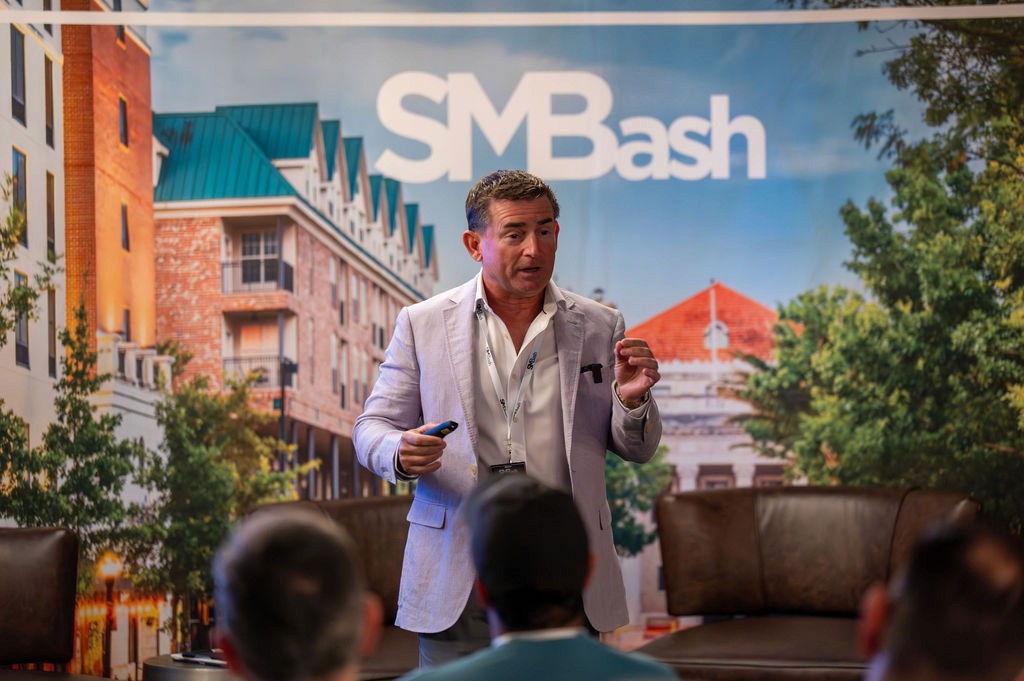
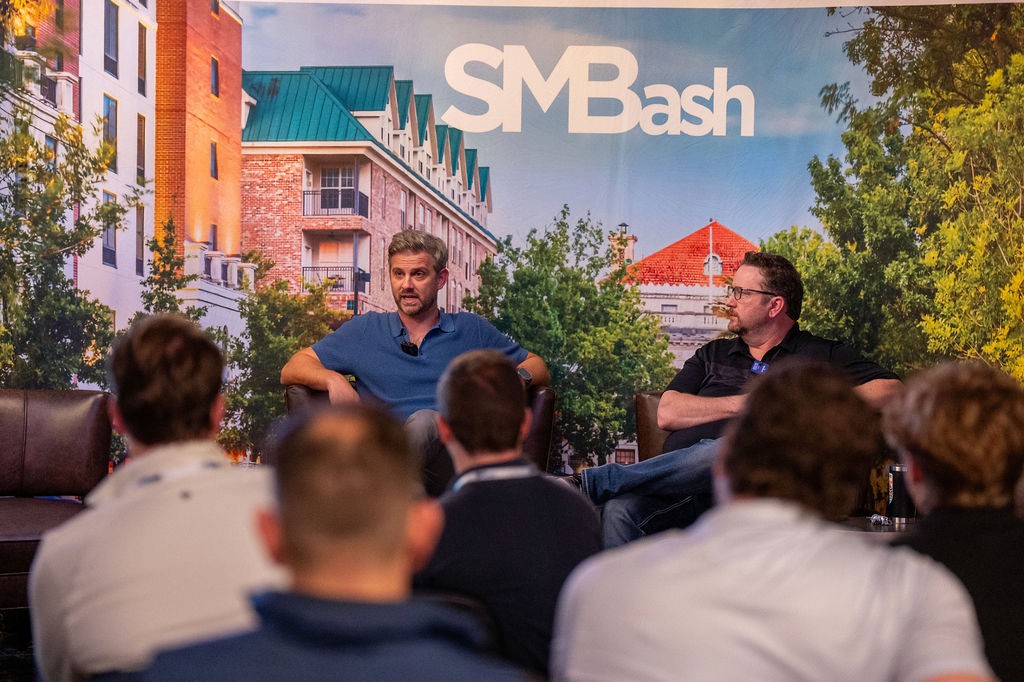
Host: I'm really excited to bring you this panel. We're going to be talking about the equity raise component that's prevalent in almost every search deal nowadays. We have Sawmil Jariwala of the Feta Fund and Tony Cappaert of Workbench Capital. These are two of the most intelligent, smartest people we have at this conference, and they've been doing this for a long time, long before ETA was cool. I'll let them introduce themselves and then we'll get started.
Sawmil: I run the Feta Fund. I worked with my first searcher in 2016. Since then I've worked with over 60. I started doing search fund investing full-time in 2019, and then raised and launched theFeta Fund in 2022. It's a boutique private equity fund that invests in search across the models, primarily self-funded, but we also do some independent sponsor and traditional search fund deals. I'm all in on search, but I get to express that a few different ways. I live in Seattle with my wife Nata and my son.
Tony: I'm Tony Cappaert, Workbench Capital. We invest in self-funded search deals and sponsored deals. Typical check size is $350K. We've done 30 deals in the last three and a half to four years. This is my fourth time at SMBash. Separately, I have a vacation rental investment fund and property management business. We own and operate a bunch of cabins and cottages outside of DC, where I live. Previously I ran a software business. The fund is called Blue Maple, Fund One and Fund Two, and there's a sister business, Blue Property Management. It's an opco-propco model.
Host: We don't have slides. We want this to be a conversation. Tony, you mentioned check sizes. Give us more detail.
Tony: On the self-funded side, we write checks between $100K and $500K. For traditional search fund deals, we'll do $500K to $1.5 million. The breakdown is about a third self-funded, two-thirds traditional these days.
Host: One of the common questions from searchers, particularly self-funded searchers, is around raising capital and terms. What are you seeing in terms of investor terms?
Saumil: There are three components: the liquidation preference, the step-up, and the pick interest rate on the preferred. Generally we're seeing a 2x step-up. There's a wide range for the pick from 6% to 15%, but 12% feels normal. And a 1x liquidation preference. That said, the idea of "market" feels like an unfair term because our industry is so bespoke. Deals can vary a lot from those averages.
Tony: Similarly, in the last year, our average step-up was 2.1x. Pref was about 11.5%. A couple of years ago in the peak ZIRP environment, prefs were a little lower, so as a searcher you were giving up less equity. Let me unpack the preferred return and the step-up. The preferred return is essentially: if an investor puts $100K into the deal at a 10% pref, we get an extra $10K every year until that capital comes back. It's downside protection for the investor.
The step-up: I hear searchers say investors will only do a deal with X step-up, and they don't understand the logic. The logic is: you're going to buy a business with a lot of debt, which is great because you'll be highly levered. If it modestly grows, that translates to a great return for everybody. But investors are sitting behind that debt. We don't make any money until the lender gets paid back. We want to share the benefit of that leverage with you. So if equity investors are putting in 10% of the purchase price, collectively they need to own more than 10% of the business. The step-up is saying if investors put in 10%, they need to own 2x that, or 20% plus.
Question: Does that change if the leverage changes?
Saumil: What we're describing is the self-funded search idea, where the deal is extremely levered, 70-80-90%. The 2x step-up norm holds whether it's 70% or 90%. If it's 70% leverage, 30% of the purchase price is from investors, and a 2x step-up means 60% of your business is owned by investors. That's why you want more leverage; you give up less of your business. Where this breaks down is independent sponsor deals, which typically use a carry-based model. The step-up doesn't apply there.
Tony: At the opposite end is self-funded search where you live and die by leverage. You might keep 25% of the business with 50% bank debt and 50% equity from investors. The trade-off and the type of business you'd want to buy with that model looks really different.
Question: Can you explain the 1x liquidation preference?
Tony: It just means investors get their money back before money's distributed elsewhere in the waterfall. 1x is the most searcher-friendly. It could be 2x, and there's an argument for that too. The investor has very little say over whether and when the business gets sold. A greater liquidation preference gives more downside protection if you sell prematurely. Let's say you bought for $5 million and sell for $5.2 million. That's not a great return, but with a higher liquidation preference, you get more protection in a mediocre exit.
Saumil: There are three ways folks are getting paid. First is the liquidation preference, a multiple of the investor's capital. Second is the preferred return or pick, an annual multiplier on the initial capital. Third is the common pool, where we share. If investors own 20% of the equity and you own 80%, money making it to that final part of the waterfall is split 80-20.
Question: For a typical 80-10-10 search deal, how much equity is the searcher retaining?
Tony: 80%. 10% of the deal value is equity, multiplied by a 2x step-up, and that's the common equity kept by investors.
Saumil: But when the business sells, they're not necessarily getting 80% of the price because investors get paid first. It's a waterfall. The pref and liquidation preference are downside protection in a mediocre outcome. They matter less the better the outcome, because the majority of the proceeds will flow through the common split. Functionally similar to carry.
Question: What skillset or features do you look for in searchers?
Saumil: At a first principle level, I want someone who's not waiting for permission. Someone who hasn't called the customers of the target, but has called customers of similar businesses and asked how they pick a provider. Someone who's emailing you from a personal Gmail but has set up their own website and email address related to the entity name because they thought they should have something professional. Someone who's just moving.
Secondly, someone with a good "why" for wanting to do this. Making money is a why, but it won't keep you warm at night when you're going through the perils of operating a business with employees who are hard to work with.
On backgrounds: I worked at a larger fund before, with $250 million dedicated to search. The three searchers who were better than everyone else: one never went to business school, one had an MBA, one was a lawyer. Ages ranged from 28 to almost 40. What they had in common was the intrinsics, not the background.
Tony: I want to invest in a transaction where the searcher seems like they can operate, knows what they're getting into, and will be honest with me. The business should be consistent in generating income, modestly growing, 5% growth is fine, where the owner isn't driving that growth. On the operator side, I like real operating experience. If you're using an SBA loan, the business probably isn't more than $1.5M EBITDA, which means not a lot of middle management, so you'll be doing a lot of work yourself. If you don't have that experience, it's an unknown factor. So I'd ask: what about this person's background tells me they'll be successful running a small business without experienced middle management?
On the business side, I tend not to invest below $1M of EBITDA because businesses tend to be more brittle. I don't like project-based or cyclical revenue, like new construction.
Host: What's interesting is that someone might say, "I've never operated a business." But are you doing things that demonstrate you can operate? Have you called the website, reached out to customers, talked to industry people? It's entrepreneurial by nature.
Saumil: High agency individual. Exactly.
Host: How much weight do you put on the searcher versus the deal itself?
Saumil: It's a tough question. If I don't believe you can operate, or don't trust you, it doesn't matter how good the business is. The reverse is also true. If it's not a great business, you could be an amazing operator and I won't do the deal. Both are important.
Tony: We're in an environment where it helps to be picky. We provide a ton of support after acquisition, so we own the consequences of working with you.
Question: How do you partner with searchers during acquisition and running the business, in good and bad cases?
Saumil: I get involved at two stages. I love the diligence stage because I see lots of search deals and can help searchers stand on the shoulders of those who came before. One of my theories: if I can work with a searcher and help them buy a business where, three years in, I have 100% confidence they're still in the seat, we will make money. Maybe less than everyone wants, but we will make money. So during diligence I'm trying to uncover risks that make it less likely you're still in the seat 36 months in. I also take board seats for the right searchers.
Tony: I meet lots of searchers very early. Most helpful during the search is having conversations like this: how do you make yourself attractive to investors? Until you're under LOI, there's so much deal flow and I'm not an expert in most industries. Once under LOI, I'll take a look and give candid feedback. If I'm in the deal, I want to get smart people on the cap table. There are LPs in my fund that will write additional checks. Almost every deal has a board with an independent. I want to make sure there's an independent with way more industry experience than I have.
Post-transaction, I'm supportive where I can be. Some searchers have never operated a business. They use me as a sounding board. Some I talk to once or twice a year, others every couple of weeks. It's searcher driven. If you don't want to hear from me, I'm not beating down your door.
Saumil: That's so different from private equity, where the owner is always breathing down the CEO's neck. Searchers do this because they want to feel like entrepreneurs. They care about autonomy, ownership, control. We're careful to avoid breathing down necks.
Question: Do you have reporting standards?
Saumil: I have a friend who's a career accountant. He's always shocked the answer is no. I can't defend why not. We probably should have common reporting standards. But if we're too overbearing, we kill what makes this fun.
Tony: At minimum I want updates twice a year. I'll ask for high-level financial metrics, top line, profitability, performance versus goal. But if I don't ask, half the time I don't get it.
Saumil: It is a shame. It's hard running a small business. Things aren't always going as you want, and no one's always hitting goals. It would be refreshing if updates were forthright and shared regularly, not to check a box but so I or someone in my network can help. Some operators get nervous about shame around things not going well. It's a real mistake not to be transparent. Invite people into your circle to help.
Tony: Set the tone that updates aren't an opportunity to grill you. It's: how can I support you?
Question: How would you build a cap table for a transaction, and how would you engage post-close?
Tony: Once you're under LOI, the clock is ticking. You need cash. Do the work before LOI to make sure you know enough people who would write big enough checks for the type of deal you're doing. Don't waste time talking to prospective investors early on, but build that list so you know you can put together $1-2M of equity. That helps you sleep at night and close faster.
Ideally you want people who are value-add or at minimum won't be a pain. Friends and family can be great if they don't need the capital back, but be mindful, this comes up at Thanksgiving. People with skin in the game who are vested. Quarterly updates, candid about what's not working. Invite them in for help. Separately, you should have a board working closely with you.
On boards: some searchers think they own 80% so they don't want a board telling them what to do. The board has teeth to ensure you don't make decisions that overly benefit you or harm the business, like an extravagant salary. But more importantly, it's there to help. Five seats: two from you, two from investors, one independent.
Saumil: There's a temptation to take the cheapest capital, investors who'll buy 10% of the business but only keep 15% of common equity, and agree to limited governance. The tricky thing is Tony and I have seen what happens when these deals go wrong. Personal guarantee, seller fraud, misrepresentation, you can't always detect it in advance. You buy a business that's half as good as you thought. In that situation, it's helpful to have people around to help problem solve. If you took cheap capital, often those folks are new or explicitly passive, so you're out there alone. It doesn't make a big difference in the upside case, 85% versus 80%, but in the downside case you're by yourself trying to fix a broken business. The right people care about governance, market terms, a 2x step-up.
Question: What are the governance expectations as a minority investor?
Saumil: A real board: five seats, two searcher, two investor, one independent. You shouldn't be able to increase your salary beyond X% without board approval. Take on additional debt beyond a few hundred K, sell the business, do M&A, all need approval. Drag-along, tag-along rights too.
Tony: We want to avoid situations where you can enrich yourself at the expense of everyone else, not just investors but employees and customers.
Question: When should a searcher approach you, and what's your vision for exit?
Saumil: I like meeting folks really early because I want to assess whether you're high agency. Easier if I meet you before you find a transaction.
On exit: I want to get off the train when the conductor says they don't want to be on the train anymore. As long as the searcher wants to keep driving, I'll stay on. As soon as they say it's not fun anymore, or the business represents too much of their net worth, then it's time.
Tony: We run small funds and our LPs want returns, measured by MOIC and IRR. If I never see an exit, MOIC looks great but IRR suffers. I need liquidity events. I can't run these funds for 20 years. Most searchers say they'll run the business and resell in five years. Reality is one to five years and often takes seven. I underwrite for a 30% IRR over a seven-year hold. I typically want a put option in the transaction at year 5, 6, or 7, where I have the right to resell my position to the business at a third-party valuation. That provides liquidity for investors.
More sophisticated investors who invest regularly need liquidity. Friends and family might be okay with you running indefinitely.
Question: What about add-on opportunities?
Tony: I love when we can do an add-on using cash flow that makes sense and would underwrite on its own. It can increase EBITDA at perhaps a higher multiple. The downside is it's a massive distraction. I'm asking, especially if this person has no M&A experience, to what degree they'll be successful integrating it.
Saumil: I don't have a lot of M&A experience and wouldn't trust myself to do a roll-up. I find it curious people who are good at operating want this, because it's a different beast. Opportunistically it can be attractive, buying a competitor or buying at a discount because a peer wants to sell.
Tony: When you're a searcher, nobody wants to talk to you. As soon as you become an owner in the industry, everyone wants to talk to you. The hardest part is the first year. So if I can put more equity in and double down on a business that's made it past the tricky part, it's a great opportunity.
Question: Are board seats paid?
Tony: For one board I'm on, a couple years into a bigger transaction, it's $20K a year per board member. That money comes out of investors' pockets. The business is $6M revenue, $1.5M EBITDA.
Saumil: I'd encourage searchers not to pay board members. I don't think it's common. Maybe the independent if they're very good. But you, the other investors, assuming they're engaged, you don't need to compensate them.
Question: What about distributions?
Saumil: Pretty much every investor seeks a 30-35% IRR. IRR is a forward-looking financial model. A great way to inflate IRR is to assume you'll return a lot of free cash flow early. I despise that. When you acquire a business, you want to build a cash cushion, and you're trying to grow more aggressively, which takes cash. If you assume you'll return a lot of free cash flow in early years, or that EBITDA margin will expand early, you're wearing rose-tinted glasses. The reverse is likely true. So in most transactions I've done, the vast majority don't return cash in years one and two.
If it's a C corp going down the QSBS route, you don't want a lot of cash returned because of double taxation, and you want the tax-free capital gains treatment. If it's an LLC, I'd love some cash distributed. Most LLC deals start distributing around year two. Some distribute a ton, either to pay down the preference stack quickly so the preferred return stops accumulating, or because the plan was to raise capital with slightly worse terms knowing they'd return cash early to inflate IRR.
The punchline: don't assume you'll return a lot of cash. Most do it after the first two years.
Tony: It's a powerful lever for new operators, as opposed to making SBA payments.
Host: We're running late. One last question: give me one thing you've never said at an ETA conference.
Saumil: There's a strange thing happening in the ecosystem. There's risk-on and risk-off behavior. We're in what looks like a risk-off environment: Trump policy changes, tariffs, AI affecting tons of businesses. You'd think people would slow down and double-check. Yet the behavior I see from searchers is risk-on. More deals are getting done, more people are coming to the ecosystem. Eric mentioned 40% of deals are stock purchases now, where you don't shed liability the way you would with an asset purchase. It hasn't bitten anyone yet, but it's on my mind. Don't let the enthusiasm prevent you from doing the checks to make sure you're making a smart decision.
Tony: The two deals I've done that went to zero were both related to seller fraud or lying. I don't think people think enough about that. I see searchers shopping the advantage that the seller will be involved post-transaction, and that works out a minority of the time. Whether outright fraud or lying by omission, maybe one in 10 to one in 15 deals has some form of it. The two deals that went to zero for me were due to that. At least two other deals had sellers being sued by the company. Overinvest in how to suss out the integrity of the seller, and invest in a strong QoE provider to ensure you're buying what you think you're buying. In the last six months that has been beaten into my head through various deals and conversations with other investors.
Host: A round of applause for Saumiland Tony.