PLAYLIST PRESENTED BY

Not All Lawyers Suck: Inside Legal Strategy for ETA Deals
Description
The founders of SMB Law Group break down how to work with legal counsel on entrepreneurship through acquisition deals, from LOI structuring and SBA-eligible terms to working capital negotiations, indemnification, and avoiding busted deal fees. Practical guidance for searchers, operators, and SBA lenders navigating the gap between downmarket lawyers and big-law M&A pricing.
Recent Videos





Transcript
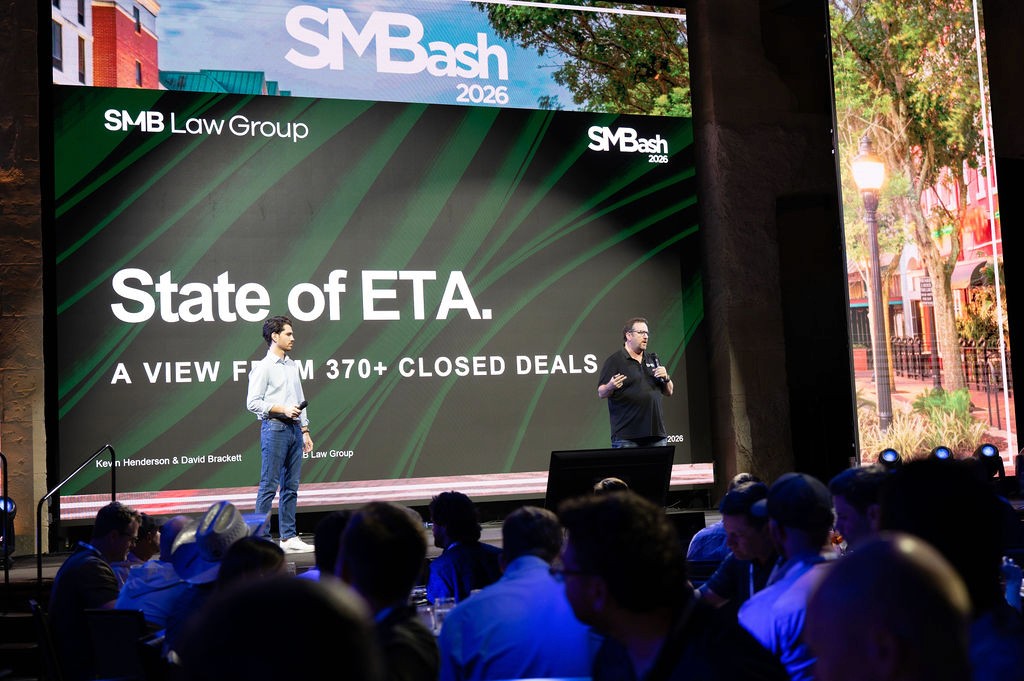
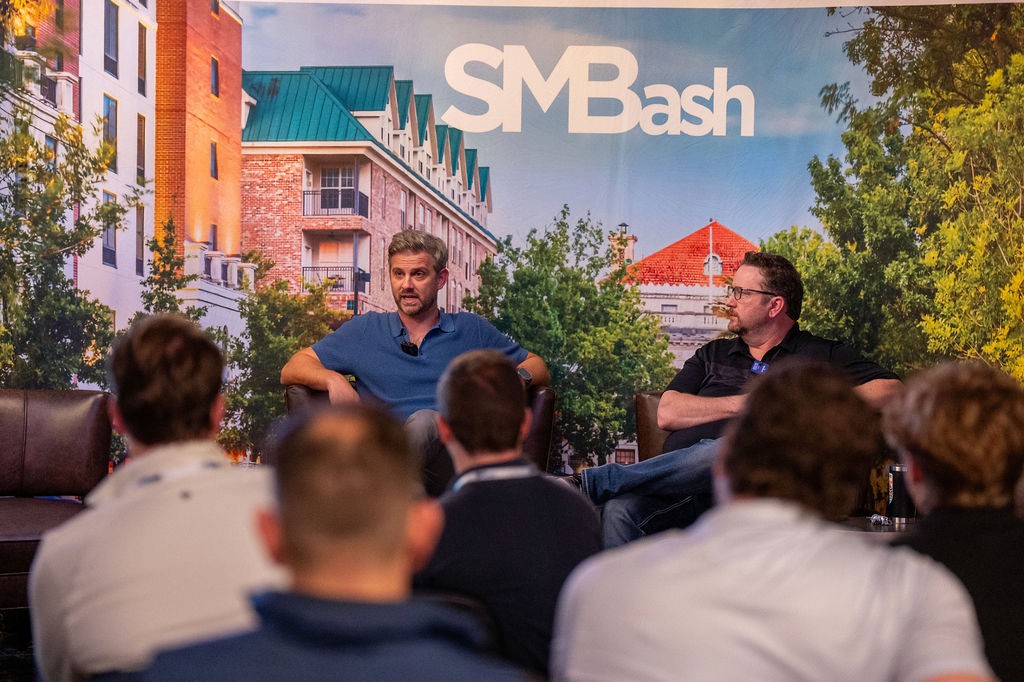
We're going to do something a little different here. We're all here because most of us want to acquire small businesses, and that's what SMB Law Group helps clients do, acquire businesses. But it is itself a startup, ironically.
First off, where were you guys 12 months ago in your careers?
Eric: I was actually in the shower thinking about quitting the largest and most prestigious M&A law firm, arguably in the world, to service crazy people off of Twitter that are buying everything they can get their hands on. I'm looking at you, Jake Wakeley, wherever you are. Laughing and thinking this may be the dumbest thing a lawyer has ever done. And here we are, 12 months later.
Kevin: I was working a corporate job, planning to launch this law firm not 12 months ago, but 10 months ago, when I was getting emails from my corporate job saying, hey, by the way, return to work starting May 1st, three days a week in the office. I called these guys and said, hey, remember that July 1st launch date? I'm turning in my two weeks notice tomorrow. I had left big law after a decade, spent a few years through Covid in the corporate world, decided I hated that almost as much as I hated big law.
Sam: I was a lawyer at Foley and Lardner in Tampa helping mostly business owners sell and cash out. This was in 2016. And I said, God, it's so much easier to just sell a business and be rich than to be a lawyer. So I should go buy a business. I took a year and a half, bought a couple businesses, but the pain I experienced being a client of a law firm was kind of how we structured our relationship with our clients.
If you're a buyer of a small business and you hire a lawyer to pay them hourly, what is your bill going to be when you close? No idea.
For those who have bought a business, what were your deal fees? First deal, $250,000. Second deal, self-funded, only $35,000. How did that compare to what you thought it was going to be? The first one was really shocking.
So all the way back to 12 months ago, we put the firm together to try and be a solution to all of us in the room that are buying businesses.
The backstory: we started on Twitter. Sam's active in the ETA community. Kevin wasn't at the time. One of our first clients, a good friend of mine, was at Goldman in 2017. I was doing M&A in Dallas. He was getting ready to leave to Austin to start a search fund. He said, you should buy a business. He got me introduced to the HBR Guide to Buy Then Build. I sat on it for a couple of years. Flash forward to Covid and I'm like, I'm quitting the law and I'm going to buy a business.
I started networking on social media. I was tweeting anonymously about M&A. I'm going to trade my knowledge of M&A for your knowledge of business buying and then go buy a business. Then you guys started sending DMs saying, hey, I need to find an experienced M&A lawyer that's reasonably priced, that's entrepreneurial, that gets it, that wants to do my $2, $4, $6, $8, $10 million deal.
I didn't know at the time that really doesn't exist. I mean, there are some lawyers that will take those deals. They're few and far between. So I started trying to find lawyers to give these deals to. The only person who was well-suited at the time was Kevin. He was working in-house at Flowserve and doing SMB deals on the side.
I started going, hey man, this space needs a solution, because the existing options are either downmarket lawyers that don't know M&A. They don't know indemnification. They get their ass kicked in negotiation. They give up crazy things they shouldn't give up. They're focused pedantically on immaterial things that don't matter. The flip side is you can find a good M&A lawyer, the Goodwin Procters, the Sidley Austins, but they're going to charge you $250,000, and they're conditioned for $50 million, $100 million deals. They're dying on hills, over-negotiating everything. And you guys are saying, give me something right in the middle.
We knew upmarket M&A, hundred-million-dollar, billion-dollar deals, but we didn't know SMB. It's a different animal. We needed somebody to bridge that gap, someone who knows legal M&A but also knows entrepreneurship through acquisition, who has been in the buyer's seat and can help us with SBA lenders. So we turned to Sam, and we launched in May of last year.
We closed 28 deals in six months last year. We've probably hit that number already this year. We have 54 in process as of last Monday. So other than maybe the QoE community and the lending community, we get a really cool view at what is actually closing out there these days.
Our average deal is probably in the $5 to $6 million purchase price range. It is usually with an SBA loan. Usually the SBA loan is going to represent 80% of the purchase price. Usually there's 5% to 15% of the purchase price in a seller note, and the balance is in equity.
Part of the purpose of the panel is to talk about working with a lawyer, how to find a good lawyer. Not all lawyers are terrible. A lot of them are. Most of them are probably. Private equity has a hundred law firms they can go to, pay $250,000 to a million dollars in legal fees and have great representation. Small business has Uncle Joey's divorce lawyer in a lot of cases. How do you plug that hole? What are you looking for? What's important to make sure when you're about to sign a personal guarantee that you're going in with eyes wide open, mitigating the risks with competent advisors?
It's not enough to ask, are you an M&A lawyer? Because every lawyer trying to pay their bills is going to be an M&A lawyer when you ask them. You want to understand: what do they see? How many reps are they getting with SBA-backed deals? How many deals have they closed?
When should you call your lawyer? Pre-LOI? Post-LOI? Post-QoE?
What we suggest for first-time buyers, and Bruce has a phrase for it: congratulations, you've structured a deal that I cannot close. All the time we are seeing, whether we're helping a buyer or a seller, an LOI they've put together, and it's perfectly crafted. Let's say buy-side, $5 million deal. They've negotiated a three times EBITDA deal. It's got some recurring revenue. They're going to pay 80% of the purchase price in cash, 10% in equity, and 10% earnout. It's because in most cases we're using an SBA loan. The SOP says you can't do an earnout, and you can't have rollover equity. All the time we're handed an LOI from the searcher that says this is a slam dunk, and we have to send them back to the seller and the broker to renegotiate that deal.
Kevin: That's the number one question we get. When should I consult a lawyer? My number one objective, aside from getting your deal closed, is to make sure we don't have busted deal fees. I do not want you to have a legal bill but nothing to show for it.
There isn't a ton of legal help needed at the LOI stage. Most people in this room are more than capable of taking an LOI template, especially if you use ours, and filling it out yourself. The benefit is there are things that are SBA-ineligible that you don't realize. There are things commonly missing. You guys always forget working capital. We know what to push on from a market term perspective. Consulting services, you don't ask for enough. You're often reluctant to ask the seller to stay on board. If you just say, hey, I like you, I like what you've built, would you help me transition this business over the next six to 12 months? They'll probably say yes.
Promissory notes, there are things that are SBA eligible like forgiveness that can be used as really smart tools to overcome business issues like customer concentration. I'm a big proponent of: come to a lawyer, pay a nominal fee at LOI stage to make sure you've got a sound piece of paper that's actually bankable. Then go away. Get your lending lined up, get your investors committed, get the term sheet agreed to, and do your financial diligence. Call Elliot and Guardian, do your QoE, make sure this business actually pencils out. Don't start running that legal bill until you come back with a business you've got high conviction on and the money to actually do the deal.
Your deal's going to die in one of two stages: in QoE in the financial diligence stage, or it's going to die spectacularly at the end at the three-yard line, often over something that should have been covered off in QoE early.
What happens when a searcher is buying a business represented by a real estate broker who says, I don't know what an LOI is, but here is this purchase agreement, and indemnification is something they Googled three days ago?
Kevin: The idea may be great. The problem is you have to look at the incentives. Those forms coming from brokerages are seller-aligned. You should know going in eyes wide open, it's not going to be friendly to you as a buyer. By and large, there's no indemnity. The reps are like this long. They're terrible. It puts you in a really bad position with everything to lose. If you don't have indemnity and you have crappy reps and you wire $5 million and something turns out to not be right, yeah, you've got diligence, but you're at a significant information asymmetry with the seller. They know this business inside and out. You're learning it on paper and in a couple of meetings.
I just had a buyer walk away from a deal this last week and straight up on the call told the seller and broker, I get it, I don't necessarily think you're being unreasonable, but this is the line I've drawn, and if this turns out to be wrong, I lose everything. On the other hand, you stand to lose nothing. You've walked away with 90% of your purchase price. That was a line he had to draw, and he ended up walking away from the deal over it.
If you've got a good pipeline and they want to force a crappy agreement on you, want money to go hard in 14 days on a quarter-million-dollar deposit, some buyers don't want to play ball, move to the next one in the pipeline.
Eric: We are also not deal-killing lawyers. We get the objective: tell us what we need to know, get the hell out of the way. On the little deals, the pre-baked form isn't the worst thing in the world if it simplifies the deal and gets it done. It's not in the buyer's favor, but sometimes we have to do it. I had a really good deal close three or four months ago from a buyer on a Texas broker form. He was a sophisticated guy, had bought and successfully operated another business. He said, listen Eric, I get this sucks, but we need to do what we can with this and get the deal done because I really want this business. And that's what we did.
A lot of these brokers don't understand M&A. They conflate it with real estate: earnest money deposits, due diligence timeframes, money going hard, things that don't make sense in M&A. We have to be practical, protect our clients, and make sure things like earnest money, which I hate in M&A, are fully refundable no matter what happens. There are red lines.
Kevin: We see this all the time, lawyers telling their clients you shouldn't be doing this deal. That's fundamentally not our job. Our job is to identify those risks, walk you through why it's awful, what risk it poses, what we can do to mitigate, what we can't. Then it's your choice. A good lawyer is going to find a way to work with your objectives.
Eric: When you go out and hire a lawyer, ask for references, try to understand their experience. A lot of these good mid-market M&A lawyers are head of the practice group at an impressive law firm with the "best lawyer in America 2013 to 2022" plaque. Part of the reason they might be great as head of the corporate group is they've figured out how to bill hours, how to churn that machine and make money. Part of churning that machine is getting people wound around the axle.
Q: How do you determine which businesses to take on, and how are you educating big law associates coming to SMB law?
Kevin: Business evaluation, we don't do. We are lawyers. If I start telling you whether or not it's a good investment or a good business, I'm out over my skis. We've added a number of big law lawyers. Jake did M&A and SMB for a long time. It's different, and the incentives are different, and you guys are different. We need smart people who've done these deals to give them context. That's why we went out and got Sam when we started.
Sam: When you're in big law as a lawyer, or maybe even private equity as an investor, you get taught a lot of habits that are hard to break. When you come down to SMB, you have severe risk aversion, an expectation that financials are going to be perfection. Then you go see these upside-down copies of the QuickBooks printouts where the balance sheet is not even close to balancing. That's the business we're in now. We want big-law-quality lawyers who can play this game. It's a different game.
It's a fact of small business buying that you have to see and do a lot of opportunities to get closed deals. We've built the business around that to help a lot of you submit a lot of LOIs. One out of four, one out of three LOIs you submit might get signed, and the odds are just as bad going from signing of LOI to close.
Q (Bruce): On working capital in the LOI, what's your opinion regarding the normal pegged 12-month average versus when that number isn't right and deals blow up?
Kevin: Right now with my current deal, we're trying to close on Monday over working capital. There are differing schools of thought. We're risk mitigators. Anything that's going to be a deal breaker, you want to be as upfront as possible about. You look at a QBO file and can't make heads or tails of it. Nobody knows what they're doing 90% of the time. The more you hide the ball or kick the can down the road, the more likely you'll end up the Friday before closing arguing over what the right working capital is. We get to the closing date and we're off by almost $2 million. $20,000 can be rounding error. $2 million kills deals.
Sam: Anybody who says working capital is not a purchase price negotiation has never bought a business and negotiated working capital.
Kevin: You've got to be practical. Mike Botkin had a seller once say, working capital sounds like a you problem. It's not a you problem, it's a purchase price problem. Yes, Mr. Seller, you may not care to give that to me in the deal, but I need to adjust the purchase price or account for it. I cannot buy a business that does not have working capital. Two weeks after closing I have to make payroll. It's just another asset of the business. If you run a towing company and the seller wants to leave with the tow trucks, you can't run that business after closing. That's a purchase price adjustment.
Eric: It's also strategy. I've had buyers methodically understand the risk, but also understand the parties: I've got a real estate broker that doesn't know what I'm talking about when I say working capital, my seller is super unsophisticated. I realize it's a risk, but I have to do this step by step. Just understand that's a risk. Whether it's a specific number or a qualitative description like "at closing we're going to need this, but we'll figure out the number based on A, B, and C," the more you can get in front of it, the more likely you're getting to the closing table.
Q (Jim Craig): How do you take middle market experience and what could be a 100-page legal contract on a hundred-million-dollar deal and right-size it to a 20- or 30-page contract for unsophisticated sellers and lawyers, while still protecting your client's interest?
Eric: Simple but deadly. We have created documents that are simple but very effective and very deadly in the places they need to be: indemnification. We're dumb like a fox on the buy side. We control the process. As the buyer, you're entitled to your paper. Forget all the mid-market stuff with caps, baskets, deductibles, indemnity. Hit them with really aggressive, simple terms and let them walk back from there. 60 to 70% of the time, they've hired a lawyer who doesn't know M&A at all. If you've over-negotiated based on your mid-market private equity experience, you're not getting as good terms as you could have. Meanwhile, the seller looks at your short document and goes, these guys are being reasonable.
Kevin: Complexity does scale with size of business. A $5 million roofing company is fundamentally different from a $150 million roofing company rollup. Same line of business, completely different business. You're worried about different things, like a portfolio of companies with a national brand, intellectual property, and trademarks. There's some scale where you can eliminate fat. We run into this all the time with sellers counseled with big firms. We get a 90-page agreement and it's like, guys, this is a roofing company and you gave me a five-page intellectual property rep.
When you're a buyer, generally shorter and ambiguity work in your favor. That works against the seller. The more general and broad the language, the more coverage you generally have. Sellers want to take that sentence and turn it into three quarters of a page, 18 bullet points, very specific so anything outside isn't covered.
Q (Lisa Forrest): How do you handle qualitative disconnects you find out about a week before closing when you finally meet the employees and they tell you, oh no, the seller's doing all of that?
Sam: I have no earthly idea. A lot of this is about looking at a lot of businesses to even start understanding what is important to you. My brother walked away from a deal last week over the inability to meet his team ahead of closing. To a lot of you that might be an absolute non-starter. For a few of you, that's a risk you're willing to take for the right price.
Eric: There's a lot of gray area. The reps in the document, you can't diligence that business and get all the skeletons out of the closet. You'll never know the target company as well as the seller. We build a bunch of reps into the document covering everything from whether you actually own the business to environmental problems, contracts, customers, suppliers. We'll ask them, do they have any reason to expect this supplier or these customers to stop doing business in the near future? If they receive notice of these types of things. You smoke out some of it, not all of it. Then you have a really aggressive indemnity provision. If you remember anything from our talk: if you're going to focus on anything legal in your deal, it's your indemnification dispute resolution mechanism. Make sure it's as aggressive as it can conceivably be, because it's the only thing coming to save you after you close your deal. Period.
Kevin: Indemnification is a contractual dispute resolution mechanism. In your purchase agreement they're going to make a bunch of statements about the business, a bunch of reps. There will also be covenants: I'm going to do this or not do that. The non-compete is the most prominent example. If any of the statements turn out not to be true, either they've lied, or post-closing something comes up, or they don't do the things they were supposed to do, it flows into your contractual dispute resolution mechanism called indemnity. You can recover from the seller for those breaches.
There has to be some concrete way to recover. If they breached a rep and you lost $100,000, you go to them and they've taken the purchase price and bought a sailboat and paid off their mortgage, you're going to court. So you set aside a pot of cash. In mid-market it's typically an escrow. In SMB, SBA lenders are not happy about escrow accounts and SMB sellers don't want to set aside a portion of the cash. So we almost always use the promissory note. You can reduce the promissory note for those indemnity claims. Be aggressive about how you have the right to do that. Do you need to go through an adjudicated process, or can you literally go to the note and say, hey, you owe me $100,000, so this $500,000 note is now $400,000? Your lawyer is going to get you different terms in that area. That's an area to negotiate simply but aggressively in the documents.
Q (AJ Lawrence): How can we as buyers use AI to work better with you to get a better outcome?
Eric: It's a great tool. I've got a buyer right now, on a plane this morning. The bank says, for whatever reason you need to draft a promissory note, very simple, where he's going to front $17,500. He said, can I do it on ChatGPT? I said, yeah, run it through ChatGPT and let me take a look. It printed out a document and I looked at it and said, cool. It's an assistant, not a replacement. I've got an ethical obligation to say always consult a lawyer with matters of great importance. It certainly is a great way to get smart on legal issues.
Kevin: It's no different than the 90s. How is the internet becoming available to the general public going to put lawyers out of business? You can go get all the legal information you need, but best and highest use, you can monkey around with ChatGPT and try to draft your own promissory note. You're probably still better off kicking that to the lawyer. It just changes the way the law is practiced. It's going to be a while until it can be incredibly nuanced. They're still going to need a knowledgeable person who understands the unique puts and takes. It just moves to more value-add pricing for legal services than time-based. Now I can get you that promissory note quicker. It still provides the same value. Who's getting the benefit? Is it you or me? It's just going to change the way we price.
Sam: When I was a first-year big law associate, the only thing I did was review data rooms for assignability clauses in customer contracts. There's a software program called Kira now that pulls them all out. Even as of last year in big law, AI is already identifying all that stuff.
Q (Hamilton Rucker): On post-close litigation. I've read previously there's between 10% and 15% of the time litigation between sellers and buyers. Are you regularly seeing that in your practice?
Eric: Our clients don't ever have litigation post-closing. Everything goes smoothly. Disclaimer: that's not a guarantee of future results.
Sam: I've seen it twice in my years in big law and now. We're early days too. Litigation doesn't always come out early. This is another reason you want a good lawyer for that survival period and the promises your seller owes you. If it's short, you've got a short clock on figuring out if they're lying to you.
Eric: What we regularly see: we negotiate purchase agreements, we're very clear we're buying all the assets, and very clear that if you want to exclude any assets you need to tell us now. I bold it, highlight it, note to draft, emphasize it for their lawyer. Invariably we close, and the buyer shows up at the job site and the seller's packing up the computer. The buyer says, what are you doing, put the computer down. She says, no, this is my computer, I'm taking it, it's got my grandkids' photos on it. Okay, well, you're going to buy us a new computer, we're going to hit you for indemnity. I typically tell my buyers, stack those up. You've got indemnification rights for 18 months or five years. No reason to piss her off now. Let her take the computer, go buy a new one, keep the receipt. We've had it with trucks worn out where they didn't properly represent the condition. Don't go make that indemnity claim on day three. She still has a relationship with employees and suppliers. Maybe you need her for transition services. Tally them all up, keep a nice file, and we'll go hit them for indemnity against the promissory note in 12 or 18 months when she's out of the picture. That's fairly common. But actual knockdown drag-out conflicts, I don't know that I've seen it.
Kevin: A lot of this is risk analysis. Litigation takes time, attention, an emotional toll, and a lot of money. The analysis, particularly in smaller businesses, is what is the conflict, and does that rise to the level we actually need to end up in litigation? In the lower middle market, you probably see that more. In these smaller deals we haven't seen it. To Eric's point, the last thing you want to do is a week after closing go back to your seller who's trying to help you transition and whack them over the head over $1,500. You've ruined all of the goodwill you've built up over $1,500.
Sam: Wait until we have equity rollovers in SBA land. As a buyer, are you going to sue your partner over $10,000? That's why they came up with the reps and warranties insurance industry, but even that has affordability issues. That's one of the main reasons I don't like the partial rollover. I don't want to have that relationship with the seller post-closing.
For those of you who have bought a business, would you want your seller as your partner a year later? No.
Now that they can roll equity, if they don't want to, is that a signal that they want to get out faster?
Kevin: I think that's the best use case for it. It's the private equity style rollover. Right now the best mechanism we have for them to show their belief in the go-forward nature of the business is the promissory note, a debt instrument. Now you can actually say to them, you are going to keep a piece of this business, and if you don't believe in it, you're probably not going to do that. But give yourself the ability in the governing documents to claw that equity back, buy that equity out, repurchase it at either fair market value or the price they paid for it, based on circumstances post-closing. You can have your cake and eat it too. If I'm buying a business tomorrow, as much as I don't want to be their partner, I also want them to say, heck yeah Eric, I believe in you and I believe in this business, so I'll keep 10% of it.
Forgivable seller note. That's the answer.