PLAYLIST PRESENTED BY

How SBA Lenders Really Evaluate Self-Funded Search Deals
Description
First Internet Bank's Jared Johnson and Viso Capital's Heather Endresen break down how SBA 7(a) lenders underwrite entrepreneurship through acquisition deals, including DSCR, add-backs, equity injection, rollover equity, and the $5 million cap across multiple holdcos. A candid conversation for searchers, operators, and capital providers on choosing the right lender, presenting deals pre-LOI, and what's changing under the new SOP.
Recent Videos




Transcript
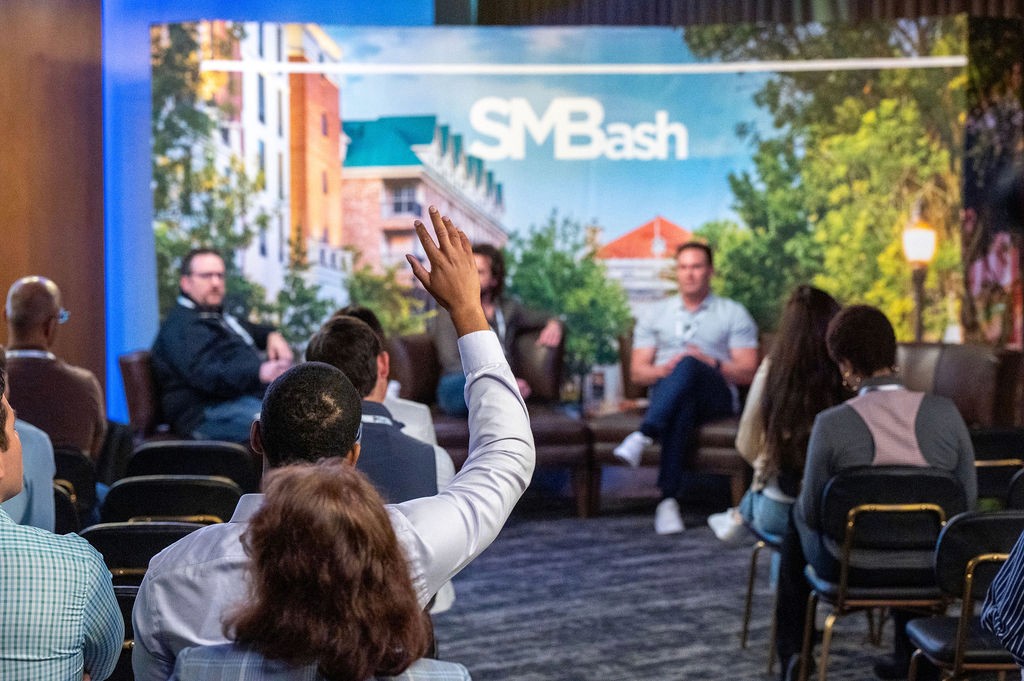
I'm looking out at the audience and I see some other lenders out there, and some people I know. I've used some of you for debt in the past, so I'm really excited to have you in this conversation. If you sat through our last session in this room, the equity raise portion, now we're looking to the debt side, but I want to have it in a similar structure. I have a list of questions, but I would prefer you just join in the conversation and have this back and forth.
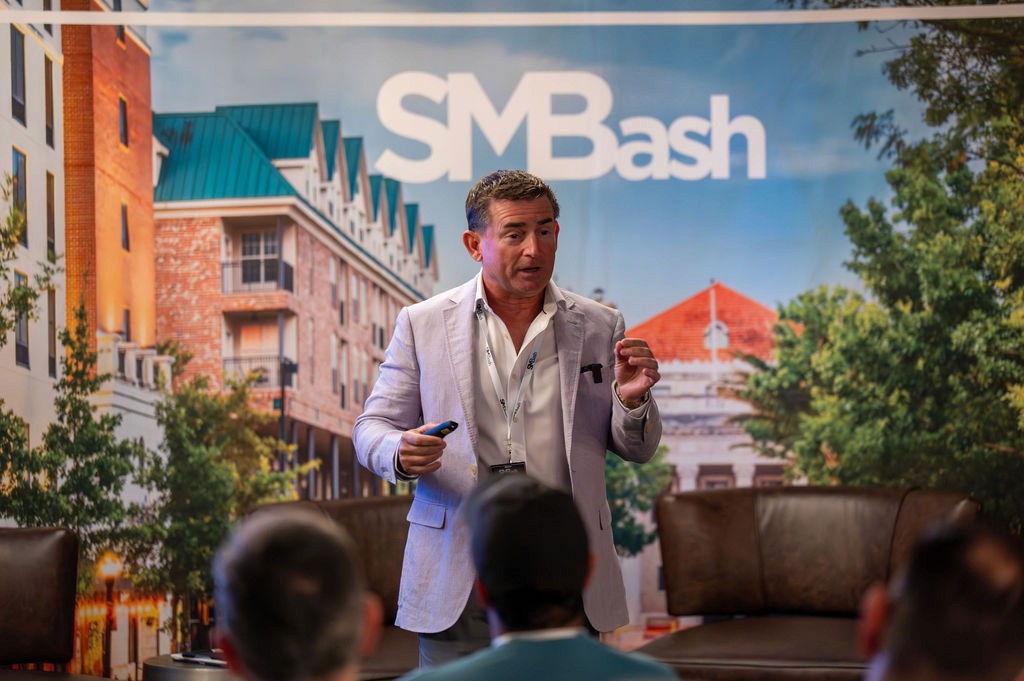
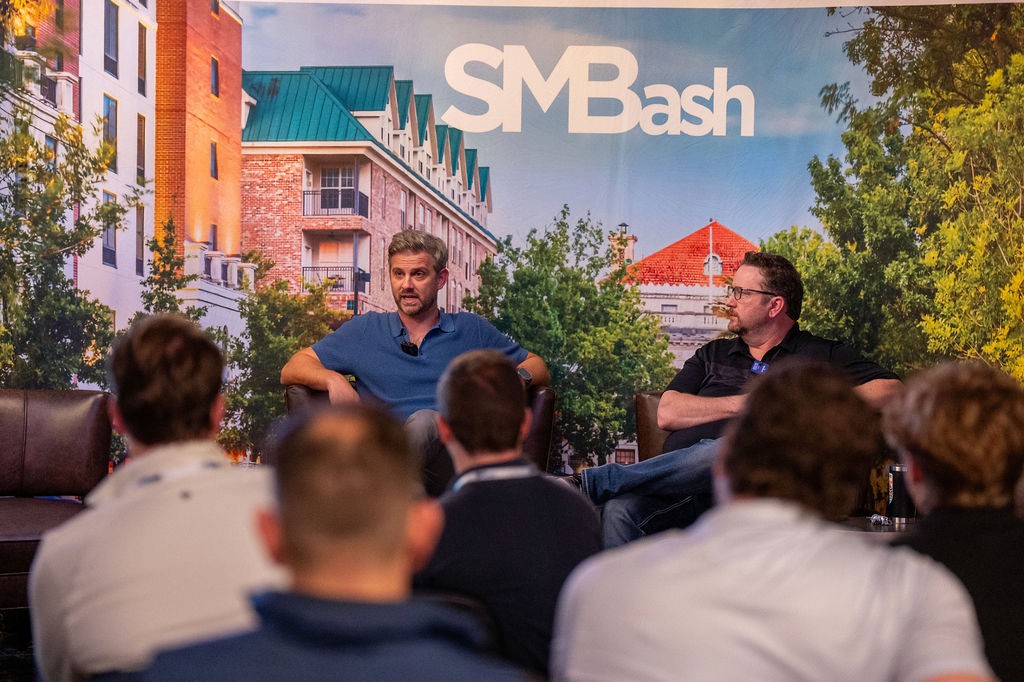
I'm pleased to introduce Jared Johnson of First Internet Bank and Heather Endresen of Viso Capital. A bit of a different structure compared to previous years, with the addition of Heather. Heather is not a lender directly. She is a loan broker, so I think we'll have an additional perspective. Heather works a lot with searchers in the space.
Jared: I'm Jared Johnson with First Internet Bank. I've been doing SBA lending for about 18 years, more focused in the last 10 to 15 years on acquisitions, and as that's developed, more on search. I bought two companies and sold one, so I've been in your seat. I do quite a bit of volume and try to help everybody continue to move forward with the process. It's been fun to watch how everything has grown.
Heather: I'm Heather Anderson, owner of Viso Business Capital. I was an SBA banker for over 30 years. My last seven years in banking were at Live Oak launching the search fund vertical. The reason I went out to do brokerage is that I realized I could do a better job for my clients working across many banks instead of just one. Our approach is very consultative. We help our clients look at deals, do pre-LOI reviews, assess which banks would be the right fit, and then make sure our clients get multiple term sheets before they select the right lender.
What is the relationship between a loan broker and a lender?
Heather: I've known Jared since he was a junior banker back in Orange County. The relationship between broker and lender is usually very positive. What we try to do as a broker is bring lenders like Jared efficient volume. When something pops into his inbox from us, it already has a full data room. We've collected everything his bank or other banks will need to issue a term sheet. We've matched the deal to his bank, so it's something we know his bank would do. Even though we're looking at other lenders, he's got a one in four or one in five chance at landing that deal. We can bring a lot of volume to the lenders we work with, but we do it in a way that makes it efficient.
Jared: Every SBA lender is very different. There are about 5,000 SBA lenders, and probably four or five do the majority of the volume based on the type of deals you're looking to do. Having a broker that understands what each lender will do is important because they can go directly to the person who's actually going to get it done, rather than you spending months or weeks trying to figure out who can do the transaction. As a lender, I'm happy to work with someone who knows what they're doing, who when they bring me a deal, I can actually get it done and they're not wasting my time.
How do you view deals brought by a broker versus directly?
Jared: Having a full understanding of the deal already from someone else makes it quicker and easier for me to say, yes, this is something I can do. There are bullet points I look for, and Heather and her team already know what to look for. If you're getting good volume from a certain source, you usually give them a bit more priority because you typically know what they bring you is something you can do.
Audience question on referral fees:
Heather: When you go directly to a lender, there's usually no other source getting paid. But it's a little less efficient for them. So there's a cost, maybe not a spiff, but a direct cost.
Jared: As a lender, we pay referral fees to someone that brings us the client or transaction. Normally it's 1% of the loan amount. It doesn't come out of anyone's pocket except the bank's. If there wasn't someone who referred the client, we wouldn't be paying that fee. It doesn't necessarily mean you'd see a difference in rate, but it can sometimes impact it. Most of the time, what that referral source is bringing to the table is worth us paying the fee. As a searcher, if you spend hours going around in circles or talking to a bank that doesn't specialize in this lending, you could actually lose deals. Working with the broker, or even with the lender who specializes, will make sure you actually get your deal done.
Why is SBA debt the lifeblood of self-funded search?
Heather: The biggest answer is the size of the business and the level of equity is very low. People often ask, can we compare a conventional loan with an SBA loan? No. The lenders that lend conventionally for acquisitions are usually looking for a minimum of $3 million EBITDA, and they're few and far between. It's a totally different debt market, much smaller, looking for much bigger deals. Companies under $2 million EBITDA almost all use SBA funding if they're getting bank funding. Number two, SBA does not require too much equity, usually only 10%, sometimes a little less. When you look at investor economics or your own return on equity, it makes more sense to do a deal that way. Plus you have the 10-year amortization, and that kind of leverage can actually work.
Jared: I agree. The only other thing is, as long as the multiples stay in the range they're at right now, then it'll continue to work.
When should searchers start talking to lenders?
Jared: This is one of the biggest questions I get every day. When you're looking at a transaction, feel free to send it over. I'll give you my opinion. Some lenders want to wait until you're under LOI. I tend to like to get involved earlier. It's a lot easier for me to guide you at that point than when you give me an LOI that's not eligible or doesn't work and you've already negotiated it with the seller, and now I have to come back and say, sorry, this isn't going to work.
Heather: Same for us. We like to look at deals on a pre-LOI basis. We have tools for our clients and a whole process around it. When a client does that once or twice and gets our feedback pre-LOI, by the third or fourth time, they're not even coming back for the feedback because they've learned. It's a learning curve every buyer should go through. As a buyer, you look at deals forward-looking, and lenders look backward-looking in this debt service model way. You need to learn what that looks like for each deal.
How should searchers present themselves?
Heather: How you present yourself in this market is really important because there are so many buyers. You're trying to stand out not only to brokers but also to lenders. Lenders that are good in this space are very busy. You have to present yourself as having done the basic homework, understanding the basics about an SBA loan, and asking very specific targeted questions. If you present yourself less than that, starting at the very basics, or clearly not understanding how to put a cash flow model together, you won't get the attention.
Jared: Don't be afraid to admit what you don't know and bring any issues to our attention. Swallow the ego and come to us and say, this is what I'm looking at, this is how much cash I have, or what I'm going to raise, my background, my experience, what I'm good at, what I'm not. If we understand all that up front, we can pair you with the right deal.
What does a good deal look like versus a bad deal?
Heather: A good deal starts with an understanding of a structure that will work, a price, a seller note, and an amount of equity that will cash flow with the DSCR the lender needs to see. We see people bringing deals all the time showing us a worksheet that doesn't cash flow. The answer's already there in the worksheet. Next, make sure you have enough information. No lender wants you to send a CIM that doesn't have enough information. You start with the CIM and answer the questions about the deal. At Viso, we have a specific M&A questionnaire we revise every so often. You're not going to get all the answers from the CIM. Some answers may be TBD. Coming with that level of preparation, you've already weeded out glaring problems.
Jared: Keep in mind we have to use tax returns for underwriting. If you're getting a CIM with financial statements, push back and get the tax returns. I can't tell you how many times I've looked at a CIM or financials, then we get the tax returns and they're so far apart. There's nothing we can do about it. Especially in interim periods, if you have tax returns for the last three years and then you're working on year-to-date or trailing 12, make sure it's the same accounting basis. Most people file tax returns on a cash basis but operate on accrual. You need the cash basis statement. I've seen CIMs that show a $2 to $3 million difference based on the multiple.
DSCR thoughts:
Heather: If I send the same deal to eight different banks and ask the DSCR, I'll get eight different numbers back. Any DSCR we calculate as Viso, or you as a buyer, is directionally correct. It's not exactly the DSCR of that bank. The variances are mainly in add-backs. As a buyer, you have to get good at presenting add-backs that make sense and can be defended. Are you throwing in all the add-backs from the CIM with a little note that doesn't even explain what they are? You see that a lot. The right DSCR depends on the revenue quality and visibility of the business. If you've got a project-based business with lower revenue quality, the DSCR should be higher. If you've got a really good quality business with great revenue visibility and contractually recurring revenue, the DSCR could be lower.
Jared: With our bank, we look at every deal differently. We don't have a hard and fast box. You can mitigate things by having a strong buyer or lots of working capital. What we like to see is that in the most recent year-end where there's a tax return and year-to-date, we're at least at 1.25 times. I don't see that often. If it's less than 1.5 times the most recent year-end and it's not because of some crazy adjustment, then it's likely overpriced. Other things that affect DSCR are interest rates and seller notes. With us, if the seller note is on standby for two years, we don't include it in debt service coverage. That's a huge difference from some lenders that still include it.
What weight do you place on the business versus the buyer?
Jared: The first thing I do is look at the seller's information. If it doesn't work, it doesn't matter who's buying it. We're required to show the debt service coverage works. From there, we look at the buyer's financial strength, other sources of income, actual experience, and whether it matches the industry.
Heather: The buyer ends up being very important to me, less so about financial strength. If the working capital and deal are structured correctly, those are more important than how much net worth the buyer brings. Some banks would disagree. My personal opinion on what makes a good deal is the buyer fit, culturally and skillset-wise. There are banks that would love everyone to have direct industry experience, and anything short of that becomes very tricky. We try to make the case for transferable experience. I asked three different buying groups that have closed over 30 deals each, most with SBA funding, out of all your portfolio, how many of your CEOs had direct industry experience? They had to think about it. Maybe one. Did that one outperform the others who didn't? They did not. So banks don't always know the right answer. How do you pick the CEOs? Whatever it took to grow that company, that CEO had that skillset. If you can delever by growth, those are the good deals.
What should searchers look for in a lender?
Heather: We ask each client before we go to lenders, what is the deciding factor? Is it price? Certainty of close? Something about the structure? It's rarely price. It's usually certainty of close. Judging certainty of close comes down to how many and what types of questions did we get before they issued a term sheet, and our opinion of whether we've seen this bank close deals like this and whether those closings have been smooth.
Jared: The challenge for the searcher is finding the right lenders. If somebody comes to me saying I'm working with XYZ bank offering crazy pricing, I ask, have you talked to them? How many deals have they closed? When was the last time they did a deal like this? It's totally fine to interview them. You basically get one shot when you're working with a lender. It's very rare you can go down the path with somebody for months and then go back to the seller and say I need to start over because this lender lied. Make sure they really know what they're doing. Some lenders don't want to touch certain industries.
Industry no-gos:
Jared: We don't have many industries we're uncomfortable with. There are some franchises we're not working on, but most searchers aren't looking for that. We're not a hotel, gas station, or car wash lender, but most people aren't looking for that either. We look at every deal individually.
Heather: The two toughest types of deals to fit lenders to are those with licensing requirements where the buyer doesn't have the license, and contracting businesses. There are great contracting businesses out there. I've got one in underwriting right now, like a guardrail contractor by freeways and highways, very well structured. Most banks won't touch it. There are a few banks that have gotten good at those. You've got to go to the lender that already knows they like that.
Deals too small:
Heather: There is no easy way to do an SBA acquisition loan. They all cost about the same internally for the banks. The smaller the deal, the less chance they have of making up that cost. We have lenders with a minimum of $500,000. Anything below that you should consider seller financing.
Jared: We try to be above $1 million if we can. Part of that is the sheer volume we have. Under $1 million, we want to make sure it's clean and easy to get through. The smaller the deal, the harder it is to get done. A lot of times you're dealing with people who aren't as sophisticated. It doesn't make sense to buy something for $600,000 and do a QoE and hire an attorney. There are lenders with fast-track programs for loans under $1 million.
DSCR above 2:
Jared: Maybe 25 to 30%. Usually somewhere between 1.5 and 2. When we see it that high, we want to understand why. I usually say you better hurry up and buy this. It could be that it's priced low or an industry where it could be lower, like CPA firms, which are usually lower on multiples. It could be an industry that's tough to get into.
Equity injection minimums:
Jared: You have the SBA-required equity injection, which is 10% of the total project. Keep in mind it's the total project, not the purchase price. A lot of people write up their LOI based on purchase price. If you include working capital, bank fees, and deal costs, that's the total project. It needs to be 10% of that. You can have a seller note on standby for two years, no payments for the first two years, no balloon payment. SBA guidelines say it can count toward part of the equity injection. It doesn't say what part. Some lenders may do 1 or 2%. Most of the time, lenders want to see 5% no matter what. If I had to guess, the new rules coming out will implement that it needs to be at least 5%.
Heather: We've gotten one deal at 2.5%, one out of 87 deals. It had a lot of other great qualities. I agree the new SOP is probably going to take back some of those rules.
Q of E versus tax returns:
Jared: If we're looking at the deal up front, we want to see tax returns. If somebody only has financial statements or a CIM, I'll respond and say can you get the tax returns? Three years, but we're looking more at the most recent year.
Heather: Important point about QoE versus tax returns. Having done well over 500 SBA-funded acquisition deals in the last 15 years, the SOP says lenders must use tax returns because they can be verified with the IRS. QoE light came along maybe seven years ago in this space. The SOP hasn't been revised and doesn't inform lenders they should look at QoE. A lot of them don't. They do what the rules say. Sometimes the QoE comes along and is actually worse than the tax returns. There are plenty of lenders that would still do the loan and ignore the QoE. You should not, but that's why lenders are so tax-return-focused.
QoE timing: I recommend, as soon as a client comes to me with a signed LOI, they at least get a proof of cash immediately. You can do that for about $4,000, very quickly, and it can identify red flags. I'm a believer in killing deals quickly. The full QoE they might order when they get into underwriting two or three weeks later because they don't want to spend extra money. But spend the $4,000 and get the proof of cash right away.
Jared: At the end of the day, that's what we underwrite to. Brokers will say give me an LOI and I'll give you the tax returns. I tell them, would you buy a car without knowing the color or how many miles are on it? Go back to the broker and tell them that. More times than not, when the broker is being like that, it's because they don't want you to see the tax returns and they want to collect LOIs. Once you do a QoE, we'll definitely take it into consideration, especially for working capital, looking at trends, revenue going up or down. Most small business owners don't even know how to read a balance sheet.
Partial change of ownership and rollover equity:
Jared: In November of 2023, they changed the rules to allow someone to buy less than 100% of the business. At first, you had to do a stock purchase, and if the seller retained more than 20%, they had to guarantee the loan. Most people said you're forcing me to do a stock purchase. Toward the end of last year, they changed it to allow more traditional rollover equity in the buying entity. It's still confusing. They didn't give us much more information. SBA changes rules, makes them vague, and says lenders, figure it out. That's where you might get differing opinions among lenders.
Heather: You have to be careful if you want a seller to be an owner with you going forward. Expect lenders to ask questions about your relationship with the seller. You've heard horror stories of relationships deteriorating after close, even on 100% buyouts. It can get messier if they're still part owner. Most clients I see use rollover equity for license issues or skillset dependence on the seller. If you don't have rollover equity of at least 1%, the SOP has a rule that says the seller has to leave the business within 12 months. They cannot stay in any role. So if you need them to stay, you have to have rollover equity. That's the most common use.
Multiple holdcos and the $5 million cap:
Jared: That changed at the end of 2023. Historically, it was tied to your social security number. Once you had $5 million, you were done. Now you can do up to $5 million per industry. They look at NAICS codes. I believe the first three numbers have to be different. We're seeing people do that from time to time. The biggest thing is, yes, it's something you can do, but will a lender actually do it? We need to make sure you have the capacity to manage more than one business and enough liquidity. You can also do a $5 million 7(a) loan to purchase a business and a 504 to buy the real estate. We did that maybe two or three months ago.
Heather: It works easiest for lenders if it's a buying group with two or three people. An interesting nuance is, even if you're considering it an industry rollup, the businesses could be related and work synergistically but have different NAICS codes. They don't have to be completely unrelated. If they are related and you have a buying group, you have a much better shot at borrowing the extra $5 million. One thing Viso has helped with for our rollup clients is when the second or third deal comes along and it hasn't been a year since the first. There's no SBA rule about this, but credit folks in banks want to see a clean transition before the next deal. We often help our rollup clients move to the next bank for the next deal. Some of our clients have done three deals with three different SBA lenders.
Using rollover equity as the full 10%:
Heather: You can use some rollover equity for some of your 10%, but no lender is going to go for 10% rollover as all your equity. Zero cash equity is just not something a lender will entertain. At least 5% cash equity is the minimum most banks want, with rollover for the other 5%. Be careful with options to buy out the seller. Even rollover equity that converts to warrants, you have to get permission from the bank and potentially the SBA for any changes in ownership after close. If you try to make a change in ownership of any kind within 12 months after close, they have to get consent of the SBA, which you'll probably never get. After 12 months, you have to get the consent of the bank.
Why let people buy more in different industries instead of just executing a rollup?
Heather: I interviewed the head of that part of the SBA on a podcast around the time of the SOP change. They wanted to increase the $5 million to $7 or $10 million. We've all wanted that for a long time. It requires Congress to act. During the Biden administration, there was no hope of Congress approving that. So this was an alternative, a way to get more runway without going to Congress.
Personal credit score:
Jared: Typically you want to see it over 650. If it's lower, we want to understand why. We're looking more at the history of credit. If someone is continually late paying, has collections, or doesn't seem to care about their credit, that's a lot worse than someone with one credit card and a low score because they don't have a lot of credit. We look at how they've treated their credit. Most of the time, we're checking the box that they're 730 or whatever and moving on. Looking at past issues, you'd want to see that a bankruptcy is longer than seven to ten years out, and since then have they had other issues. There were a lot of people with credit issues 10 to 15 years ago. What we're looking for is whether it continues to be a problem.
Recent Trump administration changes:
Jared: The main change recently was guarantee fees. Anything under $1 million, they put back how it was historically. The default rates were going up heavily on smaller loans. The Biden administration wanted to push smaller loans because the average loan size at some banks was over $1.5 million. Our bank's average is almost $2 million. Defaults were going up drastically on smaller loans, which had no fee. Larger transactions don't have trouble and were paying large guarantee fees. They also laid off about 2,400 to 2,700 employees, mostly there from PPP and COVID. Average pay was $135,000 a year. They've been pushing them to come back to work. The other change is that for new loan requests, 100% of the cap table needs to be a US citizen or have a permanent green card. They follow it back through investment entities. It doesn't affect anything if you already have your loan done.
Heather: I don't know if we'll ever get above $5 million. They'll probably increase the minimum down payment to 5 or 10%. They've harped on increased default rates. Personally, a lot of that was small loans and the rapid rate environment. It'll level off on its own. They'll probably blame some of the SOP changes and pull some back. Some things we got two years ago might get pulled back. They also want to rewrite the entire SOP and streamline it. If you've ever printed it out, it's huge and hard to read.
Jared: I think they'll change so the cap is somewhere between $7 and $10 million. Our product manager knows the new SBA administrator, and that's what he's being told. They also want the guaranteed amount up to $50 million for manufacturers exporting. I'd be surprised if that happened. I'm hoping they put something in place for veterans that actually benefits veterans. Past veteran programs haven't done much. They were working on that before Trump left, then it got scrapped. A lot of what they put in the last changes was, in my opinion, them giving enough rope to hang yourself. It literally said, do what you normally do. They always go back to saying you need prudent lending without describing it. It's vague, almost like figure out how to do it, and when you do it wrong in their opinion, then you're wrong.
Manufacturing and tariffs:
Jared: There are rules in place for exporting. You can get a 90% guarantee rather than 75%. I don't see a lot of lenders use it because it requires more work. We've worked on it and ended up just doing 75% guarantee. It costs more because you're paying based on the guarantee portion, so a higher guarantee fee. The lenders that went crazy with 90% guaranteed deals at the end of 2020 through 2021, almost all of them are gone now. As far as relief on tariffs, I haven't heard anything. I get 10 questions a day about whether we're having problems with deals because of tariffs. We're looking at it on every deal but haven't implemented anything specific because Trump changes who's sitting with tariffs every day.
Heather: Whenever you have an SBA loan, if there's a wide problem like COVID, the government does step in and give relief. SBA lenders will usually give at least three or six months of payment relief when someone's defaulting if there's light at the end of the tunnel. With a conventional loan, they'll just pull the plug. It's a little safer to be in a government program than a conventional one.
Early debt service relief:
Heather: You probably won't like my answer. This is becoming an overall problem for search. People are saying you can just go to your lender right after close and ask for three or six months forbearance or interest only. If you continue to do that, the program will go away. If you absolutely need help, yes, we will help you. But this whole conversation of how do we screw over the bank and get relief right away, if you continue to do that, lenders will say we don't want to make these loans anymore. The more defaults, the more lenders will get conservative. They'll want 25 to 30% down so DSCR is so high you won't have problems. Or the SBA may take away the entire program. If somebody asks me about this upfront, it makes me nervous they're not going to be a good credit and don't have good character.
Jared: Yes, we can do interest only for the first three to six months. We're trying to understand why. You have to change the amortization, so your payment after will be higher because we still can't go longer than 120 months. Ask yourself, do you really need it? Do you just need more working capital? Are you paying too much? Maybe you don't need to pay the seller note for the first six months. We can work with you on a structure, but we want to understand why.
Loan servicing and the secondary market:
Heather: It doesn't matter, but here's why. The bank that makes the loan has to service it. Whether your loan gets sold or not is often invisible to you. The bank only sells the 75% piece. They retain the 25% piece and service for the investor and themselves. Whatever bank you pick, that's the bank you're stuck with. Consider how many loans they service, do they have a good servicing group, will I have anyone to talk to when I need something.
Jared: It matters. We do not sell our loans. If a loan goes into default, it's treated differently in the secondary market if you've sold it versus if we handle it.
Heather: One difference: if you got the loan at prime plus 2.75 and two years later you're doing better, you go to the bank and ask for a rate reduction. If the bank hasn't sold the guaranteed portion, it's up to them. If they've sold it, they won't be able to without buying it back from the secondary market.
Jared: If a loan gets into default and we haven't sold it, we've dropped it down to 0% and extended by another 10 years to allow payments. The lender has more control when they haven't sold it, but for the most part you won't notice a difference. If it does default, especially within the first 18 months, the bank should buy back the loan from the investor. That's what we do. Most lenders will sell the loan, but you can always try to work something out with the bank.
One thing you've never said at an ETA conference:
Heather: The most important risk metric in most deals is not DSCR. It's working capital.
Jared: Be nice. We're extremely busy. I work probably 80 hours a week. When someone's mean or rude to me or my staff, most of the time I'm done. Go somewhere else. We're paying attention to everything you're doing. If you're going to be mean to me, how are you going to treat employees and staff? Every time I've fired somebody because they're mean, I guarantee that business they ended up buying, they ran it into the ground because they were mean to staff. Be nice to people. It's not that hard.