PLAYLIST PRESENTED BY

Michael Girdley: Lessons From 100 Failed Businesses
Description
Michael Girdley, host of Acquisitions Anonymous, breaks down what really killed Vlasic, Best Buy's near-death (and turnaround), CrossFit, Kraft Mac & Cheese, and Boston Market. He pulls out the practical lessons for searchers, operators, and holdco owners, and closes with a premortem exercise you can run on your own business this week.
Recent Videos
Transcript
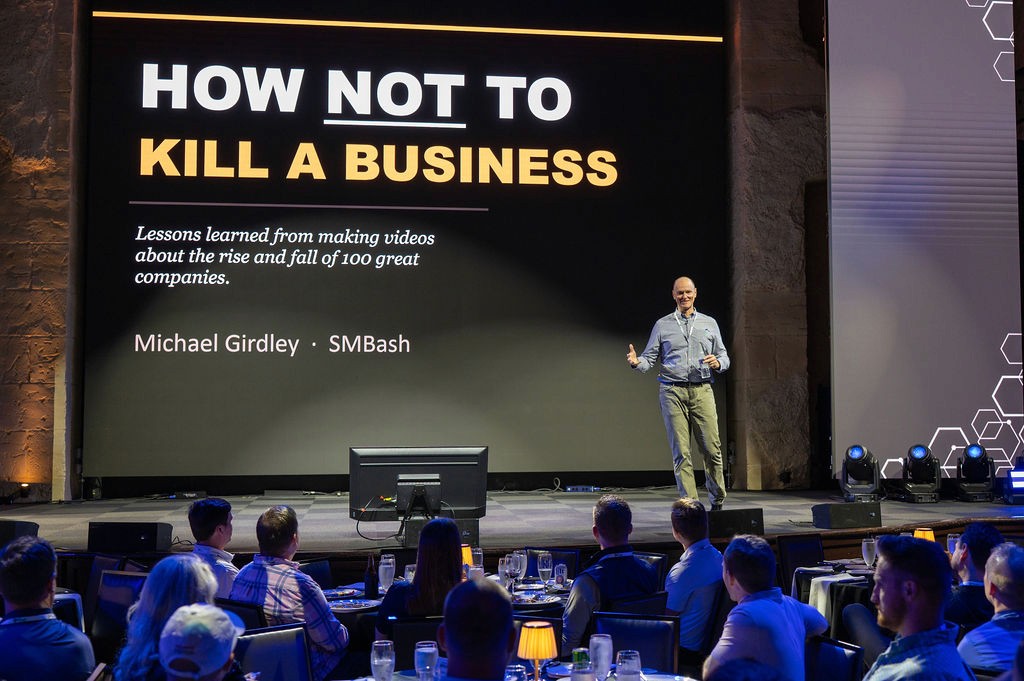
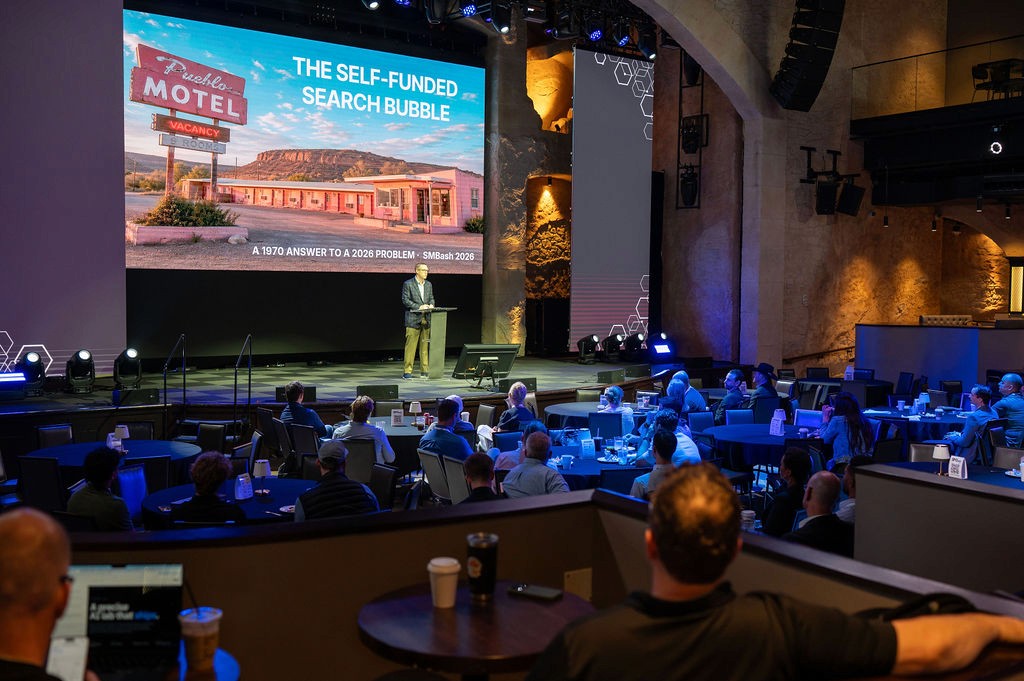
Applause for Kevin, please. That was wonderful. Without further ado, I'd like to introduce Michael Girdley to the stage. Michael is probably one of the most recognizable voices and faces in the ETA and SMB ecosystem. It's a real treat that we've got him here with us today. For this community, he's probably most known for Acquisitions Anonymous, or writing on Twitter, LinkedIn, and his newsletter. But he's a seasoned entrepreneur, and he's here to talk about lessons from 100 failed businesses. So Michael, why don't you please join us? Give a warm welcome for Michael.
Thank you. All right. Who wants to hear a depressing talk about some failed businesses? Well, yes, it will be a depressing talk. There's going to be some failed businesses in this, because that's the best way to talk about this subject. The good news is two things. One, this is the first time I've done this talk. The bad news is there's 70 slides, but they go fast.
The talk is lessons learned from studying 100 businesses that failed. This is a Charlie Munger quote: "How do I want to make sure I don't die? I want to know where I'm going to die. I don't want to go there." That has a big lesson for us, which is a good way to keep your business alive is make sure you don't do the things that are going to kill it. And that's what this talk's about.
Who am I? For those of you who don't know me, I have created my dream job. I incubate businesses. I don't run them. Other people run them, and then I get to do what I really love to do, which is to talk about business. I am a business nerd. I love it. My friends watch me do YouTube videos. A guy from my high school caught me doing one the other day in a park, and he said, "Why do you do this?" I said, "This is the best thing in the whole world. You walk around the forest, there's no people there, but I talk about what I love doing, which is being a business nerd." These are the companies I've incubated, and BedRock, our new company, is a sponsor of the conference here. My co-founder, Will, is out there somewhere.
So how did I come to do this study? Well, in 2025, I looked out and I said, "Everybody else is studying all these business successes. I am going to go study the failures. I think there's something to learn there. I'm going to go do 100 of these and see what I can take away from it. Along the way, I'm going to hold myself accountable. I'm going to make videos about this stuff."
That story I just told you is total nonsense. That's not what happened. What actually happened was I love to teach and talk about business. I nerd out about this. I started to want to do that on YouTube. Twitter was dying. People were not on there anymore. It couldn't reach an audience anymore. So I wanted to go teach on YouTube. I made some bad YouTube videos. I just started to teach people about stuff I thought was interesting: how to run great board meetings, how to find a great business idea, how to pick a great business partner. Nobody cared. I would get like 12 views. It is the most depressing thing if you want to speak and get people to care about it. Across the entire planet of eight billion people, 12 people, minus one because that's my mom. We got 11. Not good.
Then one day my kids were being difficult, my wife was tired, and I said, "Screw it. I'm going to go over to Topgolf, walk around in the parking lot, and talk about the article I just read in the Wall Street Journal about how they're doing terrible." I sent it to my team. I have editors, and I said, "Here's this video I just did. Don't know if it's terrible. Let's put it up." Next morning, people I went to high school with that I haven't talked with for years are calling me. "Hey, Girdley, you're on my TV." Turns out Gen X, I'm Gen X, and boomers, they love to watch YouTube on their TV. There's one guy who comments on all my videos, and he goes, "Great broadcast." Okay there, boomer.
But it went viral. So I did what most of us do when we do business. You get one customer and you're like, "That was great. They just paid me a lot of money. I'm going to keep doing that." So I just kept doing it, and I've done it 100 times, telling these stories of failures. People are like, "Why don't you tell the stories of something that went great?" I would love to. None of you on the internet click on success stories. You all want to see the train wreck. But it turns out the train wrecks are pretty amazing. You can learn a lot about things by what went wrong with bourbon. Turns out bourbon totally screwed themselves. The orange juice market, Nissan, Hollywood, TED Talks. I've done 100 of them like that. I don't make the thumbnails. My team makes them, but this is what people click on.
One takeaway from all this: you are leading a business. If you want to become a better leader and communicator with people, you need to learn how to tell stories. It is harder than you think to tell good stories. I encourage you to think about it, read books about storytelling. Hook: you need to get somebody emotionally invested in what you're doing and why you're talking about it. Complication: we start somewhere and then something gets more complicated because something happens. Luke Skywalker finds Obi-Wan Kenobi because his droids leave. Then there's a resolution. They blow up the Death Star. Then there's a lesson at the end. If you're on the side of light and you work with your friends, Star Wars, you win.
Every story goes the same way. I'm not going to stand up here and tell you lessons from stories and here's a listicle. Nobody wants to read a listicle. They want to hear me tell you a story and then you stick in there what the lesson is. I'm going to do that with these four, and then we have Boston Market. Boston Market's going to be a very short one because I realized it would be like two hours if I included Boston Market because it is the craziest, stupidest story of how to screw up a business. And at the end of this, I'm going to give you a tool so you can use all of these lessons in practice in your own business.
Vlasic Pickles. Who likes pickles? At one point, Vlasic was the Microsoft, Google, Salesforce, Amazon of pickles. Number one in the United States for decades. They had 25% market share of pickles. Massive, dominant. Then one idea killed the whole business.
This is Frank Vlasic. He came from Eastern Europe. He emigrated to the United States, moved to booming Detroit in the 1910s, and afforded enough money to buy those glasses and that bow tie. Frank was like most people. He sold his pickles door to door. He was an immigrant. He said, "I'm going to make these pickles. The only people who are going to want them are the other Polish and Czech immigrants."
Then his son stepped in, Bob Vlasic. Where his dad had been amazing at making pickles, Bob was amazing at marketing pickles. He came of age in the 1960s. The 1960s is when we started to see the rise of the American monoculture. The monoculture was the idea that we would all consume the same media. The same radio stations, the same TV shows. Mary Tyler Moore, everybody watched that. Same newspapers. So we all had the same culture. It's why I'm from San Antonio and I talk like I'm from California. I grew up in the monoculture watching Jerry Seinfeld.
Bob and brands like Mac and Cheese, Bud Light, Miller Lite, all of these brands you know today, came of age in this monoculture environment because one brand could outbid everybody else and become the giant of their space. Bob realized he could be an amazing marketer, so they spent more money than all the other pickle makers in the world combined to advertise Vlasic Pickles. By 1977, they had 25% of the market.
In 1978, this is the era of mass conglomerates in the United States. We all thought economies of scale would always work. So if you were a big corporation, you just buy more stuff. Doesn't matter. No synergy. Who cares? Campbell Soup comes in and says, "We want to be in the pickle business." They don't know squat about the pickle business. But that was fine because they had huge tailwinds. Everybody still ate a ton of pickles. In 1998, Campbell was public, and they had a big problem: their public shareholders didn't like that pickles were suddenly not a growth market. So they spun them out and put $500 million in debt on the business. They did a big dividend to all their shareholders.
This new CEO, who had been a middle manager at Vlasic, running the new company, realizes the only way he's going to cover the debt for this $500 million is to sell a ton of pickles. We're setting the foundation and setting the incentives. What does he do? He goes to all his middle managers and says, "My shareholders say I have to sell more pickles. Figure out how to sell me more pickles."
One executive goes to Walmart, who at that time had not dominated the level they are now. They weren't the supercenters yet, but they were still huge. They conspired with the buyer at Walmart to introduce something that had never been done before. Whereas normal pickle jars were about this big, they decided to do a gallon pickle jar and sell it for $2.97. If you're in retail, this is called a loss leader. Bananas are very low margin for grocery stores. They're always at the front. That's a loss leader to get people in.
At $2.97, they had a problem: Walmart and Vlasic were only making one to two pennies per jar. But 240,000 gallons of these pickles were going out the door at Walmart. 30% of Vlasic's business within a year came from Walmart alone. Suddenly, they had invented customer concentration. A lot of you in ETA are going to say customer concentration is bad. Well, it's even worse if you manufacture it for yourself.
The execs at Vlasic knew they had a problem. They board their private jet, first sign of badness, and fly down to Bentonville and say, "Guys, you've got to help us. This isn't working." Bentonville is famous for being the cheapest, shabbiest office in the world. It's not that way anymore. They built a nicer one, but it used to be the signal to everybody that all they cared about was cutting costs. The chairs barely worked. They were from leftover schoolhouses. They flew into Walmart and said, "We need some help." What do you think Walmart did? Gave them the middle finger. Said, "No way."
Eventually, six months later, they finally let them raise the prices by 50 cents, but by then it was done. Vlasic had entire farms that were making pickles only for Walmart. Cash didn't help them, and it killed the company. That debt, they had to pay basically $80 million a year just in interest on that debt. They filed Chapter 11 bankruptcy, and their number two competitor bought them.
What's the lesson? First of all, pickle business, crazy. But number two, this is a Charlie Munger quote: "Show me the incentives." Those managers were incentivized to do this, and that's exactly what killed the company. Everybody was following exactly how they were incentivized. The same thing will happen for you when you're running a business. I had a business once. I set the performance bonus plan on EBITDA. Guess what happened? We borrowed a ton of money, because interest didn't count against their bonuses. They didn't care anymore. Incentives really matter.
Next story. Best Buy. Have you ever wondered, why is Best Buy still alive? Fry's is dead. RadioShack is dead. Circuit City is dead. How are these guys still alive? Turns out I know. Back in 2012, they had one of the worst quarters in retail history in the United States. They lost $1.2 billion. They fired their CEO because he was caught sleeping with an underling. It was perhaps the worst year of retail for Best Buy. They were written off for dead. Stock price cratered.
You can figure out how they were going to respond by how they got started. They got started by an accident. 1981, Minneapolis. There's a kind of conventional record store with a bunch of equipment in the back. There's this freak tornado that comes through and destroys the whole thing. This guy, Dick Schulze, said, "We've got to get some cash in here because I've got to pay all these bills." He took everything outside, no-pressure situation, put it all on tables, had a big sale. He had an insight. He realized what people really want is high volume, low pressure. They don't want the Circuit City model. They don't want somebody bugging them. From that, they took off like wildfire. They adopted the superstore model and became a huge deal. They eventually bet the whole thing on this, and while Circuit City died, they started to dominate in all these categories because they clued into exactly what people want, all because of a freak accident.
But come 2011, Amazon came. E-commerce was killing it. It had killed Circuit City, and it was about to kill them. They were discovering showrooming. You go in, somebody looks at the thing on the shelf, says, "I can get it for $2 less," and they order it right there. That's exactly what started to happen to Best Buy. Their share price went down below eight bucks.
Then right around 2012 into 2013, something changed. They hired Hubert Joly. He's a hospitality exec. Doesn't know much about retail. But he knows about hotels. He walks in, and the first question he asks on the first day is, "Why does this business exist? What do we do? Why do we have the privilege of having customers come in?"
He said, "The first thing we're going to do is make some changes back to fundamentals. First, we're not going to give people a reason to go someplace else overpriced." They rolled out this price match guarantee, and it cut gross margins by 4%, which is bad in this type of retail business. You might go from 27% to 23%. That's a lot off the bottom line. But this price match policy brought people back. They suddenly felt safe buying in person and didn't feel like they needed to go online to get a better deal.
He took one of their advantages, which was they had all these stores, and used those as a fulfillment center. You order today and pick it up right away. You don't have to wait for Amazon to ship it three days from now. Something like 70% of Americans live within 15 minutes of a Best Buy.
Then they elevated to be able to do things that Amazon couldn't, like be a solutions provider. If you have a question about something, somebody should be there to answer it. Then they did the most genius thing of all. If you go to a Best Buy now, you'll see there's all these stores within a store. Windows has a store, DJI has a store, Ridge Wallets has a store. Apple even has a store. Best Buy has said, "We have this real estate. We're going to charge those people to build those stores in there." They make $40 million a year from vendors paying to have those little storefronts inside the Best Buys. 100% profit.
The turnaround happened. He cut $2 billion in costs. He didn't fire one salesperson. He changed all their printers from color to black and white. He got rid of the corporate jets. The stock went from $11 to over $80. Today, they're doing $47 billion in sales. Believe it or not, your boomer grandparents are most likely paying them a subscription fee to answer their questions about tech.
If you look at what happened, before he made all those changes, fundamentally, Best Buy had gone away from doing first principles of what they were meant to do. There was no magic to it. He was just asking the fundamental questions: "Why is this business here, and what should it be doing?" And then seeing if you've strayed away from that. There are tons of times where people have strayed away from what they were supposed to do at the beginning. Panera Bread is another example. Want to know why Panera Bread is cratering? Their bread is bad now. It's in the name. If you ask yourself the questions, why does this business exist? Whether it's a paving company, a legal firm, or anything like that, you have to make sure you're true to that.
How many of you have been to a CrossFit class? Fun fact, I've done over 1,200 CrossFit classes in my life. Between 35 and 45, I did 1,200 classes. I had a problem. At one point, this was one of the best businesses on the planet. Have you ever looked at the economics of CrossFit? It's insane. At one point, they had millions of members. Reebok was paying them $150 million to sponsor CrossFit. At one point, they had 15,000 affiliated gyms. To put that in perspective, that is three times more than any other competitive fitness chain in the United States. F45, Planet Fitness, all these guys, they were three times the size of their next closest competitor.
Believe it or not, these two folks are counter-positioning experts. They may look like hippies to you, but they are experts. This is Greg Glassman and this is Lauren Jenai. In 2000, they decide they are going to attack the entire industry of fitness using counter-positioning at every level. Counter-positioning is where you take what their entire business is about and do exactly the opposite. Cirque du Soleil is a great example. You have a business like the typical Ringling Brothers, Barnum and Bailey. You have lions and tigers. You know what you're going to get. It's all in English. Cirque du Soleil turns that all on its head, puts everything in French, unintelligible, and makes it about art, where it's different every single time.
Instead of showing up to Planet Fitness and walking on the treadmill like a hamster, you show up, you have a face like you want to throw up. There are set class times instead of showing up whenever. There are short, intense bursts, and there are barbells instead of machines. It's done bare bones, super hardcore with short intensity. Unlike a typical fitness business, where if you want to use a personal trainer to get a workout, you have to pay them, these guys just put it on a website, crossfit.com, and you download it.
They went from 13 affiliated gyms back in 2005 to 5,000 by 2008, 13,000 by 2013. Here's how the model worked. These were not franchisees. These were licensees. They paid $3,000 to $4,000 per year per gym. Straight cash. $30 to $50 million, straight cash coming in.
In 2011, Reebok signs a $150 million 10-year sponsorship with them. They put out these branded Reebok CrossFit gyms. There's all these Reebok clothes, tall socks. It's a cult. I loved being part of it. On TV, you see guys jacked and juiced to the gills. The TV coverage said one thing. On the right, the gyms look like regular gyms. I look like the male version of that, doing the sport. The TV coverage said one thing. You go to your local gym where people just want to look better naked. It doesn't make sense. Which am I doing? Am I competing in the Olympics of working out, or am I just trying to look better and live longer and be healthier?
That leads to a problem with CrossFit. If you see all this stuff on the internet where you're supposed to be doing all these crazy movements, and you're trained by these instructors who maybe haven't gotten much instruction in these local gyms, you're going to start getting injured. That starts to really hurt your reputation as a business.
At the same time, the decision they had made to have unlimited licensing meant competition started coming in. In San Antonio, I literally worked out at a CrossFit gym. We would look out the window at another CrossFit gym across the street. If you looked out the other window, there was another CrossFit gym 200 meters down the other way. That's not even talking about the three that I had to drive past to get to the one I went to. They had this massive oversaturation. Competition started coming in. Guys like F45, Orangetheory. No barbells. Started to reach at the weaknesses of CrossFit.
All of this starts to erode the foundation of CrossFit. Then we get to a point where it's ready for a match to be thrown and light the whole thing on fire. That's when the CEO, Greg Glassman, remember hippie? Turns out he's not really a hippie. He's a hippie libertarian. He decided he was going to be the right guy to come out and tell everybody what was going on in the George Floyd era and COVID at the same time. He put it all in one tweet. 7% of the affiliates see this and de-affiliate immediately. Sent in and said, "We're not sending you any more money again." Do the math. That's millions of dollars a year. Reebok, that $150 million, done. Sent in termination.
It gets worse. They keep going down this path of not being able to figure out which audience they're going to choose. In 2024, the games are televised, and there's a live televising of an elite athlete from Eastern Europe who's competing, had flown in. He drowns in the swimming portion. How did that happen? They did a triathlon, except they put everything backwards. There's a reason you put the swim first in a triathlon. You don't want a bunch of exhausted people swimming across a lake. CEO gets fired. Whole thing goes up for sale again, and they start to crater and lose gym members.
What was the fundamental problem? They chased shiny objects. They said, "We can do this big ESPN thing. We'll have this games thing." When in reality, what they should have been doing is picking one lane. They should have either been about us, everyman, or they should have been about this Olympics-type thing, but not trying to be both. Trying to be both is what ended up killing them.
If you're an entrepreneur, you're somebody who wants to be a leader, you're somebody who's willing to take risk, you're excited by new things, you will buy one of your businesses. If you're an ETA person or own one, in my case, I am routinely going in there and telling myself, "Shut up with your ideas. We just need to do what we're really good at better and better and over and over again." Focus is your friend in owning a business. CrossFit got killed because they refused to acknowledge that.
Kraft Mac and Cheese. Who likes mac and cheese? Who ate this as a kid growing up? Who thinks they have health problems because you ate it as a kid growing up? Yeah, we probably all do. Kraft sold, at its peak, 350 million of these a year. 45% market share. Who cares about the pickle business? I want to be in the mac and cheese business. Today, they are rapidly dying. The past couple of years, they've been losing 3% to 5% market share per year. The company that owned it, Kraft Heinz, wrote off $15.4 billion in valuation in one day, February 2019.
It all started back in World War II. Back then, calories used to be hard to come by. Ration stamps could actually get you boxes of mac and cheese. If you look at a lot of the policies from the '50s, '60s, '70s that have caused us all to be so unhealthy now, it's because a lot of those were created because the people who were alive then remembered people starving during the Great Depression. You could feed a whole family on macaroni and cheese. They sold 80 million boxes back in 1943. By 2010, Kraft had over 45% market share.
In 2013, we start to enter the era of mass financialization in the United States. Private equity firms were raising these big funds. One of those is 3G Capital. A bunch of Brazilian guys. They did Anheuser-Busch, InBev, AB InBev, all this stuff. They partnered with the greatest investor of all time, Warren Buffett, and said, "We're going to merge these companies together, Kraft and Heinz, and put it all together." It's a $49 billion deal. Cheese, meals, ketchup, meals and snacks, infant nutrition, whatever other businesses.
The first thing they do is a thing called zero-based budgeting. The idea of zero-based budgeting is every year, you have to start your budget for your business from zero. No expense is a sacred cow. If you want to spend something, management has to justify that every single year. You can't just look back and say, "We spent $3 million on marketing. We're going to spend 3.1 million this year, and here's why." Zero-based budgeting basically says every cost is unessential until we remind ourselves that it is each year.
They immediately went in, found synergy, shut down seven plants, and took out 5,000 workers. They hit unheard of margins in the CPG space, 30%. All the other CPG folks were like, "These 3G guys really know what they're doing." Ad spend went from a billion to $629 million. Why do people buy Kraft Mac and Cheese? Why do people buy Bud Light? Why do people buy any branded product? You have to remind them of that. That is what marketing does. R&D spend went from over 1% of sales down to .36% of sales. Unilever, one of their big competitors, was doing 1.68%. In other words, they stopped telling people why they should buy the products, and they also stopped improving the products.
The stock hit $96 a share in February 2017. All that cost cutting worked great, but basically they were mortgaging the future for the present. At the same time, by not doing R&D, they didn't realize what was going on in the market: Annie's Organic, Goodles. These are all the healthy stuff that gets bought at my house. My wife's one of those people. They started to add 4 million new households per year for these things. Suddenly, Kraft Mac and Cheese was basically left in the middle, too expensive for the value shoppers and too pricey for the people that are buying the Walmart generics. That brings us to Warren, who said they were writing down $15.4 billion, nearly a 30% stock loss in one day.
The lesson is pretty straightforward. You're going to go buy a business, and you're going to look and say, "Where can I cut costs? How can I start to optimize and streamline this?" You can cut fat, but you definitely don't want to cut muscle, and you don't want to cut bone. That's exactly what these guys did. Why did they do that? They're private equity guys. They get paid on management fees and the deals when they turn around and put them out in the public. They don't care about the long term. They care about the next three to five years, and that's exactly what they optimized for.
This is a mini one. How many of you have been to a Boston Market? My most popular videos are food videos. Everybody has emotional reactions to food. That's why they're great envelopes to teach lessons about. They invented fast casual. They were before Chipotle, Sweetgreen, all those guys. They created the concept. 1,200 stores at their peak. Today, they only have 16.
The issue was a normal chain will roll out franchises by dealing individually with each franchisee. We make a deal with you. You go get your SBA loan. You go get your funding. The bank checks to make sure you have a good business plan. We loan you the money, and it goes from there. Boston Market decided they wanted to short-circuit all that. They took it off their balance sheet and created these people who were master territory licensees. They gave them big piles of money and said, "Go sign up franchisees." What do you think those guys did? They opened way too many locations with a bunch of deadbeat operators. Eventually, the stock market caught on and crushed them. The thing has gone through successive owner after successive owner. The last group bought it right before COVID and didn't pay any of their bills. That's why today there are only 16 Boston Markets left.
Why did that all happen? The quality of the people. Take it back to that very first moment when the guy's like, "I'm going to cheat time. I'm going to run the blockbuster play, but I'm not going to be patient with it." Fundamentally, he and all the other people in this story were not strong people. They didn't have high morals. They didn't have high ethics. They didn't look out for other people before themselves. That was the total outcome. The more I spend time hiring people, if I want to predict what the outcome's going to be from a CEO down to an individual contributor, it's how good is that person in terms of their ability to make good decisions, be a good culture fit, be a good person and work hard. You can totally look at the quality of the people in any company, and it'll tell you exactly what the outcome is.
Tying it all together. If you want to do an exercise with your business after you buy it, or you own it now, you can do this. It's called a premortem. It's like a postmortem. You look at a dead body and try to figure out why it died. You get a group together. It can be a CEO peer group. It could be your leadership team. You say, "We're going to fantasy land today. We're going to figure out how our business failed this year. What went wrong?" Then you sit down, either in small groups or as a group together, and you imagine how that worked. Tell me the story. What all happened? Then you go back, and you say, "If that is how we could die, that is how this business could fail, let's invert," like Charlie Munger would, and say, "Let's make sure the why doesn't happen." Take steps there. I guarantee you'll discover something, an eventuality or a possibility you're not planning for. I've done this with a lot of my businesses, and it's really great.
These are the businesses I'm involved in and incubated. We'd love to do business with you. BedRock, our QofE firm, NEARS, a staffing firm, my media business, and the best business I'm in, making YouTube videos. Internet money is the best. That's me, and you can find me on our website. Thank you for being here.