PLAYLIST PRESENTED BY

How Ujwal Velagapudi Built $4M of Cash Flow With $625K Down
Description
Ujwal Velagapudi shares his unconventional path through entrepreneurship through acquisition, from a near-miss strip club deal at 23 to assembling a $9M revenue amusement vending platform using SBA 7(a) financing, seller notes, and creative private debt. A candid look at small deal lessons, hurricane losses, personal guarantees, and why getting in the game beats waiting for the perfect search.
Transcript
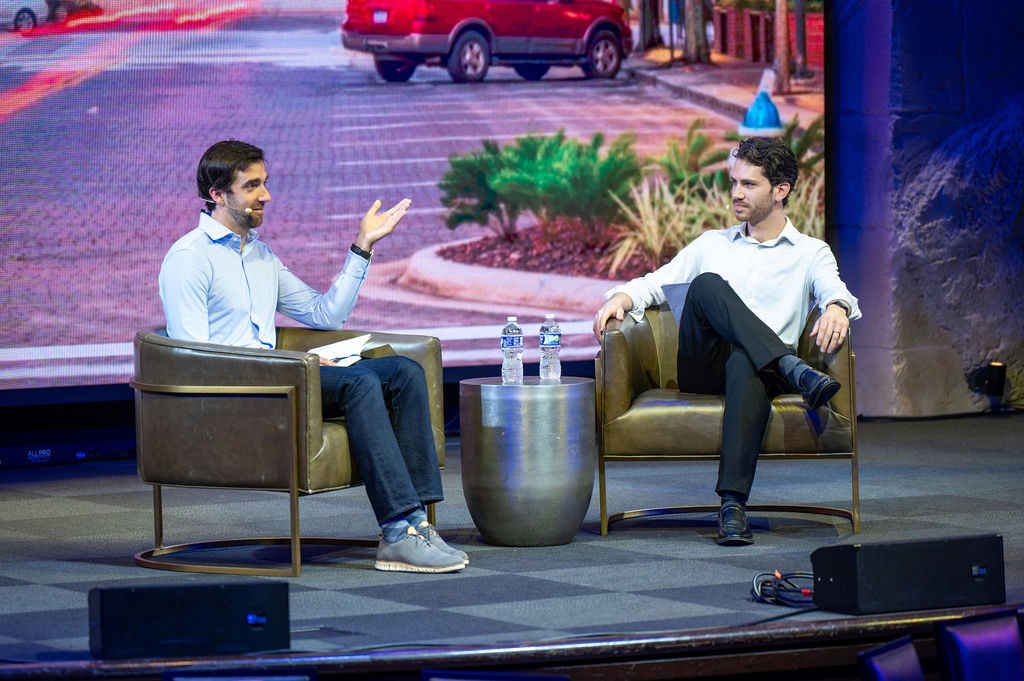
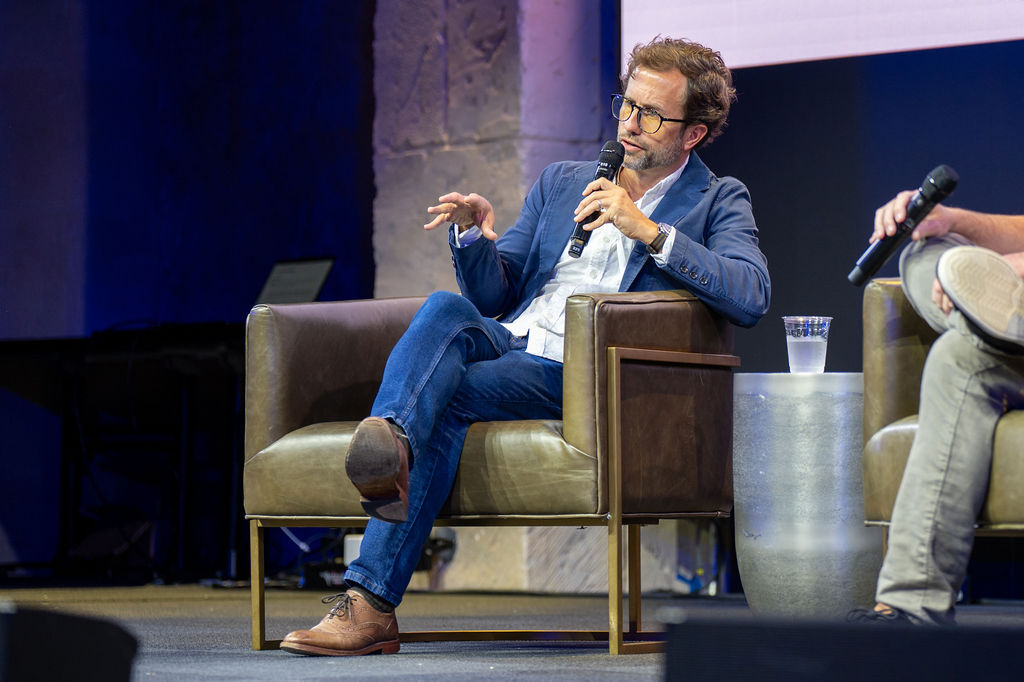
The last couple of panels have featured big, successful groups doing sophisticated things. But let's not forget that search is entrepreneurship. My guest is certainly putting the E in ETA. This is still a hard game, and for those of us who have bought several businesses, we don't forget how hard it is to start.
One mistake I probably made at the beginning was thinking that first business had to be perfect and meet all the criteria. That's just not the case. You can get in the game quicker, maybe with a little bit more risk. I think that's what Ujwal did. So Ujwal, tell me about growing up in Detroit.
I grew up in metro Detroit, went to state school locally, and I just always loved to tinker around. I call myself the Craigslist king. I was always buying stuff off Craigslist, from equipment to selling Air Force Ones, flipping those, which escalated into flipping cars. I'd buy and sell a bunch of cars, and that's really how I got my start in the SMB world. That's where I found my first few deals.
What was the first deal you got close to buying?
This was one I found on Craigslist as well. It was a gentlemen's club, a strip club, and I was under contract for about 11 months. I was 23 years old, a couple years out of college, and it was a $2.7 million deal. They were looking for investors, so of course I raised my hand and said, yeah, I'll give you money. I borrowed $100,000 from peer-to-peer loan sites like SoFi and Upstart, took on credit card debt, balance transfers, all of that, and put in my $100K to be an investor and partner in the club.
How did you finance it through P2P loans?
SoFi.com, Upstart.com. I'd go and say, hey, I'm looking for a personal loan, unsecured debt at 24% APR, 18% APR. I was taking on that debt at 23 years old to provide a down payment and be one of five partners in the club.
I took a lot of notes. I was fascinated by it. I worked with the attorneys, worked with the horrible operating agreement and purchase agreement, renegotiated, and quickly realized these guys in this industry just aren't that great. They're kind of sleazy, kind of slimy, not astute. I'm 23 years old reading this 42-page operating agreement that's horribly written, and the purchase agreement terms are so poor. We were a week away from closing, and the deal did not close. I said, screw this, I'm taking my money back and doing this solo.
What's ironic is almost 10 years ago I was a lawyer and my brother approached me. He was a 22-year-old in college, and his mentor owned a strip club in Tampa and offered him a chance to buy in. He borrowed money from my parents to buy in. You'd never know in a million years that's what got his start, but he now makes six figures of passive income every year off that first sweaty deal. From there, he's never had to have a job in his life. The punchline being there are usually a lot of secrets behind how our first deals get started and where the capital comes from. It's usually a lot more entrepreneurial.
What was the next one?
From there I went to the city of Detroit looking to buy something solo. Saw it on Craigslist as well. It was a sports bar, the closest one to our NHL Red Wings arena. I said, I gotta have this. I was still working my day job in Europe at the time. I flew back, went to the place, checked it out, loved it, and said I'm buying this. Had a purchase agreement and down payment within 72 hours. By that Monday it was under contract.
How big was the deal?
I bought it for about $75,000 all in. No partners, all my own money or debt.
What's number three?
I bought a gym in the suburbs. This was a franchise location, my first foray into learning how the franchise ecosystem works. They were divesting their corporate-owned locations, so I negotiated with the private equity guy that oversaw that portfolio company and purchased the business with a manager in place. All cash as well. I could not do an SBA deal because I closed in less than 30 days.
What's the next deal?
I bought an Amazon FBA business from an online broker. It was selling hats, fedoras, purses. $180,000, 50% cash down with a 50% seller note.
So you've done three or four deals now. How old are you? What's your day like?
I was 25 going on 26. I had my W2 job working in Detroit doing automotive purchasing for aerospace and automotive companies. I had a real estate portfolio in the city of Detroit, commercial real estate, about three dozen units. Then I had the gym, the bar (which I was getting ready to sell), and the FBA business. I was wasting my time being a horrible employee working 40 hours a week. I needed to dedicate more time to my businesses.
The punchline is there are a lot of people in the crowd working W2 jobs waiting for the right time to quit and search full-time. It's not the case that you have to wait to own something.
How did you balance that?
By being a horrible employee and doing the bare minimum. Ironically, I did get promoted a couple of times and had three jobs within five years, but I knew I wasn't giving it my all. In my mind I was contacting tenants, brokers, sellers, dealing with the lender, all while working my day job. I loved it because I wasn't fully satiated at work. I needed something else outside.
Then you bought another business that for the first time was a partner deal?
Yes. I quit my day job. The FBA business was fully online, the gym was remote with a manager in place, so it was just the real estate portfolio. The plan was to go chill out in Thailand for a couple years. I was there two weeks and hated it. Beautiful beach weather, but I just couldn't do it. I wasn't mentally fulfilled.
I came back and found a deal to purchase a software consulting business. I didn't have enough money, so I let the deal go. Someone else bought it and said, hey, I'd like you to run the company for me. I said, there's no way. I need to be a minority equity holder at the very least. I had an option to buy in, and slowly that's how I got into that business and divested from my others.
The picture we're painting is you can buy multiple small companies, generate income streams, and use those to trade up.
This was on BizBuySell, no broker, just had the guy's name. The software was acquired by Oracle, and my team in their prior lives had developed it. They were the foremost experts in the world and the only ones actually able to do the work. Slowly they would leave Oracle and come onto the consultancy. It was about a 16-year-old business when I bought it. My main role was sales, enterprise sales with two-year sales cycles. Completely different ball game from running a bar or a gym.
It was property and casualty software, a rating engine. The backend that processes when you submit a questionnaire for business policy quotes.
A strip club, a bar, a gym, an FBA business, and a software consultancy. What was your plan?
I had no plan. I just get curious and love to learn. I'd see something and think, that looks pretty cool, let me go buy it. That's how I learned. I burned my hand a bunch of times. Not all of them went as planned.
Tell us what didn't go to plan.
The FBA business. I had my W2 job and thought I'd hire an operator. I gave it back to the seller who sold it to me, and his pitch was he'd consult and run it for me. There was a lien on the asset that was sucking cash flow that wasn't shared during diligence. A couple months in, he seized the business completely. In an FBA business you have a Seller Central account, and he had all the credentials. He changed the login credentials, seized my account, and all the cash flow was going to his bank account.
Turns out he was going through some things, mental breakdown, drugs. He sent me a text saying if you send me $1,652, I'll give your credentials back. I found out that was his rent money and drug money, and that's what I wired him. I got access back, but so much destruction had already been done. I had to sell that business for $35,000 and took nearly a six-figure hit.
Let's go to today. What do you own?
I own a little virtual assistant agency, bought off MicroAcquire for next to nothing. Still chugging along. Then in 2021, through this community, I realized I'd been buying five and six-figure businesses with all these battle scars, having lost my own money. Let me go for something bigger. Through people in this room I learned about the SBA 7(a) loan. I could go for bigger businesses, especially with all the deals I'd done.
I eventually bought an amusement vending business. If you think bars and restaurants down the street, they have jukeboxes, ATMs, pool tables, Golden Tee machines, basketball, claw machines that your kids play. I own a route with all that equipment.
What was the first deal?
In Florida. Bought it for $6 million, cash flowing a little over $2 million. Got it done through the SBA after about six or seven months of pounding the pavement, calling every lender I knew. Probably the most difficult deal because I don't think it realistically should have gotten done. I Googled SBA top 100 lenders and contacted every single one, then went to 25 more, hooked up with six brokers who sent it to their network, 20 mezz funds, another 10 PE funds, another dozen private investors.
There were definitely reasons it shouldn't have gotten done. The financials and tax returns were horrible. The assets were so spread out you couldn't collateralize them.
It's $2 million of EBITDA on how much revenue?
A little over $4 million. 50% EBITDA margin, signed up for $6 million, three times EBITDA. How did that have a hard time getting underwritten?
Me saying yes was all I got from the seller. There wasn't anything on paper to back it up. This is a heavy cash business, so it wasn't on the tax return. The financials weren't pointing to any cash flow whatsoever, and there was some funny business going on. Even with the collateral, I have thousands of pieces of equipment, millions in assets, but it's not one piece of real estate a lender can seize on default. It's spread out across hundreds of locations, bars, restaurants, movie theaters, strip clubs. Impossible to seize back in case of default.
What did you do after acquiring the platform?
I bought it on a Wednesday, introduced myself to the team. That Friday I got two callers to the seller saying, hey, I heard this kid bought you out, can he buy me out too? I said, what are you talking about? I literally gave you every penny I had. For the SBA you need to sign a lease locally, and I had to cash out my 401(k) to sign that lease. I had no money, but I wanted to keep buying businesses. So I told the seller, hey, I just gave you a few million dollars, can you lend that money back so I can buy the next deal? That's what I did. I bought the successive businesses from the first deal.
The next one was $350,000. I took on that debt at 12.9%, five years, no prepayment, PG was fine. Not a penny out of pocket. I closed the first one and 45 days later closed the second.
In the meantime I had other callers asking the same things. One was another $6 million deal, another was $400K. They closed simultaneously. On the $400K I asked the first seller, hey, I need half a million dollars for working capital, can you do that? He said sure, at 10% plus a $4,000 a month consulting fee because we didn't want to surpass the usury law. That was our workaround so I could pay him more without calling it interest.
The fourth deal was another $6 million with $2 million plus cash flow. That took six months. I was still getting my bearings, barely knew the business. I told them, I have no money, I gave you all my money, and 45 days in I closed one and you're asking me to buy out your company? I tried to buy time, hooked up with new lenders. I was tapped out of the SBA. I met industry folks who had industry lenders with experience in the business. They were intrigued by what I was doing, attracted to how I was operating. I was 30 to 35 years younger than every one of their customers. Out of the $6 million, I got $4 million from them, $2 million from the seller, plus another $700K I needed for working capital because ATMs need cash to stuff in (that's our inventory). I borrowed that from private investors at 20% interest, but prepaid them sooner so it wasn't usury.
That final deal, including inventory and working capital, was literally not a penny out of pocket for well over $2 million in cash flow.
The four combined, how much revenue, profit, debt?
About $9 million top line, roughly 50% cash flow margin. Closer to $5 million in cash flow. EBITDA would be over $5 million. The way I do my numbers, CapEx is just in operating expenses. About six months ago in Florida we had Hurricane Ian, which wiped out a couple million in CapEx. Equipment was flooded and we lost almost a million in cash flow. So I'm hovering around $4 million. Once it builds back up and the resorts and towns are lively again, it should get back to $5 million.
How much debt do you have right now?
$11.8 to $12 million. Sounds crazy, but it's only two and a half to three times EBITDA.
What are you doing with this business going forward?
I have two deals in the pipeline. One is out of state. I'm going to continue to aggregate. People are calling me trying to sell. I have four sellers where I've built really good relationships. I employ their daughters, their wives, very good relationships. I feel I can continue to aggregate standalone without going crazy. There's been some PE interest to roll up and aggregate, but I don't think I'll go that route. I'd rather have 100% equity. I'm looking to diversify toward legal gaming, similar to what I do but with gambling machines and sports betting in legalized states.
You personally guaranteed $12 million of debt right now. How do you sleep at night?
Amazing. I have this huge spreadsheet, my lessons learned spreadsheet. I have scars from all the stuff I've burned myself on, the money I've lost, the sleepless nights. Every time something happens, I recall on it. When you were 25 you lost $100,000. When you were 26 you lost $150,000, nearly all your net worth. I had scenarios where I did business with the wrong people, made terrible mistakes, didn't do right by employees, was a bad leader. I took on 24% APR debt for my first deals and was literally paycheck to paycheck artificially because I was reinvesting every penny. When the hurricane happened, I lost millions overnight and didn't get a penny from insurance. That's another lesson learned. I recall every situation and think, I've been through that. I'm good, I'm alive, I'm happy, my team is good, I'm still making money.
You took your big swing with a big piece of debt, and now you have $4 million a year of cash flow with zero partners. How much of your own cash went into the deals?
I put in $625,000, which has parlayed into what it is now.
How fast will you have that debt paid off?
I'll take the maximum extent because it's at 5% and 6% fixed besides the SBA, so I'll ride it out as long as I can. If I really needed to, I could pay it off in three or four years. It'll definitely be less than three years once these resorts are back up.
When people come to you and say, should I take the big swing, what do you say?
Absolutely. But what I'd personally recommend, especially for 19, 20-year-olds or my little brother, buy the small thing first. Even when I had a few losses in my first four businesses, I bought that fifth business for $25,000 because I needed another win under my belt. I was thinking, do I actually know how to buy businesses? I don't think I'm doing this right. I kept losing money, so I got another win to bring the confidence back up. Getting into five-figure deals and six-figure deals showed me exactly what business was. I don't think I do very much differently operationally with millions in cash flow now versus the $40,000 of cash flow in my first couple of businesses. That's where I learned.
I hear from searchers asking me whether a deal is good enough to do. Besides the typical deal advice, get in the game. Without getting in the game you'll never learn how to operate, manage people, or sleep well at night with risk. That's what we're all in the game of.
The most memorable lesson on your spreadsheet?
Having your own lessons learned spreadsheet to start with. No matter how much I lose, I know I'll lose tens of millions one day, and hundreds of millions because I'll keep going at it. I'm excited because that's another opportunity to learn. You guys have done so many great things, and there are so many situations we can recall on that have gotten us through those moments and will get us through whatever we're going through today. That's been my way of getting through, sleeping well, and being happy.
Q: Why didn't you get anything from Hurricane Ian?
Despite losing CapEx plus revenue, I didn't have business interruption coverage, which could have given me potential revenue. The CapEx loss was mostly through flood and water surge. In Florida I didn't have flood insurance, and the water hit the ground and damaged my equipment as opposed to being destroyed from the sky. I'm going to talk to a few of the guys in this room about getting a better quote and upping my policy. Massive lesson learned. It's on the spreadsheet.
Q: How much are you trying to take chips off the table now versus continuing to bet it all?
I'm flying back to Southwest Florida on a $22.50 flight, so I don't know if that answers it. I've tried to make a budget, take chips off the table, maybe even divest, but I can't get myself to. I've lived in such a way where I was artificially paycheck to paycheck, reinvesting every penny. I can't even get myself to take a dividend. My salary is $100K, has been for the past five years. Every penny goes toward the next investment.
Q: Were there interesting lessons learned from working with people in the strip club line of work?
For me it was purely business, but the question was whether my partner or whoever was going to be the manager would be ethical, do things by the book, follow local state jurisdiction. I didn't have that comfort. One concern was how employees were treated, the benefits they did or didn't receive, how they were treated in person and on the job. That was one of the biggest issues, and combined with the financial aspect, I didn't have the comfort to proceed.
Q: On the amusement vending deal, the tax returns didn't tell you the revenue. It was all cash and quarters. What was your diligence process?
I saw the tax returns and all the financial documents. For me it really was being boots on the ground. I flew out there, saw the operations, saw where the cash was going, how it was being deposited, saw the bank statements and the full paper trail. I got a quality of earnings from an in-person team that went through every process. I personally tracked how a dollar goes from the vending machine and arcade games to the office, to when an armored vehicle picks it up, to the bank account. I wanted to see the full paper trail. I knew he had a plane expense and was buying all sorts of stuff, a bunch of add-backs. I was comfortable with it. There were a bunch of things the bank wasn't comfortable with from the tax return standpoint and not being able to seize assets. All those red flags weren't red flags for me. They were red flags for the lender.