PLAYLIST PRESENTED BY

What Actually Makes Business Sellers Happy After the Sale
Description
Reid Tileston shares findings from 32 interviews and 630 transactions on what separates satisfied from unsatisfied business sellers in entrepreneurship through acquisition. Learn why being blinded by the price backfires, how seller financing drives 37% of purchase price variance, and why post-sale role and intermediary choice matter more than buyer type for searchers, operators, and SBA-backed acquirers.
Recent Videos





Transcript
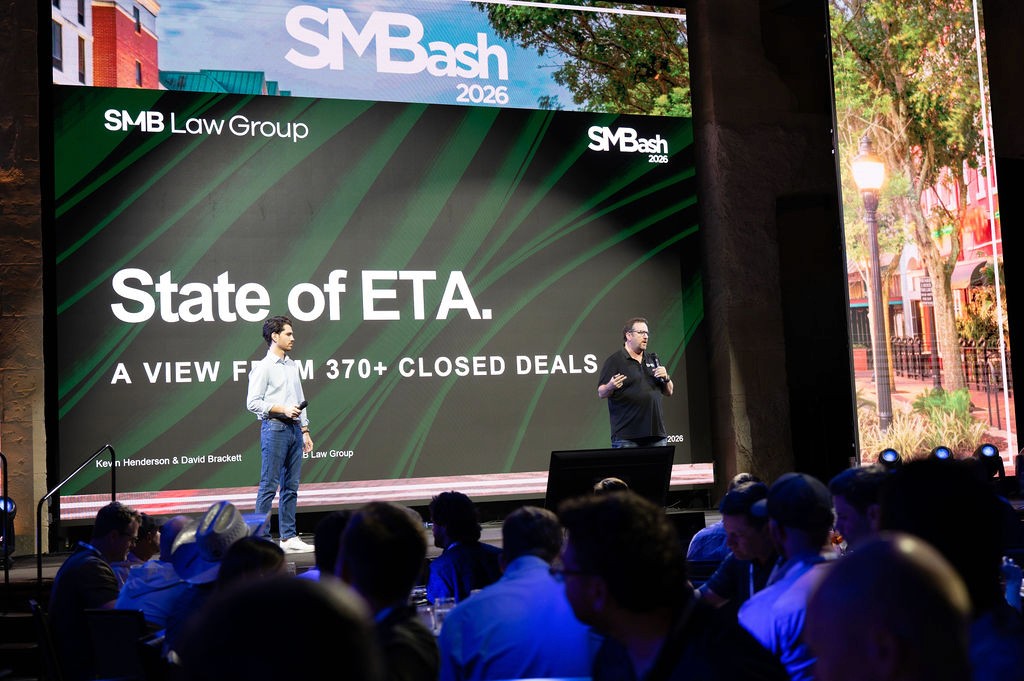
Thank you very much, David. I appreciate it. I'm a practitioner of ETA for a long time and also a professor, so I have some fun trying to bridge those two gaps.
Just to get a sense of who's here, who is currently searching for a business? Gabriel, how long have you been searching? About 45 days, starting to pick up some steam. Any business owners here? Commercial ice cream equipment, buying, refurbishing, and reselling, with about 20% year on year growth and a bolt-on acquisition opportunity on the desk. I'm always amazed even after all the years I've been in this space, I find out about new industries I didn't even know existed.
What we're going to talk about today is some academic research I've done. There are two outcomes. One, hopefully what I tell you today will help you in your endeavor to close deals, whether you're looking for your first business or a bolt-on, by understanding what things make sellers satisfied when they're selling. And for those of you that are or will become business owners, you can use this research to think about how to attain happiness after you sell.
Think about this as the happiness level of a business owner operator. You're at a baseline level. When you go through the sale process, happiness goes down. There's some cool research on this back in 2016. Eventually, when you sell, there is a short-term blip of happiness and elation when the deal closes from the seller's perspective. Then it gets worse during the transition. After the transition, life-after happiness levels rise, but on average life after is lower than during operating. Being a business owner is a stimulating, happy life amid a lot of work, but overall business owners have higher levels of life and career satisfaction during operating than afterward.
I've operated very dirty businesses, been very stressed out, hated life, sold those businesses, and afterward I personally didn't have that same level of life engagement. It can be boring. One of the panelists earlier was talking about being in the 34-year-old, sold-to-private-equity, single dad group. He had nothing to do, and now he's back in the game. It's like an empty nest.
Knowing that selling a business can be a challenge, I decided after I sold my last business to embark on getting a PhD studying entrepreneurship through acquisition. I really wanted to understand what led business sellers to be satisfied after they sell. In ETA it's often very transactional, but I was curious about what happens to sellers and how they feel about their businesses afterward.
We started with successful businesses, doing at least a half million dollars of EBITDA, often more. We did 32 in-depth interviews followed by a survey of 630 transactions. So we have a lot of data. I want to walk through some of the key findings about what separates individuals that are satisfied after their sale versus unsatisfied, with the caveat that all of these individuals were financially successful.
Insight number one: a common theme among unsatisfied sellers, 64% versus 33%, is being blinded by the price. Let's say your business is doing a million dollars of EBITDA and you credibly think it's worth five or six million, but someone offers you ten million. You think, there's no way it's worth that much, but I'm going to take the money and retire. Sellers that went down that route tended to be in the highly unsatisfied camp. One quote: I was surprised how quickly we destroyed the comfort, the culture, with the sale. It's similar to seeing someone insanely attractive, charming, maybe wealthy, but deep down a jerk. The price masks underlying issues.
Brokers can pump people up on what they think their businesses are worth, and the reality of what businesses are really trading at can be very different. If you take an offer significantly above market, you are likely going to regret it going forward. It's not just my opinion, there's solid data behind it. The seller forgets the intangible things.
On settlement statements, sellers sometimes have an epiphany about taxes, attorney fees, broker fees, and seller notes reducing actual proceeds. That's a real consideration but not the differentiating factor in this research between satisfied and unsatisfied owners.
Is the alternative selling at a lower price or not selling at all? For this research, these are the deals that actually went through. Sellers that go through the blinded-by-price experience are often conscious in the moment that selling to a buyer who doesn't share their values may not lead to a good transition, but with a high enough number they do it anyway, and they're unhappy years later. This blinding effect is insanely strong, and it happens to successful, sophisticated individuals.
Insight two: individuals that close deals and have higher satisfaction use competent help. Two nuances. One, intermediaries take a long time to cultivate relationships with. One seller knew an intermediary for years, tried to buy a business from him, was very impressed, and when he sold his own business he chose that intermediary and was highly satisfied. A practitioner takeaway: cultivate long-term relationships with intermediaries.
The flip side: when a bad intermediary gets into a deal, sellers are very slow to get them out. A bad intermediary in a deal has a very high stickiness factor. An ounce of prevention is worth a pound of cure. Be very thoughtful about which intermediary you bring into the deal, and if you make a mistake, try to have the discipline to get them out as quickly as possible.
Of the transactions, about 60% used a broker and 40% were proprietary. People that use intermediaries, controlling for everything, sell for more money and are more satisfied. So on average, it's better using an intermediary, but it's better not to use one at all than to use a bad one. The stickiness sometimes comes from contracts, but mostly it's a psychological cost of removing a bad intermediary mid-process.
Sellers who don't quite know what they're doing, who think transacting a business is like transacting real estate, are more susceptible to a bad intermediary. They sign long exclusivity contracts and get stuck.
For this study, intermediary means either a broker or a trusted advisor like an attorney acting as a broker, with the criterion that they get monetary compensation when the deal closes. This research is exclusively focused on business sellers. The next round will focus on business buyers.
Insight three: every business I've sold, I always pushed for 100% cash at close. I'm simple-minded. But for sellers who are satisfied, they actually take considerations beyond cash at close. This is not just rolled equity. It could be seller financing. Those that kept an economic interest in the business in some capacity were significantly more satisfied than those who took 100% cash and walked.
From a buyer's perspective, a seller demanding 100% cash is a red flag, signaling something may be hidden. Diligence is never complete. The interesting part is that for the seller, 100% cash also leads to less satisfaction long term.
The minimum window we looked at was one year after the sale, with the median around seven years. The narrative is partly about leaving something on the table so you don't feel like a schmuck if the buyer 10x's the business, what one of my college professors called schmuck insurance. But honestly, having read all the transcripts, I think it's much more emotional than financial. Most of these people were already in the top 1 to 3% before selling, and in the 1% plus afterward. Money is not the major consideration. They want to see their baby grow up and feel like they have some stake in it. The stake comes through money, but the value is emotional.
In one traditional search fund deal, a seller's 10% retained equity became worth more than the 90% he received at close, and his face was glowing when he talked about it.
Insight four: their role. Effective, satisfied sellers are very intentional about what their role will be in the business afterward. They think about it, often with a good intermediary, for years. It runs the gamut. One seller wanted to sell to an ESOP, be CEO for three years, transition to chairman for two years, then just get lunch with the team once a month into perpetuity. By a factor of 3 to 1, satisfied sellers figured out what role they wanted and ran toward it.
In the sample, demographics skewed older, but not by a huge margin. About two-thirds were below age 50, one-third above. The data set is all majority buyouts. The seller had majority equity and control before the sale.
A real example: a 70-year-old equipment distributor outside Boulder, Colorado, just wanted to come back every Tuesday for lunch with his team into perpetuity. Four years post-close, he had done it every Tuesday for four straight years. The key isn't what the role is. It's that they stayed involved in some capacity, thought about what they wanted, and executed on that vision.
Insight five, the quantitative one: 37% of variance in purchase price across 630 transactions is explained by the amount of seller financing, whereas 13.2% is based on EBITDA margin. Seller financing is greater than whether a broker was used, region, franchise status, SBA, industry, sales growth, and EBITDA growth in the previous three years. Outside of company size, seller financing is the biggest predictor of price.
If you put your money where your mouth is and offer seller financing, you can command a higher price. There's also a signaling effect: a seller willing to carry significant paper signals faith in the business. One commitment letter I saw recently: a $2.1 million EBITDA business where the seller carried 75% at 11% over 15 years. The seller said, given the down payment, if he ever has to take the business back because the buyer runs it poorly, he'll do it, no problem. The buyer paid a bit more, but it didn't matter.
This effect is strongest for businesses with $500,000 to $1 million in EBITDA, and remains significant as size grows.
Bonus insight six: at SMBash we tend to talk negatively about private equity from time to time. I'm a small business owner at my core. I really wanted this research to show that sellers are happier selling to ETA practitioners or keeping it in the family. Unfortunately, the data does not support that. Buyer type does not statistically matter, either for business success or seller satisfaction. There are no statistical differences across selling to family, private equity, strategic, first-time buyer, industry buyer, or non-industry buyer.
Where it does show up is back in insight one. Sellers regret selling to buyers, often private equity, who paid the highest price when the culture got destroyed afterward. Being blinded by the price had a non-monetary negative effect.
It also goes back to what the seller wants. One seller we bought from a couple years ago had a 30,000 square foot facility with his name on the front. The most important thing to him was that his name stayed on the building. He would not sell to a private equity group because they couldn't agree to keep it. The reason a seller is selling literally determines what deal gets to the closing table.
Good intermediaries listen to what sellers want and push them toward buyers who align. Bad intermediaries don't really listen and push sellers toward buyer avatars that don't make sense. Deals fall apart near the finish line, the broker tries again, and three years later the business still hasn't sold.
These are all voluntary sales, not fire sales. Some were driven by health issues, but never forced. Successful business owners.
Current research is looking at buyer satisfaction and signaling theory: how buyers and sellers send and pick up on signals.
Key takeaways for sellers. One, avoid being blinded by the price. Stay close to fair market value if you want a satisfied sale. Two, get comfortable with seller financing if you want to increase price. Three, when it comes to brokers, be thoughtful about who you bring on, take your time, and be ruthless in getting bad ones out of deals.
Any questions, email me or find me on LinkedIn. Small business owners and operators make the best Americans. Kudos to all of you for going down that route. Thank you.