PLAYLIST PRESENTED BY

How to Get Deals Done With Bad Business Brokers
Description
A veteran M&A advisor breaks down the business broker landscape for searchers and operators in entrepreneurship through acquisition, including how to spot the 20% of brokers worth working with and tactics for closing deals with the rest. Covers the differences between Main Street and lower middle market deals, SBA-driven valuations, LOI-to-close dynamics, and the broker archetypes you'll encounter while searching.
Recent Videos
Transcript
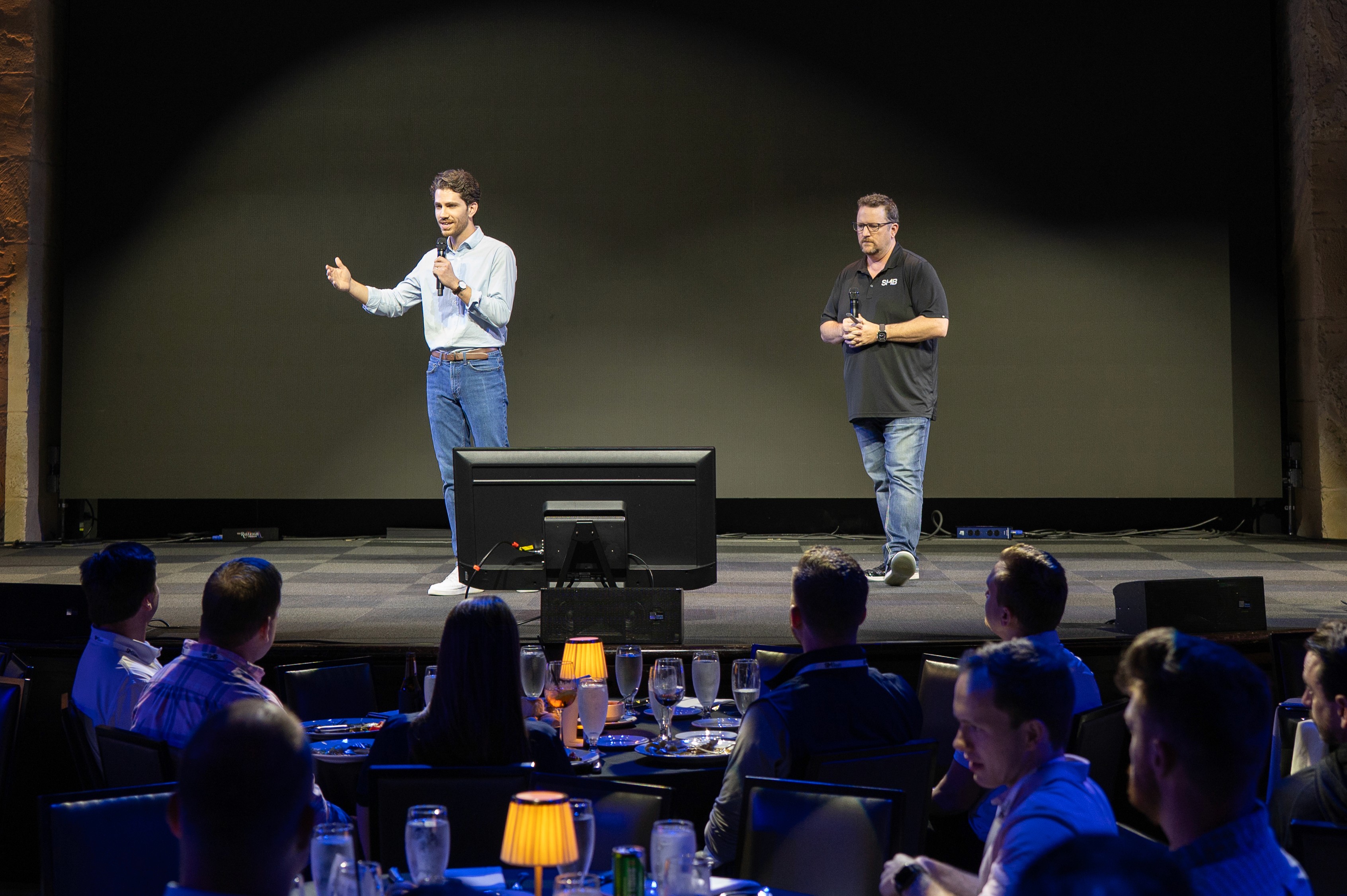
I am excited to be here. I am one of you in a way, because I'm trying to build my little SMB investment empire. I wanted to come to this event but couldn't afford a ticket, so I just got to speak. That's a pro tip: if you ever want to go to events that are expensive, just get a speaking gig.
We're talking about business brokers, a necessary evil, today. But before that, because I'm the first speaker, Matt wanted me to get weird. So we're going to get weird and wild and make everybody uncomfortable.
My business is Bison Business. We do buy-side and sell-side M&A advisory. So when I introduce myself at parties, I am in the business business. I'm comfortable public speaking because I used to be, for a brief period of time, a public speaker. I've done the hardest public speaking you can do: I spoke at middle schools and high schools in school assemblies. If you've done that, y'all cannot hurt me. That is seriously the scariest thing ever, an auditorium of thousands of kids.
I spoke telling the story of a girl, Rachel Scott. Rachel was killed in Columbine. She was the first girl killed in a shooting that changed my childhood. Her brother is Craig. Craig Scott became a dear friend of mine, and I'm friends with his family.
I had this weird roundabout way I got to small business. I was in school to be a pro pilot. I went to a big aviation nerd school called Embry Riddle. About midway through school, I was in a plane crash, and I started second guessing my career aspirations to be a pro pilot. Right around my senior year, I really felt like God spoke to me and said, I don't want you to apply for jobs like everyone else is. I'm going to open your next door after you graduate. I hated that, because I like opening my own doors. I'm a planner and a goal setter. But I really felt that's what I was supposed to do.
After I graduated, my phone rang and it was the Scott family. I had met them before and heard Rachel's story, and it really impacted my life. They had decided they wanted to take her story to the school system, to middle schools and high schools, and I was the second person they hired outside the family to share her story.
Rachel has almost become like an Anne Frank type of character, because she left behind a series of diaries that became New York Times bestsellers. When she died, her funeral was the biggest viewing audience in CNN history at the time. People came out of the woodwork that she did small acts of kindness for, and she never knew how it changed their life. That was the whole point of the program. One of her famous quotes is, I have this theory that if one person can go out of their way to show compassion, it will start a chain reaction of the same. People will never know how far a little kindness can go.
She didn't just write about it, she lived it. There was a girl who was planning on taking her life, who was being ignored at her school. She had her goodbye note written, pills laid out by her bed. The day she was planning on doing it, she was sitting alone at her lunch table. Rachel just stepped into her life and said, do you mind if I sit here? She spent an hour just laughing, joking, being friendly and kind. That girl said, by the time I'd had lunch with Rachel, I decided not to take my own life.
I worked for the family for three years. We went from startup to the largest school program in the country. In my last year, we reached over 3 million students in live audiences. I was mainly doing marketing, but as we started adding speakers, they asked me to speak. I had the privilege of telling Rachel's story in about 25 states to several hundred thousand students. We had 13 documented school shootings avoided where kids had hit lists and plans and changed their minds after hearing this story. We had hundreds of stories of suicides prevented. It was all about kindness and compassion and starting a chain reaction.
I'm telling you this for a reason. I want you to start thinking about your business empire differently. Since I'm the first speaker, we're going to get into making fun of business brokers, which will be super fun. But I want to make sure we're calibrated this morning and calibrate our hearts a little bit.
If you haven't looked up Rachel's story, it is insane. There's a book called Rachel's Tears that has her diaries, her family's comments, and some of these stories. Her family was moving a dresser out of a room about eight years after she had died. They were finally getting around to cleaning out Rachel's room. When they moved the dresser, they found an outline of her hands that she traced on the back when she was 10 or 12 years old. Inside the outline, she had written, these hands belong to Rachel Joy Scott and will someday touch millions of people's hearts. By the time they found that, it had already come true.
Eleven and a half months before she died, she wrote her shortest diary entry ever. She said, this will be my last year. I've gotten what I can. Thank you.
I had a near death experience and so did Craig. Craig was in the library at the worst of the shootings. They were ordered under the tables. He had two of his friends killed on either side of him. He was covered in their blood with a gun to his head when the sprinkler system went off and distracted the shooters just long enough that they left the library. He felt like the Lord told him to get up and get the kids out of there. He led a group of survivors out of the library and probably saved a bunch of lives. The shooters eventually came back in and took their own lives there. Craig is one of my heroes. Rachel is one of my heroes. His family is amazing. They're the ones who taught me a lot of powerful life lessons. I didn't have a dad teaching me these things growing up. Rachel's dad Darrell has been kind of a mentor and surrogate dad to me.
A little bit about me. I was raised in SMB. I was raised mostly by a single mom. We had a nursery garden center business, which is a very difficult small business. All I knew about small business was that I didn't want to do it. My mom was working seven days a week and was all about, go to school, get an education, get a stable job, don't follow in my footsteps. It's ironic because I did end up coming full circle back to small business.
I trained to be a pilot, then decided not to be a pro pilot. I went into aviation insurance after my time at the nonprofit Rachel's Challenge, and then had entrepreneurial spasms. I got bored in the corporate world, was reading business books. A lot of you probably had this happen. I didn't know ETA existed. I didn't know this world existed. All I knew was, if you wanted to go into business, you had to start a business. Didn't y'all do that as your first thing? It's very common as a first step.
I did the craziest kind possible. I did an angel-backed manufacturing startup, which is dumb. That was extremely difficult. But I lucked out and ended up selling it to private equity two years later. I got diluted along the way in some of the fundraising and had a minority stake, but I sold it for enough that I didn't have to retreat back to insurance. I had a little capital, and I knew I didn't want to go back to a job. So I started searching.
I didn't know the word search. I didn't know business brokers were a thing. I didn't know M&A was a thing. I just knew I had done a couple of startups and that was fun, but I was married and had kids. The drama of the startup fundraise, losing money, the burn rate, the roller coaster, I was like, I just want a business that already makes money. That sounds better for this season of my life.
So I started looking, and that's when I ran into business brokers for the first time. They sucked. I really didn't enjoy most of the encounters. I got frustrated. I was striking out on my search. I spent about a year in my pajamas, searching from my ping pong table, trying to buy something and couldn't get calls back, couldn't get taken seriously. I finally gave up and said, I'm just going to build what I wish existed for me. So I broke my own rule and went back to a startup. I'm just going to build a modern, better business brokerage. I didn't know how hard it was going to be. But that's how I got into this, scratching my own itch as a buyer and seeing the frustration of this fractured marketplace.
I've been doing this for eight years. Personally, I've brokered about 50 sell-side deals, and my team has done more than that. I've got a team of seven, based here in Texas. Along the way, I've done four SMB investments. I've got my little business bouquet. I liked Kevin's word, business bouquet. I don't have a holdco, I have a business bouquet. It's all been opportunistic along the way. I'm here because I want to get more strategic and serious and learn how you smart people who were doing this from the beginning do it. That's why I'll be sitting in the back taking notes like a madman.
This is what I made in my manufacturing startup: a giant fake tree that you hide inside. Hunters open the door and go into it. I built a company with some friends that manufactured those behemoth fake trees. That was my first entrepreneurial adventure.
This is my family. There's me in my Sell Me Your Business shirt. We'll have some of those out on the table. That was me earlier this year at the zoo with some of my nieces, nephews, and kiddos. This is what it's all about. To me, a business is about freedom. It's about being able to design the life you want. I decided I didn't want to be a pro pilot, but I do have my own little flying minivan. I take my jolly crew of six, four kids, and we all fit snugly in the little Bonanza and go around and do trips together. That's a great encapsulation of what small business means to me. My dad blew it with my family, and I'm there for my kids. My wife is able to be a mom and a homeschool teacher. It's been a way we've been able to have the family I wish I had as a kid. It's all because of lifestyle design through small business.
A business is not a P&L. It's not a spreadsheet. A business is a group of people and systems organized to create a better life for the owners and their employees by helping other people get what they want in life. I just made that up as my own definition, but that's how I think of it.
When you're searching and buying companies, never forget this: it's someone's life story. It's someone's baby. Someone has built a business and owned it 20, 30 years. They put their kids through school with this business. They made their memories around this business. When you're talking to a seller, realize you're standing on holy ground. It's a sacred thing to be able to take over these systems.
Before we jump into the marketplace, if there's one thing I want you to do to calibrate ourselves, be thinking of your why. Why are you doing this? There are easier ways to make money. This is not easy. Nothing about this is easy. Finding and buying companies is hard. Operating companies is harder. You've got to have a why that is bigger than the dollars.
I had this blessing, and I think the reason Craig and I clicked and became really good friends, we both had this extreme life-changing near death experience. That is the biggest blessing you can get. It is the biggest clarity thing that can ever happen. When you are certain you're about to die. Mine was, I flew a plane into a mountain. I got stuck in a canyon, had no way out, and ended up flying into a canyon wall. There's no way I should have survived. I miraculously survived. My plane crash completely destroyed the plane around me.
The even crazier part was the next four hours. I was stuck on the side of this mountain in the middle of nowhere. It looked like Mars. I climbed to the top of this peak and looked 360 degrees and there was not a sign of civilization. There wasn't a road, there wasn't a water source. It was the high desert, November 29, 2003. I was pretty sure I was going to die, but I was unharmed physically from the crash. I sat on the mountain writing goodbye letters to my family. I was so grateful I was alive, because I realized I had never told the people closest to me how I felt about them. I had never shared how I felt.
That's my challenge to you, the same challenge I gave when I spoke with Rachel's Challenge. Even if you're taking notes, think of the five people closest to you and write them a letter. Write them a legacy letter. Make sure you communicate. I was so grateful I survived the crash, even though I felt I was still going to die, because I got to at least say what I never said. I made a commitment that they were going to find those letters when they found my body, but if I made it back, I'm not going to keep this inside anymore. I gave those letters to all the people I wrote them to when I got plucked off the side of the mountain right at dark by a helicopter that found me. I don't have time to tell the whole story, but obviously I didn't die. Spoiler alert.
I had always come from a very emotionally distant family. The handshake family, wasn't much of a hugger, didn't share my feelings. Now I get up here and cry and share. When you are almost dead, you realize all the money stuff we're going to talk about, you cannot take it with you. It all goes away. The only thing that mattered when the veil was torn away and I was looking at death was God and people. That was it.
Business is a people thing. You have an opportunity to touch hundreds of thousands of lives through what you're doing with your holdcos and through your businesses and through your advisory businesses. You're doing it at a vulnerable time when people are buying or selling businesses. It's an emotional, difficult, vulnerable time, and you have a chance to touch lots of hearts. So I want to calibrate us to think about that chain reaction of kindness, why are you doing this besides just money. Then let's dive into the meat of this thing.
We're here in the United States and there are a lot of businesses, but not a lot you guys want to buy. When you hear stats thrown out, there are 30 million small businesses in the United States. Most of those at the bottom of the tier are unsellable. They're just people that have an entity and are self-employed, but they don't have a transferable earning stream. Then you get to Main Street, where there are about 12 million firms. These actually have employees and payroll. Probably 80% of those are not interesting to you because they're too small. It's self-employment with ribbons around it.
Where I play is at the very top of Main Street and the bottom of the lower middle market. About $500K is the smallest deals our firm does, up to maybe $20 million. The bulk of the deals I've done have been $1 to $5 million, $1 to $10 million. The seven-figure deal has been my specialty. There are some of you that might be middle-market people taking down $50 million deals, and that's not where I play. I'm going to be talking about deal makers and deals in the world where I play.
I like to visualize it like two bodies of water meeting. That's how I think of the deal strata. You've got Main Street under $1 million enterprise value. Over $10 million is solidly lower middle market. There's this mixing of waters between $1 and $10 million that I love to swim in. I think the best deals are in this world. To navigate it, you have to understand the type of language, vocabulary, and creatures in these deals.
I think of sharks as entrepreneur, hands-on owners, and whales as more institutional buyers buying management teams intact. On the left side, Main Street, you typically have asking prices, SDE valuations, no working capital, mostly all asset deals. The SBA is king, you have to know their rules. You can't have earnouts. There's very little creativity in deal structure. You're a slave to the SBA math on valuations. Buyers and sellers try to spend as little money as possible on due diligence and lawyers and DIY a lot. Sometimes they share one closing attorney. It's wild west. It's typically a hands-on owner-operator and the buyer fills their shoes. There's a way these things get done, but it's standardized to the small business Main Street world. I say fish for buyers because most brokers put nets out on BizBuySell and other places and hope a good buyer swims into the net.
On the other side, in middle market, you typically have no asking prices, EBITDA or DCF valuations, working capital is a major conversation. It could be an asset or stock deal. You're typically too big to have SBA involved, so you don't have any of those rules. You can be super creative in deal structuring, no templates. You have lawyers on each side doing custom work. You often have quality of earnings reports and heavyweight due diligence. You're usually buying management in place. Brokers in this space hunt you. They're building a list of buyers they want to market to and running a closed auction process.
In the middle, in the mixing waters, you often have the sophisticated buyer and an unsophisticated seller. I'm looking at probably this room as the sophisticated buyer. You must be bilingual to navigate these waters. You have to speak Main Street and middle market. I call the people who are serial buyers in this world whale sharks. Read my Twitter thread about that. You're kind of a shark with the DNA of an entrepreneur operator, but with the financial chops of more sophisticated institutional buyers. You're a deal person and a finance person, but you're also an operator. That's a shark that behaves like a whale. A whale shark.
Two myths I want to break right now about brokers. One: when you encounter a bad broker, that means the business probably sucks. Sometimes, but in general that's false. Two: if you see a business that's been on the market for a while, that deal probably sucks. Also false. Big time false. I'll get into more detail.
Let's talk about the difference between good and bad business brokers. This is a meme Eric from SMB Attorney posted, the way he saw business brokers, with the podium as buyer's attorneys and business brokers in third place celebrating. I clapped back with how I view attorneys. You've got the attorney, the buyer, the seller, the business broker, the CPA, the diligence team, the insurance broker, the wealth manager, the landlord, the pond scum, the attorney, and the bank. Sorry, banks. All our bank sponsors, appreciate it.
There are great brokers out there, but like anything, great brokers are few and far between. The reason people have a low opinion of business brokers is they rarely encounter business brokers. I've been doing this as a career, and when I tell people what I do, I'm usually the only one they know. There are maybe 3,000 in the United States who are full-time and serious about this gig. Just in Texas, we have 250,000 real estate agents. Business brokers, 3,000 nationwide, all 50 states. The 80/20 rule applies. There's 20% who are good and do the majority of deals, and 80% stinking it up. I'm going to teach you how to deal with them and how to get good business deals done with bad brokers.
When you get a good one, they are worth their weight in gold. Kevin just did a deal with one of my friends, a good broker, and I don't think that deal gets done right without a good broker getting it done.
What do great brokers do? We help your deals go smoothly. We set realistic expectations. This is the number one thing. When you're doing off-market stuff, which the next speaker is talking about, the hardest freaking part is popping the value bubble. Every business owner, 99 out of 100, thinks their business is worth way more than it is. We are the bad guy for you. We get to pop that bubble and introduce them to reality so you don't have to. You want to have a good relationship with the person on the other side. If you have to start the relationship by beating up their baby, that's not a good way to start. With a professionally represented deal with a good broker, they've already set realistic expectations.
We can influence and persuade the seller. You get to be the friendly, good buyer and gripe to me about things you're frustrated with. Then I can tactfully influence them to a more realistic expectation. We help drive the process, crack the whip, get it done. Part of that is solving problems like a ninja. When you've done a bunch of deals, anybody who is a professional deal maker has probably done more deals than you've done as a buyer. We have a playbook. We've seen a few things. I think where we earn our money is not just packaging and marketing the deal or getting the LOI negotiated, it's saving the deal. All throughout the deal you've got to talk the seller off the ledge so many times. You think you've got them contained, then they wander off. As the buyer, if there's not a good broker involved, you've got to be that person who gets them back off the ledge. A lot of your deals get broken LOI to closing because you don't have someone in there saving it. We're 80 to 90% close rate from LOI to closing, a lot of it because we have skilled hands holding it together, helping you on due diligence, with landlords, CPAs, attorneys, and all the third parties. Getting a broker-represented deal with a good broker is awesome.
This is me on the stage at IBBA, the Chairman's Circle Awards, winners of International Business Brokers Association. I just wanted to prove that sometimes I dress up. I'm more like this normally. That stage is the cream of the crop, the minority who are getting it done at high volume. Kevin's broker was on that stage, the dapper gentleman in the tan suit, Adam Petroff, VR Charlotte, good guy.
How do you find us? Look at the market leader brokers in your market for deals first. If you get them, they're going to do all those good things. Look for these letters: CBI, Certified Business Intermediary, the IBBA's certification. M&AMI is the M&A Source certification. I got all these. I collected letters like Infinity Stones, mainly because I was insecure and thought people would care, and they don't. Look for those letters. It just means they're investing in their education in deal making and taking it seriously as a profession. They're going to conferences and learning how you think.
This is just an opinion, maybe right, maybe wrong: four to 12 companies for sale is a green flag. If you don't know if this is a good broker, if they have 50 businesses for sale, how are they doing good work for that many? If they only have one, they're probably dabbling. There's a sweet spot of a professional full-time broker that's usually got about that many deals going.
They're not just a business broker. All they do is M&A or business brokering. Those are the best. You don't have time to do, I'm a CPA and a business broker, I'm a real estate agent and a business broker, I'm a this and a business broker. Those are typically not very good. Do they have a staff? Do they have people who help them? I'm hard to get ahold of because I'm here today, so if my phone rings urgent stuff on a deal, I have a team thankfully answering my phone right now. A lot of brokers are one-man, one-woman operations that don't have a staff. If you can go to their website and see they have a few people working with them, they answer their phone, you're probably dealing with a good one.
Now let's get to the fun part: sucky. Let's talk about the 80% sucky.
You've got the old guy who never calls me back. I'm modeling this stereotype after a Texas broker. When I was first getting started, I needed a gray-haired person as a partner because I had hair at the time and looked too young. This industry ages you really quick, so that helped. There was an old-school broker. Most who fit the stereotype did something else for their whole career and are doing brokerage as their sunset career. They don't want overhead, don't want an office. They're usually pretty smart, sometimes CPAs or lawyers. They're decent. The stereotype: hard to reach, but okay once you get them. Terrible with technology. Set in their ways. They think the freshly minted MBA searchers are the devil.
I had a guy with an impressive resume who wanted to take me on as a 50/50 partner. I was teaching him about electronic signatures instead of fax, and magical things like CRM, eight years ago when hardly any brokers used CRM. I realized it was going to be too hard to marry my philosophy of a high-tech, modern business brokerage with this guy. He was already in his seventies. We're still friends, but I didn't end up becoming his partner. For a brief period I was in his office training with him.
Understand his process so you can understand why you never get called back. He's one guy, his overhead is nothing, and he doesn't need the deals to close. He gets a small retainer from each one. As long as the retainers are enough that he can golf and play, he's okay. He tries to get deals done and means well, but he thinks buyers are tire kickers. He can't field hundreds of phone calls. He puts an ad on BizBuySell, hundreds of people respond because he gets pretty good listings. He had a deal in San Antonio sitting in his inventory over a year. I asked, why hasn't this sold? It looks like a great business. He didn't have a process to handle leads. He sent a template email saying, fill out this personal financial statement, print it, wet sign it, fax it back. Hundreds of people would do it, or just give the email and not bother. I called all those people and found out they were serious, but his process was so bad they didn't bother to jump through his hoops.
To deal with these people: be the squeaky wheel. Their love language is obedience, follow their process. You may get a good deal by being the one buyer who bothers to do things their way. Show them you have money. They're attracted to cash. Get in person or on the phone, out from behind email as quickly as possible. With this gentleman, don't try to text or Zoom them.
The MLM broker. Too many listings, all moderately overpriced. Thin on information, no idea what they're doing, playing a numbers game, often a franchise broker. There are some good franchise brokers, I don't want to throw them under the bus, but a lot of the best franchise brokers own the franchise and recruit heavily, with a revolving door of younger brokers, huge churn and washout. They're usually great people but don't have adequate training, listing anything they can. When dealing with an MLM broker, follow the process, then escalate to the owner. Speak Main Street to them, that's the language they know. Keep things simple. Get to LOI. Stay on top of their list. Have empathy because they're learning. They're often really good people. Have a heart for them, don't write them off as idiots. The ones who make it turn into good brokers eventually. They're drowning, don't have good training, and are doing their best.
The real estate broker who dabbles. The keyword is real estate. You see that on their website and cards. They put the business on LoopNet. They screw up confidentiality. They get all the financial terminology wrong. They have pretty pictures, their CIMs are pretty but don't tell you what you want to know. They don't have a good recast. They're obscenely mispriced often, in either direction. Sometimes they underprice, often they'll overprice the real estate and underprice the business because they don't know goodwill value. Or they'll run the entire earning stream through a cap rate and quadruple overprice the whole thing. They hate LOIs. They think that's not a real offer. They live in the real estate world, which is contracts. When dealing with that person, make an offer that's their love language. Make it look real. Get to a real estate contract as quickly as possible, do the APA later. Once you get it accepted, just take over the process. They don't know how to run the process. Make their life easy and they'll let you run it. They just want you to feel like a real buyer with a real offer. Take it over, keep them in the loop, be respectful. You can get a deal done with these people. Don't try to dunk on them, that will backfire. Be respectful.
There are a few big names that I think have predatory business models. I'm not going to say who they are, but they make all their money by overpromising sellers at big seminars that we're going to sell your business. They're really good salesmen, but they make their money at $30, $40, $50,000 upfront chunks. They're hyper aggressive on marketing and look slick and fancy, but I think these people give us the worst names. When dealing with these shops, learn who they are. Generally avoid them if you can. Make friends. They usually have one closer in the whole thing. Most of their best salespeople are upfront listing people. You want to avoid them, they're the shysters. But they usually have a closer. If you find out who that is, you can make friends with them and maybe get stuff. The best thing is to circle back with them one to three years later, because their businesses don't sell. If you find out who the sellers are, come back once the market beats them up.
That's all I needed to say. I appreciate y'all so much for having me here. I'm available for questions later. Thank you.