PLAYLIST PRESENTED BY

How to Build a 50-Deal Pipeline Without a Broker
Description
Justin Vo of Evermore Industries and Matt Henson break down the proprietary deal sourcing playbook behind dozens of LOIs in entrepreneurship through acquisition, from cold email sequences and hard mailers to door knocking and call campaigns. Practical tactics for searchers, holdco operators, and PE-backed acquirers on building a robust pipeline, qualifying sellers, controlling the post-LOI process, and winning on valuation without negotiating against yourself.
Recent Videos




Transcript
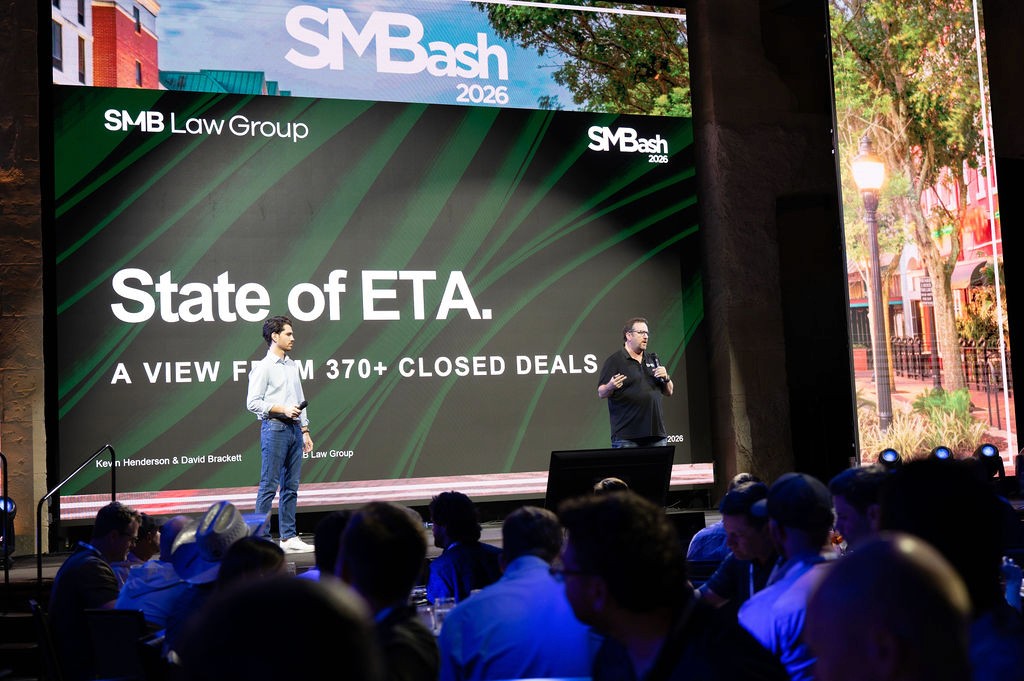
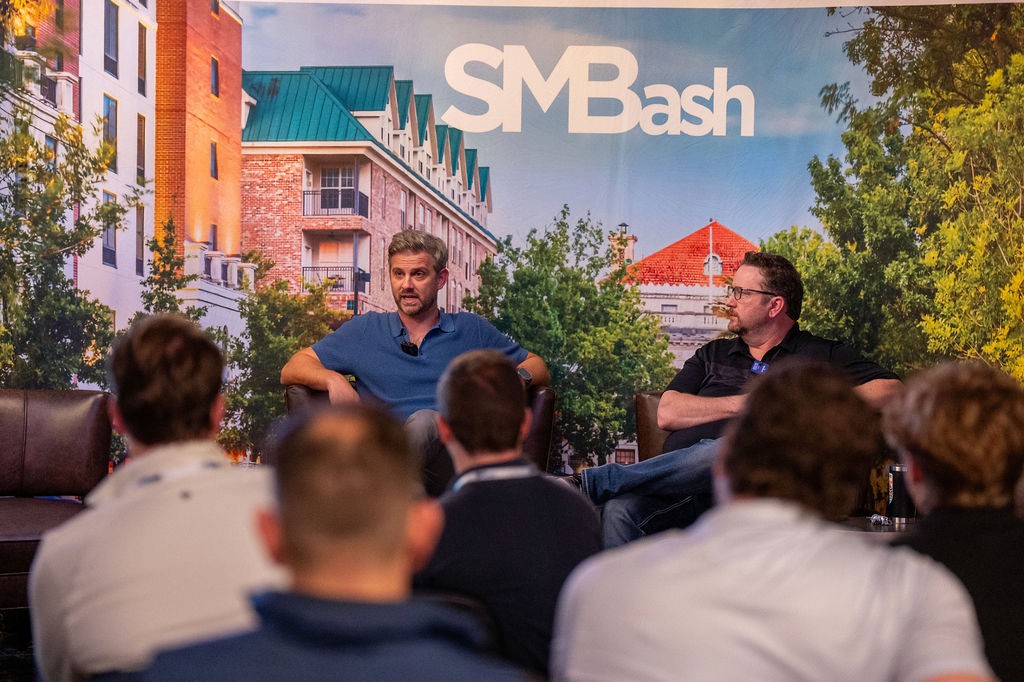
**Justin Vo:** Wonderful to see so many familiar faces. My name's Justin Vo. I manage a long-term holding company called Evermore Industries. We started about a year and a half, two years ago, and bought a business called Ity based in Cincinnati, Ohio. We sell internet of things sensors to corporate office occupiers around the world. While we were based here in Austin, we ran a fairly large scale sourcing mechanism to acquire businesses via the proprietary channel. So while hearing from Clint was fantastic, we didn't really use that channel a whole lot. We were very much direct to business owners in an effort to buy a company.
**Matt Henson:** I work for a private equity backed transportation business as Chief Development Officer. 100% of my time is spent on proprietary sourcing of acquisition targets and add-ons. What we're going to speak to you about is really how we go about doing that without a broker.
By show of hands, how many people here are actively searching, interested in searching, or want to buy a business? That's what I thought. We're going to give you some thoughts, but now is your chance to get those questions in. We want this to be more of a conversation.
**Why a Strong Pipeline Matters**
**Matt:** Number one is improved quantity. The goal is to have a pipeline that is robust with companies that are potentially selling. The probability that you can identify a high quality target is a hell of a lot higher with higher quantity. And then improve the post-LOI process. Having that confidence to close on a business because you've seen enough opportunities, you know what good looks like and what not good looks like. You're going to find not good processes, not good owners. Identifying exactly what a good post-LOI process looks like requires repetitions.
While Clint has a phenomenal close rate from LOI to close, the statistics I see, particularly through the proprietary channel, show about 20% of signed LOIs end up actually closing. So if you're putting all your eggs in one basket, that's a big risk.
For everyone interested in buying a business, put your hands back up. If you have actually ever bought a business before, put your hand down. So how many are looking to do it for the first time? We can help you guys. How many of you who have bought businesses have bought more than five?
Where I'm going with this is repetition is your friend. The way you get better at doing deals and negotiating post-LOI is by doing it a lot. The chances are very high that you're going to shoot yourself in the foot when going through the deal, even after you've bought five. The most likely reason is you'll get one deal under LOI and think you won, think you hit the finish line, and you won't be able to say no. You'll give up on bad terms or lose control of the process, which is how you win post-LOI. You're going to be afraid to walk away if you don't have a good pipeline.
If you have a pipeline full of 50 deals and a seller pushes back on a term, instead of negotiating, the answer is, see ya. You turn around and call the next one on the list. The other thing is if there are 50 deals in your pipeline, inherently they're going to be better deals because you can choose the highest quality five.
**Four Channels of Outreach**
**Justin:** When we sat down to talk about this, we think about outreach to business owners in four main channels, bucketed by broad outreach and narrow/direct outreach. Broad outreach is highly scalable, can reach a lot of owners, and is an efficient way to build top of funnel. You'll hear me use a lot of sales terminology because in my opinion, buying a business is high dollar value B2B sales.
The primary tool I've used in the broad outreach bucket is email. It's highly scalable and customizable. The minus is that everybody in this room probably has 150 unread emails this morning. So it's really hard to stand out from the noise. It's possible through a lot of the tools available, follow ups, being persistent, hanging around the rim, and having some hook in that email that allows the owner to say, wow, Justin actually looked up my business.
**Matt:** The other piece of broad outreach is a hard mailer. Literally a letter. It could be the same template as your email printed out, a one pager, or a three or four page summary on what you're doing and what you're searching for. The important point is you really have to do all of these. There's a flywheel and they all play off of each other.
A lot of us are searching for sweaty businesses, mom and pops. The owner doesn't even check his email. There are probably 10,000 emails in his inbox right now that haven't been read. One way to get in front of those owners is to literally put something in the mail and send it to their house, their business address, or where their son-in-law lives. Anything you can find for that person, send them a letter. It doesn't have to be handwritten. It can be a presentation. But put something tangible in front of them showing you're a real person with money interested in buying their business.
Another thing we utilize is a call campaign. I'm not speaking of cold calling, though there are industries where it might make sense. If you can get a mobile number, a lot of guys live on their cell phone, particularly if they're doing plumbing or HVAC and out in the field. If you're good on the phone and can talk your way through a gatekeeper, call the main address. Targeted outreach via calls to the same folks you're emailing. You email, send a hard mailer, and call. You're trying to punch through.
**Justin:** The last one is probably the most important, particularly for newly minted MBAs. Building credibility is incredibly difficult, especially when you look like you're 14 and have no industry experience. Start kicking down doors. I travel a ton during the search process. If an industry expert tells me, Justin, next time you're in Atlanta give me a call, guess what, I'm in Atlanta next week. Or industry conferences. I've attended industry conferences for many different things. Spend a few days beforehand sending emails, setting up meetings, and all of a sudden you're a real person with real interest. You've exhibited something above and beyond the typical individual looking at that business.
When you send the next email and tell them, Hey, I was at the MRI conference last week, I saw you on the list, I must have missed you, maybe you send a picture of you standing there with a sign, all of a sudden you're a really serious person. Part of the reason freshly minted MBAs get a bad rap is you show up with a fancy degree and say I can run your business. I don't know any words, I don't know the terminology, I don't know your people. The easiest way I have found to make that investment is get out from behind the computer screen, go meet them in person.
**Matt:** The job to be done is to find a business and close a transaction. The job is not to run a mini private equity firm or play private equity or put on your vest and be searcher bro. Your job until you close a deal is to focus solely on finding a business and closing it. A lot of guys do not get off their ass. Particularly if you come out of investment banking, private equity, or management consulting, you're used to processes. You're used to SIMs coming to you. In this world, there is no such thing as process. The way you find deals is you get in your car, you go knock on somebody's door, and you talk them into selling their business.
We are here until Sunday and then on Sunday I'm flying to Dallas. I emailed my analyst and said, send me a list of every business in Dallas similar to the one we do, a potential M&A target. I'm renting a truck and literally driving around to every one of those businesses. I'll knock on their door and go in and talk to them. They may say no, they may not be there, but I'm going to talk to every single one. I never want there to be a case where someone said, we missed you, you didn't put in the work.
It also gives me ammo to circle back. Instead of just a cold email, it's, Hey, I'm Matt Henson, I stopped by your office last week and unfortunately I missed you, do you have some time to talk? It's a little mind tweak that makes a connection. They're more likely to respond.
**Q: When you knock on doors, are there tactics that work better?**
**Matt:** You've got to take off your salesman hat. This is sales, as Justin said, B2B sales. The goal is, I have money, I'm trying to sell it to somebody to give me their business. But you can't walk in there as a salesman. A lot of people get over the hurdle of walking in, then go into sales mode: Hey, I'm Matt Henson with Searcher Bro Capital, I'm here to talk to Chuck about your landscaping business.
What works is to walk in and act curious. You don't know who you're going to talk to. Is it a receptionist? Is it the owner? In a lot of these businesses, owners dress similar to the other folks who work there. I'll walk in, look around, and act like I don't know where I'm at. Eventually somebody will say, can I help you? I'll say, I'm Matt Henson, I'm in this business, I'm interested in talking to somebody about landscaping. That's broad. They'll say, are you residential or commercial? I'll say it's a pretty big opportunity. Big opportunity is a key word. Their interest is piqued. Do your homework so you know who the owner is. They may say, you should probably talk to Larry, the sales manager. I'll say, no, is there somebody more senior I could talk to? You know the answer, but you're being curious and asking for them to help you. If you reframe it as I want you to help me put me in touch with the person I want to talk to, they're more likely to help you.
**Justin:** Owners in particular put their guard up when you show up as a salesperson. They're used to being sold something every day. Breaking through that is crucial. Once you get the business under LOI, the greatest correlation to whether it's going to close is your relationship with the owner. If by the time you get to LOI you don't know the spouse's name, that's a huge red flag. You're going to be a partner in this to some degree, or you're going to manage their employees who they probably think of as family. Coming in as a potential partner first sets you off on a very different foot.
**Pipeline Statistics**
**Justin:** Once we refined our process, our outreach targets per person were: 100 personalized step one emails. The follow ups were automated. Over the course of the automated follow ups, we'd get about 25 responses. Most were opt outs, but eight would be positive responses saying I want to get on the phone. One of those eight would go missing, so we'd have seven owner calls. Of those seven, about 25% would have interest in pursuing more. We'd send two NDAs and get one company to provide us data out of an NDA per week.
In my opinion, if one searcher can see financials on one company every week, and you're willing to do this for a year or more, that is a very robust pipeline. You've seen what good looks like and you can be more confident on the business you're putting under LOI.
**Q: Who is writing those personalized step one emails?**
**Justin:** We ran it all through Airtable. First name, last name, where they work, which email sequence I want them to send from, a source meaning where I found them. That can be I saw your name on an industry list, I saw you attended this conference, I just found you on LinkedIn. And then a PS statement, that is, I see you volunteer with the Boy Scouts, I was an Eagle Scout, wonderful organization. The more personalized, the better.
I outsourced fairly heavily. The virtual assistant I used was trained heavily on what makes a good target for us. She would have this entire list ready for me. I would go from a NAICS code I'd give her, she knew all the places to pull data, classify the businesses as yes or no on whether Justin should spend the time. Then it was my job to go through the list and do 100 a week.
**Q: For boots on the ground, you don't want to tip employees off. If you can't get the senior person, are you leaving info or moving to the next one?**
**Matt:** I'll always leave a card. I know before I walk in who I want to talk to. Everything is nebulous until I can talk to them. We're not talking about deals, we're not talking about transactions. I'll just say I'm in the same business, I happen to be in the neighborhood, just here to introduce myself. If I can get in front of that person and we're in the right setting, I'll broach the topic. If not and they say Larry's not here, I'll give them a card and say, have him give me a call when he gets a chance.
**Q: How do you get them over the valuation bubble, and how do you know when they're really ready to sell?**
**Matt:** Like Justin said, this is sales. Whenever I meet a potential target, in addition to building rapport, I'm trying to qualify that lead as quickly as I can. Laser focus on, are they ready to have this conversation? If they're not ready to sell, I'm out of here. I'll check in next quarter, next year, whenever it makes sense. There should never be a situation where someone receives an offer from you in the form of a legal document in an LOI. They should get your offer, negotiate it, and if they accept it, write it up in an LOI. There should never be a point where you've delivered an offer and they say, I'm not ready to sell. You should have cleared that hurdle first.
On valuation, you have to control the dialogue. Shock and awe. You need to move quickly. Each step in your deal timeline should be: make contact, have a conversation, are you interested, yes, next step sign an NDA. Another mistake first time buyers make is too much latency. They find a deal, make contact, the seller says yes I'm interested, then they ask Kevin Henderson for an NDA, three days later they get one ready, then they have comments. The way it should happen is you should have an NDA in your back pocket. Seller says I want to talk, here it is. You should have a form draft of your LOI, a form draft of your diligence request list.
I see this on Twitter. Somebody has a seller ready to start diligence and they blast out, Elliot Holland, you got a good due diligence request list? You've shot yourself in the foot already. When somebody says they're ready to talk, you need to be ready to send them an NDA, request list, form LOI immediately. If you can do that quickly, you're controlling the process. When it comes to valuation, you've got comps ready to go, terms ready. If they hit you on valuation, you're already noting, they hit me on valuation, I'm going to ask them to carry more in a seller note, or pick more up in an indemnity escrow. Put the thought into developing everything so as soon as they hit you with valuation, you can come right back. That's how you control.
**Justin:** Triggers of knowing when somebody's ready to sell. If they've had these conversations before, talked to a broker, can give me a sense of what businesses in their space sell for, that's an awesome trigger. Number two, if they're starting to spend the money already. Hey, we got the business, been looking at a beach house out on the coast. Awesome. Third, when can I come out and get dinner with you and your spouse? If I can get the spouse involved, then 100% he or she is having this conversation as well. If it's no, no, we'll talk on the phone, don't come out here, this is interesting but I'm willing to commit 15 minutes a week, I'll check in next quarter. I'm not going to hop on a plane right away.
**Matt:** On valuation, this draws back to why you want a strong pipeline. If you've ever found yourself trying to talk a seller into why they should transact at a certain valuation, you've shot yourself in the foot. You want 50 deals in your pipeline. You want to give them an LOI and say, I think your business is worth 5 million. They say no, 6 million. Okay, talk to you later. If you've got 50 names with real leads, you can flex that muscle and walk away. First time buyers think of it as their shot and don't have the ability to walk away. So they lose. The best tactic to win that conversation is to avoid it completely.
**Q: I own a niche manufacturing business. When I'm doing tuck-in deals, the sellers' accountant or lawyer gets in the way and tells them the business is worth way more. How do you navigate that?**
**Matt:** Radical candor with the potential seller about being burned in the past, and qualify your leads upfront. Before I send out an LOI, I have an investment committee. I have to talk to a group of guys who say, send it at this price, value, terms. Before I even talk to my IC, I'll have a candid conversation with the seller. I'm the broker here. Blame the accountants, the lawyers, the business brokers. I'm here to make you a fair deal, but I've been burned in the past. Tell them exactly what happened. Is there anybody else you'll need to talk to for approvals? Your spouse, family members, a trusted advisor? Bring them in early rather than later before we invest all this time. Qualify, because you underqualified that lead.
**Justin:** This is a long-term game. If you don't have it figured out today, that's fine, let's stay in touch. If it's a really good business, at some point we'll meet in the middle or we won't. I've got a laundry list of folks I still call every quarter because their valuation was double. I'm talking to a few folks whose valuation was 2x what I thought it should be three years ago, their business has grown 50% and their valuation is still the same. Great, we're closing that gap.
**Q: Your statistics are remarkable. Tell us about messaging philosophy and structure within sequences.**
**Justin:** This is our email sequence over about six months, 14 steps. It's all about positioning ourselves as the right answer for that business owner at the right time. I'm not a salesperson, I'm here to be a partner, helpful to you, your company, your organization. I think I can be the right home for that business because I've done a lot of the work to qualify it. I've looked at the website, I know the owner, I can speak the language. The first email has very little about me but exhibits some knowledge about their business and industry. Then I'm following up, being incredibly pleasant, selling myself and my capital in a way they would want to be sold to.
Over time, the emails become more about relationship building, less about buying a business. By step six and beyond, we've got a pattern. By the time somebody sees email 13 from me, they're going to search my name in their inbox and think, this guy has emailed me for five months, these are all thought out, clearly sent only to me, though I've done my fair share of engineering around that. If this guy's willing to put in this time and effort, that's worth a conversation.
The number one reason somebody said they were willing to get on the phone with us was simply persistence. It definitely wasn't because my business partner and I have Stanford MBAs, nobody cares. We both grew up in the Midwest, so we have writing throughout this sequence about the Midwest, but only for businesses in the Midwest. It's about making somebody feel special and showing them we are willing to put in the work. This was probably a 36% reply rate, 78% open rate across 270 people on a generic catchall sequence. Email absolutely works.
**Matt:** The sales cycle is so long that there are things you should do early. Searchers who have never bought something think they can't send that first email until they quit their job. You can send these emails while still working. The third business we bought was from a handwritten letter written the month after we bought our first business. It sat on the seller's kitchen counter for a year, and then we got the call. You've got to play the long sales cycle game.
**Q: How do you build a list of companies, and is it industry specific?**
**Justin:** Industry specific, yes, absolutely. At a minimum, my PS statements need some amount of language. The green boxes are things I can download and feel personalized. The red boxes are things I actually wrote. Two words is our catchphrase for I can give some industry verbiage to you. We got incredible feedback that, okay, you can speak my language a little bit.
For building a list, there are a number of free resources. It's about designing a process, knowing which resources are out there, then creating an SOP for going from a NAICS code through all paid resources. These change all the time. We used ZoomInfo. I've heard great feedback about Grata recently. Data to include: company name, city, state, owner, email, LinkedIn, website. We wouldn't get all that in the first phase.
All I would do is come up with a NAICS code, some sort of niche industry. We'd run through and classify those companies through Airtable, yes or no. The virtual assistant was taught what to look for on a website to classify companies in or out. Example: is now part of, I don't want to email that company. Custom design and assembling, not my type of company even if in the right NAICS code. Manufacture and distribute, I'm generally not in that game. Anchor Scientific, I love scientific equipment maintenance and repair businesses, but these guys are manufacturing and distributing, rule it out.
If I can identify one NAICS code a month, my assistant would build a list from 10,000 down to maybe 500, and that 500 persists me for a month, doing about 100 a week.
**Q: Is your subject line personalized? What works for you?**
**Justin:** We AB tested a ton of subject lines. The one that worked best for us was quick intro, all lowercase.
**Matt:** What works most for me is being very direct. In the subject line I'll put, are you interested in selling your business? There's never going to be a situation where you're going to talk somebody into selling. The time is right or it's not. If it's not right, you don't want to talk to them. If it is right, just cut to the chase.
**Justin:** We tried that. For my mindset, it wasn't something we wanted to do because I'm okay with meeting owners who aren't ready to sell. I've done my homework on an industry, so to the extent I get in contact and they're willing to have a phone call, I mention I'm trying to buy a business in this space, but I'm willing to do that quarterly phone call for the next five years. I was never quite that blunt.
**Matt:** You've got to AB test it and titrate it for the audience. The way you interface with a physician practice seller is different than a trucking business or a staffing business.
**Q (Clint): When you hit them with the offer value, do you back it up with your math, or just throw the number?**
**Matt:** Always quote dollars, never quote multiples. Don't tell them your multiple. It doesn't matter. The multiple's not what hits their bank, dollars are what hits their bank. They can do their own math on what they think it's worth. They know what their EBITDA is. Usually my EBITDA is different than their EBITDA anyway.
I'll send them a term sheet, never an LOI. A term sheet is literally one PowerPoint slide with five bullets: purchase price, indemnity, escrow, working capital. When I send it, I've usually arranged a phone call. I'll say, Joe Bob, your offer's ready, I want to talk to you today at five o'clock, can we talk? I set the call up and send them that one slide literally two minutes before we talk. I talk them through it because I don't want them receiving that email and reading it without me giving the voiceover.
Thank you guys.