PLAYLIST PRESENTED BY

From Broke and Broken to Multiple Companies: Jake Becker's Story

Description
Jake Becker shares his unfiltered journey from sleeping on an office floor and bouncing payroll to owning multiple companies through entrepreneurship through acquisition. In this SMBash session, he unpacks the signals, mentors, and mindset shifts that took him from his first $5,000 cash drone business acquisition to a diversified portfolio, and offers honest advice for searchers and operators on refusing to quit.
Recent Videos



Transcript
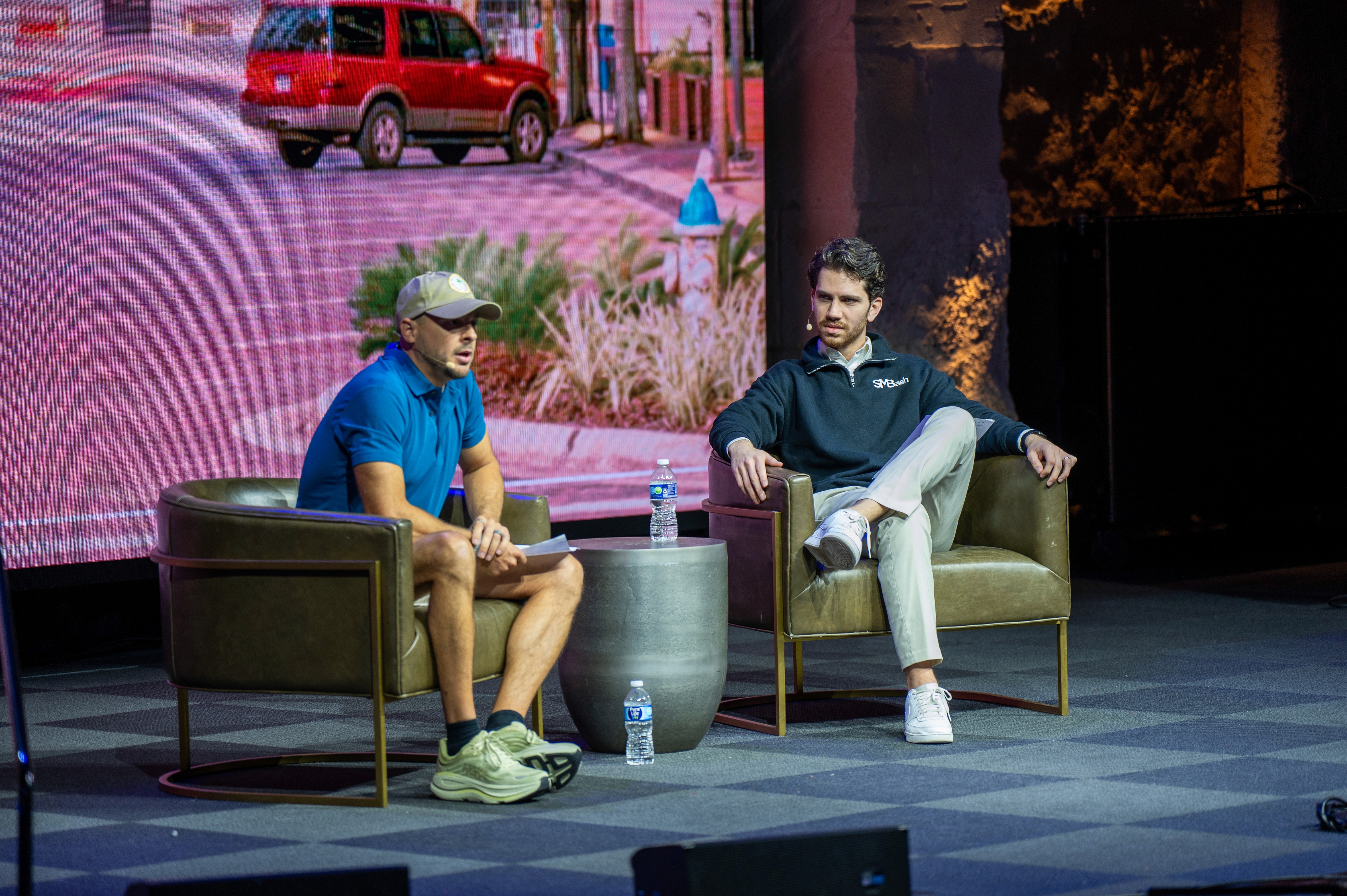
David: We have this session listed on the website and on the agenda as how to be an executive, and that's where we started when we were talking about this. But through planning, it really should be called how to never give up, or something of that nature. I think you have a really interesting story, and I'm not going to give Jake the traditional bio intro because I think you guys are going to get to know him a little more intimately over the next hour. So Jake, why don't I let you introduce yourself and set the stage for us?
Jake: Thank you, David. I'll give you the real introduction. It was not that long ago that I was at the absolute lowest point in my life, completely broke, completely broken. But I refused to quit, and now I own multiple companies. Everything in between is what we're here to talk about today.
David: Let's get started. Most people have an origin story, and they don't talk about it, or they do. What is yours?
Jake: I'll keep this part brief. I grew up in a country town in the middle of nowhere outside Buffalo, New York, typical middle class. My dad worked in a factory, my mother stayed at home. I showed the entrepreneurial tendencies some of you can relate to, like selling candy bars in middle school. But by the time I got into high school, I started going down a pretty crappy path. By the end of high school, I was selling weed and getting into all that stuff. Then I went off to college and pretty quickly got in with a bad crowd. It was outside New York City, and I got in with these mobster guys and got into this whole gambling thing. What a terrible path to be headed down.
To give you a little insight on how crazy it got, I got into this gambling debt with these mobster guys, and they seemed so friendly. One day one of them calls me and says, "Come outside. We're going to talk this out, work this out, figure out how to get through this." I leave my dorm room, walking across the parking lot. He gets out of the car with another guy. They walk up casually. He puts out his left hand to shake my hand. I go to shake with my left hand because he pulled me in, smashed me in the face, threw me to the ground, and beat the crap out of me.
I'm sharing some of these extreme stories because I want to paint the picture of where you can be and where you can go. After that, I knew I had to get out of that situation, so I left that college and went back home.
The entrepreneurship continued to call my name. The first signal came, and that's a lesson I want to mention. These signals will come for you. Notice them and take advantage of them. A friend's uncle was getting rid of his eBay store. This is 20 years ago, not the e-commerce days. It was a physical store, like in the movie 40-Year-Old Virgin, where you literally walk in and drop stuff off. People would bring stuff in, and we would sell it for them on eBay. Made absolutely no money. It went on for a year or two. It was all lessons, but it was a confidence builder.
Then I went into collections. Worst job of all time. You think people don't pay their bills because they don't want to. Sometimes, yeah, but sometimes their kid got sick or they lost their job. It was a brutal industry. I did that for years, and it really weighed on me. I did what a lot of people might do. I went back to college because it feels like you're making progress.
After college, another signal came. My oldest sister, one of a handful of people who always believed in me, had a local consignment shop. I started showing up there. She embraced it. Looking back, I would slowly start to call myself an owner of the store, and I was not an owner, but she let me get that confidence. Facebook was starting to get popular. I started posting, and my mother, who was the store manager, had local business owners come in asking, "Who's doing your stuff? Who's posting all your stuff now?" I thought, maybe I'm good at this.
That led to my first client, a bakery, for $80 a week. I'd go there for hours for 80 bucks a week. The point is, I felt I was onto something. That led to starting a marketing agency. I went out and found a domain name that was available. I've had that agency for 14 years now. The theme was, I'm just trying to follow these signals.
David: The marketing agency, 14 years, still running. What did those years actually feel like? Be honest. You're coming through this tumultuous period, getting some validation. What did that feel like?
Jake: Exhausting is the proper word. I had no idea what I was doing. I'm trying to run this agency, and this is not a couple weeks or months, this went on for years. Eventually I got an office, a couple hundred bucks a month, and I'd be there till 2:00, 3:00 in the morning trying to learn and grow. That stuff doesn't kick in right away. People say, "I'm going to watch these videos or go to this seminar and be successful." Come on. You have to keep doing it over a period of time and allow that stuff to marinate and compound.
I slept on the floor of that place on an air mattress. McDonald's dollar menu was my friend. I'd count change. I had a minivan Pacifica that would drive two to three miles before it would overheat. I'd pull over, give it five to seven minutes, then go another two to three miles. Whatever it took. You just have to refuse to quit and believe in yourself.
I'll mention this for searchers or people in the thick of it. Sadly, when you tell people, "I'm going to buy a business," there won't be a lot of people who believe in you. At least that was my experience. You can't buy into that. Keep pushing. I only had a handful of people who really believed in me.
David: Entrepreneurship is a dog fight. There are different types of these battles, but it weighs on you. Was there ever a time, especially in those early days, where it was too much, or where you broke?
Jake: 100%. I was at the office super late one night, trying to learn and grow and service the clients. Crypto started to get popular. I had no money, but I got a couple hundred dollars into one crypto, and it took off. It was worth about $2,500. I was on top of the world. It represented hope.
Later that night, one of those phishing scam emails came in, and I fell for it. I put in my information, and within ten seconds, it was all gone. These guys are good. I just fell on the ground and sobbed. It felt like I'm working so hard, and that little bit of hope was gone in an instant. I called my girlfriend at the time, now my wife. We'd only been dating a couple months. Lord only knows what she thought. Despite being on the ground, I never thought about quitting. I don't know if it was delusion, but it never crossed my mind.
A couple months after that, I bounced a payroll. There was a girl in her mid-20s I knew from church growing up. Her mother actually called me asking what was going on. So embarrassing. Out of desperation, I called this girl I'd been dating a couple months. She has her stuff together, a school teacher and bartender at night, a hustler. She loaned me $1,000. I'd painted myself as this business owner. It's probably the only reason she dated me. That $1,000 saved me. It was nice to have that believer in you. I think about that a lot.
David: At what point does the world start to feel a little bigger coming out of that?
Jake: There was a moment I felt like I belonged. There was a success blog online. The guy who ran it appealed to me. I was learning about the importance of surrounding yourself with people who want to be successful. I emailed him. The feeling I got when he responded was incredible. He invited me to LA. He was from overseas but would come in for a period of time. Still got no money, but I figured out how to get out there.
He had contacted Gary Vaynerchuk through Gary's assistant and said, "If I buy 150 copies of the book and post Gary on my blog, can I get 30 minutes with Gary?" They agreed. He said, "Do you want to come with me to New York and be the camera guy?" I said, "Yes, I do." The problem was I'm in LA with no money to get a ticket to New York. I called one client I had a personal relationship with and got him to pay $800 early. My sister deposited the check for me.
These stories are extreme, 100% true, but extreme. They don't have to be this extreme for you. The reality is, how can I figure this out?
I got the check cashed, bought the ticket, and Manhattan hotels are not cheap. I was in a freaking jail cell. It was a bed with a toilet, no light switch. But I had a night to sleep there. The next day we went to see Gary. We got into his office, this little room, I set up one camera and the phone for the other, and we got 30, 40 minutes one-on-one with Gary.
Two things came out of that. One, a lot of confidence. Two, send the email. Send the message. Take the chance. I took the chance to get a hold of Joel. He took the chance to get a hold of Gary, and next thing you know, we're in New York. Had Joel not answered me, life goes on. Had Gary not answered Joel, life goes on. There's no downside to taking a chance on an opportunity you might recognize.
David: Now things are starting to turn. You've got motivation, validation, you're still hustling, you've met Gary Vee.
Jake: This is where it starts to flip a little. I had a mentor I met through network marketing. I'm not a huge fan of it, but what it exposed me to was self-development and personal development. Back in collections, I was reading John Maxwell books on lunch. I met this woman who mentored me. I reached out and said, "I've got to break out of this." She charged a lot for coaching, but she said, "Jake, I'm going to come over to your house for three straight days and put you through intensive coaching." I told her I couldn't afford it. She said, "Just give me what you can." I gave her a $300 check, 100 bucks a day. Talk about value.
Two things came out of that. One, she forced me to make a list of big, ambitious goals. I found that list a couple years ago, and I had checked every single box. Two, 18 months ago, that same woman moved to Florida where I'm based, and the business I acquired in 2023, she is now the CEO of, and she's also running the business we acquired last summer. Talk about full circle.
David: How do you go from a marketing agency to multiple companies today?
Jake: The knowledge was starting to compound. The first acquisition fits all the stories, then they became more typical. I realized that having the skill of online marketing was a huge advantage. If I could get leads, I could apply that to a lot of things.
There was a gentleman locally who had two businesses, a drone video business and a DJ trivia business. The DJ trivia business was taking off, but I had a buddy who flew a drone. We called him, said, "Can you meet us for chicken wings and a drink at the Anchor Bar?" The Anchor Bar was the famous chicken wing place in Buffalo, and they were a client. I told the whole world the Anchor Bar was my client because you've got to pump these things up.
I prepared a one-page contract. No way it was actually valid. I had never borrowed money before, but I asked my dad and he gave me $5,000. Thank you, Dad. I showed up with this one-page contract and $5,000 cash in an envelope and said, "I want your drone business. I want to buy it." At first he said, "No, I've got to call my wife." We had a couple drinks, kept chatting, and he said, "You know what, this could use younger energy. I'm going to do it." He signed it, took the money. That was my first acquisition.
That led to a video production company because I realized, why do we only have video in the air? That video production company is now in several cities and growing. The first hire there was a gentleman named Dan, a great human being. Dan is here filming this event right now over a decade later.
The next name is a little controversial, but she helped expose me to the ETA world on a much deeper level, and that was around 2020, Cody Sanchez. She had a business buying course. I didn't know what the SBA was. The internet is so powerful. You can learn anything, and now we have AI on top of it. There are no walls to learning. I signed up for the course. My brother was really trying to get out of his job and struggling. I learned how to buy businesses and bought a doggy daycare and put my brother in it to run it. It's still operating today and has been a huge success.
David: I love the story of the drone company acquisition. As ludicrous as it is, and I don't think anybody here is buying a business with $5,000 cash in an envelope, there's still a lesson for searchers about seller rapport. In one night, you're social and likable, he likes your energy, the wheels start turning, and he says, "This could be good for the business to have somebody young like you running it."
Jake: Thank you.
David: What does the portfolio look like today?
Jake: I had the agency, started another agency for the video stuff. Because I could do the leads, I got into more stuff: a DJ company, photo booth, home remodeling, concrete, all different things. There was no cap with the way my brain worked. Then I got into ETA. I bought the doggy daycare, then the event company my mentor's now running in 2023, and we acquired a furniture company last year. So I'm pretty spread out. Now I'm starting to invest in companies where I'm not the lead person, just putting in a little. I'm invested in Kevin and Tara's company, which I'm super excited about. I'm pretty diversified across the board.
David: There are a lot of different people here at different stages, some operating, some six months into their first acquisition, others searching right now. What would you say to each?
Jake: To the people in business, where you are now and where you want to be, that in-between does not represent failure. Just keep going. It's just the middle of your story. To the people looking to acquire and searching, there is no perfect time, no perfect circumstances. You just go. It's about starting, not waiting for it to arrive. There was not an ounce of perfection in what I just told you. Don't try to line up all the stars perfectly. Just get started and go.
David: One final question. If you had to summarize everything, your life, your lessons, what would that one thought be?
Jake: My oldest sister, one of the handful of people who believed in me, texted me a John Maxwell quote when I told her I was speaking here. She said, "People don't remember what you said. They remember how you made them feel." I hope I made you feel something today. I went from sobbing on an office floor, completely broke, to owning multiple companies. I'm not the smartest person in any room I walk in. I don't have the most resources. I certainly didn't have the most money, and I did not have a perfect plan. But I just never stopped. I kept pushing. Whether you're in the thick of it, doing great with a ways to go, or searching, whatever you're going through, just keep pushing. Don't stop.
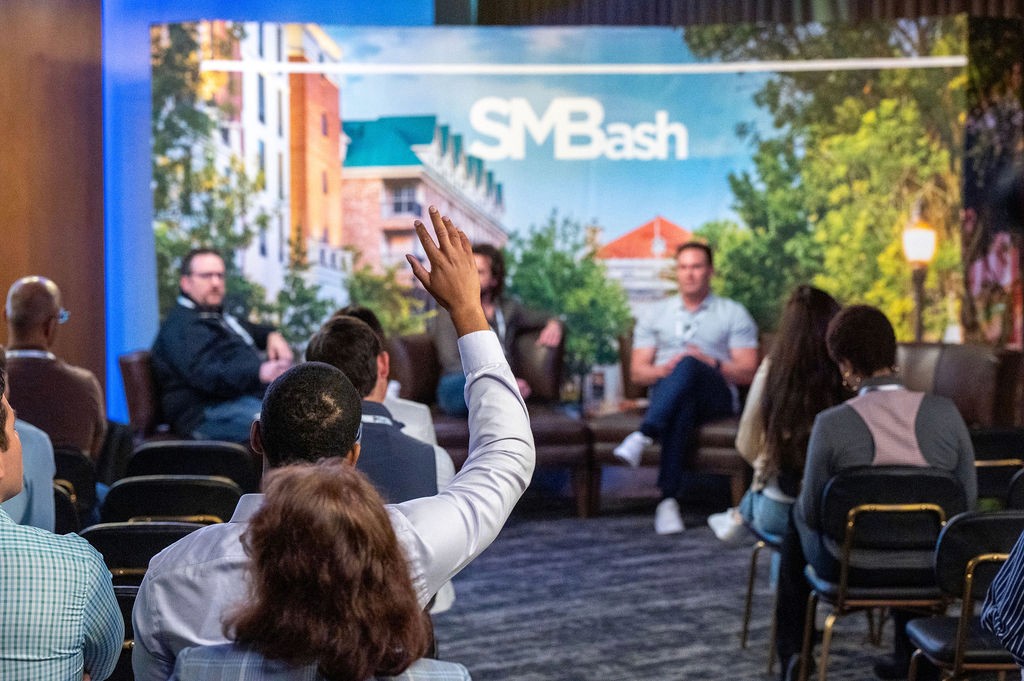
David: Thank you. Let's do audience questions.
Audience: Jake, how did you land the Anchor Bar when you were at that stage of your life?
Jake: It's probably the theme of everything. I didn't have money for a sales guy. There was a bartender in town, and I thought, the bartender knows everybody. I asked him to meet me and said, "Can you introduce me to some of these people? I'll give you a little cut." He knew the manager at the Anchor Bar. At that point, I'd been studying communication skills, sales, how to win friends and influence people. I knew if I could get a shot, I could land it.
Another client he got me a meeting with would've been my biggest, $1,500 a month. He asked, "What are you going to wear? They're all going to have suits on." I went to the consignment store, got an old button-up shirt, then went to JCPenney and bought the cheapest suit I could get. I went in and got that one too. Recognizing the bartender knew different people in town is how it happened.
Audience: For a lot of the businesses you acquire, you might not be an industry expert. How do you go about informing yourself to make an informed decision?
Jake: Great question. I'm probably not the best example because I'm a little too loosey-goosey. I'm willing to roll the dice, which can be great and can also work against you. The perfect answer lies somewhere in the middle. There's a level of diligence that should be done. While it's okay to take some risks, you want to understand something you feel like you can be successful in. If you have a little knowledge of it, that's a huge advantage. Try to learn as much as you can about the business ahead of time before taking that first leap.
It's probably ideal to look at multiple businesses and go through the process. Even if you don't end up buying it, you'll learn about the actual process. So when you find the good one, you've already been through it. Then you can focus on the real things: are these numbers legit, is this business legit, do I see myself being successful with it? Just try, then keep trying.
Audience: Have you had the epiphany of, "Oh, I made it, I'm successful"? If yes, what was the catalyst? If no, do you feel like as you level up, you just keep moving the goalpost further back?
Jake: I love this question. What you described is such a slippery slope. I went through counting change, and now the bills are paid, things are good, and most people on the outside would consider me successful. That's a battle a lot of people face internally. I need to accept that for myself. My little sister once said, "When is enough enough?" That's stuck with me.
In the last year or two, I've tried to transition. I have three little kids, and I'm trying to find balance between being a dad, being a husband, being the family guy, but also continuing to grow. That's a never-ending challenge. The best way to conquer it is to be conscious of it and understand that's a battle you'll always face. Maybe your goal is to reach the absolute pinnacle of your career, like Elon. There's no right or wrong answer. It's about being conscious because it's easy to fall into moving the goalpost. When is enough enough? If you can be aware of it, you can tackle that problem and understand what you want. That can make all the difference in your level of happiness throughout life.
David: Jake, thank you for doing this. This has been truly inspirational. I genuinely appreciate you coming here and bringing Dan along to do video. Thank you guys for listening to Jake's story. Another round of applause.
Jake: Thank you, guys.