PLAYLIST PRESENTED BY

How Chenmark Builds CEOs and Scales a 10-Company HoldCo
Description
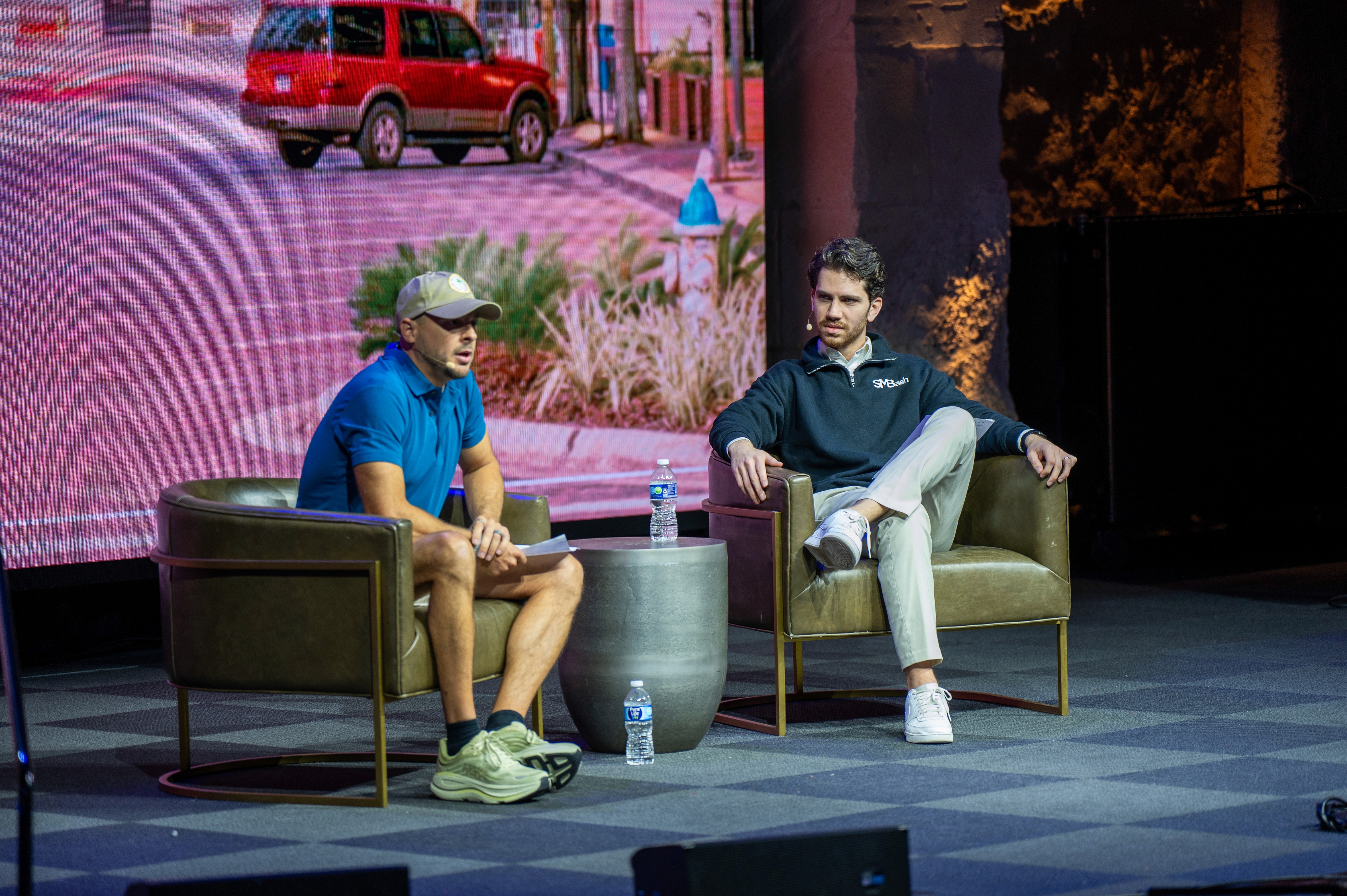
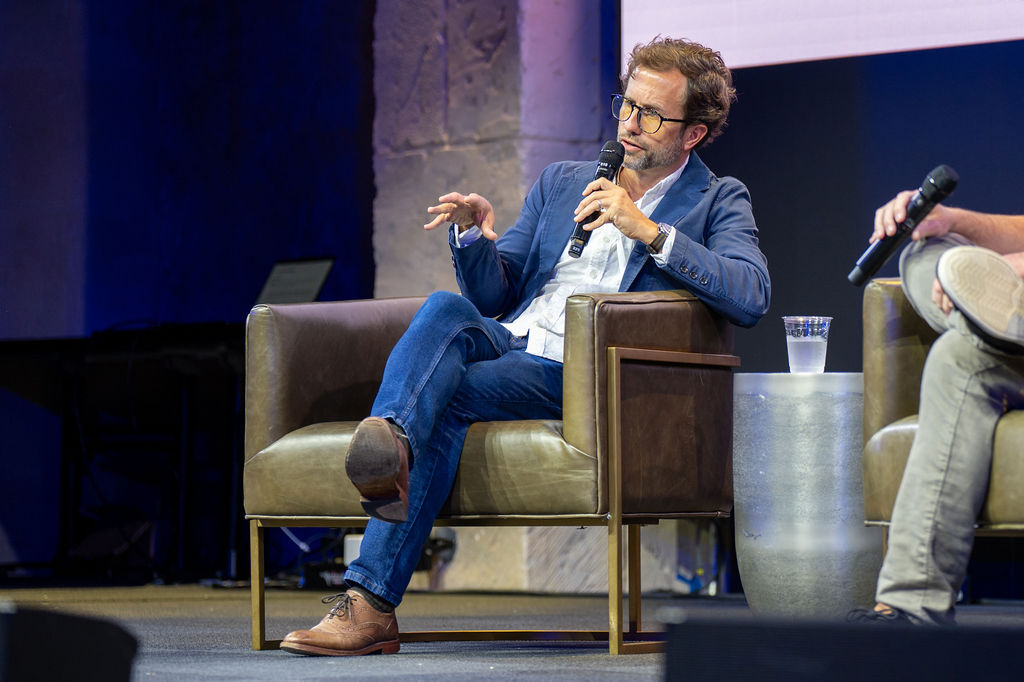
Palmer Higgins and Sean Edwards of Chenmark break down how they've built a 10-company holdco with 600 employees by developing CEOs internally through their GVP program rather than hiring off the street or relying on rolled-equity sellers. A candid conversation on holdco strategy, decentralized operations, free-cash-flow-based incentives, internal stock markets, and the tradeoffs between solo entrepreneurship through acquisition and joining an established platform.
Recent Videos
Transcript
**Update on Chenmark**
For the last four years ending in December, I was running one of our companies, Mainely Grass, a lawn care company in New England. I successfully trained up one of our CEOs in training, and then he got pilfered to go run a new acquisition of ours. So I handed the reins over to him and stepped in to run another one of our companies, Seabreeze up in Portland, which is a commercial landscape maintenance company, because that CEO got pilfered to go run another one of our acquisitions. So I'm hopscotching around running businesses, plugging holes while we develop CEOs to take over for me.
Chenmark today is 10 companies throughout a bunch of different industries and a bunch of different geographies. We're in Western Canada, Florida, Tennessee, and we have a bunch of different companies in New England. A lot of seasonal businesses, so the employee count fluctuates heavily, but at peak season across the board, you're looking at probably 550 to 600 employees.
**Sean's Background**
I joined Chenmark in early 2021. I was coming from a company called Ares Management working on restructuring and workouts, basically the problem children of the private equity world, trying to turn those around. Quite different from what I'm doing today. I joined the CEO training program that Palmer just referenced, called the GVP program. I heard about Chenmark on a podcast. I liked the operational side of my job a lot more than the spreadsheet and legal doc side, even though I do like nerding out on spreadsheets. I liked that it was more long-term focused, that I wasn't only dealing with fire drills and problems all the time.
I joined with the idea of going through the CEO training program. Came to Chenmark in Portland, was there for a little while, then moved to Cape Cod and was the CFO at a commercial landscaping business. Then moved to Florida and was running a boat tour business that we acquired in 2022. Then came back to Portland to help at the holding company because of bandwidth constraints.
Sean set the land speed record of GVPs going through the program and becoming a CEO. We've designed the program and guide people toward roughly 12 months in each segment, so roughly two years before you become CEO. Sean did it in less than a year.
**From Wall Street to Pirate Ships**
The GVP program comes in stages. First you're in Portland working directly with some of the small businesses, so you start to get a feel for what that's like. Previously, I was on the road about half the time working with middle market private equity companies, so I had seen what good looks like working with management teams, but I hadn't managed a team at an operating company. In stage two, when I went to the landscaping company, that was a steep learning curve. Now you're managing a team, dealing with people, people in your office coming to you with issues basically my entire workday, and then I go home and catch up on closing the books at night.
The big thing for me was people management. If you're coming from a finance background, that's just not something you're going to get a lot of. Maybe you have an analyst or associate that you're working with. It is a very different world in a small business.
The boat business is an insular culture. Boat captains are a bit profane, which is fine. There are two separate brands, a dolphin cruise with a pretty traditional captain, worked on oil rigs for a long time, gives a great tour, and the crew is generally younger, high school people who want to work on a boat. The pirate crews on the other hand, we're hiring people out of acting programs. It's a creative group, very different workforce. Disney on water.
One thing I did that was helpful in relating with them and understanding the roles was I did every role in the company that I legally could do. I cannot drive a 100-ton vessel because I don't have a license, but I can put on a pirate costume and work behind a bar. The team loves that, and honestly it's a lot of fun. If you can't have fun in a pirate costume pouring people daiquiris, I don't know what to tell you, small business isn't for you.
**The First Deal**
James, Trish, and I started Chenmark. The idea all along was buy multiple businesses, own them forever, operate them well, recycle free cash flow to buy more businesses. A fairly simple idea, not original at all, but bringing it to the small business space. That was eight years ago, before the word holdco existed, and it was certainly at a time when that was not considered search either. I distinctly remember a lot of business school professors telling us that what we were doing was wrong. But we did it anyway, probably because we didn't know what a search fund was when we started, so we were already materially down that road.
The first deal was Seabreeze, a commercially focused landscape maintenance company in Portland, Maine. That's what brought us to Maine. We knew we were going to move and live wherever we were for the first deal. But that was a unique deal in the sense that we probably wouldn't do it again. We were buying it from that 40-year-old cohort, two brothers who wanted to take some chips off the table and help take the next step in their business, but didn't think they were the people to do it. Private equity does this all the time, owner rolls equity 20%, tried and true. It didn't work for us.
In my experience, small business owners don't value equity the same way we do, so it didn't align incentives the way we thought it would. They were selling their business because they wanted to take a step back. When you're asking them to work just as hard as they used to and they don't own 100% of the business anymore, they're kind of like, what is this for? And we weren't operating in the business either. Trish and I have both since run businesses ourselves, and that experience has been really transformative for Chenmark.
They rolled equity, we got some debt, not a ton. We're generally fairly conservative, and when you sign a PG for the first time, it's pretty real. Then I very quickly bought a couple others and realized in order for us to scale Chenmark and realize this vision, we're going to have to rethink how we operate. That's where the holdco model came in.
We very quickly realized the CEO position for our model is a very pivotal position, and developing those internally became the very obvious choice, as opposed to either having sellers stay on or hiring directly from the street. We tried that and failed pretty miserably. So now the only way to become a CEO of a Chenmark business is to work in Chenmark first.
**Were We Ready for Deal Two?**
Honestly, we probably weren't ready, we just did it. Trish has the best mindset for this: don't waste a lot of time thinking about all the things that are going to go wrong, because a lot of things are going to go wrong, just figure it out. I'm more the freak-out kind of person, and James is somewhere in the middle. That's what's helpful about having three people, we have a natural spread and balance each other out.
In hindsight we probably weren't ready. Ignorance is bliss. We were young, we were hungry. People ask what was it about you guys, and I think really two things: willingness to bet on ourselves, and a fairly high comfort with delayed gratification. Those were the key ingredients to getting the start.
**The GVP Program**
It's a three-stage program. Stage one, move to Portland, get to know the team, get to know the culture. Chenmark makes sure you have the right attitude and aptitude to be a successful small business leader, so they're comfortable sending you to an operating company as a representative of Chenmark. While you're in Portland, you're working on search and helping operating companies with whatever they need help with, generally ad hoc one-off projects. You're not trying to be installed on a run rate activity because you're going to be moving on in six to 12 months.
If that goes well, you move to somewhere in North America, could be Florida, could be Western Canada, could be New England, and you take a leadership role. That can take a lot of different forms: plant manager, general manager of a branch, head of sales, head of operations, head of finance.
Then stage three, ideally the final landing spot, you are running a small business somewhere that is a great long-term fit personally and professionally.
The why: we did have some bad experiences hiring people directly and false starts with owners who wanted to stay on. Our model is heavily predicated on a decentralized operational model. We put a lot of autonomy and authority in the CEO's hands, so making sure we have the right person from both an attitude and aptitude perspective is important. Maybe we're just not good enough interviewers to do that in one fell swoop.
Culturally, it's great to establish a culture where we develop our own. The person who replaced Sean as CEO was not a GVP, he worked at the boat tour business as a general manager, was hired directly, and has become phenomenal.
**Incentives**
Everything in Chenmark is free cash flow based. That's the North Star. As an operator, your compensation is tied directly to the free cash flow your operating company specifically generates every year. You also have the opportunity to invest in Chenmark at the holding company level. The only people who can invest in that stock are employees.
The original idea was to recycle cash flow and be a long-term capital compounding play. The equity that goes into our next acquisition is internally funded. We don't raise external capital. The only people who have access to equity are our employees. It's CEOs, but we're expanding that to increasingly larger pools of our entire 600-person team.
For CEOs, you earn your compensation based on the performance of the company you're running. That gets paid out in cash, and you have the option but not the obligation to turn that into stock. There's a tax drag component, and a lot of people say it's a dumb thing, why don't you give options. But I think it's powerful to give the choice back to the employee. If they want to use that cash to buy a house or send their kid to college, they can. We also make a market in our own stock every single year. I stole that from Motley Fool. It's a two-way market, sellers can sell, buyers can buy, so it adds another layer of liquidity.
For valuation, we have a formula. It's a very simple multiple, fixed for a number of years, so everyone knows based on these financial metrics what the value of Chenmark's going to be. We don't have options, no adjusted EPS or anything like that. I'm a big believer in keep it simple stupid.
**What We Look For (and What Flames Out)**
First, cultural fit. We have a hiring squad of five people who interview every candidate, plus our HR director. What we are primarily focused on is values alignment. Each one of us focuses our interview around a specific value and makes sure the candidate is aligned with the Chenmark core values. Beyond that, we're looking for a baseline level of analytical ability. There's a case study component to the process. The typical things you're looking for: is somebody authentic, are they humble, do they have grit?
I bucket into two components: attitude and aptitude. The aptitude piece, there is a level of intellectual and analytical horsepower and rigor necessary to do the job. When you're in a CEO seat, a lot of stuff comes at you all the time. In small businesses there's often very few people, in fact a lot of times one person, the CEO, whose job it is to see the whole field. You have to take in a lot of information, properly contextualize it to pick up on the signal and not the noise, build a foundation of understanding in an industry you don't have any exposure to, reason from first principles, and then communicate that clearly and concisely to your team.
The more important thing for me is the character piece. My three: humility, authenticity, and selflessness. Those are crucial in a small business.
How do you filter for those on a piece of paper or an interview? It's really hard. To be honest, we still don't have a good answer. Our hiring process has been phenomenally successful, and I honestly think it's the process as opposed to each individual. If you ask any of the five people in the hiring squad, we would all say we're terrible interviewers. Our process is very structured. The one thing we are very firm about is that none of the five of us talk to each other until we've interacted with the applicant and submitted our submission. So we get five distinct opinions, and the wisdom of crowds plays really well. It's precisely because we try not to cross-pollinate.
The progression of putting people in the back seat first, then the passenger seat, then the driver's seat, creates better outcomes. If it flames out with somebody at Chenmark working on deals, that's okay. But if we made a really bad decision and put that person in as a CEO, that's a lot less okay and a lot harder to unwind. One person or a small group of people can have an outsized impact on a small business. The catch is there's no guarantee that impact is positive.
I've now had two GVPs serve as my CFOs at various companies who've gone on to be CEOs. They've been in the room in all the decisions, but they haven't been the CEO until they actually took that step. Both of them, within that first 90-day period of being a CEO, called me up and said a version of the same thing: I did not realize how much stuff comes at you as a CEO. Nothing prepares you for it, but we try to prepare people as much as possible.
**Shared Services**
We have a shared services team, five people. Three in IT and technology, one in HR which is mostly recruiting for CEO and CEO-in-training candidates, and one in marketing. The way we refer to them is they're internal consultants. They shouldn't be taking on any day-to-day responsibility in any of the operating companies, because that would suck up their bandwidth and tie them up so they can't help any of the other nine companies. It's meant to be a resource that operating companies can tap that they otherwise might not have the budget to invest in, or even if they have the budget, they don't have enough work to get the ROI.
We own three landscaping companies, and everyone says, why don't you consolidate them? I got sucked into trying to at least consolidate whole goods purchases. They all buy mowers, so let's all buy the same mowers. I was able to strong-arm our companies into doing it for about a year and a half, and then they wanted to make their own decisions. The juice isn't worth the squeeze. I think the autonomy piece is important. There's a bit of Darwinism keeping three different companies separate. They actually are slightly different landscaping companies: one's totally residential, one's totally commercial, and one's in the middle.
Autonomy is a big piece of what attracted me to the space in the first place. I was working in finance, not a ton of autonomy there. I wanted to run my own business, to have an impact, to make those decisions. If you need to do X, Y, and Z and we're going to dictate all that to you, that's not very attractive. We're attracting a very different candidate.
**Why Join a Holdco vs. Solo Search**
Two primary pieces. First, I've always been a team sports guy. The idea of doing a search completely on my own was just not very interesting to me. It sounded a bit lonely. I like working with really smart, hardworking people and being able to bounce ideas off them. I have 10 other CEOs that I get on a call with once a month and talk about important things going on and problem solve together. If I have engine failure, I can call another boat tour captain at another business. I'm not a tech expert, so the fact that I have a really incredible resource to call and help with projects is awesome.
Second, if you're a finance person, the risk-adjusted return is quite attractive. If you're going on your own, the downside case is very possible, especially if you're putting up PGs. There's a very wide range. You hope you're on the good side of the bell curve, but you may not be. If you're going to a company like Chenmark, your range of outcomes is much narrower, so your risk-adjusted return is much better.
**Acquisition Criteria Evolution**
We wouldn't do a deal where a seller wanted to stay on. When we talk to people who say they might want to stay on indefinitely, we say that's fine, we're probably not the best fit for you.
We've written about what we call bait and tackle shops, companies that have really high returns on capital but maybe don't have tons of reinvestment opportunities, especially organic, just because of the nature of the business. Those can be really attractive opportunities for Chenmark and for the CEO, but pretty bad opportunities for traditional search where you have to hit the classic 35% IRR. In the Chenmark umbrella, that's great. It's a source of cash that can fund other acquisitions somewhere else. We've gone in thinking these are going to be bait and tackle shops, and they turned out to be bait and tackle shops with other proximal bait and tackle shops next door. So they actually have had reinvestment opportunities within the franchise.
**Do People Leave to Do It Themselves?**
To date, no. If we're articulating the long-term vision and strategy and giving people a compelling opportunity to buy into a diversified holding company that is compounding capital at a really attractive rate, and they're part of a culture where they enjoy going to work every day, why would they leave?
Five of our 10 businesses are run by GVPs right now, and none of them have been run by a GVP for more than two years. We're very long-term oriented. I'm sure it will happen at some point. Our focus is to make sure we're providing opportunities for people to grow in their careers. Hopefully they're in a business where they can grow in their career in that business. If not, are there other businesses they can step into or other roles within Chenmark where they can continue to add value? We've seen that with one of our CEOs going from CEO to a different CEO position. That's why I'm running the business I'm running now.
**Candidate Backgrounds**
We currently have very diverse backgrounds in the GVP program. There are people who came from Ivy League schools and people who did not. Some people graduated college and ran their own landscaping business and sold it and then wanted to do something else. Some people came from professional sports and had more to learn in the business world, went through an MBA, but clearly had exceptional grit and tenacity. We're not looking at, oh, you didn't go to Harvard, that's a shame. If you pass the baseline thresholds from an analytical perspective and from an ability to communicate clearly and concisely, then it doesn't really matter what your background is. I actually think it's beneficial that we have people from diverse backgrounds. It makes us better decision makers overall.
What gets people into the second round is a genuine interest in small business and an authentic desire to be an operator. We have a junior version of the GVP program now, called the Generalist Associate program, for people earlier in their careers. We've had some people who are much more entrepreneurial, don't have the Ivy League background but have a ton of grit and started the types of businesses we would all buy, just smaller. We have one guy who started a lawn care business, grew it to sub a million dollars, and another who started a pool cleaning business sub a million dollars. They wanted to take the next step in their career and realized it probably wasn't going to be just them themselves. They've both been phenomenal additions. JP Morgan taught me a lot of things, but it didn't teach me how to run a small business. I didn't go to business school, so it'd be asinine for me to say you need to go to business school to run a small business.
**Balancing Deal Pipeline with People Pipeline**
It's a balance. Since we're internally funded, you're constantly balancing the cash flow being generated from operating companies with the opportunities to reinvest, and the people coming into the program to ultimately take over those small businesses. I can't say we get it perfect, but it's a constant balance. If we feel we're not where we need to be in search, how do we dial that up? Everybody who comes in as an associate or VP is involved in search. We're looking at broker deals, inbound deals, doing outreach.
Good people create good opportunities. They end up adding value to the operating companies they're in before they become CEOs, which kicks off more free cash. When they're in phase one helping out on search, they end up helping find more and better deals. It all starts with the people. It's a self-fulfilling cycle.
**Managing Seasonal Workforces**
Mainely Grass is the biggest example. We have about 60 technicians we can't keep on in winter. There's not enough summer months to make that business model work. The seasonal position is the worst bitter pill, being CEO and having to lay off a lot of your staff. People leave bosses more than they leave jobs, so make sure you have a good culture where they feel like they have room to grow even if they're in a seasonal business. We had a technician at Mainely Grass go from seasonal tech to account manager, an inside sales customer service rep hybrid, to now being our director of marketing. The more stories like that get out there, there's a more compelling understanding that this can be a career.
I actively look for ways to increase wages. I don't hide the fact that it's a tough deal those technicians get not having a year-round job. How can I make it as compelling a position for them as possible? How can I structure the business in a way and put them in a position to be so successful that I can afford to pay them a lot more than other lawn care companies can pay them?
Our HR manager spends a lot of time with them before the season ends. We give them heads ups and commit to a date. Even if we get through our work before that date, we'll keep them on and keep paying them. Our HR manager goes through, if you want to file for unemployment, this is what needs to happen, this is how to fill out the paperwork. It's a very strict process, if you fill it out wrong it'll jam you up for a while. We try to place them as best we can in other jobs in the winter. It's hit or miss whether they really want to do that.