PLAYLIST PRESENTED BY

Self-Funded Holdco vs. Committed Capital: Two ETA Paths Compared
Description
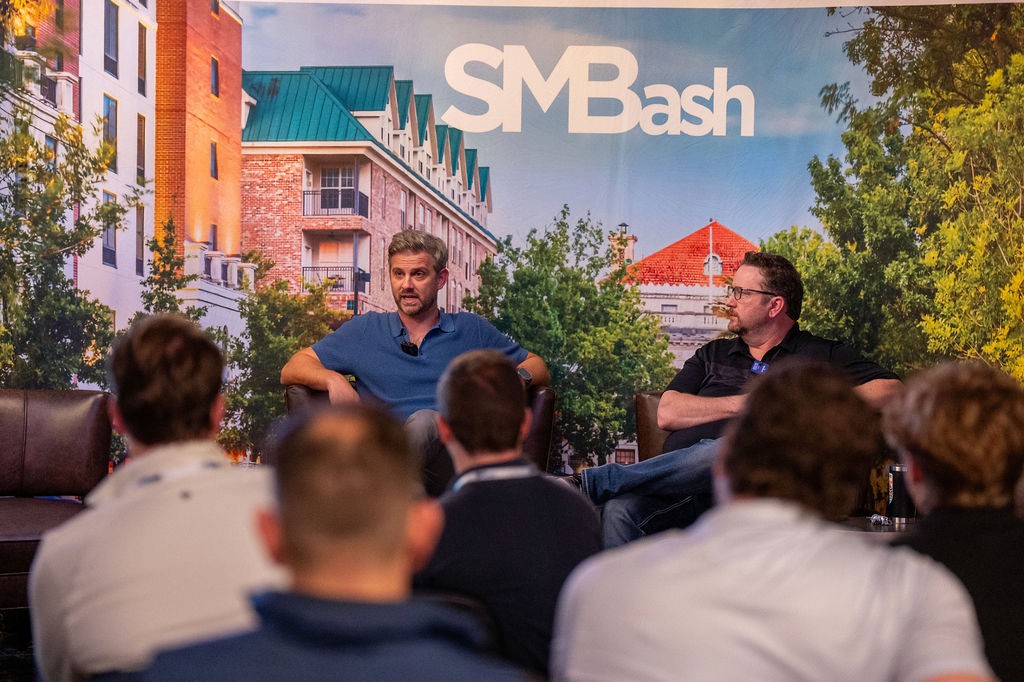
Chase Murdock of Decada Group and Danny of Sterling Heights compare a self-funded holdco built on cash flow with a committed-capital permanent vehicle, covering deal pricing, operator selection, the EOS framework, and the real trade-offs each model creates. A candid look at long-hold entrepreneurship through acquisition, hiring CEOs, and why patience often beats speed in lower-middle-market search.
Recent Videos
Transcript
The first 10 or 15 years of my career was in zero-to-one venture-backed, primarily tech or tech-enabled startups, and I looked up to the Mark Zuckerbergs of the world. At 22, I thought I wanted to be Mark Zuckerberg. Today, I'd rather die than be Mark Zuckerberg. Maybe I'll take a little bit of the good, but none of the rest.
Early in my career, I loved zero-to-one company building. I loved the craft of how do you will a new company into existence? How do you raise a gob of capital and deploy it to drive growth? I had a couple of successes, had a couple of flops, and eventually I grew really tired of what I now call the arrival fallacy of tech. Every project I was working on, I was trading my work-life balance, my sanity, my relationships, my hobbies in exchange for a three-to-five year push to build something and ideally exit it. And even if it wasn't the three-to-five year exit push, it felt like we were always sprinting toward the next tranche of capital. When you're building a company that has fast growth, you're not default alive. You're living off of the last round of financing, always chasing the metrics you need to unlock the next round.
Eventually, I took a long backpacking trip with my now business partner and best friend, Adam. This was 11 or 12 years ago, on a long hike in the Utah desert, and we were trying to decide, how do we change this game? We're tired of playing it, but we love entrepreneurship. The genius idea we had was, we'll just start a small lifestyle business and siphon cash. Even if it's only 3,000 to 5,000 a month, that's enough to extend our runway. We ended up starting Taylor Cooperative, the first company in our portfolio. We grew it quite quickly. The intention was to have a small, tangible brick-and-mortar business where the goal wasn't to be a billion-dollar company. The goal was to run it well, be an anchor in our community, run it profitably. We started it with the intention to keep doing moonshot ventures, and eventually we fell in love with small. That business eventually threw off enough cash flow that it led to acquiring a second, which led to acquiring a third.
Now we have a diversified portfolio of five companies in Utah. We've done a bunch of acquisitions and a little bit of startups. That's Decada Group, a diversified holding company, entirely self-funded. We don't have any funds. We haven't raised any capital, committed or otherwise. We use the cash flow of company one to acquire two. Companies one and two funded three. One through three funded four, and so on.
**Interviewer:** In your model, it's still very much complementary to what you loved about that earlier part of your career, in that you aren't operating any of your portfolio companies at this point, right? With Taylor, the get off the ground, get it zero to one, bring in an operator, and set your sights on number two. Is that how it evolved?
**Chase:** In slow motion over five years, but yes. We've had the advantage that we didn't have debt on our first company, and we have three companies that have no debt. Last year we issued distributions at 16% of total revenue. We're operating in a very lean, low-debt environment. We're able to reallocate the cash and hire senior management, whether it's a general manager or a CEO, based on the size and scale of the business, and do our best work in support of our operators. We've been in the trenches, and I respect operators because that's where we got our start. Today, we're hopefully the first call when there's an issue, and Lord knows there's issues in every company every day. We want to be the shoulder to cry on. We want to be in those whiteboard sessions. We do quarterly board meetings, and my team at Decada Group is in support of our operating companies.
**Interviewer:** Danny, contrast that. You took a completely different approach. You raised committed capital before acquisition number one. What led you there?
**Danny:** My career is a lot less interesting than Chase's. I got a job on Wall Street out of college. I was in the M&A group for Merrill Lynch, and the first deal I worked on, we sold an airline payments business for Accenture for $850 million. I was so proud of that project. There was an announcement deeply embedded in The Wall Street Journal, page 34A, and I sent it to my family. Then I got to work the next day, and it was clear nobody in our group really got out of bed for deals less than a billion dollars. I worked on the smaller deal because I was the new guy. I had a great experience there, but was very much part of a much larger machine. I would get myself in trouble for having opinions and being like, "Hey, what if we did it this way?" "No, we have teams for that."
From there, I got recruited back home. There's a prominent family in Salt Lake called the Eccles family. They were at an intersection in time where they had recently divested their last operating company. They had a bank they sold to Wells Fargo. Most of their wealth was held in philanthropic entities. They were saying, "We've been LPs in a lot of different private equity funds." They had family members who were former partners at Carlyle, and a senior member of Leucadia, a well-known holding company. They got together with the idea of creating a private investment company that serves families like the Eccles family. I was fortunate to be part of that initial team.
We were targeting companies quite a bit larger than companies I invest in now, but we found this very niche software business in the utility space. It was doing about $4 million of cash flow, an opportunity that was almost too good to pass up but didn't really fit anywhere. We made the investment anyway, and it became my favorite project. We stepped in, got very involved, and they gave me complete autonomy because it was our smallest holding. The company provided forecasts for power utility prices. They had very rich data sets that you could zero down to a zip code level. You could forecast power prices 30 years in the future with a detailed Monte Carlo simulation. It was a mission-critical service to utilities and some of the nascent players in the space. This business was virtually indestructible.
Because we were investing mainly through non-taxed philanthropic entities, the Eccles family couldn't actually participate very much in the deal. We had to go around Salt Lake and put some capital together to do the deal. That was probably the first time I got to exercise the muscle of raising committed capital. As we stepped into the business, it was a 50% cash flow margin business growing at 10% a year. I remember a chart I put together that overlaid the S&P 500 over a 25-year period, with multiple troughs and peaks, and this company was almost a linear function.
Despite that, there were massive opportunities. We asked, "How do you think about pricing the service you give these utilities?" After some work, we found out they were 500% underpriced from some of their competitors. We asked, "How are you finding customers?" They said, "They kind of find us." No sales function to speak of. And there was a huge swath of the market, smaller utilities, that they weren't serving. There were tons of opportunities to add value.
Because it was a non-core orphan in our portfolio, we sold it about two years after our investment, and I had mixed feelings. We had a triple-digit IRR, but I felt like we were just getting started. We bought the business for a little over $20 million and sold it for about $60 million. They sold it two years ago for a little over a billion dollars. And they didn't do anything different than the things we were already doing. That was a very impactful experience.
I found myself wanting to recreate that experience. But we kept bringing more capital in. The plan with Cynosure Group was being executed as everyone thought. We started making investments larger and larger, and I felt myself getting further away from the businesses. I sat down with all the partners and said, "I keep bringing these businesses that are too small and getting shot down in investment committee. I think I want to go and buy these myself." Little did I know, that was a backdoor into this whole community that already existed in search funds that I didn't really know. I didn't go to business school. I remember doing all this work and being like, "Yeah, there are these businesses that are undercapitalized, and a lot of people are retiring." People had found this thesis separate from me.
What I did realize is that having capital is a massive differentiator in the lower end of the market. Oftentimes, independent sponsors will invest in these businesses, but they come from a background where, "Send us the financials every month. We'll do the board meeting every quarter." There's a lot of complementary benefit to having support in these businesses that doesn't exist otherwise. That, in addition to a lot of structural advantages, lends itself to a holdco. That was part of the ethos of the Eccles family as well. They generated their wealth not over a three-to-five year hold. They generated their wealth over 150 years. Those businesses are built over long periods of time. That was late 2019. So I've been doing this model since right before COVID until today. Most recently is Sterling Heights under that banner, and we have two platforms.
**Interviewer:** Let's talk about structural trade-offs. One of the primary benefits of raising committed capital is it's a big differentiator. If you were in the sourcing talks, 75% of the content is how do you get a broker or investment banker to take you seriously. That said, you now have committed capital and obligations. Danny, how do you balance, okay, I've raised a bunch of capital, with the pressure to make the right investment decision?
**Danny:** Fortunately, we were fairly deliberate in the capital we took on. We had a very clear objective that this is a long-term vehicle. People like the Eccles family, who are now investors of Sterling Heights, that was part of a filtering mechanism for limited partners. There was a lot of investors for whom it was a non-starter. This is a long-term permanent vehicle. My path to liquidity is going to be more opaque. A big part of it is a lot of our partners are people we've known for a long time. With any private investment, there is a level of trust. I know exactly how much of the fund I've drawn down and how much I need to deploy. The bigger issue of trade-offs is not the pressure to deploy, but making sure we're reserving enough to deploy across our platforms. We tend to be in areas where we have long runways to grow via acquisition, and making sure we have enough capital to support that.
**Interviewer:** Chase, contrast that. Have there been instances where you've wanted to move and capital has been the handcuffs?
**Chase:** That's the major disadvantage. We could have scaled a lot quicker and made a lot more acquisitions if we were bankrolled. We could have bought bigger deals. The advantage on the flip side is the ability to be patient. I haven't seen a well-priced deal in three years. Instead of acquiring, in two and a half years, we bought four companies. We can move at that rate if times call for it. By contrast, we've started two, and we're working on a third. So we're able to greenfield, to do de novo, to underwrite to our own terms.
Adam and I are a little fiery, a little independent. I didn't want to leave entrepreneurship for a job. I didn't want to be beholden to LPs on some acquisition or return timetable. Your story is exceptional, of a beautiful business that if only we could have held onto it a little longer. I published our fifth annual letter a couple of months ago reflecting on 2025, and the theme was reflecting on one company that's turned 10 under our ownership, and an electrical contractor we bought four years ago that turned 30. Things don't get good until you're five, six, seven, eight. It gets great at 10. The first few years suck. The J curve is real operationally, financially. That three-to-five year return window has never brought about positive pressure earlier in my career. It's only brought about stressors and timetables that don't make sense for what we're trying to do.
I don't stand on a preachy pulpit saying you shouldn't raise capital. There's a time and a place. But Adam and I were very clear with each other when we started that we wanted to create a day-to-day we don't want to retire from. We enjoy our work. We want Decada Group to be around 30, 40, 50 years from now. Some of our best companies looked pretty damn awful in years two or three. The ability to stack and compound and be patient is the advantage.
**Interviewer:** The compounding is not only financial. There's real knowledge compounding too.
**Chase:** Totally. To be clear, I'd probably be driving a nicer car if we raised a fund and acquired larger companies at that volume. There's more money to be made. We could go build higher enterprise value. The downside is we've had to be careful of stringing along the right acquisition at the right time and not getting in over our skis. It only feels like Decada is starting to gain traction on the earnings power at five years in. The first several years were sacrifice. We could have swept cash and bought a cabin. Instead, we swept cash and bought a really tough company that we had to work our tails off for three years to turn around.
**Interviewer:** Let's talk about the operator model. How do you think about the right avatar and recruitment process for an operator for a platform, whether through hiring or acquisition?
**Danny:** I've thought a lot about this and I've tried both: partnering with existing teams and bringing on a CEO day one. There are trade-offs. We tend to enter discussions with founder-owners asking what they would like to do. Frequently we have, "I want to keep growing this business and stay involved." That becomes a factor that pushes us away from doing the deal. We have a fairly specific box of things we feel like we understand, where we could grow a business and bring somebody in to execute on that plan. If a business is doing $5 million of revenue and has been doing $5 million for the last 10 years, I probably don't believe the team is going to grow it to 20. Everybody will say, "Here's the five things we can do to grow." Well, you've been working in this business for 20 years and haven't done it.
There's no substitute for a new operator that has on-the-ground experience just shoveling crap. If someone has a pedigreed career but has never stepped inside the doors of a small business, it looks and feels very different. Oftentimes there are things that are the right thing to do for the business that aren't the most efficient, automated things, but they're just what has to get done. I have this discussion with a lot of MBA buyers who are like, "I'm buying a commercial cleaning business doing $700,000 of EBITDA." My first question is, how comfortable are you on a Tuesday night when two people on your crew don't show up and you're scrubbing toilets in the Bank of Utah's branch downtown? It's a lot different than the $850 million deal.
**Chase:** De novo and established are two very different CEO types. It's a very unique skill set to go from zero to one and build to 50, 100% plus CAGR. That's a very different persona than someone who's really good at stewarding an asset and growing it in a slow, compounding way. Our model is such that we don't need to force any one company to hit certain growth targets for Decada to be successful. We can do quite well compounding with inflation and stacking wins in other bets. We have some companies where the operator's goals are maybe not as ambitious as we might find if we recruited a different CEO, and that's fine. That works with the model.
It's very important for us to get the right CEO in alignment with the right business. If this is an opportunity Adam and I are amped on, and we feel like the industry's going to grow and we can 10X this thing, that changes the kind of CEO we'll go find. One of the most upstream decisions that dictates our success downstream is the CEO we put in place. It comes down to matching them to the industry, the size of company, and the growth trajectory. Every CEO's personality is very different. There are commonalities of humility, of being really high EQ, really great at taking complex things and simplifying them. It's rare that we'll take someone we've never met and put them in the CEO seat. We don't do that if we can avoid it.
Right now we have a joint venture we're working on. We would ask the CEO of one of our companies to potentially move over for this opportunity because we've been around him for two years. The president of one of our companies started five years ago as a part-time associate, was promoted to assistant general manager, to general manager, and then asked to take the operator seat when we transitioned CEOs. We like spending time with people. When people get what we're all about, know how to communicate with us, and are aligned on what we're here to do, that's really valuable. There's a world where people can be on a CEO track anywhere across our organization if that's what they want.
**Interviewer:** When you identify a good operator, it can inform your thesis. With Taylor Cooperative, you opened your second location in Chicago in large part because you had such a great person who wanted to move to be close to family.
**Chase:** She came and quit. She said, "My wife and I want to move back to Chicago where family is. I'll give you a year. I'll help you find a new CEO." I was so bummed because I saw myself spending 10 or 15 years doing this with her. A week later, Adam and I were like, "What if we just go to Chicago with her?" That led to us opening a second location out there. When you get the right person, we break all the rules I opine on. We'll get them into the economics. The hardest part in this business is always people. All we do all day long is solve people problems. When you find people where you say, "I love working with you, and I want to spend the rest of my life building with you," we'll break all rules to make the people side make sense.
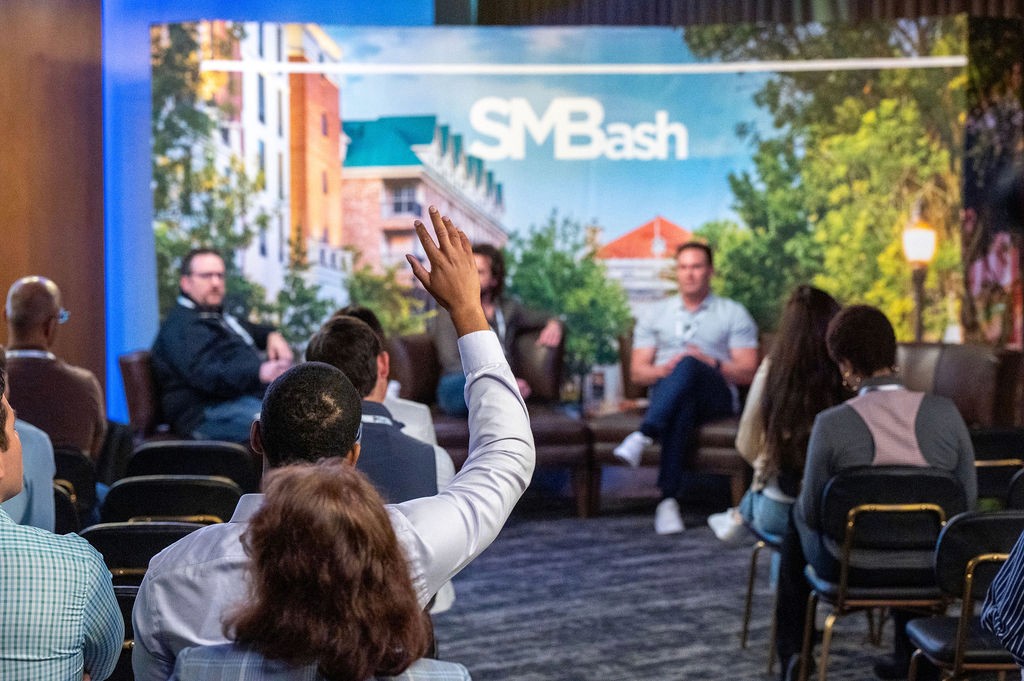
**Audience question:** Hiring is one of the hardest things in business. How do you find a really great person and have conviction they're going to be great?
**Danny:** I wish there were magic questions. The short answer is, nobody bats a thousand with hiring. Some of the people I've thought interviewed the best end up not performing, and vice versa. The perfect situation is what Chase mentioned: you have people already excelling, you're familiar with each other, and you've had time to know what they're good at. The Mount Everest we're looking for is the majority of people growing in our organizations are growing from within.
Oftentimes, we inherit businesses that need leadership. You try to solve for that through reference calls, through digging into their past lives. We have a relatively robust process. Our interview process doesn't happen over a couple of days, especially for someone going into a key leadership role. One of our most successful CEOs wasn't the CEO when we brought him on. He came on and spent time, and the founder-owner stayed and transitioned over a two- to three-year period. He had time where he didn't have to make decisions on things he didn't know a lot about as he was wrapping his arms around the business.
**Chase:** I completely agree. An exceptional hirer is the difference between batting 500 and 600. You can spend your whole life trying to get really good at reading people in an eight-hour time period, and people are going to surprise you every time. The best way to get really good at team building is to get really good at firing, unfortunately. You're going to get it wrong, and you'll have to course-correct immediately once you know.
It depends on the role. The more senior, the less we're hiring people off the streets. When we are hiring off Indeed or LinkedIn, we're challenging our CEOs to spend a lot of money on recruiting and cast a really wide net. A lot of folks struggle to spend to recruit, whether through headhunters or advertising. It's a numbers game. The wider a net you cast at the top of your funnel, the easier it'll be downstream.
On senior roles, I keep a list of 30 to 35 people I really want to work with one day. I have a spreadsheet. When the right deal crosses my plate, I'll call Suzy, buy her dinner, and talk about the opportunity. That's a product of years of networking.
The best differentiation is recruiting versus hiring. Recruiting is looking for folks who aren't looking. Brand building is articulating what Decada is all about so when people say, "I really want to be a CEO at Decada," they know what they're signing up for. Hiring is the very reactive process when you need a job filled. The best organizations are doing a lot more recruiting than hiring. But hiring is hard. No one's got it figured out. It's being really loyal to the folks who do work out and being really discerning on the high bar.
**Audience question (Costa):** Chase, you said you haven't seen a well-priced deal in three years. How are you advising folks in terms of starting their own business from scratch now versus acquiring a search deal?
**Chase:** Things are so much more expensive today than they were five years ago. There's an entry price into the arena. It's hard to do great things in life, so you've got to figure out what you're willing to compromise on. For some, that's slaving away for a couple of years, working for nickels to get a new venture off the ground. Sometimes it's absorbing more risk. There are deals we did earlier in our journey that we wouldn't do again because we don't have to. I'm glad they worked out. There's a real challenge today with the way things are priced and the way the overall search ecosystem is operating.
On the other hand, I have four friends in Utah who have either completed a bankruptcy process or are in the beginnings of one post-acquisition. The stats from your presentation last night, I think it was 3% or 4% of SBA loans default, and that's only telling part of the story. My advice isn't just to pay the entry fee and jump in. It's complicated. Being really good at running a company is a craft. It's like being an athlete. It's a skill set that takes 10 or 15 years to develop. I get tired of searchers with credentialed graduate degrees thinking they can jump in and run a business better than someone who has 40 years of running a business. It's about tapering expectations, developing your chops in real time, staying humble, and paying an entry price.
**Danny:** My actions would say I've found some well-priced deals. What I've seen unfold over the last five years is a massive increase in interest in "I want to buy a business, run a business, run a search." What's coincided with that is the average quality has gone down. Everybody in the ecosystem is filtering. You have to look different. People have to remember you. You can't rely on just one channel, and you have to be tenacious. Our pitch oftentimes is, "You don't need to do the search. Just come. We'll find the deal for you." Acquiring a business, structuring a deal, sourcing, and running a company day to day are two very different phenotypes. The common denominator for someone who does it successfully is grit. There are more eyeballs looking at deals, so finding an angle unique to you leads to things more favorably priced. Add structure into that too.
**Audience question (Simon Reynolds):** Danny, you mentioned providing businesses with capital as well as support. When you said support, were you alluding to a board of directors?
**Danny:** We don't have any boards. Our businesses are too small for that. We spend a lot more time with them than board meetings would allow. Support is oftentimes resources that don't exist in the typical business of that size. One example: we have a CFO that sits across both of our platforms and is an advisor to our controllers. They might say, "I've never done acquisition accounting because we've never acquired anything, but we've done three acquisitions this year. I don't know what to do." He can say, "I've done this 100 times. Let me show you." We did a refinance with one of our businesses late last year, and they'd never done that before. We put together budgets, and they've never done that before. We provide resources either directly from the holding company or through our network, either putting them in the business permanently so someone's not wearing three hats, or as an outsourced resource in any major function.
**Audience question:** Where do you both go every day? Do you physically go to an office? Do they get jealous if you spend more time with one entity?
**Chase:** I protect my mornings. I do a lot of writing in the morning. I don't take morning meetings. If all things go to plan, we do quarterly board meetings. We have someone on our team who does weekly rundowns with our operators, just metric reviews, that flow up to my desk. We do a monthly financial review. If things are going to plan, our touchpoints are very infrequent. The best thing we can do most of the time is get out of the way. We have three jobs: buy great companies, appoint really great CEOs, and support them in the way they need it. Any time we're playing a role, it's not good alignment. The best thing we can do is help them fill the role, help them think about the problem, help them think about who to hire.
We started our journey on the opposite side, running fractional marketing, finance, operations. We were in the guts of our businesses, and the alignment was messy. We were propping up functions that, once we took a step back, regressed. We were over-internalizing profitability in some areas. We've moved to the other side of the pendulum.
Things never go to plan. We get really involved when things are going either really well or really poorly. We have this concept we call the box. We go through annual planning with our CEOs every year. They're responsible for articulating a budget and plan for the year that we ultimately bless. As long as they stay within the parameters of the box, four board meetings a year, monthly call, I do a monthly sauna session or coffee with each of our CEOs. If you're in the box, that's all you have to do. If we're out of the box, we get hands-on. I had a CEO go on vacation to Costa Rica and come back with my desk in his office. Our ultimate fiduciary duty is being the ultimate steward of the long-term of the company.
**Danny:** We're huge proponents of the EOS system. We tend to establish that in our companies. Some of them are already kind of doing it. It's not a silver bullet, but it's a really nice framework to make sure everybody's on the same page. When we set out the structure of the businesses, we deliberately put ourselves in what we call the growth bucket, and we are support to everything else. The one thing we drive is, "We'll find ways for us to grow." That means we'll do the work on this adjacent service we should start providing, or this new market, or this acquisition. We take full ownership and accountability for that. We help them fill other gaps that exist.
Early on, we're very involved, talking on the phone several times a week with key people. We have our standing 90-minute call with our companies that eventually they graduate from, but we always remain in the growth bucket. People ask, "How involved are you going to be?" We'll be involved as much as we really need to be, but we don't want to get in your way. Oftentimes there's expertise in middle management who's been there 20 years; they'll forget more about the industry than we'll learn. We're self-aware and try not to walk in like we have all the answers. We say, "We have all the ingredients. We just need to put them together the right way."
**Audience question:** Is there a single favorite attribute you look for in CEOs?
**Chase:** Hiring for a CEO role for Decada is an interesting Venn diagram. We're looking for the talent, caliber, and gumption of someone who would just go do it on their own. That's hard. If someone has that level of experience and tenacity, they'll never come work for us. But there's a lot of really high-drive, high-ambition people who are very risk-averse. That tends to be the Venn diagram. Either if they didn't have three kids and a mortgage, they would go do this, or in five years from now, they will. They see Decada Group as a bit of an accelerant. The economics need to make sense, and the experience.
In terms of attributes, I've been shocked at how many great CEOs are so different from one another. It's less a personality thing. They always share really high humility, really high EQ. They're the chief communicator between Decada Group and the economic interest, and the group on the ground doing the commercial cleaning or the work. They can take really complex situations or high-emotion things and make them very simple. Our CEOs are very different people: ages, gender, personality, interests.
**Danny:** The analogy we use is we want someone entrepreneurial. Sometimes we get lucky and catch them right before they jump out of the airplane. That's a timing thing. In general, the way we talk about it is an ownership mentality. Our model doesn't work if we have to micromanage. Someone with an ownership mentality says, "These are the problems, and it doesn't matter whose problems they are. I'm the leader." That's the one commonality. We have a commercial roofing, glass siding business, guys building real things, and we have a childcare business. Those businesses take very different leaders. But the ownership mentality is common.
**Audience question (Madison):** What keeps you guys up at night?
**Danny:** I think the biggest moments of crisis are when CEOs depart suddenly. One of the benefits of the model we've been deliberate in building, our cash-to-debt-service coverage ratio is a 4.5. We're not levered to the gills. We don't do 90% debt. We don't have shareholders or LPs breathing down our necks. So it's a very internal thing. As we've grown, we've had to delegate a lot and put trust and authority behind the CEOs we hire. The biggest fear is losing a CEO we thought was good but isn't.
**Chase:** People is my answer, even though you said it couldn't be. One thing that has caused me angst: when we step into something, we very frequently are partnering with the existing founder-owner, and that partnership needs to be healthy. When that partnership is unhealthy, that keeps me up at night.