PLAYLIST PRESENTED BY

Financial Modeling A Search Deal


Description
Drew Eckman and Kosta Dio break down the SMBootcamp financial model and show how to structure a self-funded entrepreneurship through acquisition deal that keeps the seller, buyer, investors, and SBA lender aligned. Covers SDE versus buyer's EBITDA, defensible add-backs, seller note terms and standby periods, step-up economics, DSCR thresholds, and how to use deal math to avoid wasted time on transactions that will never close.
Recent Videos




Transcript
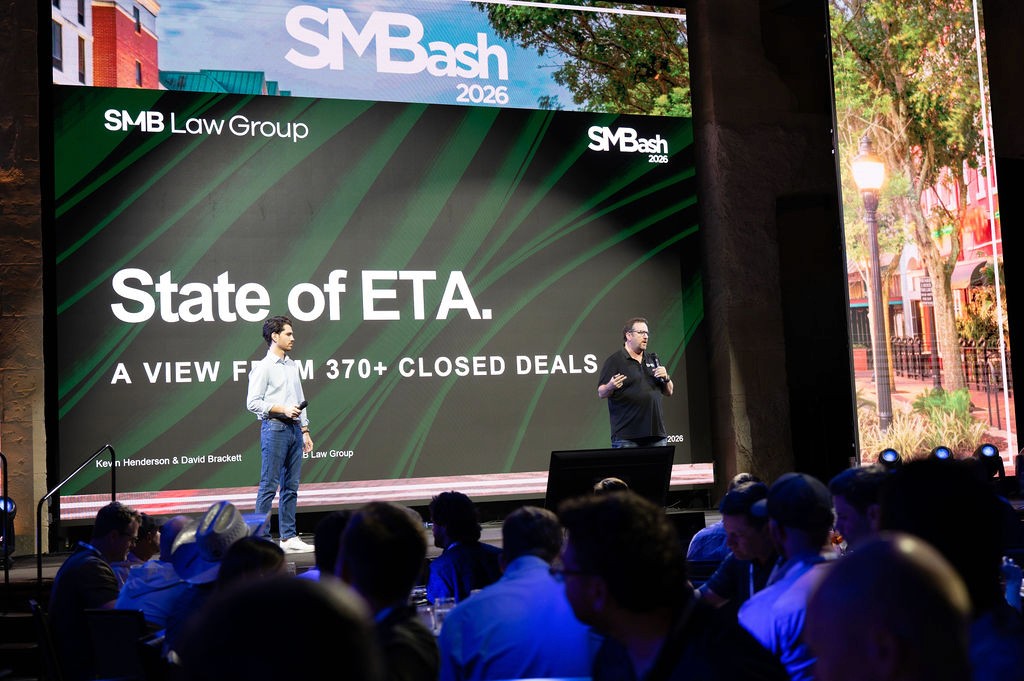
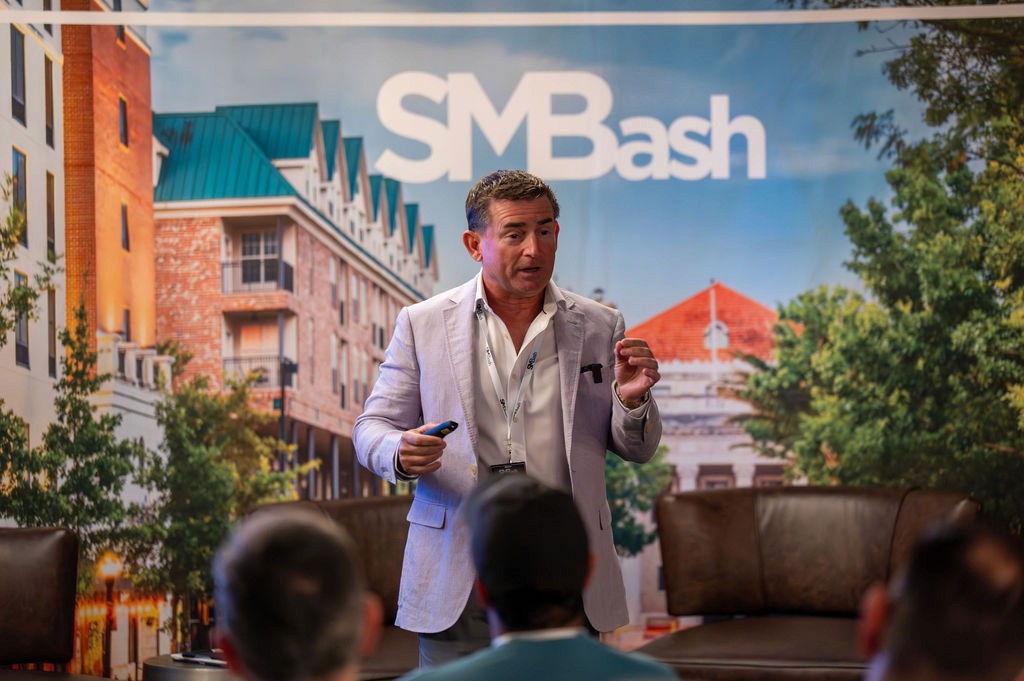
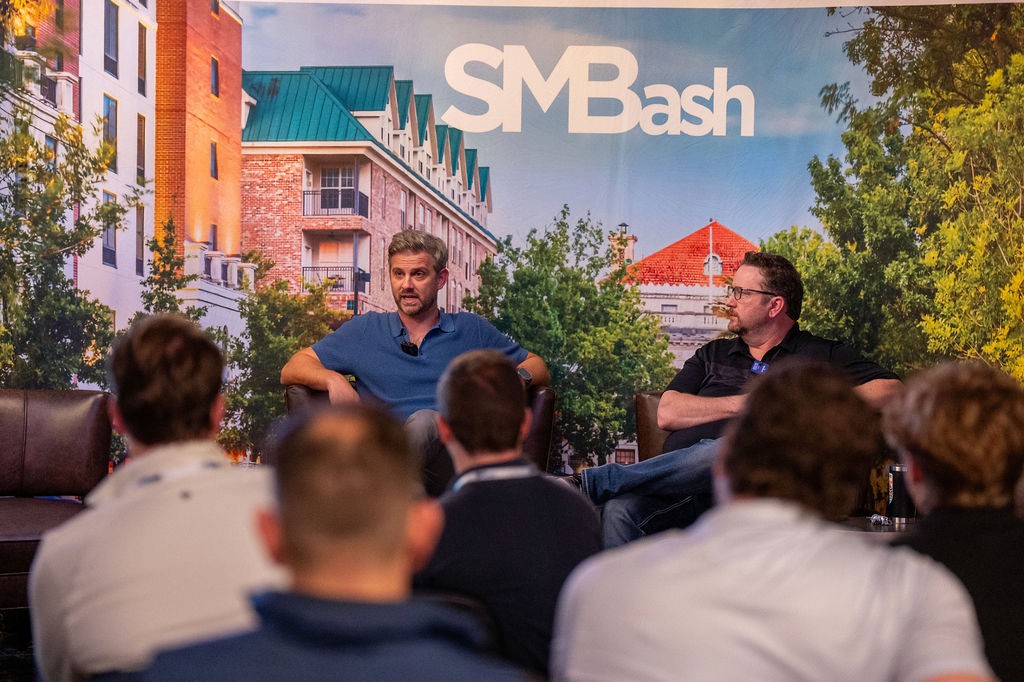
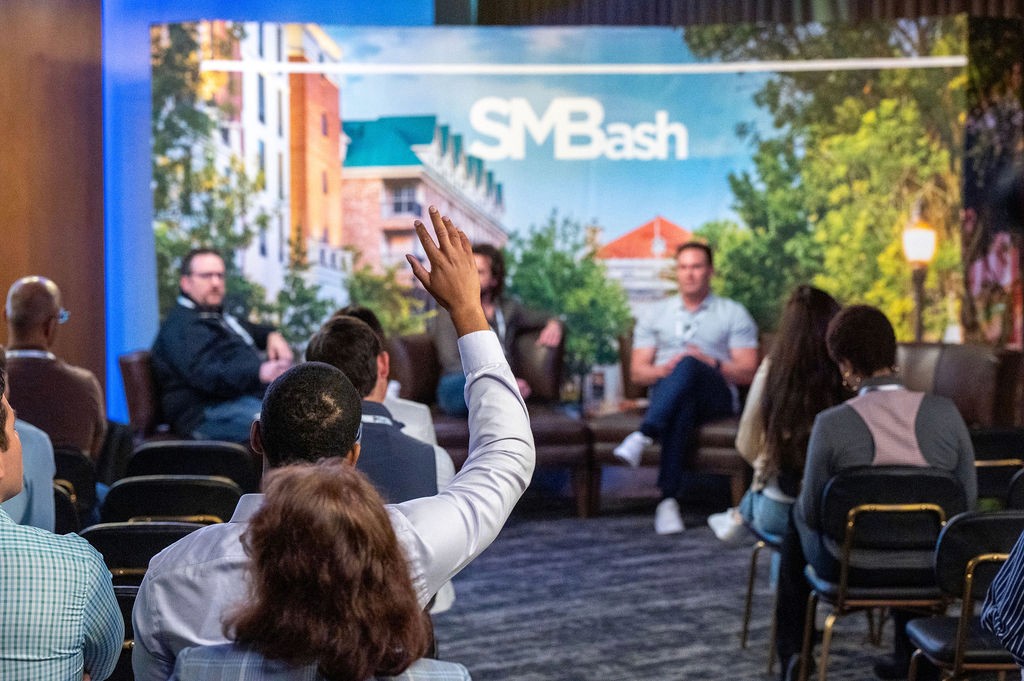
If you are a fan of Excel, modeling, or finance, kind of the lifeblood of what we're doing here, this will probably be exciting for you. Hopefully it's going to be informative for this market and a new way to look at these deals. I'm really excited to introduce Drew Eckman from SMBootcamp, and welcome back to the stage Kosta Dio to help us walk through it.
Drew: I think this will be the single biggest screen of financial modeling I've ever seen. Has anybody seen the SMBootcamp model before? Financial modeling can get really complicated. The big goal of this model, and the reason it's popular, is because of its simplicity, and a lot of that is by design.
If we zoom out for a minute, many of you are looking to go out and buy a business. To do that, first you have to reach out to a broker or a seller. You're signing an NDA, getting a SIM, then maybe having a conversation with an owner. You get excited to pursue this business, to submit an LOI. What's your offer look like? Has anybody run into a deal where there's no asking price? Sometimes there's an asking price, sometimes there's not, but often what you will have is a breakdown of the last three years of the historical P&L and maybe some balance sheet data.
This is the SMBootcamp model. The place to start is the P&L tab, because this is the type of information that a business broker is going to put together on the front end. You take these historical numbers from 2023 through 2025 and plug them in.
Kosta: My job here is to heckle Drew and add color commentary. There's a weird issue with self-funded search modeling, which is if you put 90% leverage on a deal, and you say it grows 3% to 5% and you pay down your debt, the math always works. No deal has never not worked if you put 90% leverage on it and it grows 3% a year. So the point Drew's going to walk through is how do you make a model useful for the actual purposes of getting a deal done?
Before we dive into numbers, the whole point of this exercise is to show you the four parties who need to be happy for you to get a transaction done. Those parties are the bank, the seller, the buyer, and the investors. Depending on which levers you're pulling, you might make some parties happy and other parties not happy.
Drew: I've got revenue, cost of goods, opex, building all the way to net income. I'm adding back non-cash expenses of depreciation, amortization, and interest expense to get to EBITDA. Then we get to add-backs. One that's very common in ETA land is owner comp, payroll, and tax. This is an appropriate add-back to get to SDE. What it's not appropriate for is reflecting adjusted EBITDA that you're going to have as the buyer.
Kosta: I've written a blog post about this. Most small business broker SIMs start with SDE, which is a made-up term, but all profit terms are made-up terms. What I want to do is build from SDE to buyer's EBITDA, which is what the EBITDA of this business looks like for you, the buyer. Then we walk from buyer's EBITDA to levered free cash flow and unlevered free cash flow. Those are real profitability metrics.
When you hear on Twitter somebody say, "Oh, they only paid two and a half times," if they paid three times for 500K of SDE, and compensation for the new owner of 150 goes in, now EBITDA is only 350, and you're paying 1.5 million. All of a sudden, your math is looking a lot closer to six times, five and a half times. SDE multiples and EBITDA multiples are not interchangeable, so understanding those terms is crucial.
Drew: Even getting to an appropriate SDE number, there are going to be three different numbers folks get to. What does the seller think the number is? What does the buyer think? What does the lender think? They're almost always different. That goes to what add-backs are going to be acceptable. There may be personal expenses run through the business, and the nature of those can either be a valid adjustment or very suspect. I see a lot of deals go bad because you've accepted add-backs that are not legitimate.
Kosta: To me, reasonable add-backs are costs that will truly go away when the seller is gone and earnings will be unchanged. They have no impact on the cash flow generation capacity of that business. I have a framework with three questions. Question one: is the expense one-time or recurring? Question two: is that an expense you are going to incur in the future post-closing? Even if it was one-time for an owner, if you're going to continue to have that expense, it fails question two. Question three: how do you prove it? Can you actually prove this? If you can get through those three, you have something defensible.
Drew: That gets us to our SDE number, and then I'm deducting owner comp for the new CEO. I see people tempted to drop this number, because if I just pay myself 60,000, I've got a lot more EBITDA. Don't do that. You need to pay yourself a fair wage.
Kosta: From the deals I've looked at, market is anywhere from 100K to 150K.
Drew: All of this is just reproducing what you were given on this deal and making some adjustments. If you see add-backs you think are suspect, take out the ones you don't think will hold up. Another common one is rent. In a lot of small businesses, the business owner owns the real estate too and has been charging themselves way under fair market rent, or no rent. If you're not buying the real estate, ask what fair market rent is going to be, because you're going to have to reduce your cash flow based on that new market rent post-closing.
The other big bucket in that pro forma is all the replacement costs for the sellers that are leaving. One of the most common ones is there's an owner and a spouse. The spouse does the bookkeeping, taxes, all the little admin stuff that you think in theory you're going to take, but you probably aren't. They'll add back their salary, but you're going to need that back in the form of an admin hire or global talent hire. Your buyer's EBITDA should be the number you think you can replicate consistently going forward.
Now I'm going to the Model tab, where you're framing the offer and trying to make all these parties happy. When I looked at my pro forma, I saw 884,000. Let's pretend the asking price is $5 million. Some key components: how big is the seller note? What's the structure? What's my basic revenue growth rate assumption? How should I think about annual maintenance CapEx? How much equity am I going to put in, and how much excess cash do I need?
Let's talk about the seller note. Pretty standard to see a 10% seller note in this world. One thing I see occasionally is people move for a larger seller note but don't appropriately consider the terms. They think a 20% or 30% seller note is great, but the seller wants to be paid in three years, or maybe five.
Kosta: How long is the SBA term? 10 years.
Drew: Each dollar you move to the seller note on a shorter amortization period takes up more cash flow. One lever you have: my seller note, he agreed to a six-year term, but we negotiated a 10-year amortization profile. The payments are as though it were a 10-year loan, but there's a bullet at six years.
Here's the seller note interest rate and any standby period. A seller note on standby can either be interest-only payments for some period, or no payments at all. For no payments, it can be interest accruing or not accruing. My seller note was a six-year note, first year standby with interest accruing. When I started making payments in year two, the balance was principal plus accrued interest, and we amortized from there.
Why a standby period? So you don't run out of cash. In any of these deals, the odds you break it are highest in the first two years. You're trying to build working capital, learn to run the business. Anything you can do to manage cash out of the business in the first couple of years minimizes the risk you break the business. Just be careful of the amortization on the back end.
Kosta: One thing people don't think about with the seller note is if your deal goes bad, your seller is a counterparty in your bankruptcy. In nine out of 10 cases, you would rather the bank be your counterparty than the seller. The seller is far more likely to be an irrational or unknown actor. The SBA lender has a pretty clear-cut set of boundaries. The more seller debt you have, the more the negotiation moves out of your hands.
Drew: When you set the seller note at 10% of five million, you've got a $500,000 seller note. You then have to decide how much equity to put in. For SBA financing, that's generally going to be 10%. Right now, collectively, the searcher is putting in 100,000, raising 500,000 from investors, at roughly 11%. Then on the right-hand side you'll see the investor equity and step-up.
Kosta: A step-up is one of my least favorite terms we've decided as a market in self-funded search world. What it states is you take the percentage that the investors have committed of the total capital of the deal, which makes no sense as the denominator, and step it up by a multiple. In this case, the investors put in 9% of the total capital. They get a 2X step-up, so they end up with 18% of the common.
The standard is that investor capital goes in as preferred equity with an accrual rate, usually between 8% and 12%. The waterfall is: return on capital to the investors of that accrual, return of capital of their initial money, and then they retain 18% of what's left as an ongoing common equity stake. The searcher's capital is most often treated the same way as investor dollars, as preferred. That's negotiable.
The reason for my sarcasm about step-up: in that practice, the investors are putting in five-sixths of the equity, 80-something percent, and ending up with 18% of the common. It's not a step-up. The searcher's getting a massive carry or promote. In private equity deals, the sponsor gets 20% above an 8% preferred hurdle. In this case, the searcher's getting 80% above an 8% to 10% hurdle. This is the most dramatically off-market searcher economics. Sometimes searchers get confused and think it's because they're so great. It's not. It's because you're taking a ton of debt. The investors are borrowing your PG to access off-market debt from the SBA. As a result, they can give you way more equity than you otherwise would get.
Drew: From the seller's perspective, they're thinking about purchase price, how much is cash at closing, how much is in a seller note, and on what terms. For an investor, they're looking at your growth assumption, the cash flow, and ultimately the IRR. To get there, you have to model an exit. Most folks suggest that as a base case, you not assume multiple expansion. If you bought at 5.7X, assume you sell at 5.7X. With one caveat: if you believe you're overpaying but it's worth it to get into a deal, your exit multiple should go down. You can't assume somebody else will overpay the way you did.
Those assumptions around the exit multiple and step-up drive IRR and multiple on invested capital. IRR is more time-sensitive. MOIC says for each dollar I put in, what dollar do I get out?
For the searcher, are you happy? This is 82% equity total. The final place we test happiness is at the bottom of the pro forma P&L, historical debt service coverage. Cash flow divided by annual debt gives you DSCR. You're seeing oh-nos on the screen, telling us our lender's probably not happy.
At a $5 million purchase price with a 10% note on standby for two years and amortizing eight years afterwards, we've got a seller who's happy. Investors?
Kosta: If you're going max leverage at 90% LTV, a reasonable investor IRR base case should be north of 30%.
Drew: I could change something, like a three-times step-up, or out of market at three and a half times. Now investors have a 30% IRR, seven times MOIC. I still own almost 70% of the business.
Kosta: The challenge is any decent investor isn't looking at IRR as a standalone data point. You have to understand the actual potential walks on your deal from year zero to year 10. That DSCR math, if the lender cares about it, the investor really cares about it. This is saying if the business performed how it performed the last three years, you've got no margin for error, especially once that seller note kicks in.
Drew: So all four parties aren't happy. This isn't a deal that works. The growth rate isn't going to change anything about the historical debt service. The only way to change who's unhappy, which is the lender, is to decrease the loan. We have to raise more equity.
Kosta: One thing I run into with searchers is they get frustrated when lenders don't understand why their growth plans make sense. What searchers don't understand is that the lender has a fixed return. On day one, the most money they can make is their principal plus interest. If you grow 6% or 50% a year, it makes no difference to how much the lender makes. The only thing a lender cares about is, are you going to lose their money? I run into searchers saying, "The bank just doesn't get it." The bank gets it. They just don't like it.
Drew: Something I see all the time is people don't appropriately model historical debt service coverage. They might look at 2025 but not 2024 and 2023, saying, "Why am I applying a salary in those historical periods? I wasn't even there." The idea is you're trying to get at what cash flow would have been if you were in that position with the structure you're contemplating. If that happens to the seller in 2024, do you really believe it couldn't happen to you?
Kosta: In my deal, my business was run out of the seller's house. I signed a three-month lease to keep using his house, and I had to find a commercial lease. I had pro forma'd in square footage and rent rate. Turns out you can't get a commercial space as small as I thought I wanted. I ended up with twice the square footage. Three months into my deal, if I had levered at 1.25, we're below SBA underwriting standards three months in from one underwriting miss that wasn't that egregious. It just cost 45,000 a year. No margin for error.
Drew: What happens if we raise more equity? Let's assume a two-times step-up. What if we raised 1.3 million, 26% all-in equity? Now we're at a 6X multiple all-in. The searcher owns 53%. When that seller note kicks in, we're still pretty tight. So you're not pumped as a searcher.
Kosta: There are lenders who will do that, not a lot of lenders you want.
Drew: Investor's still not happy. We increase the step-up to closer to three and a half. Now we've hit our 30% IRR. Investor's happy. Lender's happy, seller's happy. Searcher, are you happy? We're at 17% all-in. I'm personally guaranteeing this very large SBA loan. I don't know if I'm going to do that deal.
People want to go to purchase price first. It's the easiest lever to pull as a buyer because you can keep all other parties happy except the one you need to convince to sell. At the end of the day, this is a deal that doesn't get done at $5 million.
Let's say it's 3.75 million. We're slightly over a four-times multiple. Bring equity back down to just over 15% total, step-up to two times. Investors are happy. Searcher, am I happy? Yes. Lender's happy. All that's left is the little old seller.
What you can do is use this model as it was intended: quickly stress test without spending tons of time building out a complicated model, to submit an offer that keeps all four parties happy.
Kosta: This is perfect for what I'd call gut-reaction deal math. Manage your time to figure out right away if a deal is a non-starter. You should be able to plug numbers in, fiddle with them, and know pretty quickly if it's worth spending your time on. If it only pencils at 3.75 and you've gotten clear signal from the broker that there is no sale below five, just move on. Don't argue with the broker. It's not worth it.
What this is not is an operating model. A 3% flat growth rate with steady margin profile is how zero businesses work. This is meant to give you a rough idea on whether the deal works. It is very different than what an operating model is.
Drew: It is not a model that helps you stress test, if I lose this customer, what happens to EBITDA? What it is useful for is not getting into a trap many buyers find themselves in: spending way too much time on a deal that was never going to get done. How do I eliminate wasted time? Where am I willing to stretch?
The place most folks I talk to are least flexible on, that I think they ought to be more flexible on, is ownership. If you really want to compete at a higher price, the trade-off should not be even more leverage and running the business even tighter. The trade-off ought to be, I like it enough that I'm willing to take slightly less equity.
Q&A:
Q: Is this in the DIY Essentials tool?
Drew: Yes. SMBootcamp has a DIY Essentials product with more templates and videos on this content.
Q: Show us how to use the earn-out and equity rollover.
Drew: If you're pursuing SBA financing, you should not use the earn-out function. Earn-outs are not eligible in SBA financing. Equity rollover, as it's called, is actually just buying less than 100% of the equity. It's become mostly a non-starter in SBA financing because sellers have to provide a personal guarantee for two years. Most sellers, even if they sound open to it, once they talk to someone who understands what it means, won't do it. The exceptions might be someone who worked in the business a long time and built up trust, basically an alternative to seller financing.
Q: Can you walk through a wild add-back example and your framework?
Kosta: Country club membership, because they do marketing at the country club.
Drew: One-time or recurring? The initiation fee is one-time, membership fee is recurring. Funny story: B2B service business, marketing firm, owner had country club dues. Absolutely massive business development. A lot of customers came out of that country club. "Oh, this is a clear add-back." Well, a lot of those relationships were through that country club. Is it going to recur for me? Maybe not. I have different ways to entertain those customers. Can you prove it? Easy to prove. So in the right circumstance, great add-back.
Here's a tougher one: we hired this person, we don't really need them, we want credit for the 60,000 salary. One-time or recurring? Recurring. Am I going to have that expense after closing? At least to start. You failed the first two tests. Non-starter.
The only way I know I'm good is if we've clearly passed all three. I've seen plenty of circumstances where a buyer says, "I know I'm not going to have this after closing," but they can't prove it. Lender's not going to accept that. It's got to pass all three.
Kosta: One thing worth noting: you don't have to get the seller to agree to what you think EBITDA is. What you need the seller to agree to is a purchase price. In my deal, we started with SDE, super owner-involved business. Me and the owner sat down together, worked on it together, and pro forma'd down. There were certain expenses I said I'd have. He said, "You should just work harder." We disagreed, and that's okay. That was my buyer's EBITDA. I figured out what I'm willing to pay off my EBITDA. As long as that matched the number he was okay with, it doesn't matter if the seller agrees.
Drew: There's what seller thinks EBITDA is, what you think, what the lender thinks. They might all be different. What's most important is what multiple you're paying of what you think EBITDA is, what works historically for debt service coverage, and how you make sure all parties are happy. The seller isn't really deciding based on the multiple. It's, "What's my purchase price?"
Audience member: A common adjustment people don't push on: charitable contributions. At face value, it could be an adjustment because buyer won't continue it, but the question is, is there a benefit from it? Hey, seller, I'm paying 10 grand a year to my kid's softball team, but is so-and-so customer the coach? Or I give to this charity, and one of our largest customers is on the board.
Drew: Looks fine on the surface, then you figure out there is some benefit. You're probably not going to get off to a great start with your biggest customer when you tell him you're not continuing the charitable contributions.
Kosta: I had the inverse. My seller had stopped donating to this one botanical garden in Seattle. After the deal closed, one of the board members reached out. He's a huge referral source because he does individual consulting arborist work. He said, "Martin used to donate here. I really think you should." I added charitable contributions I wasn't expecting.
Q: Is there a framework for a health check on a deal?
Drew: Investor IRR ought to be something like 30%. If it's the right deal, could it be lower? Sure.
Kosta: It goes back to this underlying issue with modeling small business deals: with the self-funded search structure, the math always works. The model itself, if you've figured out those four things, anything you lever 90% and say isn't going to break, the math will work. What's actually interesting: you build a model like this and figure out what you have to believe for the model to break. "If I lose my top 10% customer, what happens? If I lose my service manager at that branch and that branch goes down 20%, what happens?" Run real-life scenarios against the model to look for the actual break points.
Drew: This model isn't talking about things like customer concentration. That's a big risk that impacts whether 30% is acceptable given the deal you're looking at. For the banks, most are going to tell you 1.25 DSCR historically maintained is sufficient to get financing. Others say 1.5. Some say the last two years to be 1.35. That's lender by lender. SBA rules put it as low as 1.15. Most banks don't do that. Just keep in mind that's a personal decision you make too, and it impacts how investors think about how tight the deal is.