PLAYLIST PRESENTED BY

Inside an ETA Deal Team: How a November 1st Close Actually Came Together
Description
A first-time searcher, his SBA lender, QoE provider, and the sell-side broker break down what really happened on the way to closing a Florida roofing acquisition. Honest, tactical talk on working capital, seller transitions, deal team dynamics, and the unglamorous work of getting an SBA deal across the finish line in entrepreneurship through acquisition.
Recent Videos





Transcript
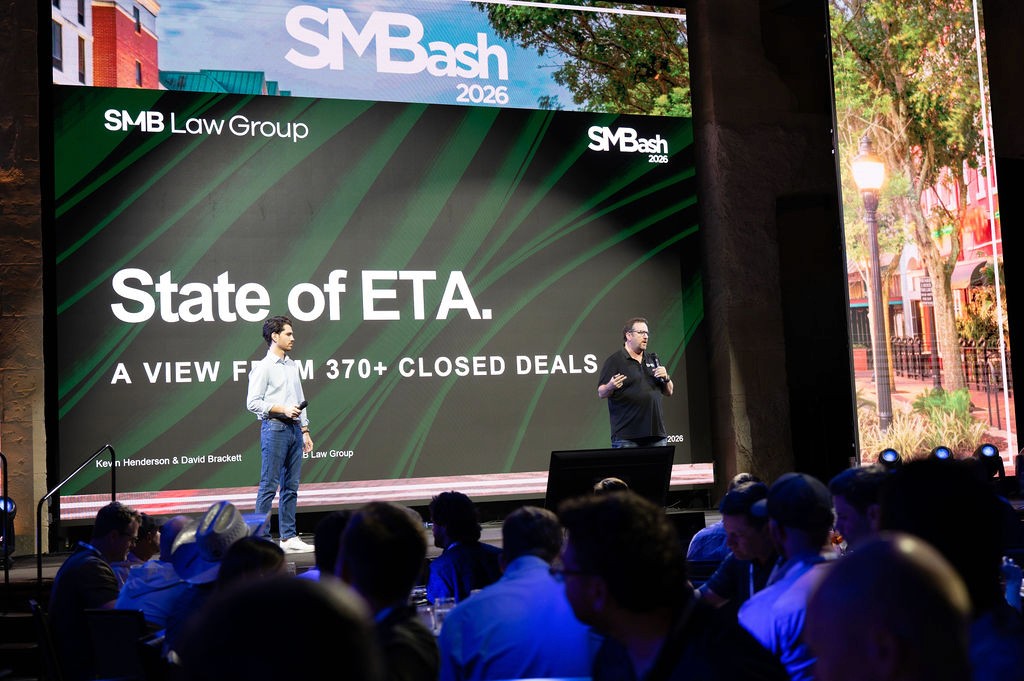
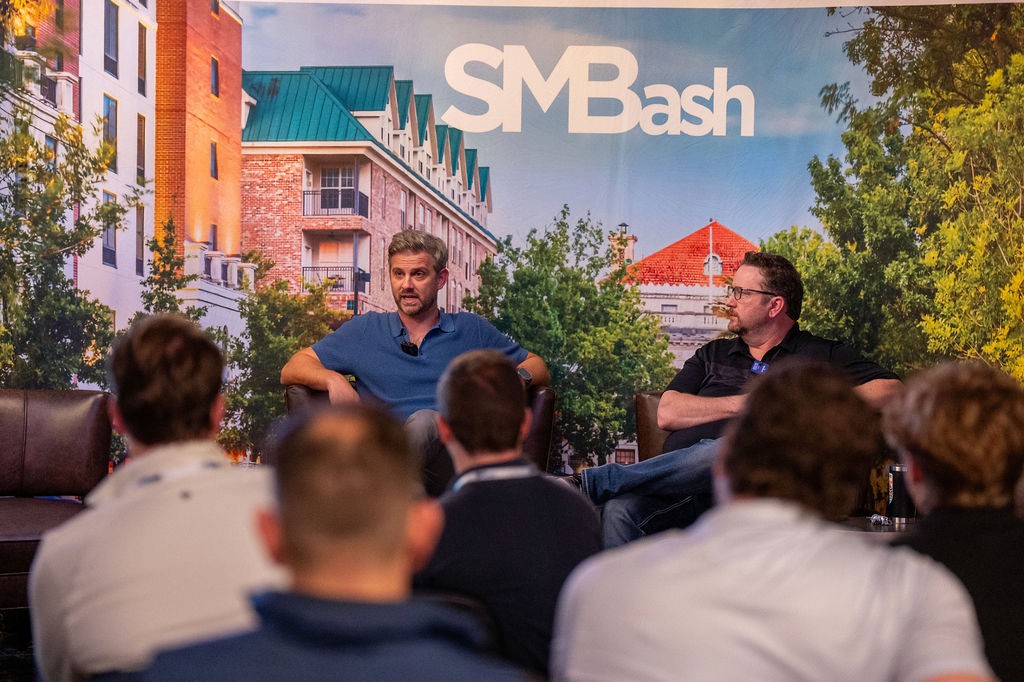
Thanks for coming up here. This is a little bit of a different session this year. We had a unique opportunity with myself, Jared, and Jackie being here. We hatched this idea of, hey, why don't we get an entire deal team on stage? Nadav happens to also be in Florida near Jackie, so we pitched it to him and he bought into the vision. We've also got Mike German here. We botched the planning a bit.
Nadav closed a deal on November 1st, and his entire deal team is here in the room. SMB Law Group represented on legal, Jared represented as lender, Mike as QoE financial diligence, and Jackie represented the seller, so not technically on the deal team but effectively part of it.
Let's do quick introductions.
Mike: Mike German. My team at Hollywell runs a private equity and sub $20 million QoE shop, big four trained.
Jackie: Jackie Hirsch, Crown Atlantic. I sell companies, and I've sold about 400 of them. I also own some other companies and invest on cap tables. I was lucky to sit next to Nadav at bootcamp. I speak at the SMBash bootcamp.
Nadav: I'm Nadav, first name only, like Beyonce. You'll hear more about Honest Save as we go through Jackie's slides. Jackie made all these slides and I think they're pretty cool.
Jared: I'm Jared Johnson. I'm an SBA lender. I work at First Internet Bank. I worked on the deal. I met Nadav at a different search event and the deal kind of all came together.
The slides were Jackie's brain trust, and despite her overall height she's definitely the alpha on the panel, so we'll let Jackie lead us off. Let's make this as interactive as possible. Please raise your hand, interrupt, and engage.
Jackie: I was at bootcamp. I had put a business on the market and put it under contract right before bootcamp. I'd had a call with a searcher, Nadav, and it's a pretty unique name, so I knew it was him. The deal was pending. Then I walk into bootcamp and see his name on the table. I thought, I've got to see this guy and ask why he didn't call me, not knowing that when I put something on the market I might have a hundred NDAs in less than 36 hours. When I go to market, my deal is super prepared. I have a mini data room, a second data room, a pre data room. I screen people. When you call me, I'm trying to get you off the phone. I've done this hundreds of times.
Later the deal fell apart. Because we'd met at bootcamp and I knew Nadav as a buyer and knew his background, I called him and he was the first one in the deal.
Nadav: My background is all over the place, which may be common for searchers. I didn't know what a searcher was a year ago. Originally from Israel, I moved to Miami, ended up as an engineer, then went to law school. I started my first company, a fitness tech and retail hybrid based in New York City. COVID put the kibosh on that. Then I worked in tech doing early stage investing and ran a venture studio arm where we'd start companies with our own ideas, and I'd run them and try to replace myself as soon as I could. So I had this combination of deal making and ops background.
I was working at a multi-family office and left in October of 2023. I took some time off to think about what I wanted to do next. I had a couple ideas to raise money on but didn't want to go the VC route. Then I read kind of all the literature, and at some point saw that you could buy a business for three or four times earnings, which seemed impossible because my background was representing large private equity funds doing billion dollar deals where you're definitely not paying 3x. Once I saw that 3x idea, I was like, I don't understand why everybody doesn't do this.
That was the beginning of last year. I started my search at the end of March, almost a year ago. The first business I came across in Florida was Honest Save. I found it on BizMLS, which is a great resource if you're searching in Florida. They should have that in every state. I had a call with Jackie's brother who works with her. It went great. I told him I was flying to Spain the next day for our wedding planning, and we'd pick up the next week. They had 12 LOIs by the time my plane landed in Spain. They were under LOI by the time I got back, and that was the end of that.
Then I ran into Jackie at bootcamp, and it was a running joke of, hey, here's the idiot that flew to Spain and missed out on his deal.
After bootcamp, I did the search thing for a while. Jackie was very nice and sent me a bunch of deals. We chased a few, put in some LOIs, looked at a lot of garbage, which anyone who has done this knows: 90% or more is absolute trash. At some point I got introduced randomly to the guy who was under LOI to buy Honest Save. I spoke to him, got off the phone, called Jackie and said, there's no way this guy's closing on this deal. Let me know when he pulls out. Sure enough, in July, Jackie called and said, you still want Honest Save? We had a house 20 minutes away from the office. I said, yep, let's get on a call.
I asked her why he pulled out. She said someone did a QoE. I asked who. She said Mike German. I said, perfect, hung up, and called Mike.
Mike: The quality of earnings is a historical shape of the trees. We do QoE everywhere from ETA through PE. Adam and I grew up in PE deals. Carrie actually did the QoE for the original searcher under LOI. All of you are going to have different risk appetites. Without disclosing too much, that buyer's risk appetite was not good for Honest Save and they walked away. The business fundamentals, which have now been shown true, were there. It just wasn't for them.
On how we treat carefully with a buyer in that situation: we tell you the yellow and red flags we find. You make the decision. You'll ask us what the yellow and red flags mean and how we escalated, and we'll help you play out the scenarios. This one had an issue with structure that wasn't fitting the buyer at the time. It's up to you, but you'll have a wealth of knowledge behind you. Once you sign and fund, you're in bed with these people, whether they stay on or not.
Audience question: The previous potential buyer paid for the QoE. Were you able to leverage that?
Mike: We gave Nadav a very good discount. It was Carrie's leg work with the team. Different QoE firms do different things. We're fixed fee. You pay for half upfront. If the deal falls through for reasons that you or we find, we don't send the second bill. No one really pays a ton of money for this QoE.
Audience question: Aren't you incentivized to say everything's good so you get paid the second half?
Mike: That would come back at us differently. We're fixed fee. We're not basing it on a commission of the deal. That would be a pretty shortsighted approach to QoE.
Jackie: Selling a QoE and just blessing it, they have liability insurance and an integrity issue. People hire them because they're high integrity. That's why I recommend them. They're doing a pre-QoE for me right now on a $50 million company.
Nadav: Not to be self-serving as a service provider, but a lot of people will value shop. That's not to say don't get yourself a good deal, but part of the benefit of working with reputable places: this sounds terrible to say, but they're going to make enough money without screwing you to make an extra $10K on the back. That's what you're vetting when you're interviewing deal team members.
Kevin: The horror stories of terrible lawyers and accountants and bankers and brokers exist for a reason. It's not because people randomly decided to hate brokers. There are a lot of bad brokers, lawyers, and accountants. When we do fixed fees, we get pushback all the time. There are tradeoffs: fixed fee versus hourly. A bad actor in either scenario is going to go the wrong way.
Mike: We tell you about the halfway point, so it's not like we've incurred the second half of work to want to get paid. We're rolling into wrapping up, polishing, cleaning. You're only being billed for the first half because we've only really engaged for the first half.
Nadav: There are a lot of places where you can cut costs. QoE is not where I would do that. Even on the legal side, I could have done this deal on my own. I'm an M&A lawyer. I've done deals before, but I've never done an SBA deal. I'd rather have somebody like Kevin, who I'd already met, come show me what I may not know about this specific deal. The fee I'd pay him versus getting my SBA deal wrong, the cost benefit is pretty clear.
We wanted to close November 1st. The seller was in a rush. I was getting married in Spain October 22nd. The timing was challenging. If you want the full story, listen to Jared's podcast, we just did an episode last week.
Jared: When Nadav went to Spain for his wedding, it was the only time my phone didn't blow up every single day. The day of the actual wedding, his now wife told him, I swear to God if she catches you in the corner on the phone with the bank, that's going to be a lonely trip back.
It was kind of interesting. I had met Nadav in New York when he had first started. When he finally got it under LOI, he called me and said the broker wants to talk to me. Jackie called me and said, I usually work with someone else at your bank, Ryan. Ryan and I are really good friends. Then she immediately started beating me up on the deal. She said, I know you don't know me, but I promise I know what I'm doing. I'm not like a normal business broker. I'm like, yeah, I've heard that for 18 years. But it ended up being true. I checked with Ryan, and Ryan said, no, trust me, she's really good. We worked out some of the stuff on the deal. Working with a business broker who actually knows what they're doing is a lot easier to usher things through. We actually ended up changing quite a bit of things after this, mainly because of some of your ideas and frustration.
Jackie: There was a day before Nadav left for the wedding when I said, hey, we're about to hit 1,200 emails in my file for you. Let's make that happen. Let's do another 60 emails today. It got really intense. I called Jared and said, listen, if the bank asks me to provide an arm hair from my dead grandmother, I will get it. Don't let them think any piece of molecular level due diligence will stop me from getting this deal done. He said, got it, Jackie.
That's the level it gets to sometimes with the bank. The closing team doesn't all talk to each other. The people in the same office don't all talk to each other. If you're married and sleep in the same bed with that person, sometimes you don't talk to that person about every situation. These people work in an office, and sometimes stuff gets missed. You have to really be on top of all that communication.
We got really sticky with the landlord. They wouldn't respond. Nadav and the seller asked, what are you going to do? I said, I'm going to send Don Pan pastries from Miami to the Miami office, and dried fruits and nuts to California. They didn't understand, but it worked. I sent $150 worth of pastries to the Miami office and they called me back. The best part: the cleaning team got the pastries, not the rep at the residence. Sometimes you have to really think about how to get the attention you need to get the pieces of the deal done.
We also had an insurance problem. Nadav couldn't use his phone. I called and arranged insurance. I somehow got this one blessed document that was all the bank needed. It's all these little pieces that add up to that deal.
Kevin: Back to the joke, I probably beat up on the broker community more than I should because lawyers are terrible too. But what you're hearing from Jackie is a reasonably rare exception to the rule. It's very rare for the involvement of a sell-side broker in a deal at this level. As entertaining as the story is about how Jackie did some of these things, 97 out of 100 of you in here are not going to have a Jackie-type broker on your deal. It's important to take the mental notes because you can be doing those things. You could be the one sending the pastries.
Jackie: Half the brokers are like the seller's cousin who's a realtor and says, yeah, I'm a broker because I sell crappy real estate deals.
Kevin: I'm notorious for making up all statistics and still standing behind them. I'd guess half of our deals have a broker we don't see a single presence from from the moment the LOI is signed until they send us the invoice for closing. That is much more normal than what you're hearing from Jackie. They've done their job when the LOI is signed and let me know when to cash the check.
Nadav: Working capital is the most problematic issue. Anybody who's going to close a deal, my guess is nine out of 10 times your biggest hurdle is going to be working capital. If the seller doesn't have a broker at all, or a bad broker, it's almost impossible because most sellers don't understand what working capital is, let alone why they need to leave it. If you're buying a business cash free, debt free, why do they need to leave money they feel they've earned in the business?
This was the biggest sticking point for sure. It was also problematic because the business keeps cash accounting. It's hard to figure out when you look at the P&L: a net loss of $200,000 one month, then a gain of $600,000 next month. There's no real rhyme or reason because they keep cash accounting.
The seller really didn't want to leave cash in the business. We were trying to figure out how to look at AR in a way that made sense. The bank gave me some working capital, which at the time I was like, I don't know if I need that much. In retrospect, as much working capital as anybody's willing to give you, you take it. Cash is king.
We went through iterations. Initially we had a target of $350,000 working capital, which the seller offered. As we got closer to closing, the seller was worried he'd have to leave cash, so we sort of compromised. He convinced me there was enough AR in the business that it worked after he paid stuff off. In retrospect, I wish I'd pushed harder on this.
It's a roofing business. The way they collect: typically 30% upfront, 30% upon permit, another 30% once they did a tear off. On a residential roof, you rip off the old roof, do the drying, and cover it with metal, tile, or shingle. Once they were done with the tear off, they were entitled to 90% collections before they did the metal or tile. When you look at the AR, it was presented as: we haven't collected on these jobs and we've earned 90%. What I didn't understand at the time was that yes, technically you earn 90%, but you still had to install and pay for the materials for that second part. Metal is expensive, tile is expensive. In retrospect, I wish I'd known that. Working capital is going to kill more deals than anything.
Kevin: A recent deal involved a financial services company, accountants. The seller's counsel was wrapped around the axle that we were talking about deferred revenue in working capital. They wanted it in a separate section and said working capital only exists in equity sales and is only cash and accounts receivable minus accounts payable. I'm like, I didn't go to accounting school, but I think deferred revenue is literally the definition of working capital. To give you an idea of the crazy stuff you meet out there and the uphill battle when there aren't good advisors all the way around the deal.
Nadav: 90% of all arguments in deals are going to be working capital related, because working capital essentially is a change to purchase price.
Mike: Working capital is essentially your current assets less current liabilities, less seller cash, but it was used to generate the revenue and EBITDA you based your deal on. It's confusing for private equity and high-level technical CPAs, let alone SBA owners who care about net profit at the end of the year for their tax bill. To give you perspective on how often this comes up, I have a 9-year-old who's very mean and listens to a lot of my work calls. Often I come in the house frustrated and she'll say, are you talking about working capital?
There are ways around the working capital discussion. There are lots of pegs to compromise downside risk for both sides.
Audience question: If a searcher is working with a non-Jackie broker and there's a business for sale, what should they do in their LOI? Do they say we think you should leave this much working capital in, or do they say I'm not even going to talk working capital and I'll borrow the working capital?
Kevin: You want to be able to say something. We will have a reasonable working capital discussion and compromise. We have templates.
Jared: The problem with that is your lender's going to come back and say, how much working capital is that going to be? Can we get an estimate? When we're looking at the deal, we want to make sure there's enough working capital. We usually say there'll be enough working capital at a normalized level, and then I'll say, can you give an example as of today and estimate what that will be. Then we have something to work off of.
A challenge I'm seeing a lot: people will ask the seller what's a normal amount of cash you keep on the balance sheet. That's the wrong question because the seller will say, I keep $300,000 and that usually works. What people don't realize is that when they close and don't get that AR, now you're in a hole for 30, 60, 90 days. That $300,000 works fine when you're constantly rolling and picking up your AR every week. But if you're not, how long will it take to get to that point? It's important to look at the QoE and take that into consideration. I always tell people, I'd rather you call me in six months and pay down the loan than call me in six weeks and say you can't make payroll. That happens all the time.
Jackie: From a broker's perspective, sellers are not professional buyers. Even my sellers with a $10 million company, even a $50 million company, they are not professional sellers or buyers. They don't understand your terms. They don't understand ETA, NWC, PG, any of these terms. When you're talking to them about working capital, they don't like normalized working capital because they don't know what it is. If you give them a peg, it could be wrong. You can directly ask: I would like for you to leave $250,000 in the bank account. They're going to say, $250,000? That's my money.
Then you explain. Would you empty all the money out of your bank account today and run the business? The answer is no. There's always a certain amount they leave in there, usually too much. I have a seller right now with a million in the bank account because they don't want to take it out. They said their wife spends it. First, don't tell people that. Some people just feel comfortable. The question is, at a bare minimum, how much would you feel comfortable running the business with?
The sellers want a number. Explain what target working capital is. If they don't know, have a Zoom call, a phone call, a chart explaining it. If you want your deal to go through, you are in competition. As a searcher you have a huge advantage because you're younger, typically energetic, excited, and sometimes have relevant industry experience. When I started Crown Atlantic at 26, I remember people dumping on me and saying I didn't know anything. So I have pity for searchers and I try to help them because I believe in them.
In Nadav's situation, he had a life he was planning. They want to have a family, get married, do more for the community. That's the sell to the sellers. When you're selling that working capital, you sell those items.
Kevin: As you can see, there are different approaches on the panel. Even in a friendly deal team, there's difference of opinion on how to approach it. The other thing I'd say in those discussions: I agree with everything Jackie's saying, and it's back to, I'm buying a business. Even if you're buying assets, you're buying a business. What sellers can usually understand: if I'm valuing your business at $3 million but you're telling me when you deliver it on day one, when I pay you $3 million, I have to immediately put $350,000 into working capital, I'm not buying your business for $3 million, I'm buying it for $3.35 million. They can start to wrap their head around: working capital may look like cash, but it's an asset of a going concern. When you're talking about valuation including assets that operate as a business, it can help.
Audience question: Typically when you close, sellers are going to stay in the business for some period of time, six months, a year. It's going to take 30, 60, 90 days to figure out whether what they told you in diligence proves out, whether there are gaps in working capital, or aspects of the business where they said a particular machine is in good working order and you find out it needs a lot of service. How do you have those conversations with sellers without scaring them away or causing them to retire quickly, to actually say there may be an adjustment after the deal closes?
Nadav: My seller was gone in three weeks, so it wasn't a big issue. The whole idea of a seller staying on for six months or a year, there are deals where it's totally seller financed or some sort of transition period, but most of the time it doesn't really work that way. You don't really want the seller hanging around too long. It creates a weird dynamic with the team, because they're used to going to that person for all the answers. You're the boss now. They need to come to you. The other thing is the seller has no incentive. They're checked out.
For us at Honest Save it was less than a month, primarily because we had to do a bunch of administrative transitioning. Then it was mostly hostile and he was out. I don't know how much more he could have contributed. I think it's important to buy a business from somebody you respect and trust enough that they're not totally screwing you over. But I would not count on any kind of help. I'd look at any help from the seller as a bonus, a nice to have. I would not count on this person helping you run the business in any material way.
Kevin: We get locked into battles all the time of, how can I make sure the seller stays around? What hooks do I have? The vast majority of the time, you want the seller gone faster.
Nadav: We had 90 days in our SPA. We ended up doing a stock purchase.
Kevin: Particularly in the search community, when people are doing a partial change of control or rollover, the vast majority of cases, that relationship has significantly deteriorated six months into the deal, and the seller wishes they'd never granted equity. It's easier to get rid of a consulting agreement than an ownership interest. Especially when it's equity-based and you can't get rid of them, tread very carefully. You're getting married.
Jackie: Some of my friends joke that I do business therapy all day. When sellers sell their business, it's like they're sending their kid off to college. Some sellers are like, bye, call us if you need something. Some sellers are heartbroken. For some it's like a death and their kid is leaving. The seller is having a death and the buyer is having a birth.
Susan Lowe, who's here, has owned 30 plus businesses. She's a total beast. We talk about sellers staying on. A lot of times they're not modern enough to execute your vision. But if they're a tradesperson, I'm working on a deal now where it's an electrician and he just likes to do electrician work in the marine field, be out in the field. He hated being in the office, hated managing, hated admin. That's when I think it's okay to have the seller stay on. He's just doing his artistic craft, versus managing and being the lynchpin and the hero every day.
Nadav: We keep hearing really good things about that. When they stay on with 5% ownership, ask them what they enjoy doing. Then they end up doing that and they're really happy.
Jared: With your question about how to explain to a seller that things are going to come up: if you can figure out what's hardest about selling, a lot of them, it's giving up that identity. They don't want to leave the staff. They become family with these people. If you can touch on that and explain, hey, I want this business to be successful when we take over so I can keep the staff and keep everything running, which was your legacy, they're a lot more open to working on working capital and telling you what's really going on with the business, including what needs to be replaced right away.
Kevin: I'm a terrible time manager, so we're over time. Huge thank you, especially to Jared and Mike, who we just kind of saw in the chairs and asked to join us totally last week. Thanks again. We're moving right into the next session, Mike talking about financial diligence. You can go wild with the working capital questions there.