PLAYLIST PRESENTED BY

Alumni Panel: Year One Lessons from Searchers, Operators, and Holdcos
Description
SMBash alumni return to share what actually changed after closing, from managing crews and rebuilding centralized teams to renegotiating seller notes in a higher-rate market. Searchers, operators, capital providers, and QoE firms will hear candid lessons on growth, EBITDA, AR risk, and integrating multiple businesses across an entrepreneurship through acquisition portfolio.
Recent Videos
Transcript
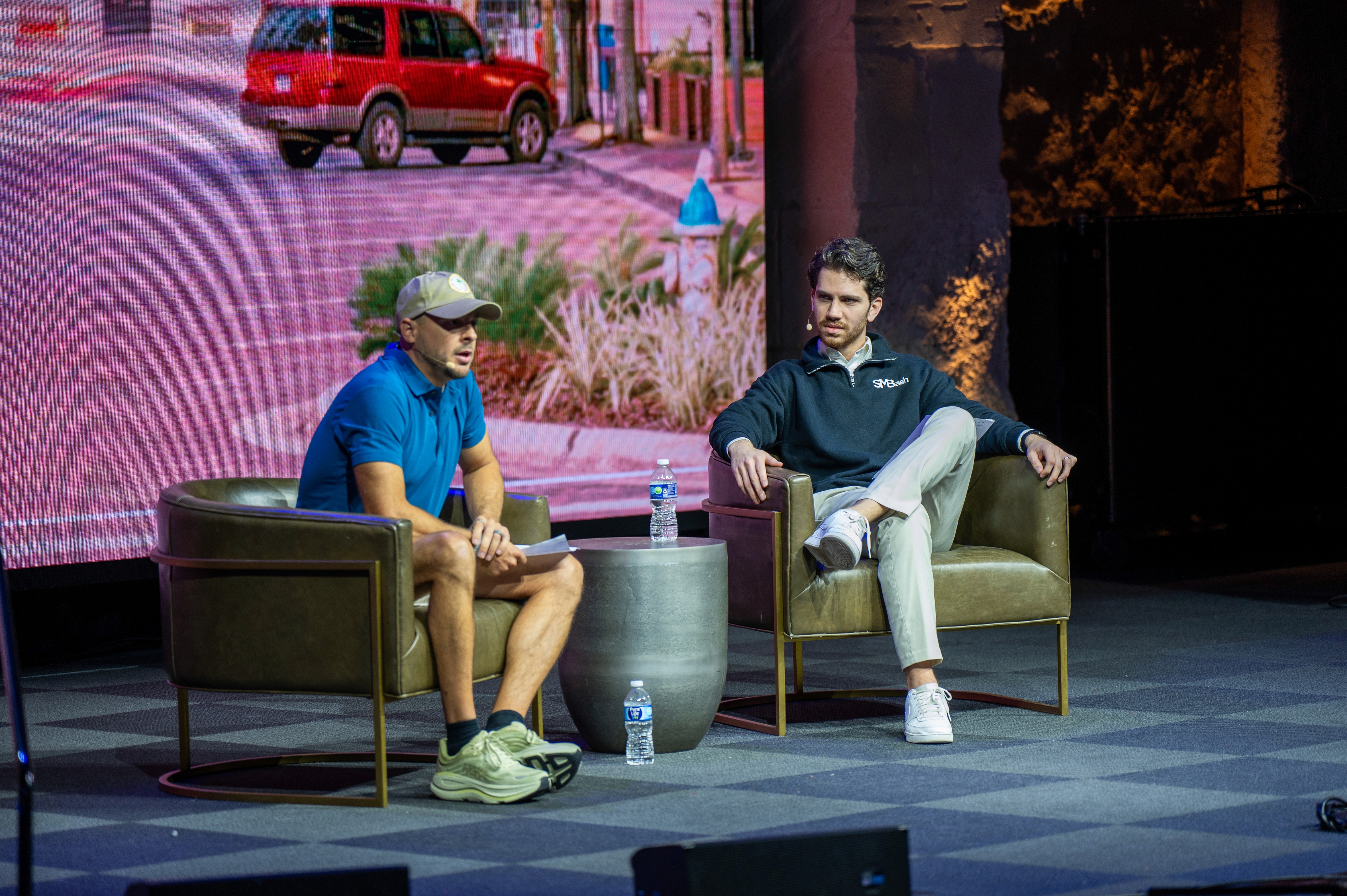
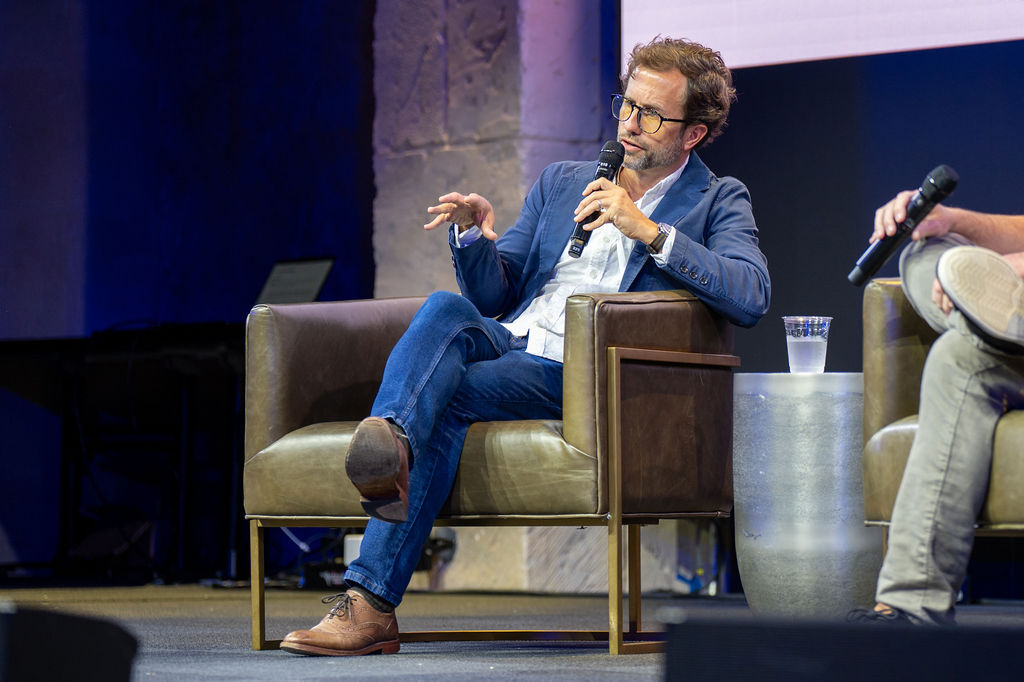
We wanted to have a conversation about the past year, things we've learned, things that have happened since the last time we got together. Some of us haven't seen each other in person since then. We want to do it in a way where folks, particularly searchers looking to buy a business, can learn something. We're going to riff and have a conversation. As you guys have questions, you've got two professional investors, a successful searcher and now operator, and the king of QoE himself, who probably sees more deals than anybody. So let's ask some questions and try to make this something we can learn from.
To kick it off, KD, the last time you were on stage at SMBash 22, the check was in the mail. You were literally closing a deal that day or that week. What are some things you've learned in the past year as an operator that you wish you knew then?
Thank you for having me. Last SMBash I think was less than a week out from closing, and it was unclear, so I had multiple flights booked just in case I needed to go back to close. It's been 14 months of owning a tree trimming business in Seattle. 14 employees. I've learned how to drive an F-750 with the chipper on the back, which is shockingly not CDL required. I've climbed a tree, I've used chainsaws. My background's in private equity and distressed debt before that, so we can talk about the finance side of the deal.
For me, I've been shocked at how gratifying it's been to work with the people in the business. I knew that was going to be part of this, but building a business in my hometown of Seattle, working with really good people, watching them improve at their job, watching them skill up, being able to pay people more because they're more productive, reconnecting with my community. I moved away after high school, so it had been 10 plus years since I'd been back. That's been really gratifying.
When you start thinking about your search, it's your whole life. It's not just the dollars that go into the business. It's what you wake up thinking about, what you go to bed thinking about, what you dream about. You're going to think about the PG also. If you're doing all of that, do it somewhere you want to be, do it with people you want to do it with, have investors you're excited to partner with. I've got investors in my deal who have been phenomenally helpful.
This has been a more self-confidence-shattering process than anything I've ever done before. I was good at private equity, I was good at distressed debt, I was good at college, I was good at high school. It's TBD if I'm good at small business. Having the support network, a peer group in small business, a peer group of investors, a local friend group, your family, that stuff really can make or break this for you. I wasn't really thinking about that as much pre-close when I was here last year. The people side of this is incredibly gratifying.
Has that been an area where you feel like you needed development?
When you come out of private equity world, at most I had managed two highly paid associates. Right now I'm managing 14 tree workers, two of whom are certified arborists. You need to learn how to code switch. You need to meet people where they are, understand what they're interested in. It's a new leadership challenge. You are doing a deal, but you're stepping into a role you are most likely underqualified for. I was just dangerous enough to be able to buy a business because I knew how to do M&A. There's a lot of personal development that happened in this past 14 months. If you're in the search seat, I know it's stressful trying to get a deal done, but you need to be thinking ahead to the moment the deal closes, because you've just arrived at the start. You've signed up to the biggest financial decision of your life. If you don't have the toolbox already, you need to figure out who your people are going to be to get you through that next phase.
I'd love to hear from Chase or Justin. You guys in the past year have both added businesses to your holding companies. How are you balancing buying more businesses and running the businesses you have?
I'm Justin Turner with Traction Capital. We're out of Seattle and we own six businesses. Echoing Costa's point, while you're searching, you feel like getting a deal done is one of the hardest things you've ever done. Once you own it, that's the hardest thing you've ever done. Buying a business is the easy part. The hard work starts and continues for the next 5, 10, 15, 20 years while you're actually running and growing that business. We've bought two new businesses since the last SMBash, and I think we broke all the systems we thought we had in place. It's been a lot of personnel challenges, rebuilding systems, making sure team members know how to communicate and treat each other. We have a lot of what I would say are adult children at these businesses, which is always fun.
I'm Chase, I run a five-company holding company out of Salt Lake City called DTA Group. We break a lot of conventions with our strategy. We formed two years ago and made three acquisitions in our first 12 months, and suffered the consequences the next year. In the past 12 months we've made one tuck-in acquisition, a really quirky business, a custom western hat maker that makes and sells luxury hats, $700 to $800 custom hats.
Echoing the theme, we're having to get good at operating, and this last 12 months for us was a year of operating. We grew our portfolio a little more than 60% year on year organically across the board. That brings a lot of chaos. You're breaking a lot of things, outgrowing systems, processes, technology, people. Coming back to something Costa said earlier, I came to SMBash a year ago, and a lot of my closest peers and relationships have come out of getting involved in the community, both online on Twitter and offline through Slack groups, text groups, and meetups. That's been a really important thing for me to stay sane and to build camaraderie and have a safe space when things are tough. Whether you're searching or operating, go find your people, go find your peer group, search alongside them. Have an accountability group. The past year has been a lot of operating hell, and it's been fun, it's been a blast, but we've had to digest all of these acquisitions.
Do you have a dedicated team internally, or do you white-knuckle it yourself?
Our DTA team has grown a lot over the past year. We're a team of six. It's me and my partner, a head of marketing and a marketing team, a head of finance, and HR. We break the convention of buying smaller than I think most here. We tend to target one to 2 million in revenue and less in SDE than I would like. We invest aggressively in growth. We will get into that J curve, invest in bringing operators in, plugging in systems, doing a brand refresh, and breaking a lot in the first year. We break the convention of don't mess anything up in year one. We mess a lot of things up in year one, and we drive growth pretty aggressively. We've gotten better at acquisitions each time. We've learned what kinds of things to touch, what not to touch, how to keep a seller involved, whether to keep a seller involved. The long-term goal is for our operating companies to run pretty independently, but for now we're very hands-on because we have to be.
It's worth mentioning that Chase and Justin are experienced acquirers and operators. You hear the story of "hey, they grew 60% organically this year." I did not grow 60% organically in the first year. I was kid gloves with the business, don't break anything. Revenue went up but EBITDA went down, which I think is common for most search deals in year one. Level set for yourself as you're coming into your search deal. Are you more like me, or more like Chase on deal six?
We specifically screen for deals where we know we can go do that. We have a sample bias of what kinds of companies we buy so we can drive the kind of growth we're trying to grow over the long term.
Did you model EBITDA down in your projections?
I actually modeled EBITDA down more. The reason it wasn't down that bad was because I couldn't hire fast enough. But yes, I did.
Speaking of EBITDA, I want to hear from the king. The last time we hung out, Guardian was picking up steam, you were building a presence, building a client base. What have you learned over the past year working predominantly with searchers in a very different market today than 12 months ago?
I niched down over the past year. I do almost exclusively self-funded search now. I was broader before. Doubling down on getting to know you guys here, on Twitter DMs, has been super helpful. Within a year, interest rates more than doubled. For those who own SBA-backed loans, you've felt that. We had a 12-year bull market, so last year everybody was smart, brilliant, rich, ready to go build a holding company. "Forget the first one, let's do 10." Now the market's more uncertain, and that requires more prudence, more diligence, more thoughtfulness. You're ingesting 2022 numbers but betting on 2023 to 2028. I see a lot of brokers and sellers being slow to get their 2023 numbers out and a lot of people making excuses. A lot of great deals are getting done this year, don't get me wrong. It just requires more thoughtfulness around: is this a deal you should do this year? A lot more deals penciled last year.
Are you seeing expectations adjust at all?
Slowly. For most owners, they don't see their business as a multiple of cash flow. Their business is worth 2 million bucks, 4 million bucks. It put kids through college, it paid mortgages. Just because cash flow is down doesn't make it less valuable to them. I've seen this before, in 2007, 2008, 2009. It's going to take people holding fast to their probably inflated valuation, not finding a buyer, and having to reset their expectations. That'll take a while to get through the market. People always ask me, are multiples down? You've seen some of the same studies I have. I still see a lot of hubris in valuation, a lot of hubris in structure.
I've talked to Lisa about this. Last year was the year of the 10% seller note. I don't know why that number isn't double or triple. Over the history of doing deals, I was in private equity before, a lot of seller notes are larger than 10%. We're going to have to reset not just multiples, but what size seller note you're starting your LOIs at, what terms you're going to get, in this year as it becomes more of a buyer's market.
Does anybody have questions for the guys up here?
[On turnover after the acquisition]
Turnover has been very low. I came into it with the attitude of not changing anything. My message to the team was: one, I don't know anything about tree work, I'm going to rely on you to teach me. Two, eventually I'm going to start growing this business, which means there's going to be spots for you to grow into. And three, if you see me climbing trees, you should find a new job. We've been pretty lucky with turnover. You also do have to pay people more. They're taking a flyer on you to maintain their livelihoods. We talk about this idea sometimes, that we're the ones taking the equity risk and they're getting the certainty of a W-2. That's kind of true, because if it doesn't go well on the equity side, they're going to get axed also. Their risk profile just went up the minute I put 80% leverage on the deal. There is some element of they need to be paid more because they're taking implicit risk.
We've seen the labor market change in the last 6 to 12 months. We haven't had any turnover at the management level with our new acquisitions. One of the businesses we bought is a disaster restoration business with about 85 employees. At the technician level we have a lot of churn. It's a tough business to work in. We haven't seen a lot of churn at the management level. We have had a lot of trouble finding controller and CFO-level folks. I don't know if it's the remote work that started with COVID, but it doesn't seem like there's a lot of high quality candidates looking for jobs in those roles right now.
[On plugging in operators and keeping sellers engaged]
We have had a couple of different approaches in how and whether we keep sellers engaged. We default to: we have to love the seller and have a lot of chemistry and have spent a lot of time together to justify keeping them in longer than a few months. We'll do seller notes every opportunity we have to ensure a good transition. Otherwise we are moving pretty quickly to allow the seller to move into retirement.
On the operator side, it is a very difficult thing to get an operator to succeed. If they're capable of running a business, they should probably go buy one. If they're not buying one, they're probably not experienced enough to step up to that plate. We build a lot of infrastructure at the holding company level to make sure that someone who would be a really great general manager is almost like Iron Man with DTA support, in the way that we help structure strategic planning, budgeting, and run marketing, finance, and HR. On the spectrum of a Berkshire hands-off holding company to an accelerator model, we're a lot closer to an accelerator. We're pretty hands-on. If we weren't hands-on, it would be very difficult for us to plug in operators and allow them to see success. We're definitely not proponents of plugging an operator in and moving on to the next deal. It's not that easy.
That said, there's a lot of people who find a ton of fulfillment and career opportunity growing small businesses. Finding those people and finding ways to incentivize them over the long haul, getting them on an EBITDA share, helping them understand what the success measures of the business are, that's something we've seen a lot of success with. Typically if you're buying a single business and you're out searching, year one is about making sure you yourself understand the business and how to operate before you can begin to cascade that out into someone else.
In the six platform businesses we have, we have prior owners that are still the CEOs in four of those businesses. In the ones we've transitioned to new CEOs, our commitment to the seller has been: we want you to stick around for a year or two, and somebody from our team is going to be on site every week the first few months after the acquisition to help us really understand what we need to recruit for to fill that role. We haven't gone into any of our deals with the operator already selected on the front end. We have not used SBA debt at all, and so we have rollover and we like rollover in our deals. Even if it's a seller that's not going to be involved, we want them to have a reason to pick up the phone when we call. We're not experts in their business or industry going in, so we want to be able to bounce ideas, ask a lot of very simple, sometimes really stupid questions in an effort to understand. We always want them to feel a reason to pick up the phone.
[On screening for growth opportunities]
We have some core competencies at the DTA level from previous lives and what we've developed over time, essentially our playbook. Often what we're looking for is what a lot of you are probably looking for: is there paperwork everywhere when you walk in? Is there a lack of digitization? Is the website a little bit clunky? Do they have a repeatable and sustainable way to acquire customers? Have they spent on marketing to date?
When we bought Workshop SLC, our fine arts studio, our first acquisition, we spent more on sales and marketing in the first 30 days than they had in the whole history of the company. We executed a brand refresh, brought them online, pumped social media, and implemented a digital marketing funnel. It's not as easy as just pulling some of those simple levers to drive growth.
Fundamentally, because we are self-funded and have refused outside capital, we have to acquire at smaller sizes. Smaller sized businesses come with higher risk. You have less redundancy, a lot of key man risk, no room for error, very little cushion. We have to look for organizations where we can very quickly scale them up past what we call that small business death zone. So we're looking for areas where we can drive growth. Often it's: has the owner been extraordinarily good at their craft, or really good in one part of the business, maybe on product, and maybe they've overlooked some things in sales and marketing that we can bring to the table on day one?
[On replacing a craft-focused founder]
The founder is the soul of the company, and you can't operate a company without its soul for very long. It's a delicate balance, especially when it's a small business where the founder really is that soul or that secret sauce. We ideally wouldn't buy a business where it's that reliant on the seller, where if they vacate, so too does the obsession of craft. It's got to be present in the team. It's got to be built into the processes. Maybe it's not digitized, maybe the processes aren't as standardized or optimized as they could be, but can we replicate what the seller has?
We talk about stewarding legacies, honoring that original craft. We almost called DTA Group Chapter Two Ventures because we wanted to convey that we're not pivoting the strategy, we're not pivoting the soul. We're here to extend it. As Aslan was saying earlier this morning, most businesses aren't sellable, there's no transferable value. We're looking to make sure that soul can be transferred, albeit probably imperfectly.
Costa, you should take a stab at this. I've heard you talk a lot about the things you were really thoughtful about not changing, and the things you were okay with changing. I think about your shift to QuickBooks Online. Part of our model is probably not advice I would feel comfortable giving to a standard searcher.
I was hard on the side of try to do no change for 90 days unless you are extremely confident you're doing no harm. One I didn't change: the former owner wrote paper paychecks every Friday. I did that for three months before I moved to direct deposit. The learning was, every Friday the whole team came into the office and had a beer. That was a morale item, something about our culture. It's a tree trimming company, the guys drive from the yard, leave the trucks, they can go home from there. Now that we're on direct deposit, when I flipped to direct deposit, I wouldn't see some of the guys for three weeks. That's one of those weird learnings where when you're on the outside as a searcher, you're like, why the heck is this guy writing paper checks every Friday? That's so dumb. And then you're like, oh, it's so he gets to check in with every single person every Friday. I still switched to direct deposit, but I'm creating other ways now of building morale, building culture. You realize what you're giving up.
On the flip side, QuickBooks Online versus QuickBooks Desktop, that only impacted me. Switching from one single cell phone to a VOIP system, it impacted me and the one scheduler in the office, and she was extremely on board. There were some changes we could make that didn't touch the service team, that changed the people closest to me in the office that I could manage hands-on. Anything that really touched the crews themselves, I really left alone for at least 90 days.
Something else to note: two folks up here have multiple businesses. With single company risk, your downside is amplified substantially, whereas there's some spread for you guys around. On deal three or four, you can try more things because you have cash flow coming in, you have some consistency. For a lot of folks in the audience thinking about doing that first transaction, just be mindful of where you are in your process. These guys have done several deals before. They have pattern recognition, lenders lined up, lawyers lined up, they've had difficult conversations with sellers, walked away from deals. When you're going through that for the first time, I would encourage you to be a bit more conservative. There's a lot you might not understand. That word "unsophisticated seller" gets tossed out a lot, and I cringe when I hear it, because that person has done a lot of smart things to get you to want to show up and pay them a million dollars plus to buy their business.
My primary goals for that first year that just ended were learn how the business works and put away enough cash to cover about a year's worth of debt payments. That gives me breathing room. Now I can start messing with the business, and if I screw things up, I've got a year I can pay Lisa before I run out of room. That gives me the license to go do stuff. These guys can be a little more hands-on right out the gate because they've done it before and have multiple businesses.
Even still, I want to be clear, we are very hesitant when we make changes. It's impossible not to come into a deal without a mental list of so many things you're looking forward to changing. That's your thesis. It can always be bucketed into: does it not impact and will it not be noticed by employees? Does it not impact employees but will be noticed? All the way down to: they will notice and they will not like it. You have to be really thoughtful about where each change you're trying to make lands in those categories. I've been surprised so many times when I thought a change was way over here on that spectrum, and actually we had to either walk it back or go spend a lot of time with the team helping them understand why we made that change.
[On the seller transition]
In my deal it was highly owner dependent. It was a father-son team that were the two crew leaders, the two sales guys, and the admin team. That was it, plus their employees. What we agreed was that the dad would do a three-month transition and retire, but the son needed to do a full 12-month transition. That gave me enough time to really hire replacements. The way we structured the forgivable seller note: his portion of the seller note would be forgiven proportionate to how many months he left early if he chose not to complete his 12-month contract. It worked out great. He was all in all 12 months, really stuck to his work, working 50 to 60 hours a week with me. I was somewhat lucky. It's a trust but verify type of thing. I got breakfast with him I think four times one-on-one during diligence, just trying to look at him eye to eye and see what's the character of this person. You verify with the forgivable seller note.
[On centralization vs. decentralization]
We've changed our opinion on this a lot in the past two years. Centralization always sounds great. It just makes sense in every spreadsheet, every meeting. What we've learned and since shifted to is that decentralization is the only way to have accountability and strong performance inside each of our operating companies. It's tough for us because we're buying small and we're in high growth organizations, so we're highly centralized. We run marketing in three of our five companies in-house at the DTA level. Same with payroll, finance, and HR.
What we convey to our operators, and a big part of our long-term strategy, is we start centralized. The goal is for our operating companies to outgrow our centralized offering. We charge back a management fee that is somewhat commensurate with what they would spend if they were hiring us. The moment it becomes not cost effective for them to hire us, and to bring it in-house or go outside to an agency, we encourage them to do that. We want our operators to be the first to raise their hand and say it's time to decentralize. We have a long-term aim to be decentralized, but right now the fact that we centralize is our competitive advantage. We bring marketing, finance, HR, legal, strategy to the deal on day one. These are typically organizations where they don't have a head of marketing, finance, or HR. There are advantages and disadvantages. The last place I want to be with our operators is them saying "the reason we didn't get to our goal was because of this and that" where it's tough for accountability to be taken at the operator level.
This panel is supposed to be about changes in the last year. Last year at SMBash I was firmly in the centralized bucket. We have completely shifted our mindset and echo a lot of what Chase says. Our thought was we could hire higher-caliber, higher-output people at the Traction level and fractionalize them across our portfolio. That sounds good in theory, but you take away a lot of the accountability and ownership from each operating business by pulling that up. We've had to teach and train our CEOs. We have a lot of variability in the skill sets of our CEOs. We're working with them so they feel ownership of their management team, that they're going to be responsible for giving us accurate and timely financials, but they're also going to be responsible for the career track of that controller and CFO that works alongside them. With that comes delegation of authority matrices for things they have full autonomy to handle, things they have to bring the accounting team in on, things they have to bring us at the Traction level in on. It's been a big shift on our side recently.
[On softness in the current market]
There's a little bias in my data set, because the ones coming to me for QoE are the ones that weren't heavily impacted, because if they were terribly impacted, somebody killed it before they brought it to me. I've been pleasantly surprised around a lot of businesses that I would have thought would have taken a hit in Q1, and a lot of them haven't. Part of that is the micro nature of the companies people are buying in SMB world. You're talking about $3 million, $5 million businesses. The macro environment could be tough, but because of their marketing, strategy, operations, conviction, and dedication, they're still kicking butt.
Where I've seen real softness is a couple of online digital marketing agencies that did really well last year and got hit with the double whammy of market uncertainty and over-saturation of their clients being in technology. All of a sudden it's a lot harder to keep their revenues up or keep customers consistent, so you're seeing more churn. One of the big things I have to work through right now is making sure we get January through March financials into our analysis, so people aren't buying off of 2022 or just a January. Any private business owner knows we do some interesting things in December and January in our books. You need to get past that January month to really see clearly.
For us across our portfolio, where we've had the most challenges is on businesses that sell discretionary spend items. We own a mattress and home goods business. That has been a struggle for us the last 12 months. On the flip side, we have businesses that sell into the public safety market on the fire side of things, and that business has been up and to the right since we bought it, and we don't feel that one's going to experience a slowdown. We have an infrastructure services group, and a portion of our work there is tied to federally funded infrastructure projects, which we feel pretty strongly is going to continue. We have exposure to construction with that business as well. That side has slowed down. You're starting to have issues with AR balances getting extended because contractors are starting to feel the squeeze from rising rates shutting down projects. There are parts of the economy that have been really strong, but there are definitely parts we're seeing on our side that are softening quite a bit.
He made a really good point about AR being extended. In markets like this, be really thoughtful about: has the AR aging in the company you're looking at changed, and what does that mean for the likelihood of those customers to pay, and what does that mean for the working capital you're going to need? If all of that went over your head, go find somebody who knows what they're talking about to help you.
One interesting thing on AR I learned this year: in Washington we have 90 days to put a lien on a project. I was not aware of that until this year, and we definitely missed some windows.
If your AR is stretching, you've got to stretch your AP too. You should be doing that anyway.
All right guys, thank you very much. Check back with us in 2024 and we'll do an update.