PLAYLIST PRESENTED BY

The 7 Levels of AI for Small Business Owners

Description
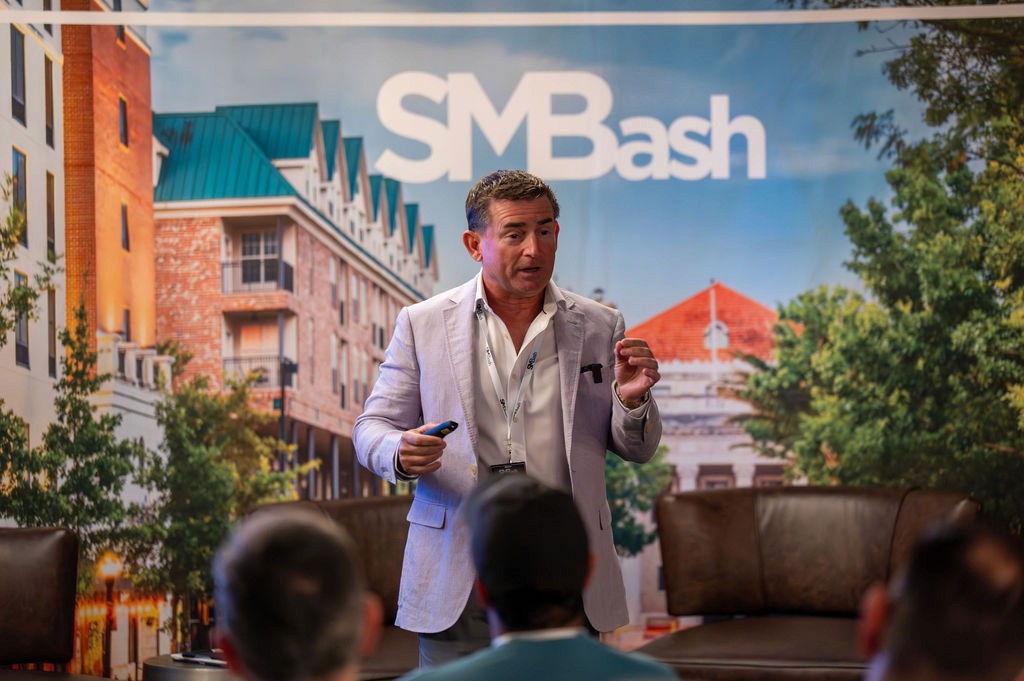
Paul Henderson, CEO of Pure Utah Processing, breaks down a seven-level framework for deploying AI inside a small business, from basic prompting to autonomous agents and full operating systems. Using a real HVAC owner in Ohio as the case study, he shows how operators in entrepreneurship through acquisition can reclaim hours, replace workflows, and build internal tools that off-the-shelf software cannot match. Practical guidance for searchers, holdco operators, and SBA-backed buyers looking to compound productivity in the businesses they own.
Recent Videos
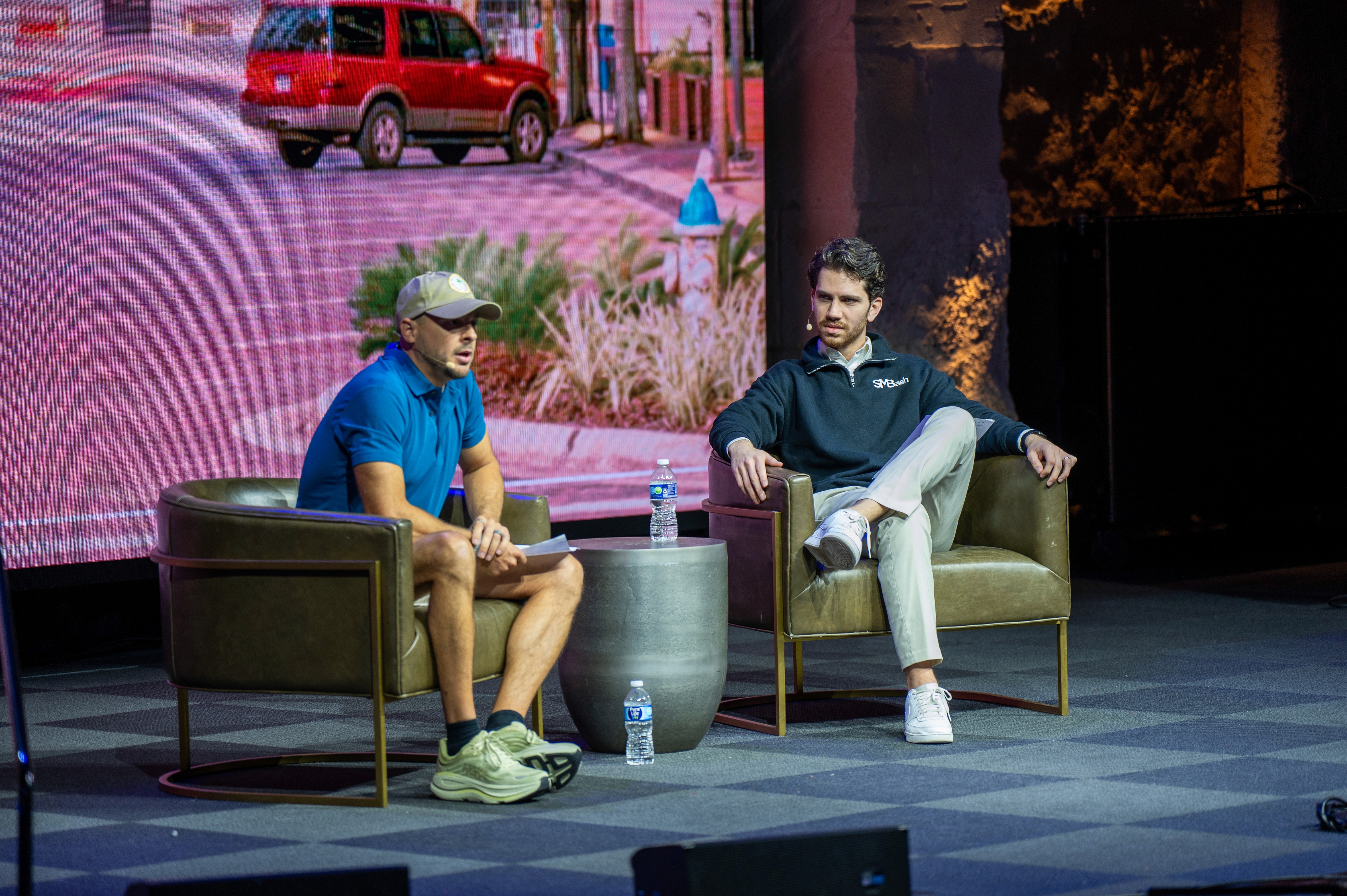
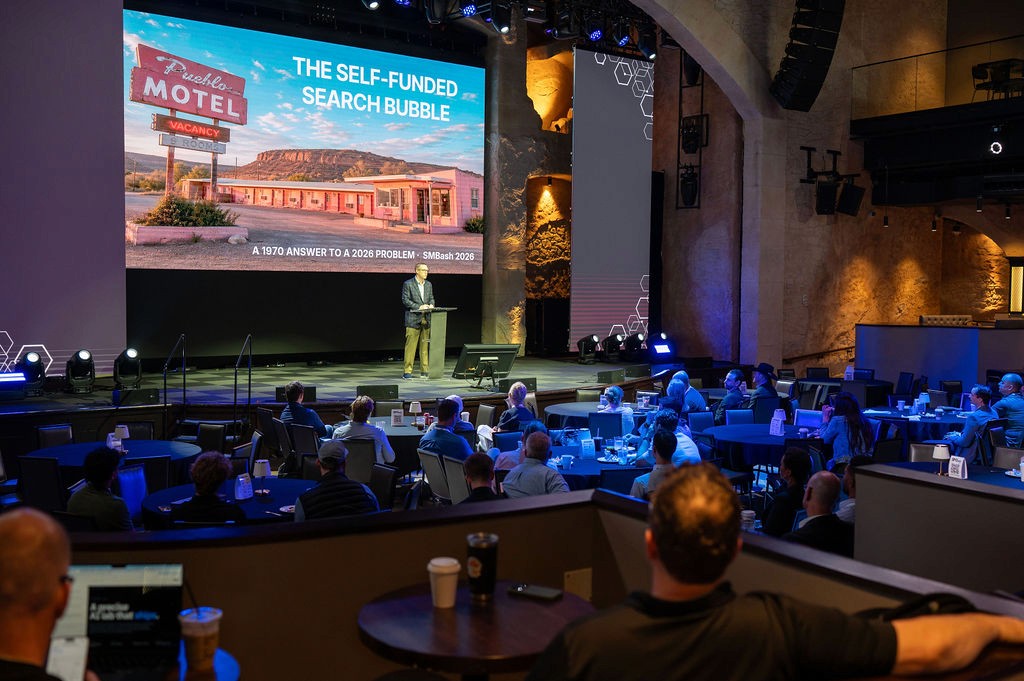
Transcript
For those who were here last year, you may remember I spoke a little bit about my cannabis business, shared a few numbers, but I ended the presentation talking about AI and the coming of the AI age. So this year I figured I'd spend the whole time on AI and what's going on in business, and hopefully leave you with a couple of nuggets to take home to your own businesses or during your search. I titled this "Seven Levels of AI."
A couple of AI researchers much smarter than me have said that societal advancement in the next 10 years is going to be greater than what we've seen in the last 100 years. Think about what that means. 100 years ago was 1926. To give you an idea of what was happening in the United States in 1926: the space age was just beginning with a two-and-a-half second rocket launch, the birth of commercial aviation, synchronized motion in films, and prohibition. Now think about what's going to happen over the next 10 years with the launch of new technology, including AI.
Today, 70% of businesses are using AI in some form or fashion. You're not early anymore, and that's totally okay. I'm going to show you how to catch up over the next handful of months.
Every day there's a new tool or new model. You've heard the noise. You've also felt the pressure. Competitors are using it, labor's tight, inflation keeps going up, and you need help. You don't have four hours a day to sit on YouTube tutorials. You just need a roadmap.
Adoption didn't creep up like the internet. This exploded overnight. Three years ago, when ChatGPT launched, about 36% of businesses jumped in immediately. Today that's 70%. Where are owners spending their time? Marketing and sales is number one at 63%. Customer service is second, because it tends to be a cost center, so eliminating costs there is an easy win. Then supply chain and operations at 54%.
In my manufacturing business (for those who don't know, I run a cannabis manufacturing business in the medical marijuana market in Utah, plus a holdco that does work across a handful of other businesses), I gave my ERP software tool to AI and asked it to run an analysis on my inventory par levels. It looked at raw materials, finished goods, production time, and analyzed our sales invoices, then kicked back an entire report showing me at what level of inventory we need to kick off manufacturing to make sure we're never out of stock. Something that would've taken me a while was done in 10 minutes.
5.6 hours saved per employee per week is what's being reported with people using good AI tools. Managers are reporting even more, 7.2 hours. That's almost a full workday in a week. If you've ever joked about having an eighth day in the week, you just found it.
A quick recap: 70% adoption, 5.6 hours saved per employee per week, 63% of owners using it for sales and marketing. But what's most important: 64% of owners plan to train their staff on AI tools. I want to pause here because much of the conversation around AI deployment focuses on cost cutting, which mostly means headcount. While that might be true in large organizations (Amazon and other tech companies have laid off employees and blamed AI), in small business it's different. Your office manager also does hiring, payroll, and some bookkeeping. They wear multiple hats. So in small business, when we talk about AI, I'm talking about productivity, not about getting rid of heads.
What's actually changing? The tools are going from copilots that just answer questions to agents, sometimes autonomous agents, that take action on your behalf. They do everything an employee can do in front of a computer. Second, writing is essentially free. There's a lot of AI slop out there, so this isn't about copy-and-pasting everything, but you can get a first draft of almost anything in seconds. Third, vibe coding. It sounds like a term a teenager made up, but it's real. If you can dream it up, you can build it. Tools like Claude Code let you write plain English and they deliver. The barrier between "I have an idea" and "I have software" has collapsed.
A few risks to think about: security and what AI means for your data; data quality; shifting customer expectations; and owner burnout. 53% of business owners feel totally unprepared for this moment. You may have heard of shadow IT, where employees connected unauthorized devices like iPhones to the network. Now companies worry about shadow AI, where employees upload sensitive company data to tools you don't know are being used. Data hygiene is critical, and regulation is coming.
60% of AI projects fail on bad data. A lot of these big-organization projects fail because they start with poor data. Data from your CRM, your ERP, wherever, has to be accurate. Clean inputs are the real unlock.
Customer expectations have shifted, especially in home services. People expect instant responses, almost 24/7. Their customers use AI, so they expect you to use it too. Speed and personalization are key.
And you as the owner can't keep running 60-plus hours a week wearing every hat. AI was built for this moment to help you get time back.
Let me walk through a real case study of two owners. Owner A is working the hours. Same tools, same market, same 24 hours. Responding to every email, doing proposals, up at 9:00 at night booking appointments. Twelve years in business. Owner B comes along and uses AI to draft quotes, communicate with customers, schedule calls. Agents draft emails and do follow-up. He's been in business 11 months and has caught up and is surpassing Owner A who's been in business 12 years. Eleven months is all it took for that 12-year head start to evaporate. The tools are the same. The level of use is not.
Let's meet Mike. I picked HVAC because everyone in this room has probably evaluated an HVAC company. Mike has eight technicians, has been in business 12 years, and is nowhere near Silicon Valley. He's in Columbus, Ohio. He had never used ChatGPT. He thought it was for kids. He was burning out. Three competitors had just opened in his region, and he couldn't afford to hire the people he needed. He opened up ChatGPT for the first time and got to work.
Here's the meat of the presentation: the seven levels of AI in business. You might see this as five levels or nine elsewhere, but this is the model I've put together. Every owner sits on one of these rungs. The levels are: awareness, fluency, leverage, compounding, creation, systems, and frontier. Mike climbed all seven.
Level one, awareness. This is where everybody starts. Free tools. ChatGPT, Claude. You've opened it up, asked a couple questions, and used it as a fancier Google. For Mike, he typed, "Write me an email to a customer that's overdue." ChatGPT spits out five paragraphs, friendly tone. Mike thinks, "Wow, that would've taken me an hour." He copies, pastes, sends it. That's level one. Most people stop here and miss 95% of what AI can do.
Level two, fluency. This becomes real when you realize how you prompt the AI matters a lot. The same question asked two different ways gets vastly different responses. This is context engineering, or prompting. Mike stops typing one-liners and starts feeding context. Here's what he typed: "You're a marketing consultant for an HVAC company in Ohio. My customers are homeowners aged 40 to 65. Write a one-page postcard promoting pre-winter furnace tune-ups. Here's the tone. Include this. Keep it under 20 words." Role, audience, task, tone, limit. With those five things, AI comes back with something you can use right away. It wasn't the AI, it was the input.
Level three, leverage. You're getting great results, but every time you fire up AI, it's like having a great assistant with amnesia. You repeat who you are, what your business is, who your clients are. Level three is where you work with memory: projects within ChatGPT or Claude. Perfect if you own multiple businesses with different brand guidelines or if you have clients to keep separated. You work in project folders where AI remembers everything you've done previously.
Mike grabs a spreadsheet of his last 500 service calls, throws it into ChatGPT's data analyst feature, and asks, "What are my most profitable ZIP codes?" AI analyzes all the rows and spits back three ZIP codes doing 40% of his revenue, which shocked Mike. Two neighborhoods he had been investing heavily in were actually break even. This wasn't just a nice informational unlock. He shifted ad spend to the profitable ZIP codes and killed advertising in the other area. Tools at this stage include ChatGPT Plus, Otter, Fathom, Zapier, Make. I'd recommend everybody get the Pro plans, around $200, because the best models kick back much better information than the free versions.
Level four, compounding. Up until level three, you've been sitting in front of the computer, prompting, uploading files, copying and pasting results. Compounding is where AI does work for you when you're not at the computer. This is where agents come in. You stop asking, "What can ChatGPT do for this?" and start asking, "What's the best tool to solve this problem?"
Before level four, a service form gets submitted at 11 PM. Mike reviews it the next morning, calls the customer, tries to win the deal. After level four: the form submission triggers an AI review. AI determines urgency. No heat in January equals highest priority. Within 12 seconds, it texts the customer: "Hi Sarah, we received your request and understand you're without heat. A tech is being dispatched, and we'll have someone to you within two hours. Reply if you need anything in the meantime." Mike's asleep. The job's already booked on the calendar as an emergency, and the tech is on the road making money before Mike wakes up. That's the power of agents. No human in the loop. I'm not advocating no human in the loop is always good, but in certain workflows it makes total sense. This is how you scale.
Level five, creation. This is where jaws drop. You take those agents and add complexity. You build tools to service your internal team. How do you help your employees get better and more productive? It's a massive mindset shift. You start thinking, "How do I build something to solve this problem?" not, "What off-the-shelf software exists?"
Mike's eight techs are good at diagnosing problems, but occasionally they encounter error codes on older equipment they don't normally service. They call Mike. Mike gets 15 calls a day acting as human Google. The tech is sitting in the homeowner's house waiting for Mike to call back. It's disrupting Mike, and it doesn't look professional. So Mike fires up Claude Code and types: "Build me an app where each crew member can look up and review error codes directly from the manufacturer's manual." He dumps in every PDF manual he can find. The app is live on every tech's phone in 48 hours. Now the tech pulls it up, uses voice to text: "I have this E3 error code on this piece of equipment." It comes back with potential diagnoses, solutions, wiring diagrams. They look competent in front of the customer, they're more efficient, and Mike isn't getting 15 calls a day. Simple internal tool, but you couldn't go buy this software. It only existed in your imagination. Tools at this stage: Cursor, Windsurf, Claude Code, Replit. If you can describe it, you can build it.
Level six, systems. Something totally shifts. You don't see individual automations anymore. You don't see roadblocks. You just see systems to build to break through them. Mike is done experimenting. He's writing AI into his SOPs. Level six is a fundamental shift. It's not enough to add AI on top of your business. You're now fundamentally shifting your entire business to work side by side with AI in the loop.
Another tool Mike builds: invoices get sent, payments come in. Every Friday his bookkeeper reconciles them and follows up on anyone who hasn't paid or short paid. Now AI reconciles invoices, matches payments, flags anything unique, and sends a summary to the bookkeeper. The bookkeeper saves hours every week. Mike stops managing tasks. He's now managing the system that manages the tasks. Inbound email, phone, voice calls, web forms, field notes from technicians all feed into Mike's operating system. Agents (he's built four, but it could be 400) do specific things with inputs and outputs: booked jobs, reordered parts, invoices sent.
Level seven, frontier. This is where almost nobody is yet. One human running an organization fully with AI agents and not a single human employee. It's aspirational. Peter Thiel and others talk about the one-person billion-dollar company. Much harder to do with an existing organization unless you fire everyone, which isn't feasible. It's more for startups thinking through totally different ways to launch businesses. I'm launching new businesses now where literally every question we ask is: what can AI do first before we add a human? E-commerce businesses with 3PL services can run fully autonomously. My manufacturing business still has humans. Until robots can take the physical labor jobs, I still have human employees.
You may have seen a company called Medv in the news, based in Los Angeles. Online telehealth medicine, mostly around GLP-1s. You get a doctor's appointment via telehealth, get a prescription, and it ships from a compounding pharmacy to your door. One individual ran the entire organization with AI and hit $400 million in revenue before he hired his second employee, his brother. In 2026 they're estimated to hit $1.2 billion in revenue, which makes them worth much more than a billion. Possibly the first billion-dollar valued company with one employee.
Mike now doesn't really own an HVAC company. He owns a platform. He's built an operating system in his brain and is licensing it to other HVAC companies in Ohio and across the country. Generating a totally different revenue stream. Remember, he's an HVAC guy nowhere near Silicon Valley. He doesn't know software, but he's now selling a software solution to other HVAC operators.
Mike didn't do this alone. There was an ecosystem of tools behind him. Mike still works late. We're always going to work hard as entrepreneurs. But now he's not worried about labor costs, inflation, or competitors killing him. He's looking at the next step.
You don't need to be Mike, but you do need to climb one level. This week, pick one tool. Build one prompt. Build a prompt library. Automate one workflow before the end of the quarter. Pick one thing you do over and over and build a system before the end of the year. Experiment. If you haven't played with these tools in a while, go back. Things have changed dramatically. The biggest example is voice agents. They used to be very finicky. Now with ElevenLabs, you almost can't tell it's not a human. For services businesses, having AI pick up the phone 24 hours a day to sell on your behalf, not a phone tree, but a real-sounding human at 1 AM that answers questions and books the appointment, is going to be table stakes shortly.
Three things you might tell yourself: I'm too busy. I'm not technical. I'll start next quarter (which means never). I get it. But which level are you on? Be honest. Pick your level, pick one tool, replace one workflow before quarter end, then build the system. Somebody in this room is going to build it. I want it to be you.
A quick show of hands on what level you're on. Awareness, level one. Fluency. Leverage. Compounding, level four, building agents. Claude has a feature where you can use a series of agents handing off tasks to each other. Creation, building software tools. Systems, building an entire operating system for your business. Anyone aspirational toward a fully autonomous business?
The next 10 years starts the moment you walk out of this room. Lastly, if you know you're not going to do this yourself, my internal dev team, for the first time, is open to consult and help other businesses. Scan this and fill out a form. I might turn it into an agency in the future, but I figured I'd put it out there. Consultation, actually building tools, whatever it is, let's have a conversation. No agenda. Just want to be helpful.
Question: Of all the tools you're using, where do you see the most value?
Answer: Claude just launched Claude Design on Friday, and I've been using it nonstop. It was the missing piece between having good taste and building what you saw in your mind. Previously you'd go to Claude Code and try to figure out how to get there. Now with Design, you can do so much: circle something, change this, change that, modify a color, and then hand that directly to Claude Code. It packages it perfectly so Claude Code knows how to build exactly what you saw in Design. I built this entire presentation with it this weekend. It closed a major gap for people like me who used to need a designer. The design tools just weren't good enough until Friday. They're going to get better. Google came out with something today that trumped it and is giving it away for free. So there's always these wars: someone launches paid, someone else launches free. We get all the benefit.