PLAYLIST PRESENTED BY

The Big D: SBA Debt Strategy for Self-Funded Searchers in 2024
Description
Lisa Forrest of Live Oak Bank and Matt Dolsky of Byline Bank break down what self-funded searchers need to know about SBA 7(a) lending, including when to engage lenders, how partial change of ownership is reshaping deals, what credit committees actually care about, and how debt service coverage, J-curve, and buyer fit drive approvals. Essential listening for searchers, operators, and capital providers navigating entrepreneurship through acquisition.
Recent Videos




Transcript
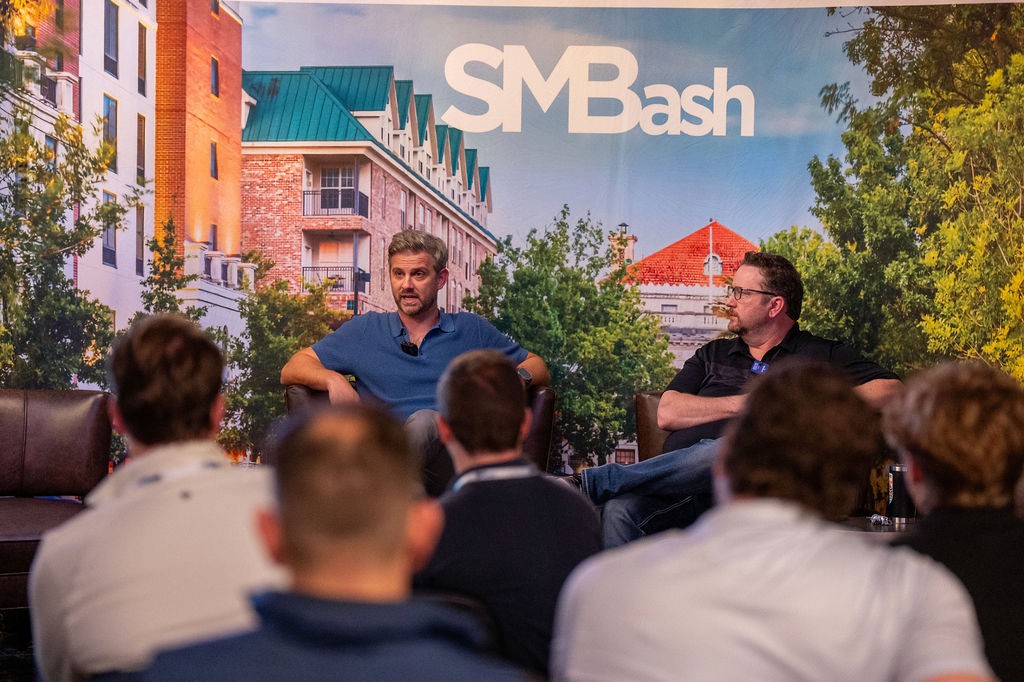
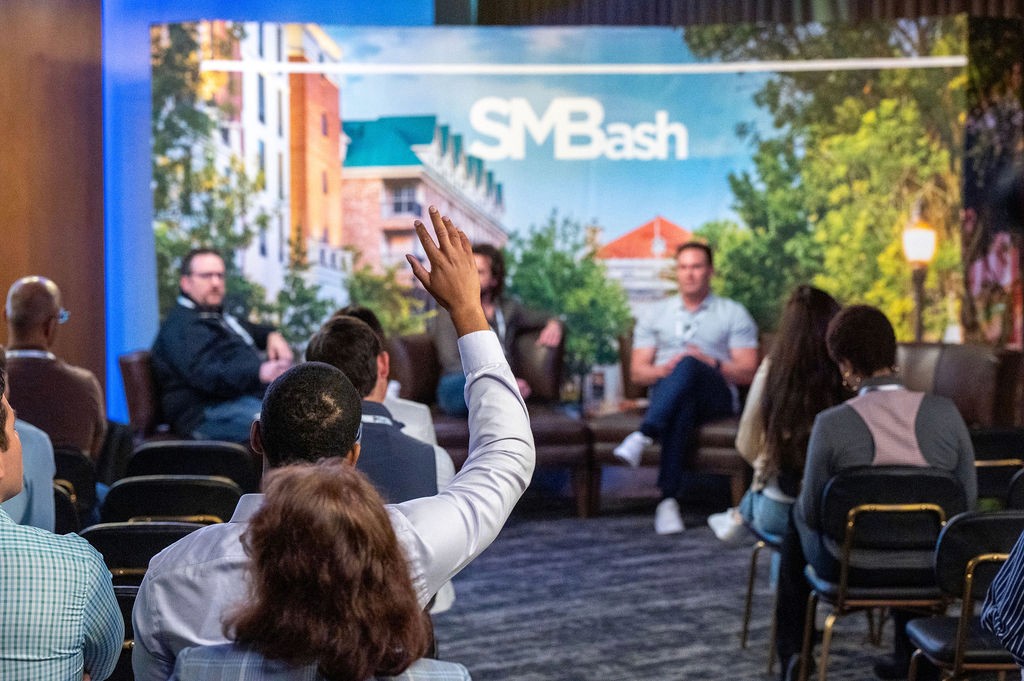
Last year at Bash, interest rates were really starting to rise. Now we're in a totally different debt environment. This year we've had some SOP changes, and we've got some fun stuff to talk about. These guys do a lot of SBA panels all across the country at business schools and at every conference you can imagine. So I really want to emphasize that this is SMBash. Let's hit them hard, let's grill them, let's have some fun with it, let's get some real answers.
The three things we're really going to talk about are process, deals, and changes and trends, things that are specific to this point in time, SMBash 2024. Without further ado, we've got Matt Dolsky from Byline Bank and Lisa Forrest from Live Oak Bank. Why don't you guys introduce yourselves?
Matt Dolsky: I've been with Byline Bank for most of my SBA lending career, which is a little over 15 years now. I specialize in SBA 7(a) lending. I stumbled into my first search deal accidentally six or seven years ago. It was a pest control company in Florida, and I had no idea what search meant. About three years ago, I started exclusively doing self-funded search deals all across the country. Then two years ago, our management asked me to start a self-funded search vertical within our bank, so now it's all I do. We're one of only a few banks, along with Live Oak, that really have a focus in this space.
Lisa Forrest: I'm head of our search fund lending division at Live Oak Bank. This is my 37th year lending. I've been at Live Oak for going on eight years. With my then partner, Heather Anderson, we brought the search fund lending division to Live Oak Bank. It's one of our 40-plus verticals. We were one of the pioneers, if not the pioneer, of lenders to focus on self-funded search. The momentum has really exploded. Business acquisition has been popular for my three-plus decades, but now it's gotten a little fancier, with more methodology around it and a lot of resources and content out there for searchers. We have competitors who are also our friends, and we share resources. There is plenty for everybody. My colleague Sarah Andrews is here as well, my lead lender. It's great having environments where we can help one another, because being the next generation of business owner is needed.
Q: I'm a searcher going the SBA 7(a) route. When do I start talking to you, and what questions will you ask me?
Matt: There are some lenders that say, I don't want to talk to somebody until they have an LOI. I've always taken the approach that if you have something to talk about, cash flow, structure, or the LOI, you should call. A lot of times without talking to a lender, you may enter into terms in an LOI that aren't SBA eligible. For instance, the seller note has provisions where the interest rate cannot be higher than the bank note. So it's a good idea to talk to a lender before you get too far into the process. At the point where you're starting to conceptualize either an IOI or an LOI, it's definitely time to talk to a lender. But there's no such thing as too early either.
Lisa: The momentum with the self-funded ecosystem is amazing. The amount of time placed on service providers is significant, so Sarah and I have created processes to efficiently speak with you as soon as possible. We have weekly office hours. New-to-search acquirers attend every Wednesday. Every Thursday, we talk about everything SBA and share deal vetting templates. You can't be too early. We have folks going into their MBA programs who aren't graduating for a couple of years but are curious about search. When you want to talk pre-LOI, we welcome that. You're probably going to look at three or four or five deals you want to show us. We understand you're looking at hundreds. We want you to do some homework. Do not just send us the SIM and say, what do you think, I have a broker meeting tomorrow. We get those practically every week. This is a partnership. You're interviewing us and we're interviewing you.
Matt: When somebody doesn't put any effort in other than shooting an email saying, can you do all this stuff, you're putting too much on us up front. It's not the best look in the interview process either, because it makes it look like you didn't do the homework or don't know how to put it all together.
Q: How do searchers avoid being annoying?
Matt: Unreasonable requests on time would be the biggest thing. I haven't come across many folks doing eight phone calls a day. Most everyone is pretty sophisticated. But there are some unrealistic time demands on how quickly we can put something together.
Lisa: It's so competitive right now and we appreciate that, on behalf of QoE, attorneys, and insurance too. We know you have to move urgently and sometimes literally that next day. There's a process to forming a relationship. At the end of the day, Byline and Live Oak are going to give you a loan. It sounds transactional, but it's not. We're really getting to know each other. Just understand there are many buyers out there, and on any given day we can have many people calling us. Appreciate the time constraints on our side too.
Q: What should a searcher look for in a lender besides rate?
Matt: It's important to know what each bank likes. There are certain industries that banks may or may not like, things tied to residential construction, heavy manufacturing. We all have different thoughts about cash flow, customer concentrations. If you have a thesis about what you're looking at and have some conversations, you'll figure out, okay, that bank may be the best fit for this type of deal. Each bank has nuances. We all have horror stories about that one deal in an industry that blew up.
Lisa: Everyone in our lane for self-funded searchers is type A. That's why we like you. But until you find the deal, you don't necessarily know what bank is the right fit. Have relationships with several lenders. You probably come from private equity or investment banking, and this SBA thing is quirky. We're not good for ground-up new construction. We have an HVAC vertical, but if it's HVAC for ground-up high-rises, that's not a fit. We're service maintenance. When you actually identify the deal, that's when you're really deciding which lender to go with.
Matt: One of the biggest things that gets under-talked about is how big of a discussion buyer fit is at the bank level when we're going to our committees. Everyone gets focused on cash flow and structure, but everyone in this room can put together a cash flow chart. By far and away the biggest thing we talk about at credit committees is the buyer fit. Is this a complicated business to run? If you want to buy a tool and die maker or stamping company or machine shop, we feel you probably need operational experience or an engineering background. General contractors are a unique business where finance or accounting backgrounds sometimes transfer well, but not always. Be sure you've thought out how you're going to tell us you're the right person for this business. Don't say, I'm agnostic, this came across my desk at a 3x multiple with 25% seller financing, so this is the deal for me. That's not the right answer.
Q: What if the buyer doesn't have direct industry experience but an investor does, or a key employee will stay on?
Lisa: That comes into account on every deal. Most of our acquirers do not have industry experience. It's actually more rare when we see industry experience. Transition plan is so important. The math is almost the easy part because you either have the debt service or you don't. It's the qualitative discussion around the numbers. Show your work, why does this make sense to you. We want that storyline.
Matt: The partial change of ownership has opened up so many possibilities, having the seller retain equity. We talk all the time about whether there's a key employee who would come along where the searcher is willing to offer them 5% equity that vests over time. We're so concerned that something might get messed up in transition. I love when I hear a searcher say, I really want this person to stay on and I'm willing to give up some equity. I had a deal a couple months ago where the seller was willing to have a limited guarantee limited to a couple hundred thousand dollars, and that helped us feel good they'd be there through the transition.
Q: How do those qualitative buyer traits show up in deal terms, like interest rate spread?
Lisa: As far as how much we'll loan, debt service coverage really matters. I'm not the multiples person, I'm the debt service coverage person. If you want to pay a higher multiple but the structure makes the debt service work, that's great. Then we look at qualitative aspects, customer concentration, seller dependencies, supply chain dependencies, employees who can help transition. We've seen folks who are better at doing the deal than operating the business. You're good at making spreadsheets work and negotiating the LOI, but can you literally see yourself managing people in a warehouse? We get into conversations with our clients about whether they can literally envision running the company.
Matt: As it relates to terms, I don't think those qualitative factors really work into interest rate. We're fairly narrow on rates. It might work into asking for more seller financing, or rarely more equity. The short answer is it's more whether we're comfortable or not.
Lisa: Where pricing comes into play is if it's a strategic acquisition. Thirty percent of our business is for someone who already owns a company and we're giving them their second or third loan to buy additional companies. Clearly there's some pricing in play.
Q: Why would you select an SBA lender offering a lower fixed rate versus certainty to close? And how do partial standby, full standby, and balloon notes impact debt service?
Matt: You've got to do your best to figure out if banks are for real. Five or seven years ago, I didn't do term sheets. I hated them because you'd see big bank gives a term sheet, then a month later they come back and say we can't do that deal at all. So I had an aversion to term sheets. When my practice started going into the business acquisition and self-funded search world, term sheets are part of what people want to see. After a deal last summer that didn't go the way I was pleased about, I rethought my process. Now I work up a seven to ten page initial analysis, take it to our credit committee within three or four days, with cash flow, PFS, resume, deal structure, get it in front of our five credit committee members, and then put out a term sheet. Ask questions like, have you vetted this, is this something you do all the time, how many SBA loans are you doing annually? If the number is less than 50 million, start to ask questions. Live Oak has been the number one SBA lender, and we've been right at the top inside the top five. If you have a bank you can't even find their name, their credit committee may look at a search deal and not even know what it is.
Lisa: Confidence to close should be a bank's value proposition. Confidence to close is worth a couple percentage points of price.
Q: How does J-curve play out empirically?
Lisa: J-curve is on every deal. If you're doing conventional lending, especially for funded searchers backed by co-investors known coming out of HBS or Stanford, J-curve is how you underwrite in a conventional setting. We know you're coming in to up-level the company, hire different people, spend money on marketing and sales. Your EBITDA goes down. So you're actually buying maybe a 5x or 6x EBITDA company because of your investment thesis. That's one benefit of an SBA loan, there aren't covenants. So if you thought you bought a million dollars of EBITDA and now it's 750 because you're spending money, that's planned J-curve. In lower middle market, there's a lot of unplanned J-curve. You lose a salesperson who was key. You lose a customer. Even if your top customer is only 7%, losing them a month later causes J-curve. With SBA, most lenders love your investment thesis but underwrite to historic EBITDA. We really want you to get in, run the company, transition it. There's probably going to be some depression in EBITDA naturally. Lenders have different debt service coverage requirements. We're unapologetically the more conservative lender. Industry agnostic, we want a 1.5 debt service coverage in the last full year. With our 40 verticals, if it's an industry we know well like HVAC, our debt service might be 1.25 or 1.35.
Q: Do you keep stats on J-curve?
Lisa: We don't track that, but at Live Oak, as lenders on the front end, we are invited to a quarterly watchlist meeting and quarterly default rate meeting. These are not voluntary. So we know our portfolio extremely well. Observationally, J-curve happens, but we're not keeping stats.
Matt: We call them war meetings. Every quarter.
Q: What DSCR do you underwrite to?
Matt: When we do Pari Passu loans, we have stricter debt service coverage, at least 1.40 over the last two years based on tax returns. With straight 7(a), we don't have a hard and fast rule. One thing I see a lot is somebody brings me a deal that never cash flows on tax return basis the last three years, but on trailing 12 months it does at 1.8x, and they ask if we can underwrite off that. Almost every scenario, we cannot. I want to see at least one year of solid tax-return-verified cash flow plus a good interim or TTM. Once you get below 1.25 or 1.30, I start to scratch my head about whether there's enough cash flow left over for the searcher. SBA's minimum is 1.15, but that's for a turnaround or real estate deal. For an acquisition, that doesn't really make sense.
Q: Let's discuss SOP changes. Partial change of ownership, what's the rule and how can searchers use it?
Lisa: We like it, we love it. Before, it was only 100% buyout with SBA. This is not seller roll, even though I say it too. It's partial change of ownership. You are partially buying into their company. The seller retains some ownership. These are stock sales, not asset sales. If they retain 20% or more, or are considered key, they have to personally guarantee. If they retain less than 20% and aren't considered key, they don't have to personally guarantee. Key is interpreted on each transaction. Especially where licensing is required, like HVAC or plumbing, if the seller holds the license, they can retain 5% or 10% and you can use their license. It really resolves a hole in service and specialty trade business owners being able to transfer wealth to the next generation.
Matt: It opens up so many more deals to searchers. There are sellers who don't want to be 100% out. I'm interested to see how the dynamic plays out between a seller who's been running the company viewing it as my company and a searcher coming in. In most partial changes I've seen, sellers retain 5% to 15%. It'll be rare to see a seller want over 20% and personally guarantee one of our loans.
Lisa: We've done this a few times where the seller retains equity, and it's helping us get comfortable with a really nice transition and education period for an acquirer with zero industry experience.
Matt: It makes it that much more important to ask, how do I get along with this person? Can I see myself working with this individual for five years or longer?
Q: When investing in a deal with a searcher, I always think the searcher should be on their own cap table. Do you require that?
Lisa: Our requirement is that the acquirer, the guarantor, the PG, the operator, has their own equity in the injection. We want what's meaningful to our operator. Meaningful equity injection is different for every person. We don't have a stated minimum. If you have $100,000 of cash, $50,000 might be meaningful.
Matt: It would be atypical to see where the searcher has no equity. I don't see that often.
Q: Pros and cons of working with SBA loan brokers?
Lisa: There's room for everybody. There are more buyers, more lenders, more QoE, more attorneys, more brokers, more of everybody in the ecosystem. It depends on you as the acquirer. Some searchers wouldn't consider using a loan broker because they want to be in control. Every searcher is talking to numerous lenders anyway. If your deal is more down the fairway and you've established relationships with lenders, maybe a loan broker doesn't come in. But if your deal is a little on the outskirts, a loan broker is definitely going to be helpful.
Matt: It's about who you're more comfortable working with. The brokers we work with better in the search world are former SBA lenders, former people from big SBA banks. There's real value in what they bring. Loan broker is almost like a dirty word, but it's not that way anymore.
Q: Eligibility changed in November. You get $5 million for each different NAICS code, correct?
Lisa: We're actually doing that, and it's nice for seasoned operators. Maybe you bought an HVAC company, operated it well, ready to expand. Now we run by NAICS, different names.
Q: Walk us through the underwriting process for 504 versus 7(a) for businesses with commercial real estate.
Matt: You have to run concurrent paths with a CDC that's also approving the loan. Two approval paths run concurrently between the bank and the CDC, which represents the SBA on the 504. When both approve, it goes to SBA for approval. The 504 process takes longer than a 7(a) real estate transaction. The benefit of 504 is the great debenture interest rate, but you put in a little more equity and deal with a more cumbersome process. On the 7(a) side, probably higher interest rate but less equity and a faster process.
Lisa: There's a real estate size that makes sense for 504. If it's small real estate, you probably just want to put it into the 7(a) deal.
Q: Have you successfully done a 95% buy-in with a license trade deal where the seller holds the license, isn't considered key, and doesn't have a PG?
Lisa: Yes, we have.
Matt: We have too, assuming they're not the only one holding the license, that they have staff.
Q: If you max out your 7(a) at $5 million, you still have $5 million for real estate?
Lisa: If the building is considered green or if it's manufacturing, you get another $5 million to buy a building.
Q: What's your timeframe for doing a second deal with the same buyer?
Matt: I have one right now where we closed loan number one on 12/31, and now we're starting underwriting for the second acquisition in the same industry. There's a lag to default. When we look at our portfolios, it's two to three years between making a loan and default, if it's going to default. But often you see issues right out of the gate, transition problems. When something goes bad, usually the seller pulled the wool over our eyes and over QoE and attorneys, or it just wasn't the right buyer. Coming for loan number two, the number one question I ask is, how is loan number one doing? If the answer is good, loan number two is usually easy. If the answer is bad, loan number two is impossible.
Lisa: Default rates don't capture businesses that struggle. On cadence for second acquisition, if your EBITDA went down after the first eight months, we might not give you that second add-on. But 30% of our pipeline is additional acquisitions for accounts.
Q: What's the default rate?
Lisa: The SBA stat is between 2% and 3% default. But businesses can struggle and pay us back not through business operations. They could be paying us back because their spouse makes money outside the small business. If you need a specific answer to decide if this is a good fit, it's not a good fit. Statistically, the SBA stat is 2% to 3% default, but a fair amount struggle and that statistic isn't captured anywhere.
Closing remarks:
Matt: The thing I get most excited about is when people bring me something they really love. Most people who buy a business are going to be operating it longer than they think. Make sure it's something you'll really enjoy spending the next 5, 7, 10 years doing.
Lisa: The reason this is so exciting for those of us who've been doing this a long time is purpose. My purpose is to help coach and mentor the next generation of entrepreneur. Especially where interest rates are today, if you find an opportunity you're passionate about and can really envision yourself in, this is a fantastic time to be doing what you're doing. Go get it.