PLAYLIST PRESENTED BY

Risky Business: Insurance Diligence Pitfalls That Kill ETA Deals
Description
Insurance veterans Josh Richman and Andy Harbut break down how insurance diligence protects EBITDA, valuation, and post-close operations in entrepreneurship through acquisition deals. Learn how X-mods, loss runs, hidden contract requirements, PEO traps, and missing policies can blow up an SMB acquisition, plus the five commercial coverages every searcher and operator needs to understand before closing.
Recent Videos



Transcript
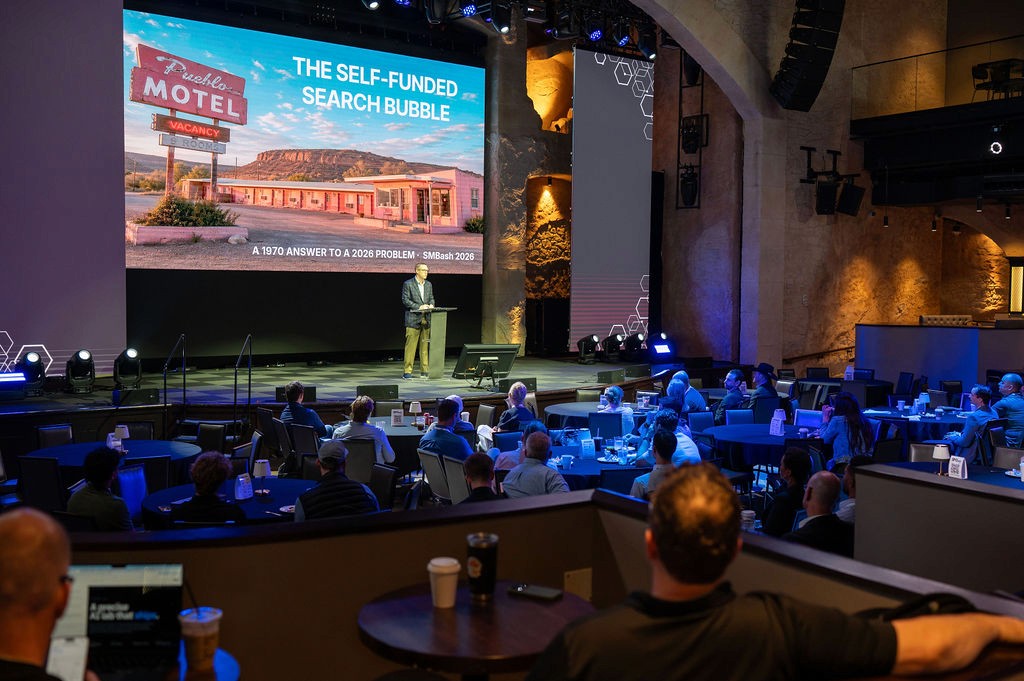
Good morning everyone. Did anybody see Flat Roof Freddy on Twitter? He posted a tweet last night. Since he's not here, I'll tell the story.
Flat Roof Freddy was a self-funded searcher. This is a true story from February 2023. He was looking to acquire a roofing business in Florida doing $10 million in sales. $7 million of that was commercial flat roof, and $3 million was new construction. What's important about the new construction is that Flat Roof Freddy's company was working as a subcontractor under a general contractor, and the general contractor had a special insurance program known as a wrap-up. The wrap-up insurance program effectively wraps around all individual subcontractors, whether that's the painter, HVAC, plumbing. There are a number of reasons for it, but it's about cost control and making sure all the subcontractors are properly insured.
Because the general contractor was buying the insurance, Flat Roof Freddy's company didn't need that insurance for the $3 million of revenue. So their insurance premium was going up 40%. The reason it's 40% is that new construction has a higher rate than repair work. It's extremely high risk.
Additionally, this company in Florida transitioned all employees from W-2 to 1099 subcontractors. However, there was no process in place to ensure that the 1099 contractors had their own insurance. They weren't collecting certificates of insurance. From an insurance standpoint, the insurance company was looking at it like, well, those are your employees. When we looked at the loss runs, there were claims occurring on the workers' comp side from 1099 contractors because they didn't have their own insurance. There was a $40,000 claim from a 1099 subcontractor.
The point of this story is a couple of things. Insurance is complex. It's likely outside of your operating wheelhouse. Maybe you've procured insurance through your personal channels, but this is a completely different world. Also, if you can understand and improve the risk profile, you can increase enterprise value and expand the business.
Why do we do insurance diligence? To make sure that if you buy a business, number one, you don't overpay for things like insurance. In Flat Roof Freddy's example, we found that the company was overpaying and were able to immediately create value by lowering insurance costs. The other thing is to make sure you're not buying a business that has all kinds of issues where you find out you're fundamentally uninsured for things you thought you were.
Who we are: Andy Harbut. I've done insurance due diligence for M&A deals for almost 20 years. I started at a broker called Aon, one of the two biggest brokers in the world, doing deals for private equity firms, Apollo, Cerberus, and Carlyle. My claim to fame is that I insured Twinkies. I have all kinds of stories about that. They won't survive the nuclear blast, but they will last a couple of months on a shelf. I met Josh three years ago and have been focused on SMB and ETA ever since.
Josh Richman: We were friendly competitors. I fell into it by accident, doing more middle market stuff 13, 14 years ago. Search funds were actually called pledge funds back then. Some of those earlier deals I worked on were very successful. They got sold to middle market clients, those searchers went out and started funds, and I saw the whole birth of search funds, ETA, and this whole movement.
If there's anything I really want you to get out of this presentation, it's this slide on low risk versus high risk businesses. Low risk businesses are bookkeeping, accounting, a lot of SaaS businesses. Those businesses are easy to procure insurance for. There are a lot of insurance companies and markets interested in writing your business. You're going to get really good terms and a lot more coverage at a lower premium.
Compared to a high risk business like Flat Roof Freddy, the market is really skinny for roofers that do new construction in Florida. You're going to be paying a lot of premium. You'd better get it right. Insurance is going to be your second or third highest cost outside of payroll. Because of this higher premium, you're getting less coverage. Just because you're buying a $3 million business, if it's HVAC, roofing, or parts of healthcare, insurance will be your second or third largest cost. There are ways to handle it, whether transferring the risk, avoiding the risk, mitigating the risk, or using different risk controls to enhance your overall risk profile.
Five commercial coverages everybody needs. We don't want to get too far in the weeds, but we want to put up some guardrails. There are really only five different types of policies that just about every business needs. There will be some specialty coverages, and we'll talk about that as well. Some of the names are similar to what you might see in your personal insurance, but the policies differ considerably. Whatever you think you know about insurance from buying it personally, throw it out the window.
The insurance industry loves to make it seem more complicated than it is. They use terminology like 'this is a bespoke, specialized insurance policy unique and custom for your business.' The first example proves that's not true. General liability insurance is funny because it's called general liability since it generally applies to any business. The policies are almost all exactly the same. They have four primary coverage parts.
The first is premises liability. If you have a retail operation, hotel, or event center, any place where the general public comes onto your premises, slip and falls, you have a duty to provide a safe place. Second is products liability. Any business that sells a product, whether it's a widget or a Twinkie, has a duty to have a safe product in the stream of commerce. Third is completed operations, super important if you're looking at servicing businesses like plumbing or HVAC. This is not a particularly well understood part. For roofers, people think, 'I've got general liability insurance. If I have a warranty claim three years down the road, am I covered?' It doesn't quite work that way. Think about it as liability arising from work you do for other people. If you're a plumber and you install a washing machine but didn't tighten the hose right and flood somebody's house, that's completed operations coverage. Finally, personal and advertising injury, things like libel and slander. For the typical SMB that runs an advertisement on Facebook, it's probably okay. Any lender is going to require this coverage to be in place.
Next is commercial property, broken down into three parts. The first is the building. It's really common in SMB transactions that the seller owns the building. The lease agreement and who's responsible for building coverage is really important, especially in Florida, California, and parts of Texas. Next is everything inside the building, whether that's inventory, desks, chairs, product, the contents or business personal property. Then you have business income or business interruption. If there was a fire to the building, business income would pay the net income you would've earned during the period of restoration. That's payroll, that's debt service. Getting that number right is critically important. If your operations are on premises, critically important to get that right. A lender will require that coverage to be in place.
Workers' compensation is required in all 50 states. If an employee is injured in the course of their employment, it's a statutory coverage that covers their medical bills and lost wages while they're recovering. There's also a component called employer's liability so that if a tort lawsuit happens because of an employee injury, the policy covers the employer's liability as well. The classic example is you have a manufacturing facility and you take the guards off the table saws, or take guardrails off an assembly line, and somebody loses a hand. That's pretty egregious and you can get sued for that.
A lot of times you want to get into a PEO. Workers' comp is an extremely profitable line of coverage for insurance companies. That's why the payroll provider or the PEO really wants it. They try to use tricks when rating it.
Business auto: if you have a fleet of vehicles, third party liability and damage comprehensive to your vehicle. What's important to note is you also have a coverage called hired and non-owned auto. That's essentially if an employee is using their personal vehicle for business purposes, or if they rent a vehicle, there's liability coverage in place. That coverage is excess of any personal coverage they have. So if an employee only has a statutory minimum of $30,000, then the business auto coverage comes into play.
Umbrella gets a really bad name. Umbrella only sits over business auto, general liability, and the employer's liability of workers' comp. A lot of people come to me and say, 'Hey, I have an umbrella policy. It's going to cover cyber, damage to the building.' It doesn't. Does it cover sexual harassment claims? No. Would it cover a hacker that takes down the system? No. Earthquake? No. P. Diddy? None of that's covered. It really only covers cars, people working on premises, general liability, and you're lucky if it covers anything else. I get this question with probably 50% of deals I work on.
Policies you should consider beyond the five everybody should have. There are really three other types we talk about. First is management liability, which refers to four types of coverage typically on the same insurance policy. It includes directors and officers liability. If you have a board of directors, there's a good possibility they'll say, 'We want D&O insurance in case we're sued for our fiduciary liability.' Employment practices liability covers sexual harassment, wrongful termination, discrimination, failure to promote. General liability typically does not cover employment practices liability. Fiduciary liability is tailored coverage for 401k plans and other employee benefit plans defined by ERISA. If you offer a 401k but the options are terrible and everybody loses their money, that's fiduciary liability. Crime insurance covers theft of money or securities. The classic example is Steve in accounting creates a fake vendor and sends out $2,500 a month to a vendor you've never heard of. It turns out that vendor is Steve's cousin. White collar crime and embezzlement falls under crime insurance.
If you don't want to buy any of these, be really mindful as a new CEO. If you're going to terminate employees, consult an attorney. We see a lot of that when a new CEO comes in and six months later starts deciding who's working and who's not, then the employee files a claim.
Cyber: I think everybody should have a cyber policy. Invoice manipulation, social engineering, funds transfer fraud. It's fairly inexpensive for how broad the coverage is. Just a couple of weeks ago, a client got a fraudulent invoice for $144,000. The accountant paid it and didn't realize it until afterwards. It hit the cyber policy and the cyber insurer just paid. That policy costs $2,500.
You want to avoid the scenario of 'we had this thing happen, don't we have coverage for that?' These recommended coverages cover 95% of the things a business could run into.
Bucket number three: Other. Anybody who's run a business or bought insurance has some story of, 'Well, what about E&O? What about marine cargo insurance? I've got these guys on a dock in Jacksonville, do we have to have Jones Act coverage?' There are a bunch of different specialty insurance products that exist for unique exposures. We can't say universally they're going to apply on your deal, but they definitely come up.
This is the most important slide in the whole deck. People say, 'Okay, you do insurance diligence. Here's a stack of insurance policies, are we good?' My answer is, I'll tell you as much as I possibly can from these policies. I can tell you what they cover, but am I really doing diligence? Not really. The way I look at insurance diligence is it's as close to doing total business diligence as any of the diligence disciplines out there. It's gestalt. We've got to look at everything.
For property insurance, I can tell you what the property policy covers, but do I know if the limits are adequate? If you're buying a bunch of inventory, I'm going to look at the balance sheet and figure out what the inventory levels look like year over year and month over month, try to figure out if there's seasonality, if the inventory values on the balance sheet match what's on the insurance policy. If you're buying a business and need a third party valuation of the real estate, we'll look at that valuation to understand the replacement cost. Is it a unique property? If it's an industrial facility, are you going to have a harder time with business income and interruption losses because you wouldn't be able to easily move operations? Don't even get me started on deferred CapEx.
Legal diligence is huge. One of the biggest things we see is that SMB operators enter into contracts without reading the insurance requirements. We can look at a stack of insurance policies and tell you the liability limits, but if your business has contractual requirements with key customers and we don't look at those contracts, we can't tell you if the liability limits are sufficient.
That's especially important when you're coming in. A lot of these deals are asset purchases. You're going to have a new entity set up, and you'll be required to submit certificates of insurance and endorsements to that customer. You don't want to find out on day five that the contract required $10 million of umbrella and you only had $3 million.
I'm dealing with this right now with a client. They gave us a schedule of insurance and all the policies. I get attentive about this stuff and want to see the seller disclosure schedule. Ultimately, the purchase agreement is going to reflect what policies they buy. We found the client had a contract with UPS that required crime insurance that was not disclosed anywhere in the disclosures or the policies during diligence. The only way I found it was on the list of top 25 vendors payable. That policy expired, and now our client, the SMB operator, had to deal with UPS asking for a new certificate of insurance for crime coverage.
QoE is a huge part of what we do. The QoE guys typically look at normalized cash flows and try to make sure you're making adjustments to seller discretionary earnings that make EBITDA make sense. Insurance policy premiums aren't static. When you buy a general liability or workers' compensation policy, those policy premiums are adjustable after the policy period based on actual revenues or payrolls during that period. This creates a QoE issue where you can look at the trailing twelve months insurance expense, and it can be misstated by too much or too little because the policies have an audit function. Typically QoE providers don't look at that audit function. We help align those numbers so you have a normalized run rate for insurance expense.
This is extremely important for blue collar businesses. When you're bidding on jobs, the seller low balls the initial revenue, and then later they triple it. Insurance will reflect that. It's like premium financing.
Environmental issues are really big. All the insurance we talked about earlier almost universally does not cover environmental liability with a handful of exceptions. If you're buying real estate or a business with environmental liability risks like cleanup, pollutants, or disposal of pollutants, hydrovac trucks are getting super popular for some reason. Environmental regulation and insurance is a totally separate bucket of risk.
Finally, transactional risk. Part of what we do during diligence is understand what assets and liabilities are assumed in the purchase agreement, where you have seller indemnification for uninsured risks, and how to box that in to protect your interest going forward.
What we typically provide is an acquisition insurance report. Our work begins with understanding the transaction structure and what the intent of the purchase agreement is. Whether it's an asset deal, stock deal, or F-reorg, depending on the structure, the policies may or may not transfer to NewCo. We look at coverage gaps, impacts on EBITDA and ultimately valuation, and do a deep dive into claims analysis. This is also an opportunity for you. You're in a transaction role right now as a searcher, but once you move into the role of CEO, insurance is going to be in your hands. These aren't middle market firms with a whole risk control team. It's going to fall on you.
Missing policies. It's remarkable. We talked about the five coverages every business needs. If you're buying a business from an entrepreneur or founder that never took out bank debt and never had anyone looking over their shoulder, those are typically risk takers focused on marketing, sales, and building their business, not 'do I have all the right insurance policies?' Maybe they've had a good run and never been sued. Things like auto coverage: a lot of businesses say, 'We don't own any autos, why do we buy auto liability insurance?' Well, it's that hired and non-owned auto.
This was actually a deal done last year. The searcher was buying a trailer manufacturer and there was no general liability policy whatsoever in place. Obviously a major issue going forward, plus successor liability issues. Another one: we were doing a deal for a fire suppression company in Colorado, and 5% of the work was done at aircraft hangars. Looking at the policy, there was an aircraft hangar and marine exclusion. What's going to happen if there's a claim at that job site? There's no coverage in place. The insured had a $10 million umbrella policy. They were able to negotiate with the seller.
Premium rating basis. There are two components: the rating basis itself and the classification. For general liability, it's typically rated on sales. You tell your broker, 'I think I'm going to do $10 million in sales next year,' and that's what the insurance company uses to determine the premium at inception. When the policy expires, you get a letter that says, 'Send us your books and records for actual revenue during that policy period.' They adjust the premium and send you a bill, typically because hopefully you've exceeded your revenue estimate. If they return premium, it's like a tax refund, meaning you paid too much to begin with. So generally the advice is to aim a little bit lower. But if we look at an insurance policy and the seller reported sales of $3 million, but you're looking at a CIM that says the business is going to do $5 million, we say you've got to make an adjustment because the insurance cost is going to be $140,000 when they get the bill, not $100,000.
If it's a stock purchase and you're assuming the policy, that's going to be your liability. Even if it's an asset purchase, you need to know what the go-forward insurance expense is. It also factors into working capital because you have prepaid insurance as a current asset. If that number is too low because they low-balled their expected revenue, you want to know about that beforehand.
Rating classification. For instance, in a lot of states there's a difference between a plumber making above $40 an hour versus a low wage plumber making less than $40 an hour. A high wage plumber is more experienced and proven to have less likely claims. If you're buying an HVAC or plumbing business, how are they classified? Are they all lumped into that higher class code? It can make a material difference. Especially within middle market firms where investors are unsure of the rate and classification, we get letters from NCCI to verify it.
The gist is you can't assume insurance premiums are guaranteed. Do premiums ever go down with better risk controls? Absolutely. There are also economies of scale, minimum premiums, and a whole bunch of factors. One of our major takeaways is don't just say, 'I need to get my insurance cost down.' The best practice as an operator is to think about risk controls and MVR drivers. Implementing telematics could be a 5% to 10% discount. Having drivers do defensive driving courses. Subcontractor agreements: making sure your subcontractors are properly insured. On a policy, there could be a line for uninsured subs, and the rate they're going to charge you is probably three to four times higher. As you scale, you need to have these in place because you're going to attract more markets interested in your business.
In the acquisition insurance report, current cost analysis is straightforward. Here's a stack of insurance policies, here's what they're paying. If they were doing everything they're supposed to be doing, what would it actually cost? Things like, is there a contract the company's not complying with where they have to add a policy? Or the audit adjustment we just talked about. If your model is based on TTM $5 million in revenue but the policy says $3 million, we'll tell you what the insurance should actually cost.
A lot of times the seller has his personal vehicle, his spouse's vehicle, his kids' vehicles on the business auto. You can sometimes see business auto go down because of that. It rarely gets picked up within the add-backs. And the property too: if real estate is coming off the deal going forward, is that something you have to cover or is that something the seller's going to continue to insure?
Besides the actual type of work, the other big drivers of insurance costs are location. Coastal locations, anywhere with catastrophic or cat exposure for earthquake or windstorm, makes property insurance more expensive. The other driver is legal liability, driven on the state level. Certain states are more favorable to plaintiffs than businesses. Florida and New Jersey for auto insurance and employment practices liability. California: everybody talks about employment practices liability in California because retentions and deductibles will start at $100,000.
Location matters. If you have a roofer in California, you do not get workers' comp right, you will be out of business.
Projected cost analysis. Assuming the seller buys adequate levels of insurance for the business so you can continue operating it, that's more about QoE. Projected cost analysis is, maybe you're going to have a board and want to add D&O insurance, or your sleep-at-night comfort is above and beyond minimum requirements. Things like adding cyber insurance or increasing umbrella liability. This is more about best practices recommended insurance versus QoE adjustment, where we found something to negotiate your purchase price.
We always ask for loss runs. You're going to come back to me and say, 'The seller is stressed out, I can't ask many more requests.' Loss runs are incredibly important. The reason is current year's claims are not factored into current year's premium. If they've had a poor year, it hasn't been completely reflected in the current year's premium.
We're doing a utilities contractor right now with a $4 million workers' comp claim. A terrible accident, the guy lost two arms. The timing was that it wasn't reflected. The claim happened in November 2022. We looked at the business in November 2023, and the workers' comp policy renewed in January 2024. Our client had done his QoE, his legal diligence, and was planning to close in January. We looked at the loss runs and said, 'There's this $4 million workers' comp claim that hasn't hit the experience rating yet and it hasn't hit the premium.' It blew up his deal.
The reason is workers' comp has something called the experience modification factor, or X-mod. Everybody starts at 1.0, your C student average. If you have poor claims, you'll go to 1.10, 1.5, 2.0. That means you're 10%, 50%, 200% worse than your industry peers. If you're below 1.0, like 0.8, you're 10% to 20% better than your peers and you're getting a discount on your workers' comp premium.
For a searcher who's going to be CEO, this gives you great insight into the company. Are they legit claims? Is there a frequency issue, a risk control issue? How do the employees feel about the company? Maybe they don't have strong healthcare and are using workers' comp because of that.
The other reason it's important, especially in some trades, is when you're bidding on contracts, they'll ask you to have your insurance broker sign a letter saying the X-mod is, say, 0.9. They may not want to work with you if your X-mod is above 1.3. Why would they want to hire a contractor prone to claims who could be brought into a claim at the work site?
For our client, this $4 million workers' comp claim hadn't hit the X-mod yet. We modeled it and said when this gets adjusted next month, it's going to take the X-mod from 0.7 to 1.3. There's software we can use to model an X-mod. The longer survey for this business: our buyer knew that if the X-mod went to 1.3 within that industry, he wasn't going to be able to grow the business because there was a hard and fast rule with utility companies that they won't hire subcontractors with X-mods over 1.0. It literally shelved the deal.
You've got to ask for the loss runs. The X-mod is calculated every year and is a function of three of the last four policy periods, excluding the most recent. The algorithm isn't widely known. It typically takes four years for a claim to fall off, but there are limiting factors. The bigger issue is usually frequency over severity. It's not like a $4 million claim makes the business totally uninsurable, but hey, that's a big deal, let's keep an eye on it. The other rule of thumb is frequency leads to severity.
Question: Building off the utility company example, how could that company get their number down where the state basically wouldn't allow them to operate? They're able to stay on current contracts, but it was a question of bidding for new jobs.
This gets into SMB shenanigans. Some of the stuff we look at is crazy. Guys who run $5 million and $10 million businesses are wild and woolly. That's why I love doing this stuff.
A question I get all the time: I did an asset purchase, I'm setting up NewCo, that's the seller's responsibility, I should start at 1.0. It's a hard case to make to the insurer. We're saying, 'Hey, we have a new CEO coming, same business, same operations,' and making the case that the new owner is going to be a steward of risk management. There are ways to hide in PEOs or payroll companies, but they've gotten a lot smarter about tracking it because it was a huge problem.
I did diligence on a company years ago where the seller volunteered, 'Yeah, our X-mod got a little bad, so I bought this other company and transferred all my payroll to it.' X-mod typically follows the EIN, that's how it's tracked. But now the rating bureaus, the big one called NCCI, will track the EINs and the ownership of the individual LLCs and entities.
What happens if you're looking at a company with a 0.6 X-mod? It looks 40% better than peers, but in my experience, anything below 0.7 means the seller has likely been paying out of pocket for workers' comp issues and not reporting them to the state. It can blow up in your face pretty bad. Anywhere between 0.7 and 1.1 is fine.
Generally speaking, the distribution is left-skewed. If you see over 1.2, 1.3, 1.4, that's less common than seeing 0.8, 0.9. It's a bigger red flag if you see a high number.
For holdcos, if you're looking to buy and build, you have a great company with great risk control and a 0.9 X-mod, and all of a sudden you want to acquire another company with poor risk control and a 1.5 X-mod, you need to have a talk: do we want to merge the programs together? Do you want to spoil the water? Maybe you can set up a separate entity for workers' comp. The way it's supposed to work is that the experience rating sits at the topmost entity. If you're building a holdco, in theory the insurance company is going to combine the experience of all the subsidiary companies. Even if you go, 'My plumbing company has nothing to do with my HVAC company,' it could still be a blended experience rating.
So get the currently valued loss runs.
Ways to improve risk: look at MVRs (motor vehicle reports). I can't tell you how hard it is to hire workers in HVAC and plumbing. A lot of the time their MVR is their resume. Searchers come to me saying, 'Josh, I need drivers, I need technicians.' I'm like, dude, I don't know how you can insure them. He's got a DUI, he's got reckless driving. Before you hire, look at those. Are they insurable?
Use telematics. Cybersecurity: everybody should have this policy. There are ways to do a penetration test. We can enter a website and they'll come back pretty quickly with a report of any cyber vulnerabilities, leaked email addresses. What's going on in the InsurTech world is they'll come back and say, 'Hey, you guys look great, job well updated, we want to write your business and give you a discount.' Or they'll say, 'You've got to clean this up.' It's actually a free cost as part of the acquisition report. Next time we do this, we're going to move cyber over to the six policies all companies should buy.
Transaction impacts. Probably 90% of the ETA deals we see are structured as asset purchases, usually for tax reasons. Insurance policies generally, you can't assume they're going to survive a transaction. They're legal contracts between OldCo and the insurance company, and generally insurance companies don't want to assign those contracts to NewCo. Our starting point is understanding the purchase and sale agreement. Are you taking the policies or not? There are a lot of reasons not to take the policies, to leave those liabilities behind with the seller and to bifurcate the insurance asset so you have clean insurance limits dedicated to your business on day one.
This flows into reps and warranties. If your purchase agreement is structured with seller indemnity for liability arising from pre-close stuff, like a sexual harassment claim that occurred before you acquired the company and post-close a claim was filed, insurance will dictate buying tail coverage or runoff coverage for those cases.
What do we do besides diligence? Really the execution. PE firms are really good at doing deals with all the advisors. For you, you've got yourself maybe an analyst. Our job is EBITDA protection, risk control, and understanding. I always tell people in this space, work with people that know how to execute. There are a lot of moving parts. Your lender is going to be pounding the table for insurance requirement certificates and endorsements. Our job is making it a smooth process for you.
Q: Why do you need insurance diligence if you're going to be getting a new policy going forward anyway?
First, don't assume the old policy cost is the right cost. Part of what we do is get you quotes for new coverage. The idea is you're buying this business, looking at the P&L, and they spent $100,000 on insurance. Your value is going to be pegged to what they've been spending. We come in and say you need new policies, here's the cost delta and why.
We're cost neutral. We don't charge for our work. Whether you engage us to place a new policy or just for diligence, we're still going to do the diligence to let you know what's in place. Our goal is that we can improve upon it from a cost perspective and exclude transfer issues. We get paid through the insurance companies.
There's stuff you can hand us. I can do a lot with the QoE report. But generally speaking, the more we know, the more comfortable we can get with the business, the less likely we're going to miss something. My preference is if it's a proprietary deal and you're making your own data room in Google Drive, get us in there. Let us look through the folders. If we're guessing about contracts or asset reports, I'd rather just have firsthand source data.
If you don't want diligence to answer these six questions, take the fire suppression contract example. You're going to assume that contract, and it probably won't have coverage for 5% of your revenue. If there was a claim there, you'd have a problem.
Our request list isn't asking for additional stuff. We're going to get loss runs. A lot of times the lender will require it. We try to piggyback off the other diligence request lists. Sellers are trying to get a deal done and run a business. Having that bedside manner of not making them go crazy matters. There are a handful of things we push on like loss runs, but other than that we try to be minimally invasive.
This QR code has a few documents, including an acquisition entrepreneur's guide to insurance diligence that lays out key diligence questions.
Q: When should searchers engage with the insurance diligence process?
Great question. Typically I say at LOI, and we're happy to field calls beforehand. If you're looking at something and want to know what questions to ask in the initial conversation with the seller, we can tell you pretty quickly the things to look for. We typically kick off the diligence process right after LOI. The reality is you're going to get through QoE and legal, and insurance is going to get pushed to about a month before close, sometimes a couple of weeks before close.
Let us know at LOI. Collectively we've done a lot of deals. Without doing full diligence, we can tell you the hot buttons for that industry to make you smarter. We'll say, go through commercial, get QoE kicked off, and bring us in. Andy and I joke, we work in M&A search fund time. Our real work begins 30 to 45 days before close.
Q: How often are you seeing deals being blown up due to insurance premium being raised?
I don't think I've seen anything blow up, but it's not a walk in the park. Every so often there's something, and it tends to be with a PEO and the tail nature there. A lot of times you can go back to the seller and trade. Sometimes you're buying these businesses at such a good multiple that it's something you may want to eat. Your lender is probably going to require certain coverages. You're taking out a personal guarantee, so you want to make sure you're properly insured.
Q: Can you expand on the PEO comment?
From a workers' comp perspective, workers' comp is a very profitable line for insurance companies. They'll try to make additional money off the workers' comp and not give you the true rate you'd get in the private market.
If you're a searcher looking to acquire and the company is in a PEO, the PEO might have 10,000 workers. The workers' comp premium for that one policy could be $4 or $5 million. Workers' comp has a long tail. You trip and fall today, dislocate your knee, the reserve is $200,000. What happens a year later if you need surgery again related to that? You don't know the true cost of the claim. You need an actuary to understand the valuation, especially since a lot of PEOs are self-funded with $100,000 to $500 million retentions or deductibles. It gets very hard for investors to understand. You can literally get kicked out of the PEO.
Thanks everybody.