PLAYLIST PRESENTED BY

Why Every SMB Operator Needs Overseas Talent (and How to Start)
Description
Operators Cole Ruud Johnson, Bryant Suellentrop, and Parker Cox break down how overseas talent transforms small business economics, from cost arbitrage and loyalty to building offshore sales, ops, and admin teams. Practical guidance on country selection (Philippines, Pakistan, Latin America), managing remote teams through outputs, building SOPs alongside hires, and integrating global staff into ETA-acquired businesses.
Recent Videos





Transcript
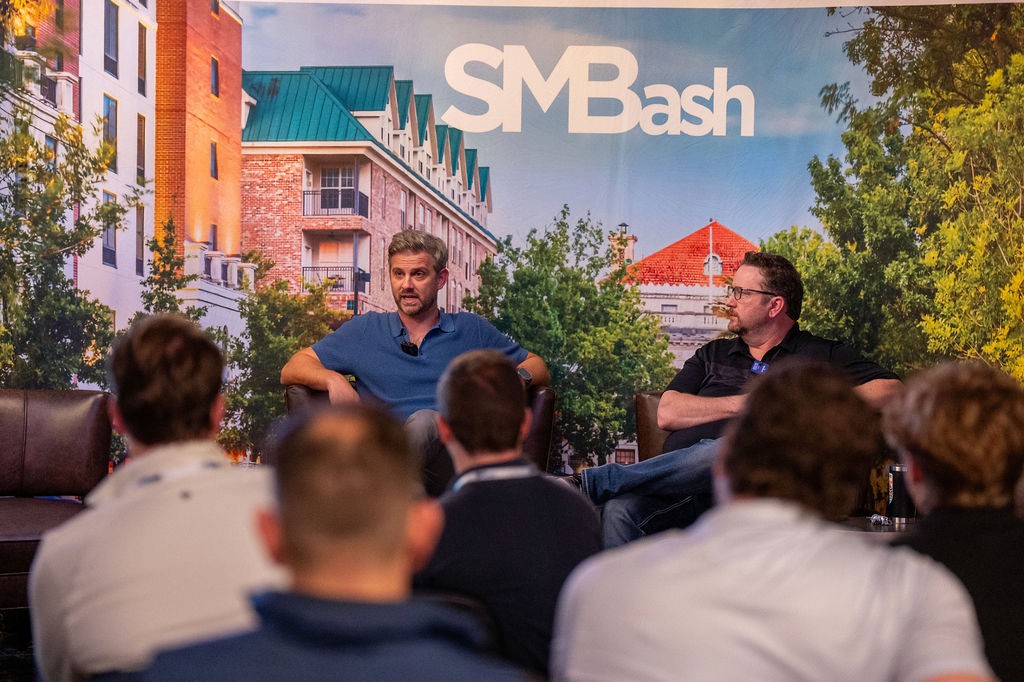
All right everyone, we're getting kicked off with our first panel on the operator track today: Overseas Talent in SMBs. I'm incredibly excited about this one because I'm a big proponent of this within my own business. Quite candidly, if you are not leveraging this within your business, you must hate making money. There are some hurdles to get over, but after you do, there are incredible people across the globe who can tap into your business and make it a machine, both in cost and in experience.
I'll let our panelists introduce themselves.
My name is Cole Ruud Johnson. Originally from Seattle, living in San Diego with my wife. My background is actually in real estate. I started flipping houses at 18, dropped out of school, and very quickly needed global talent for lead generation. I started my first call center when I was 19. We have about 300 agents around the world now, and across all my companies, 90% of our staff is global. Super excited to be here.
My name is Bryant Suellentrop. My background is a typical services business. I did janitorial, had about 25 employees cleaning toilets. I started that business myself, doing all the work. About three years ago we found out our son was on the way, and a friend had a come-to-Jesus moment with me and said, "You need to hire somebody in the Philippines." I said, "What is that? I don't even know where that is." I did it, and it was such a game changer for my business that I started helping some friends do the same. We've hired just over 800 people for different companies over the last three years.
I'm Parker Cox, and like them, started out with my own business and stumbled into this. I had a need in my property management company. About two years ago we were getting ripped off by digital marketing agencies, paying a six or seven thousand dollar override per month. My business partner and I knew a bit about global talent, had tried call centers, and we said, what if we go find this person directly? Instead of paying six or seven thousand dollars a month, we could bring someone on for one to two thousand dollars a month and get 40 hours a week instead of four hours of agency attention. I went on a long search, did it myself, didn't know about recruiting companies then. Pretty quickly, the person I found was incredible. He's actually a partner in my company now. Within a few months we were up to five or six people. That was about 18 months ago. Between all my businesses we're up to 17, going on 18. People started asking where I was finding these people. We source out of Pakistan currently, and I think it's an undiscovered gem globally. When four or five people ask you where you're finding this person, all of a sudden there's a business. That opportunity, and where the market is moving, is really driving me to make this my full-time focus, because I think everyone in this room and outside of it will appreciate the value, and everyone will be on a global team in the next 5 to 10 years.
**What are the key benefits of hiring overseas talent for small businesses?**
The number one thing everyone thinks about is cost. You're paying less. But in my experience, most of the core team members I hired overseas when I was 18, 19 are still with me. You get a lot of loyalty I just have not found in the States. I go visit these countries, and you see they stay with you forever and go above and beyond. To me, it's not even the price, it's the loyalty if you treat them right. Then yes, the price arbitrage by paying two grand a month for a position that could cost you six or seven in the States. Third, once you have it set up the right way, it's actually easier to hire overseas than in the States. There are a lot of really talented people who really want a job and just don't have the opportunity. When we put out a hiring post for one of our call centers, we get way more qualified applicants than we do stateside. Anytime I need to hire anything, the first thing I think is, can this be overseas? For most people it's their last option, when it should be the first.
It almost seems like the government doesn't want us to hire local people because of how much work is involved with hiring people locally. Workers' compensation, benefits, all kinds of things. You can do fun things like offer health insurance to your offshore people too. It's a different world than it was 10 years ago. With software and Zoom, I can send a quick Slack message to my team and they'd be on Zoom with us in two seconds. Use that framing: can this be done offshore? Then, should it be? Try it. It's going to be a lot cheaper to give it a shot first.
A couple of additions. If anyone has hired someone in the US for under $50,000 a year in the last five years, the quality is rough. I'm not going to overgeneralize, but you'll get the person where it's 8:59 in the morning and it's, "Don't text me right now," and 5:01 it's, "Sorry that project wasn't done, I have to go home." The commitment and quality level you get overseas is much higher because they value the opportunity. The second one: as a business owner we have a need-to-have list and a nice-to-have list. When you go offshore, because of the cost, commitment, and quality, you can start to tackle the nice-to-have list much faster, which allows for iteration and scale. You become not just a bare-minimum-meeting-needs company; you exceed expectations.
One byproduct, definitely a pro, is you'll be forced to become a better manager because you're managing someone thousands of miles away. And for those buying or looking to buy a company, global talent is lower risk because you don't have to deal with a lot of the red tape to hire and fire if it doesn't go well. You also become a better manager because you have to put systems in place.
**What are typical roles overseas talent can fill in any small business?**
We've found three roles to be extremely effective, and this is not all-encompassing. Sales, both outbound cold calling and inbound conversion. Digital marketing, especially because it's better for time asynchrony. And general operations roles, from customer service to accounting to feedback and support. Higher-level roles like CFO can be more challenging. It requires a lot of skill and knowledge. Having someone you can put right in front of you is more helpful. I prefer middle management or below. Pretty much, if they don't need to shake someone's hand or move something around your office, you can find a way to systematize that offshore.
I had my team throw me a few of the more unusual roles we've placed recently: people with AutoCAD and SolidWorks experience, a variety of engineers, full-stack developers, medical coders, analytics engineers, medical transcription, solar engineers. If you're a solar company going door to door, your offshore team can put together the plan overnight, so the customer who you spoke with at 3 PM about getting solar has a quote at 8 AM. A lot of supply chain stuff, especially in the Philippines. Because the Philippines is so close to China, if you're doing supply chain, you're basically working on the same time zone.
Look at the business you're running. The higher you go on the skill ladder for hiring overseas, the more skill you need as a manager. People do really well starting with an admin hire who can be an assistant, do quotes, work in your CRM. Then you move up to marketing, sales, outbound, bookkeeping. People who are successful overseas tend not to sprint to the top. They start with a role they need right now and build skills as they go up the ladder. I would not go hire a CFO or a high-level salesperson overseas if you've never managed a salesperson stateside.
**On cold calling specifically:**
We've placed probably 25 cold callers, either entirely outbound or a mixture. We have about a 75% success rate. The people who have run sales teams or have an existing sales team they need to supplement increase their chances of success. When you have no sales experience, the candidate is only one piece of the puzzle. You need a candidate, a sales process, and a way to generate leads. Without all three, it won't be effective.
A lot of people don't know that in Pakistan, for example, about 60% of the population speaks English as a first or second language. Belize, where my main call center is, is an English-first country. Bangladesh has a massive influence of English charter schools, and they almost have no accent. There's a lot of misconception around overseas talent and accents. It also doesn't matter quite as much as people think on cold calling. I had great success the past year hiring 10 salespeople. You can pay 4% commission and give them the same quality of life as someone making 10% commission in the US, with limited accent.
The thing I do see go wrong is people hire an offshore cold caller but don't have a system for follow-up. You need a system where the email conversation starts immediately after a positive response on a cold call. If you don't email until two days later, it's not going to work.
On accents: getting near-perfect English is about 2 to 5% of the time. But there's a massive pool of what I'd consider quality, where it's like they moved here at 10. Yes, there's a hint of an accent, but they sound like an immigrant, not someone 10,000 miles away. Every single person who has ever hired us to find them a cold caller says, "I don't know about my clients in this part of the world." Your clients aren't as racist as you think they are. Does this person have the personality, acumen, skillset, and ability to persuade? Those things are far more important.
**Question: automation versus offshore?**
Most people don't want to deal with automation. It does a ton of cool stuff, but it has to be really, really good. When you're talking about the end of your sales process and how you send an email dictating whether or not you get the sale, it needs to be the best. If that's AI, fine. If it's a human, also great. And for crying out loud, if you're not, you need to be using a CRM, HubSpot, Salesforce. You're going to live off those templates.
A lot of people use automation and AI as a way to procrastinate. In a sales process, 90% is relationship building. You can craft messages with AI, there's a lot of cool stuff with automation, but to me that's leverage to speed up the relationship rather than doing the actual work of building it.
Automation is supplementing humans running a system. It's like sitting in your car with automated cruise control. Somebody is still driving. When you use offshore in that role, you get a lower risk profile. Hiring someone onshore for $8,000 a month versus offshore for $2,000 gives you a lot more time on a cash burn basis to tweak systems, implement automation, and figure out what works.
**How do you help your existing team integrate with overseas hires, and vice versa?**
If you treat them differently, the rest of your team will treat them differently. Whether we onboard an SDR in Ireland or an executive in the States, we don't treat them any differently. They can't come to the team offsite as easily, but besides that, if you don't make it a thing, your team won't either. Build a culture where, no matter where someone is in the world, you have a standard of excellence. The language issue isn't as big as anyone thinks. The time zone issue isn't as big as anyone thinks.
If your offshore hire is making your onshore employees' lives easier, you'll rarely get pushback. If they aren't, there will be problems, but that's not an issue with your offshore hire. It's an issue with your onshore hire.
It depends on the business. I already have a business with multiple locations, so my team feels remote. If you're used to Zoom meetings connecting people in different locations, it's much easier to integrate. The challenge is when 11 people are in the office and the 12th is remote. The key part is this person has to be part of your team. This isn't some call center on the other side of the world; this is a person on your team.
In my businesses, I've seen a default inferiority complex with offshore people that you have to help them work through. "Hey, this person didn't give you what you need, it affected your job. You need to address that with them." They have a sense of, "Well, that's an American, I need to be a little more careful." You have to empower them. And in the opposite case, where an American team member views themselves as superior, you have to address that too.
Make sure you have an open line of communication so anytime there's an issue they feel comfortable approaching you. Otherwise, you get quiet people, ghosting, those kinds of interactions. Once you start building that team, ours of eight in the Philippines have a culture and community within their own group, a Slack channel where they share pictures of the weekend. Treat them like everybody else. It is harder to get your overseas team, especially in cultures like the Philippines, to be more direct with you when they have issues. Early on I was thinking, "How is this guy in five tragic bike accidents in one week?" He just didn't want to ask for time off because his family was sick. There's a learning curve, but once that's done, it's awesome.
**Main challenges of managing an overseas team and how to overcome them?**
If you're a chronic micromanager, managing someone 10,000 miles away is not going to work. Understand how to manage based on outputs and clear, trackable KPIs rather than worrying about where every five minutes of their day is going. For my overseas talent, we have outputs like, "You produce this many leads per day for a client." If they get there in four hours and they're legit leads and the rest of the time they're in and out, it is not worth, especially at scale, screen tracking them all day. That's where people really screw up, not just with overseas, but stateside too.
If you haven't built scale in management, understanding the whole funnel, you might want to dive into that before you go hire overseas. Someone who's hired an admin in person but never written an SOP needs to learn about SOPs to actually manage that person. The weaknesses you have as a manager will get exacerbated overseas, but the better you become, the easier and easier it gets. Focus on outputs.
Two challenges that pop up. First, SOPs. If I had to pick only one SOP to have prepared for any role, an end-of-day report is the most essential for offshore. Something where they're producing for you, whether it's number of calls made or widgets built. Second, I run into a lot of people who say, "I want to go offshore, but I need to plan out all my SOPs." Be careful not to let the tail wag the dog. When the role is there, one of my favorite things is to have them build the SOP as you're doing the work together. Lay the SOP track with the train pretty close behind so you can pivot and adjust without having already built the intercontinental railway.
Think of them like a human, not a robot. So many of us try to make them a robot working 18 hours a day. The reality is most people we employ produce three or four productive work hours a day, and the rest is filling white space. As long as they're producing the main output, that's a good situation.
**Question on hardware:**
We do everything in the cloud as much as we can. Personally, our expectation is that when you come to work with us as a contractor, you have everything you need already. I would not risk any of my information on someone's laptop. It all needs to be on Google Drive and similar.
We ship a lot of in-person ops around the world, and it's difficult. We're sending 100 setups to Belize, spending 20, 30, 40 grand, and they're held up because someone in the government wants us to pay them two grand to release it. If someone has been with us 2, 3, 4 months, a lot of them already have laptops. If theirs is slow, we'll buy them a computer in-country, $500 or whatever, but we think of it as a gift. That's not a company laptop, that's theirs as a gift for their loyalty. I wouldn't ever buy something for someone overseas and expect it to come back. We buy mics, headsets, those types of things as gifts. They're an asset to the company in that you get better quality work.
**Question on encouraging overseas talent to take care of themselves outside of work:**
It's important to me. We offer sick days and paid PTO so the expectation is if you're sick, take your day. We don't make any part of our company reliant on one single person. First and foremost, you can't change people. If it really becomes detrimental, you may have to move in a different direction.
The culture is so different. The guy who runs our call center in the Philippines, I've worked with him since 2018, has probably taken four days off. There's so much fear and so much poverty that they would rather provide for their family than take time off. That ties back to the tragic bike accidents five days a week, that's how they ask for time off. We tell them it doesn't need to be a tragic accident to take time for yourself, but there's only so much you can do because they have a different experience. Where we lose our job and have a safety net, in places like South Africa where we hire a lot of people, it's a 40% unemployment rate. If they lose their job, even if they're qualified, it might be two years before they can provide for their family.
It's nothing different from what you'd do with a US employee. One of our first hires is getting married in two or three weeks and wants to be in better shape. We created a fitness competition where you track your steps and post results. If anyone hits 5,000 steps a day, they get a $20 incentive. It's nothing for us, but they care about it.
Since we do everything in the Philippines, a lot of people are working nights. Hire people who have a proven work experience doing that. You can't rely on someone saying they can easily shift to night work if they've never done it.
**Are certain skills better in certain places?**
For admin-related stuff, I love the Philippines. For cold calling and outbound lead generation over the phone, my top places are Belize, Egypt, and South Africa. We experiment with Pakistan a lot. For software and programming, Pakistan is the best place I've found in terms of quality, price, English, and safety. I tried Eastern Europe; it's a little more expensive.
When you're starting out, focus on one area. You get to know the culture and people. For example, in the Philippines you can find a bookkeeper, an admin, someone to follow up in your platform, someone to do quotes, all in one place. When I started, I put them all in a small five-person office and they built their own little culture. It worked really well.
There are talented people all over the world. Everything we do is in the Philippines, and I like the variety of talent. But if you said, "I need five people to answer phones for my landscaping business and they need to speak Spanish and English," I would tell you to find somebody in Latin America. I would generally avoid hiring from four different countries at the same time to start.
It's a Venn diagram of cost, skillset, time zone, and culture. There are really five regions globally: Southeast Asia, the Middle East, Eastern Europe, Africa, and Latin America. Those are the places where you have enough cost arbitrage. Latin America does a lot in marketing and finance, and there's some good web development. Eastern Europe is also very good in web and marketing. Southeast Asia is mostly ops and admin. Focus less on whether it's $300 a month more in this place, and more on whether you have a recruitment team you trust.
**Question on recruiting costs and headhunting services:**
I've seen 25 to 30 companies start in the last six months and close. The vast majority of our business is built on relationships and going deeper with existing customers. Generally, no matter where you go, you're going to be paying about 20 to 30% of the cost of the US equivalent. Find people you trust to put on your team.
I'm going to sound like a bit of a contrarian. I don't run a staffing agency. We build lead generation call centers for people who don't fit our client criteria. I don't even know the market on staffing. It takes a couple of reps to get good at it. Your first hire isn't going to be amazing. It takes three, four, five shots. A lot of staffing agencies charge an arm and a leg. I don't want you to go to a staffing agency, pay five grand for something that should be one or two, have a bad experience, and never try again. As you're getting started, fail, get out, fail five times, do it yourself, get used to it. Then once you're saying, "I want to take this to scale and build a specific team," go to amazing recruiting agencies. Otherwise I just don't want anyone here to get turned off, because it's such an amazing thing.
From a high level, the market is going to get more compact. I had my assistant run a competitor analysis and we found 78, 79 agencies. One of my friends said, "That's so much competition." I said, forget the echo chamber of Twitter. This is early. If you look up digital marketing agencies, there are about 15,000 in the US. Property management companies, about 150,000. Very early. You're sitting here on the vanguard, the spear tip compared to most of your friends who don't see Twitter or interact in this space. The question is what happens when your uncle who owns a body shop in Houston, who has never thought about offshore, starts thinking about it.
Three options: headhunting, staffing, or you find them yourself through We Work Remotely, OnlineJobs.ph. It's a cost-benefit analysis. If you want to do it yourself, that's how I did my first, before starting an agency. Almost 60 interviews, 1,000 applications. It took a long time, but I highly recommend it. What we offer is expertise. Take digital marketing: if you're not a digital marketing expert, a resume will look great, but as soon as they open Google Analytics, you have no idea if they know what they're doing.
One thing an agency provides that other places probably can't is checking references. Actually calling and figuring out if these people are who they say they are. Every country is different, but we do a version of background check. That's a nice thing to have, and it's not fun to do yourself if you don't have relationships there. I would not say you must use a recruiting agency. It's whether you want to or not, like running your own Google ads.
One of the biggest competitive advantages over the next 5 to 10 years is using overseas talent, because 99% of the world isn't on Twitter, hasn't made a hire overseas, doesn't understand what it means. If you figure this out, you have a big leg up.
If you're going to a staffing agency, an important piece of the puzzle is not just the person, but how to be successful with that person. When we provide cold callers for lead generation, we set up the funnel with them: scripting, how to disqualify, quality assurance, the data process. If you're going to a company saying, "I want to hire a bookkeeper," make sure they have some training around how best to do that. I think that's where the market goes as it gets more saturated: specialized agencies that help with both the talent and the pieces of the puzzle around it.
The agencies that give me red flags are ones that say, "We pre-train these people on your business." They cannot pre-train them on your business. They don't know your business.
**Closing thought:**
If you're not currently leveraging overseas talent in your business, in my opinion that's a critical mistake. I challenge each of you to make your first hire within the next month. For most people, it's naturally going to be admin. A tip: do a time audit of everyone on your team. You'll have a summary of every task being done. Read out the thinking too. Figure out the lowest-level tasks taking up your time. Write the job description. Use a staffing agency or do it yourself. You absolutely need to start leveraging overseas talent in your business, or your competitors will. Do or die. Please give a big round of applause.