PLAYLIST PRESENTED BY

Why KPIs Saved My Search When the P&L Would Have Lied
Description
Kaustubh Deo, who acquired Blooma Tree Experts through entrepreneurship through acquisition, walks through the leading and trailing KPIs he uses to run a seasonal home services business. He covers backlog management, SBA leverage tradeoffs, average job size, SEO, and how a manual spreadsheet beats waiting for the perfect software, plus lessons from his first bolt-on acquisition.
Recent Videos

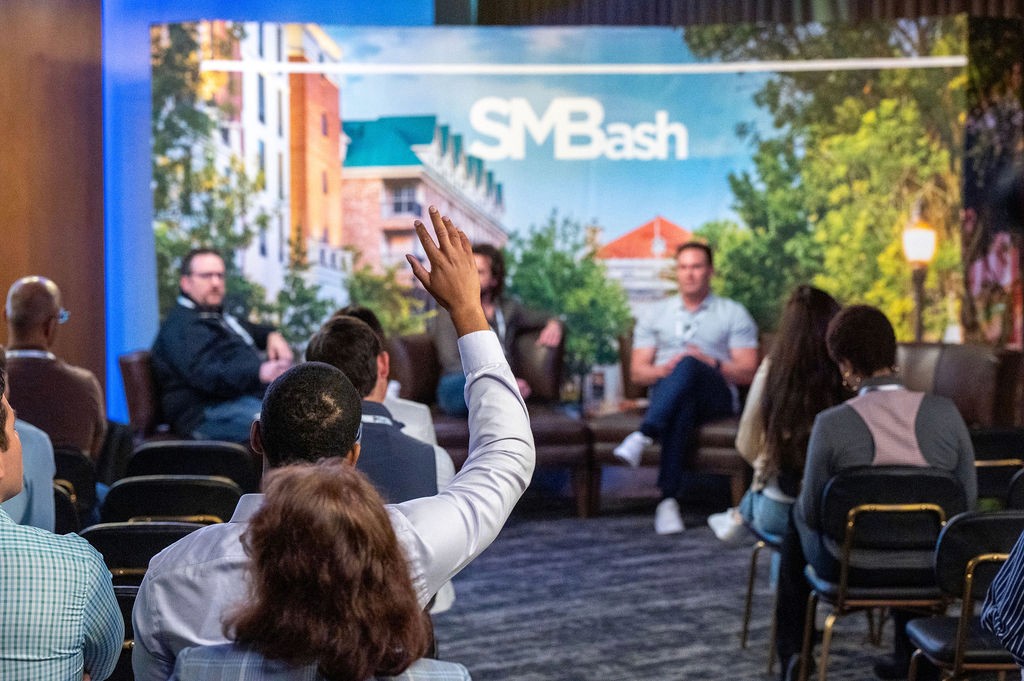



Transcript
My name is Kaustubh, pronounced COS-toob. You can ask me again if you say it really wrong. I won't tell you if it's the worst I've heard, so feel free to ask. I run Bluemont Tree Experts, a tree care contractor in Seattle. I'm going to dig into what is generally a boring topic, KPIs and performance tracking, but hopefully we can make it more interesting as we go.
Let me torture a metaphor for a moment. We've all known how to drive for 10 to 30 years. When you were learning to drive, you needed the speedometer to gauge how fast you were going. Today we don't really look at the speedometer as we drive, because we've built that gut sense. When we buy businesses from retiring owners, that's where they're at. They don't need the speedometer. They've built the gut sense of how their business is doing. We're buying their business with no experience in the industry. In my case, no experience operating. I need the speedometer. Having a speedometer doesn't make you a good driver, but you need it to know how things are going.
So what makes a good KPI? A useful KPI helps you understand how things are going before they actually go bad, so you have time to make adjustments. There are a lot of vanity KPIs that get likes on Twitter. That's not what we're doing. I don't really track revenue. Revenue is an output. KPIs clarify your priorities. Whatever you measure is what gets managed. By choosing what you're measuring, you're deciding for you and your team what's actually important.
Despite all this, delivering strong KPI results is not the goal. People sometimes get wrapped around year-over-year on a specific KPI. KPIs are for you to manage your business better. As you evolve, you keep recalibrating. Don't get stuck on what made sense in year one and two for the next seven years of your hold period. Evolve your KPIs to figure out what's actually helping you. This is a tool for you.
Let's talk about leading versus trailing KPIs. On a normal P&L, the bottom is the most trailing. By the time your bank account changes, it's way too late to do anything about it. Tons of business owners check their bank account every single day, but the change in cash was determined 90 days ago. As we move up the P&L, revenue is the most leading indicator on the P&L, and that's where a lot of people focus. But I want you to start to move above revenue.
Let's say you own a widget maker, which is what every private equity guy thinks of businesses. Revenue equals number of widgets times price per widget. Now you have two leading KPIs. Take number of widgets and make that trailing. That's number of orders times widgets per order. Now you can tell your salespeople, we're doing great on number of orders, but I need you to sell more widgets per order. Take number of orders as trailing. Now you're talking about website traffic times conversion rate. Am I going to push more people to my website or optimize to improve conversion? Take website traffic as trailing. That's organic search plus paid search. Am I going to manage my paid search CAC or my off-page SEO?
You pick how far up the scale you go. You can keep going forever, and at some point you can't actually manage it. You want to keep going up to something you actually manage that people in your business are accountable for.
Take a minute. If you weren't allowed to look at your financials for the next three years, what would you track? How would you know if things are going okay? You can't track EBITDA, gross margin, revenue, cash, the number of boats in your driveway, or Twitter followers.
[Audience answers: bid volume for a defense business; membership attrition rate for fitness centers; consults and consult fees for a law firm; samples deployed and return on samples for a textile business.]
These are all great. Most of you can figure out for your own businesses what this should look like. This is really understanding the key drivers of your business. But how do you actually track them? A lot of searchers and new operators run into this. You want the right SaaS product, the right data flow, the numbers to automate every week into your KPI tracking. I'm going to try to convince you not to wait for that, just to start.
I've gotten a little better in two years. I do have some software now, but a lot of this is still what I do. The leading indicators I care about: number of bids per week (a leading indicator of sales), number of booked jobs per week (a leading indicator of backlog that lets me manage capacity), and our actual backlog in weeks (which measures breathing room and lets me make staffing choices and manage seasonality).
[Q: How do you know where it needs to be?]
You start tracking it. Eventually month two you have month-over-month, month 13 you have year-over-year. It compounds. But in the first 9 to 12 months of owning your search-backed business, you have no idea if it's good.
Let's start with number of bids. This is bids we gave per month in 2022. I bought the business in February. I went back and counted January. Number of bids is going up month after month. By July, that's the highest number of bids we've ever given. I'm killing it. Then August. Turns out people take school breaks in August, and we're residential tree care. Nobody wants a bid in August. The first time that happens to you as a searcher, it is terrifying. You think, am I going to default to Live Oak tomorrow?
The issue is, if you're not even tracking that, you won't know something might be wrong. It turns out we have seasonality and that's okay. But you won't notice it on your cash account until three months later, when the lack of bids turns into a lack of sales, then a lack of completed work. September and October is our other busy season. We have one busier season in late spring through early summer, and a second going into winter to prepare for storm season. Then around the holidays it slows down.
Year one was establishing a baseline. The next year, 2023, we're still going up, beating last year. But now I know August is going to be bad and I can market against it to offset the seasonality. I up my marketing spend, focus on emails to customers in August. In August 2023, we saw a meaningful difference. To be clear, I spend money to get that. It's not automatic. You then go manage your business, but you don't know to manage it in August unless you have the KPIs.
KPIs are not the goal. Creating pretty charts is not the goal. This helps you know what to do at what time of year. In 2024, this gives me solace. January is going to be weak. That's okay. We do maintenance on our trucks. It changes my approach instead of being upset that we're not hitting 200 bids in January.
[Q: Did it spawn more KPIs, like CAC by channel?]
Eventually yes. I'm honestly bad at that part still. That's the next evolution.
How do I measure number of bids? This is what our bid calendar looks like for one week, three colors for three estimators. I made a really cool Google Calendar Zapier function. No, I counted by hand: 1, 2, 3, 4... 39. I'm not joking. I have software that tracks this now, but for me this brings peace to the business. I know how many bids we gave this past week. Then 39 goes into a spreadsheet. The rest calculates: last two weeks, year to date, year over year. The data entry is by hand and doesn't take long. That's 117 weeks of owning the business, every week put in by hand. Takes 10 minutes a week. The takeaway: don't over-complicate this. Start getting data on your business as soon as you can, because you need it to have month-over-month and year-over-year.
[Q: Could you have someone in the business count and put the number in?]
That'll be the next step in my business. I haven't done it because I get a lot out of doing it myself and feeling the flows. When I worked in private equity, there are good export tools to take public financials into Excel. My most boomer take: I would always put them in manually, cell by cell. When I did that I would notice things I wouldn't otherwise. Smarter people than me don't need to do that.
[Q: Do you also track bids that closed?]
Great segue. The other one is booking emails sent. When I bought the business we didn't have invoicing software. Whenever someone approved a bid, we sent an email saying their job was confirmed, with a template subject line. So booking emails sent is roughly booked jobs for the week. You have to do some fixing because sometimes a job is revised. I had no CRM software to track this, so I went into our sent folder, filtered by subject line, counted emails. That's it. Now I have it all in reporting, but I still find this helpful. It also tells me when our sales guys are feeling low. They feel a good or bad week viscerally. I'm tracking last two weeks and year to date because that's what I care about. They feel every week.
[Q: Why last two weeks?]
It's a smoothing function. Week-to-week is too random. I need to smooth the data to see trends.
Now backlog, which was Patrick's question. Our business operates such that when you book a job, it goes on our schedule, and depending on time of year we have varying weeks of backlog. Unlike HVAC or plumbing, which is more dispatch, our model is to build out a backlog and do project work over time. The goal is to keep refilling. If you're not paying attention, you can end up a week out with nowhere to send your guys. I could still end up a week out, but I'll know it's coming. That's the difference. They're often caught off guard. Knowing it doesn't solve the problem, but you get three weeks of heads up.
How do I tell if we have enough jobs booked at the end of October to get through the slow winter? You need data, and after the first year you have an idea. The former owners would lay off a team in January and February. We have two crews. They'd lay off one crew. Every year you'd have guys who are upset and won't come back in spring. You've invested in their training and lost it. I didn't want to do that. Some businesses are so seasonal you have to. Seattle is moderate enough that we don't have to do a seasonal layoff, but that means running the business differently than the former owners.
Backlog in weeks: how much capacity do we have. Two crews at 40 hours a week is 80 hours of capacity. I look 12 weeks out because that's the furthest we go. Then how much of that capacity is booked, measured in hours. Booked hours divided by average weekly capacity is backlog in weeks. I use average because over holidays it's not 80 hours, it's more like 76 to 78.
How do I figure out booked hours? Our jobs calendar. Red spots are open slots. Two crews, two sides per day. I count up open hours: three and a quarter Thursday, four and a half Friday. The bottom purple box is left open for rush jobs. So I have seven and three quarters open. I plug into a 12-week table the booked versus open hours each week. The spreadsheet does the math. April 1st: 936 hours of upcoming capacity, 560 open, 376 booked, translates to 4.8 weeks of backlog.
One thing I'll flag, going back to not needing to be perfect: sometimes the week prior is the same as the week before that, because I missed that week and copied. Some weeks I just don't have time. Don't stop doing this because you missed a week.
This is why this is helpful. March 2022, tail end of slow season. Former owners would lay off a crew. I bought with 11 weeks of backlog and thought, this is amazing. Year one goes great. Going into year two, I'm not going to lay people off. I knew I had to build more backlog, but didn't have a visceral sense of how much. So in March-April I'm at a little under four weeks of backlog. You are slamming on the brakes. You have no idea when it's going to turn. Should I do direct mail? Raise Google Ads? I don't know what's normal.
The confusion: when you look at financials before I bought it, March is when revenue goes way up because they bring the second crew back to work through the backlog. So in my head seasonality turned in March. When April-May kept going down, I freaked out. It turns out the seasonality in inquiries doesn't turn around until April-May, after tax day. We're at the end of our slow season right now. I missed that from last year's data. I spent a buck-ton on marketing. Primarily I was thinking, do I have jobs for my guys? If you'd managed off the P&L, you would've mismanaged the business. We would've driven to zero backlog.
[Q: Do customers leave if you can't trim for 12 weeks?]
When you hit 10 to 11 weeks, people say it's not worth it. We've never crossed that. If we get to September two weeks ahead of last September on backlog, that tells me we need to increase capacity, because I don't want to end October at more than 11 weeks. We do leave slots open for rush fees.
[Q: How do you decide when to add a crew given fixed costs?]
A seasonal business is fundamentally weaker. The cost of capital for incremental growth is higher. I don't have an internal benchmark like, if we're at five weeks of backlog in May, build a crew. It's more gut feeling. This is my speedometer. I'm trying to gauge whether I can go five over or ten over.
[Q: How often do customers come back?]
Wide range. Large evergreens, every five to ten years. Fruit trees or hedges, every year. I don't have predictability. One goal eventually is to organize our customer list by type of work and cadence so we can tell them when it's time. Not there yet. Maybe SMBash 2026.
[Q: Knowing what you know now, would you have picked a different cap stack?]
Good question. You have a choice as a business owner. Your revenue and cash flow can be seasonal, or your backlog can be seasonal. We let October backlog go way up so revenue from January through March is steadier. The former owners let revenue be seasonal and kept backlog steadier. If revenue is seasonal, it's hard to leverage with an SBA loan. You buy a business based on that P&L and can get clipped on it.
In January-February 2023, our backlog was okay but going down. We beat year-over-year revenue by 50% because the former owners used to lay off crews, so my January revenue with two crews looked great. I made a choice to make revenue flatter but not backlog. That allows you to support more leverage. You can make cash flow less seasonal if you ride the backlog rollercoaster. If you don't know what rollercoaster you're on, there's no way to do that.
[Q: How did the qualitative impact of not laying off people play out?]
We're doing more or less the same revenue with seven guys as we used to do with 10. You get major productivity gains because the same guys work together longer and get better. If we leave the pie the same size with fewer guys, each piece is bigger. Option B is to press the gas and grow the pie. Better, but harder in a seasonal business.
[Q: How did you identify backlog as something to track?]
The former owners would constantly ask our scheduler what week she was booking. They had a gut sense of whether that was good enough. I was listening, thinking, I have no way to tell. I needed numbers to ground myself. To be clear, a lot of small tree care businesses that get to zero backlog don't have enterprise value to sell to someone like me. The reason this business had enterprise value is they were savvy enough to track backlog in their head. They've done it long enough. I showed up as a 16-year-old. They managed it in a way that wasn't legible to me at the start.
On conversion rate. April-May 2022 we gave 268 bids, closed 148 jobs, backlog went down 0.7 weeks. Next year, year-over-year: bids up 35%, closed jobs up 26% (so some conversion drop), but backlog still went down 0.7 weeks, which is a bigger deal because we started at 4.2 weeks. What's the missing link? Average job size had dropped dramatically. That runs into qualitative management. Was it macro, with clients tightening budgets? I saw some heavy repeat clients say, let's skip these two trees this year. But also, we now had employees as salespeople instead of the former owners, who were beasts at upselling. This data tells me what the problem is, not how to fix it, but it starts the conversation.
I went through a process of coaching our guys, building their confidence. They might have called us about one Japanese maple, but there are three other trees we should look at. Just give them the option. The former owner was very good at this. They almost didn't listen to what the client asked for. They'd show up, the client says they're worried about this tree, and the owner would walk around writing up every single thing. They'd present them all, with the requested work as the base and a ton of options. Clients would accept because they were just options.
In diligence I went on sales visits with both sellers, shadowed them for a full day each. I was worried they were magician salespeople I'd have to replace. They're good salespeople, but not high charisma. They're arborists at their core. What I didn't understand is they were upselling the heck out of every job in a way that wasn't visible to me.
Our solution was spending time with the sales team on upselling. This is challenging because in our industry, salespeople aren't salespeople, they're arborists. None of our arborists are on commission. There's an ethics dynamic: arborists on commission push to remove trees that don't need removal. To them, upsell feels slimy. We coach them: the client doesn't know what's needed. You're providing information. While we're here, it's cheaper if we also handle your 120-foot Doug fir. They wouldn't know to ask.
Three months ago we tested expanding to Sammamish. One arborist complained about driving up for one ten-foot tree below our minimum. I said, it's a big property, just go. He walked the property and what should have been a job below our $500 minimum became a $5,700 job accepted on the spot. He only put work on the bid that he felt was good tree work. The client didn't know to ask. Having those examples reinforces with our arborists that this isn't slimy sales, it's being a good arborist.
A few punchlines. Identify leading KPIs. You'll track trailing KPIs by default, but figure out the leading KPIs that give you time to adjust before it's too late. Don't over-complicate it. Start tracking, build data. I now track average job size, but only have eight months of data because I started late. You can adjust as you learn what matters.
The hard thing for a lot of people in search: if you come from a Type A high-achiever perfectionist background, that doesn't work in small business. None of this is going to be exactly dialed in the way theory says. The stuff I send to my investors, which Sam says is pretty good, if I'd sent that to my PE partners it would've been a what-are-you-doing conversation. The expectations are different, but it's calibrated correctly. This is the information I need to run my business. Incremental dialing isn't helpful because I need the rest of my time to actually run the business. This is meant to serve you, not your investors or employees. You levered the business up and don't know how to run it. You need this.
[Q: How do you look at bolt-on acquisitions now?]
For add-ons in my space, they're never going to have these metrics. I have proxies: what percentage is pruning versus removal (indicative of repeat revenue). Is the owner climbing trees, doing sales, or both? The business I bought, both owners were climbing trees four days a week and doing sales the fifth. Highest owner-dependence business you can think of. Now I look at a P&L based on what the owner is doing and what my replacement costs are. Then conversations: how far out are you booked, what's the lowest you ever get, are you ever a week out? Companies in suburbs of Seattle are willing to go down to a week because they don't have the same permitting restrictions. In Seattle, if we're shorter than three weeks we might not be able to do the work because we don't have permits.
[Q: How's the business doing overall?]
Fine-ish. I just closed an add-on two weeks ago, the first one, on April 5th. In advance I took two weeks off in March, partially as a stress test, partially because I was burned out. I retained payroll for two weeks and kept the acquisition ball rolling. Got six texts and two calls in two weeks. The business is in better shape than it used to be, but I burned a buck-ton of EBITDA to get there. Unclear if I now have the ability to grow EBITDA, but operationally it's clearly better than two years ago. That's what I tell myself.
[Q: Tuck-ins versus other ways to add capacity?]
Function of your risk profile. There are good search operators who run this on the edge because they have more faith in driving organic growth. I feel less confident building organic growth, so I'm more conservative on backlog. If you have a systematic way to drive leads with known LTV to CAC, you can be aggressive, burn backlog to five or six weeks with another crew, and put the profit back into marketing. That flywheel works. I don't feel I have that dialed yet.
[Q: Industry peer group?]
Not formalized, but four or five searchers have bought tree care businesses around the country. There's one traditional searcher with a bigger business in Chicago. That guy Kevin is on my advisory board, invaluable. He's running a business eight times my size. I asked him for his safety handbook, he sent it.
A weird benefit of being in a local home service business: if you go 50 miles away we're not competing. When we added plant healthcare, I became friends with an arborist in Boise, Idaho who does a lot of plant healthcare. He sent me the invoice and specs for his spray rig. He's an arborist, he loves that we're adding it. It's a welcoming community. I underestimated how nice that would be.
One way I built that: I ran for the board of the Pacific Northwest chapter of arborists. I'm the only non-certified arborist on the board, but I'm the treasurer. They're 50% excited I'm there and 50% confused why I chose this industry. I've found really good tree care contacts. Finding that in your industry is a game-changer to learn rules of thumb: revenue per man-hour, revenue per day, crew size, should I have a pickup with every crew, do I need an F-750 or a 5500. You learn the terminology.
[Q: Was your KPI pursuit anxiety-driven or training-driven?]
Anxiety-driven, but the way I knew to assuage anxiety was based on training. I knew KPIs help. I was anxious I didn't know how to run this business. There are other things I could've been doing. John Wood in his book talks about scheduling CEO time, two hours a week. An advisory board member told me to do that two years ago and I hand-waved it off. He was right.
[Q: Day-to-day, two years in?]
Ignoring integration: I send final invoices, do payroll, do bookkeeping (which I should outsource), and do hiring. Plus big customer escalations. When I started, I also did permitting, daily staffing, supply ordering, and mechanic coordination. I've delegated all of that.
In the last eight months I've focused way more on SEO and PPC management. The first year and a half I treated SEO as a black box. It turns out the leading KPI for my business is really good SEO and good local map pack rankings. I outsourced to Scorpion. The problem: if you don't understand what you've outsourced, you can't hold them accountable. Any question I'd ask had a reasonable answer. I needed to delegate other things to free up time to read white papers about SEO. I cut SEO from Scorpion, am doing it mostly myself with one freelance agency, and it's working better. You can't do that early on because you're firefighting. These things have to happen in order.
[Q: 2024 plans?]
If integration goes well, the highest return on my time is more acquisitions. Not my original thesis. Organic growth is hard to produce systematically. I don't have a strong understanding of digital marketing. I talked to eight agencies and got eight different answers. I do know how to buy a business. When I buy one, I get $800K in revenue. It would take a long time to generate that organically. You pay a multiple, but you actually move the ball forward.
[Q: The transaction you just did?]
We bought a local competitor two weeks ago. Highly regarded company, the owner is a legend in Seattle area tree care, 24 years. Two reasons: high-quality crew, good client list that looks like ours. In Northeast Seattle, our primary region, us and them ranked one and two on Google Maps. They were priced below us, so at minimum we eliminate below-bids against us. No meaningful antitrust concerns in Seattle for us.
The other element: with our leverage, debt service had gotten tight. When I closed, my rate was 5.25%. Two weeks ago it was 10.5%. That was painful while J-curving the business to operational stability. One benefit of doing the acquisition was refinancing the SBA debt, stretching the eight years left back to ten. That lowers payments on that portion. Even though my debt went up, payments only went up a little. That's a financial engineering side that can be meaningful.
[Q: What's your SEO freelancer doing?]
What we were missing was true high-DA backlinks. I hired someone to place links into 20, 30, 40-plus DA websites, basically guest posts. He does that while I've understood more of the core SEO myself. The website is in good SEO shape. It's the off-page SEO we were lacking. Took me three months to understand. I reached out to five other contractors in Seattle who are searchers and said, can we put each other on our websites? Corey at Washington Generators put me as a contractor referral; I have him. Raffi in Florida reached out about putting his pool company on my website. I asked, why would I put a Florida pool contractor on my website? He said, no one's looking at it. You have to do it more systematically.
[Q: Acquisition, brand?]
They had a broker. I'd already met the sellers from being in the industry. We went from listing to LOI in two weeks. The ideal outcome, which I don't know if it's feasible: both consumer brands live on the front end, but the team backend is one, so trucks and staff can move between crews. That's the scale benefit. I don't need the brand to have the scale benefit. Their brand, like ours, has brand equity. I'm going to test keeping both brands alive while having the same backend.
Thanks for sharing.