PLAYLIST PRESENTED BY

From Apple to Cannabis CEO: Building a Vertically Integrated Weed Empire
Description
Paul Henderson shares how he left Apple to build vertically integrated cannabis operations across California and Utah, including buying Pure Utah Processing for one times EBITDA with a one-year, 20% note plus 25% equity because cannabis operators can't access SBA financing. A candid look at 280E taxes, the path from Schedule 1 to Schedule 3, deal terms outside the SBA system, and the operator playbook for entrepreneurship through acquisition in a federally illegal industry.
Recent Videos
Transcript
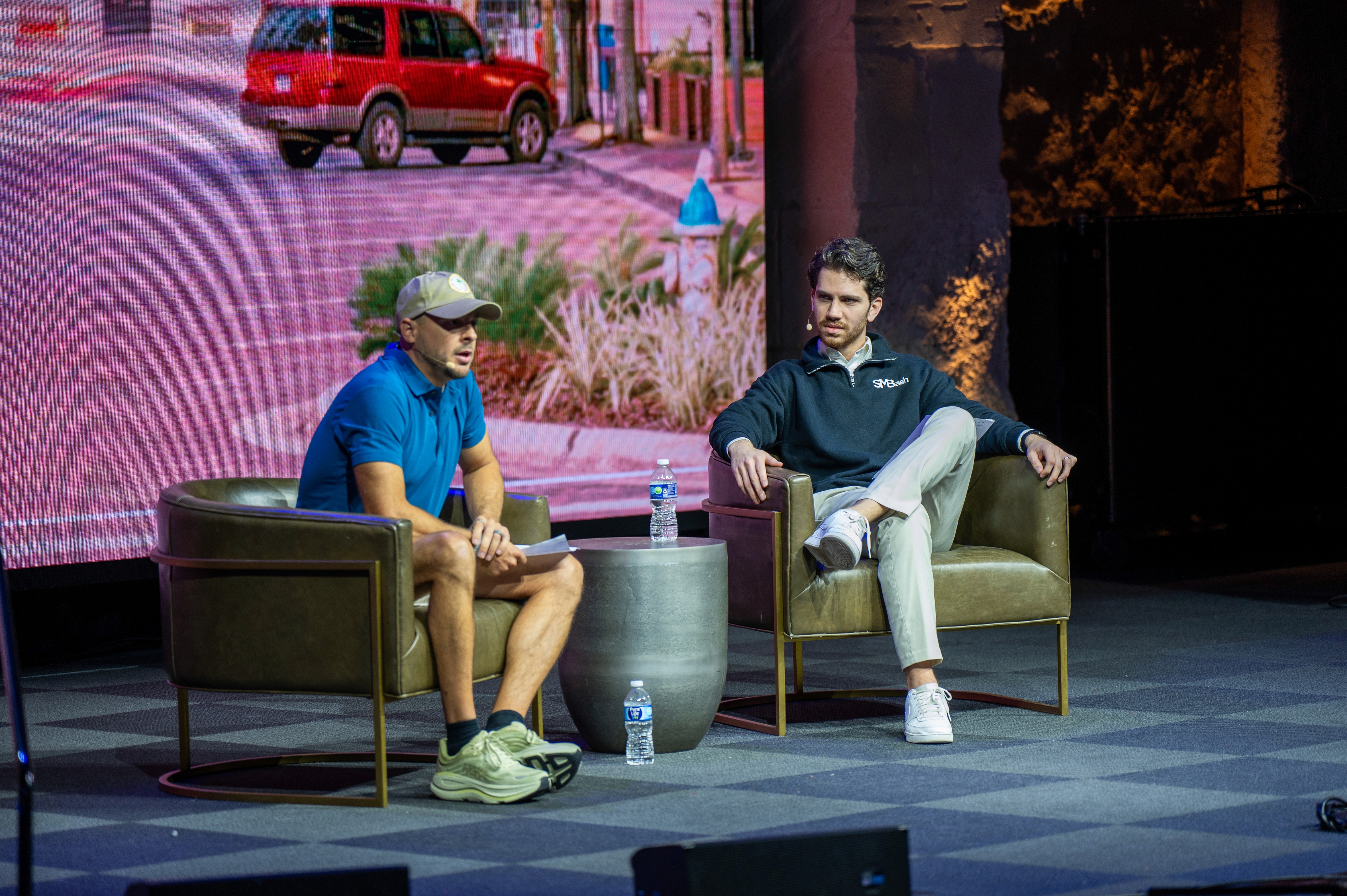
Hey everyone, Paul Henderson, Kevin's brother. I'll take that, hopefully you guys like him. I'm the resident weed guy, the marijuana guy for those who don't know, so I'm going to chat a little about that industry tonight.
It's not lost on me why I was asked to speak today. Today is April 20th, which for those who don't know is the international consumption day of cannabis. For the industry, it's our largest sales day of the year, so in a couple hours I'll get reports to figure out what's going on here in Utah with my stores.
What I'm going to do is run through my background quickly, then run through the history of the cannabis industry, tell you about my experience over the last eight years, and wrap up with a couple pieces of advice I've picked up over the years.
I grew up in San Diego, one of six kids. I grew up Mormon and went on a two year Mormon mission to Rio, Brazil. I still speak a little Portuguese. I ended up as a freshman in undergrad at 23 years old. I got through school as fast as possible, in three years, then was fortunate enough to join Goldman Sachs. I spent multiple years there, did a three year analyst training program, then did my MBA at Carnegie Mellon's Tepper School of Business. They were one of the early schools that did remote programs, which now seems normal but in 2008 was not normal at all. I got to take all my classes in a boardroom at Goldman Sachs with corporate sites like United Technologies and Cisco Systems.
I leveraged that opportunity to leave Goldman and join General Electric, the capital business when it still existed before they sold it off. I was in a two year leadership program where I got to spend a lot of time with senior leadership including Jeff Immelt, which was incredibly valuable. Then I ended up at Apple, which recruited me back to the Bay Area. Got to do a lot of new business development. This was my big corporate life. As you can imagine, I was on the track and my goal was to become a Fortune 500 CEO, and I ended up in weed.
I got randomly assigned to launch new businesses at each one of these big corporations. I didn't really realize it at the time, but it happened over and over again, so I got to experience researching and pitching to senior leadership. That was my intro into launching new businesses and startups, although I had the backing of major corporations.
Before I jump into cannabis, I want to walk through a hypothetical situation so you can understand what I went through. Say you're living in San Diego, California. The city decides they're going to issue cannabis licenses. California has already legalized. You decide you're entrepreneurial, this is exciting, big industry growing rapidly, you want to dive in.
The first thing you look at is real estate. All these cities confine cannabis operations to specific zones called green zones. You get to work, find a landlord that doesn't owe anything on the building, because he can't lease to a cannabis tenant if he has a loan on the building. It has to be paid off. It has to be the right type of building, industrial for cultivation or manufacturing, retail focused for a retail store. You negotiate a lease because the law in San Diego says you have to have a lease in place. It's not good enough to have a commitment, you actually have to sign a lease and start paying. The process the city goes through to issue licenses takes about 18 to 24 months, so you're committed to paying rent for the next couple years.
You apply for the licenses and San Diego issues you several licenses across the supply chain. Now comes the fun part. You've been in corporate, you know how to piece together vendors. But the payroll company won't work with you because you're in cannabis. Banks won't lend to you to build out your facility. You want to raise equity, but funds and investment firms won't give you equity because their LP bylaws state they can't invest into anything illegal at the federal level. Software platforms, HR platforms, they don't want to work with you either. A lot of times it's not because they have rules, it's because the owners have moral objections. Social media companies, you can't advertise your business because Instagram and Meta won't promote illegal activities.
Worst of all, you realize you're going to be taxed egregiously with a provision called 280E, a provision of the tax code that relates to drugs. You get taxed on gross margin, not on net income. You can't write off any traditional business expenses. The history is interesting. It actually stems from the eighties in Miami when cocaine dealers were writing off their yachts and exotic cars. The IRS basically said, we know you're selling cocaine, you can write off your COGS, what it costs you to buy the cocaine, you just can't write off anything else. That law has been on the books since the eighties and we're still subject to it even though states legalize.
You throw your hands up. You just signed rent, you're going to pay crazy taxes, the state legalized, your city legalized. The response is, tell somebody who cares. You're now a drug dealer. Congratulations.
Let me walk you through about 110 years of cannabis history quickly, mostly focused on California. 1913 was the Poison Act in California, which made it illegal to sell cocaine and opiates, and was amended to add cannabis. 1937 was the Marijuana Tax Act, a federal law that prohibited various drugs. This stems from the Mexican Revolution in 1910 and subsequent immigration of Mexicans into the United States. There was backlash from Americans saying they didn't want this immigration. Sound familiar? They said Mexicans were bringing their marijuana and turning Americans into violent lunatics. If you've heard of Reefer Madness, that's where it stems from. The reason we generally don't say marijuana from an industry perspective is because of the racist undertones of this era. We mostly call it cannabis.
1970 was the Controlled Substance Act at the federal level, which replaced the Marijuana Tax Act. It broke drugs into five categories based on potential for abuse and medical uses. 1972 was the first time California tried to pass medical cannabis. It failed with 34% of the vote. 1996, California passes Proposition 215, the first state to legalize medical cannabis, with 56% of the vote. 2010, California attempted to be the first state to legalize for recreational use, but the Democratic Party decided not to endorse the bill and it failed with 46%. 2012, Washington and Colorado legalized adult use, the first two states. 2016, California passed Prop 64 for recreational use with 56% of the vote, implemented January 1, 2018.
Fast forward to today. There's not an election that goes by that there's not some cannabis bill on the ballot. The biggest this fall is Florida voting for recreational use. They've been a medical state for a while but they're one of the largest states in the country. There are 38 states currently that have some type of cannabis law, mostly medical, and 24 of those have laws for recreational use. It's all moving in one direction.
Back to the Controlled Substance Act. Schedule 1 was the most ripe for abuse with no known medical benefit, including ecstasy, heroin, LSD, and cannabis. Schedule 2 is meth, cocaine, fentanyl, Vicodin, oxycodone, and Adderall. Schedule 3 is ketamine and testosterone. Schedule 5 is things like cough suppressants. It's silly with cannabis given all the known medical benefits, but 50 years ago there was no research, and cannabis has been at Schedule 1 for the last 50 plus years.
You may see in the news soon that cannabis will be rescheduled from 1 to 3. HHS at the federal level has already provided their recommendation to the DEA. It's not a federal legalization move, it's a rescheduling that helps the industry significantly. One, 280E goes away. A lot of these big cannabis companies have been waiting for this day because they're dealing with crazy taxes. Two, it opens up banking. Over the last several years we've had banks step up and accept your cash into a bank account, but every service beyond that is off the books. You can't get a line of credit or a loan from a bank. The reason this is coming up now is it was a promise from Biden on the campaign trail four years ago. He's trying to make good before the election to appease younger demographics.
Back to the hypothetical. You won licenses and decided to be fully vertically integrated, everything from growing all the way to retail sales. Congratulations, you now need to become an expert in genetics, agriculture, oil extraction from plants, CPG manufacturing, logistics, and retail, any one of which could take a lifetime to master. You just have to put your head down and get to work.
That takes us to my experience in cannabis, starting in 2016 in California. I left Apple and joined a company called Indus, now known as Lowell Farms, in Monterey County. I left Apple where I was managing a global team, and I'm now in Monterey County with a small cannabis team. The first day, the CEO walks in and says, we're being sued for securities fraud by a current investor. It ended up getting thrown out of court because of the arbitration clause. But when an investor files a lawsuit alleging securities fraud, the SEC perks up. Cannabis is hot and sexy, and the SEC decided to investigate. It ultimately became nothing, but it took a ton of time and money in lawyer fees.
I also realized shortly after that, that during interviewing I was told they had just raised $1.8 million with a burn rate of $100,000. Amazing, I have 18 months as the CFO to figure this out. Turns out they had already spent $900,000 of the $1.8 million, and the burn was actually $300,000, not $100,000. So we had three months to figure this out. We realized we had to vertically integrate, plant and grow ourselves, extract ourselves, otherwise margins were never going to make sense. We raised about $5 million, bought a greenhouse, and converted it to grow cannabis in Monterey County.
In November 2016, my first experience understanding that one bad decision can destroy your reputation. We were at a large industry conference in Las Vegas. The CEO came from hospitality and decided to throw a party at the Palms Hotel in a mega suite. It's affectionately known as Meat Gate now. He hired a mostly naked woman to lay on a table for people to pick food off of her, like sushi in the movies. Because we didn't have sushi, they put cold cut meats on her. It was gross and disgusting and became a PR nightmare. We had to hire firms to manage through this. Nobody knew except him. I just left Apple and I'm dealing with this.
January 2017, I get a call. Our distribution driver dropping off products in San Diego was held up at gunpoint, robbed of 60 pounds of flower worth about $175,000. It was an inside job. Somebody from the store knew he was coming with the product they agreed to buy, called their buddy, and ambushed him with guns to his head. Went to the cops. They don't care, you're a drug dealer. That was my first six months in cannabis.
I ended up becoming the CEO of a company called Grupo Flor, an across-town rival in Monterey County. They had won licenses across the supply chain. They were a couple of lawyers and real estate guys who had never raised money or launched a business. I came in, raised about $20 million, and we built the entire supply chain, this time including retail stores. 2017 and 2018, recreational use had passed in California, implemented in 2018. There was a ton of excitement, a ton of people throwing money at the space. I call this era shooting fish in the barrel. We took this company from non-existent to $75 million in revenue in two and a half years.
A couple fun experiences at Grupo Flor. Colombia had passed laws for medical cannabis. I was invited down by the mayor of Cali, Colombia. If you've watched Narcos, the Cali Cartel. The governor was looking for US companies with experience in cannabis to invest in Colombia. We toured potential growth sites. I got to do a nighttime walking tour of downtown Cali, which nobody gets to do, because we were surrounded by the governor's armed guards since Cali is still dangerous with the FARC.
I also went to Mexico at the invitation of the Agriculture Commissioner. Mexico was running through recreational use possibilities in their Congress. I had a lunch meeting with the head of a Mexican cartel from northern Mexico that represented guys who grew cannabis. Remember the old Mexican brick weed that used to come across the border? These guys grew that. They wanted to grow better cannabis to support the Mexican industry. The conversation, brokered between the agriculture commissioner and a drug cartel, was around how my company could come down and provide the genetics to cartel members to grow better cannabis to insert into the Mexican ecosystem.
I also ended up at a ranch three hours outside Mexico City owned by the Carlos Slim family, together with the largest home builder in Mexico, because they were interested in the cannabis space. They had a bullfighting training arena on their property. Idiot that I am with no idea about bullfighting, I said I'd love to see live action bullfighting. In 20 minutes there was a guy on a horse with a bull in the arena. I didn't know they killed the bull at the end. I killed a bull on my trip to Mexico. Another pinch-me moment.
I joined as CEO of High Times Magazine. Launched in 1974, basically 50 years old this year. I spent the last three and a half years running that company. They were in a world of hurt. They were a media and events company. They were a top 10 globally distributed magazine in the world at their height in the nineties, with 5 million subscriptions. Whenever I went anywhere, everybody had a story about boarding school in Panama with their High Times magazine under their mattress next to the Playboy.
Media is dying, the advertising revenue model was dying. High Times revenue was 90% live event revenue from the Cannabis Cup events, crowning the best weed in every market. People built their businesses off the reputation of High Times judging. When COVID hit, all that went away. Sitting in April 2020, the whole business is basically dead. We took the strength of the brand name and moved into plant-touching space, into growing and retail stores. We opened eight stores over the last couple years in California. We licensed the brand internationally for clothes, skateboards, necklaces, calendars. Anybody who wanted to launch a weed product wanted to use the High Times name. We attended the Las Vegas licensing show, the only cannabis company ever invited, right next to Universal and Disney. We were the most popular booth in the entire show.
In October 2021, our head of security, a former captain of the Oakland Police Department, was leaving one of our Oakland stores. He was followed, getting gas on his way to the Oakland Airport. Four guys pulled up, three got out pretending to pump gas. They came over, pointed a gun at him, started taking his jewelry, watches, everything. They knew he was in cannabis because they followed him from the store. He's a former Oakland police captain with concealed carry, very challenging to get in California. He has an assault rifle in his trunk. One of the guys told another to grab whatever they could from the trunk. He knew if they got into the trunk it would be a disaster. He had a split second, backed up, and shot and killed the guy in front of him, a 20 year old kid from Stockton. The other guys unleashed fire. He was in a full firefight on a Friday at noon in Oakland. He got shot 11 times. Fortunately, 11 holes in and 11 holes out, no arteries, no bones, no organs. He was back at work in two weeks. That's the type of thing you deal with.
During my time at High Times, my COO and I just said yes to everything. It's not necessarily great advice, but anytime anybody invited us to do anything, we said yes. Speaking at a conference in Panama, we're in. Saying yes put us in interesting situations. Hanging out until 4 AM in a music studio with Migos, hanging out backstage with Snoop, smoking blunts with Mike Tyson in his office in El Segundo, hanging out with Kareem Abdul-Jabbar and Matt Barnes. If you follow Matt Barnes, former Kings and Lakers player, he was high every game and only admitted it afterwards. He loved weed so much he joined the industry after. Spending time when CJ Wallace, Biggie's son, was given the key to the city. I flew to New York with Mayor Adams and experienced that.
During this time I met my current business partner here in Utah for the Beehive businesses, Beehive Pharmacy. Once we started writing applications for the Utah medical market, he decided I was much more valuable, and I became a co-founder with a lot more equity. Utah has a medical program. People are surprised because Utah is super conservative, but in 2020 voters took it to the ballot and passed the law. The state begrudgingly put together a program. We ended up winning two of the 15 retail licenses in the entire state. 3.5 million people, 15 licenses. This is one of the best cannabis markets in the country that nobody knows about.
We won one of three in Salt Lake County and one in Brigham City. We didn't win a cultivation license. We came in ninth place, and they granted eight licenses. Ultimately a friend of mine won a cultivation license but didn't win retail. I contacted him and asked if he had interest in selling. It was a company out of Arizona called Harvest Health and Wellness. We purchased that license, which was nothing more than a warehouse and some plants, for $5 million. That ninth place finish cost us $5 million.
I exited High Times in August of last year. I live in Utah because of Beehive. When the pandemic hit in California, I didn't want to be in the Bay anymore and moved out here.
Before I left High Times, there was an interesting scenario. High Times was merging with a company called Moxie out of Long Beach. Before the merger was complete, about $1.5 million had to be paid off from a senior secured lender. The Utah asset Moxie had launched, the manufacturing business, was the thing that made the most sense to peel off and sell to pay off that lender. The chairman of High Times pinged me and said, we're in this situation, you have stuff in Utah, are you interested in buying Pure Utah Processing? I said maybe. He said, I'll give you a smoking deal, but you have to close in 10 days. Not LOI, you have to close and wire the money in 10 days.
I called a couple friends and investors who I had made money for and got the commitment for $1.5 million in 30 minutes. I called him back and said let's do this. That completed the full vertical in Utah: cultivation, manufacturing, two retail stores. I also called SMB Law to do the legal work over Memorial Day weekend, so thanks Kevin.
The only reason this was possible is because I had met the team, knew what they were doing, and understood the market incredibly well. It was still a massive risk, but I was willing to take it on because I bought the business for one times EBITDA. I ended up with a ton of equity in that business from day one. I'm two months away from paying off those original investors. By the way, here are the terms for cannabis companies: a one year note, 20% annualized interest, and I had to give them equity amounting to 25% of the company. Because I can't go to the SBA, I can't borrow money. I'm very envious of those of you doing deals with SBA debt, and I look forward to my future that includes things like that.
Now five pieces of advice I try to live by.
First, start with your why. Many of you know Simon Sinek. People don't buy what you do, they buy why you do it. If you own a coffee shop, your why isn't selling coffee. Your why is creating an environment for the community to have interesting conversations, and you happen to sell coffee. The why dictates everything outward facing in your brand. Your website, social media, newsletter, everything has to align with your why.
For those of you searching, think about why you're searching, and then when you find the business to buy, what is your why? For us with Beehive, my partner is an Iranian immigrant who was diagnosed with an autoimmune disease at 12. He spent from 12 to 19 on infusion therapy. He ultimately found cannabis and got off every med he was on. He's 33 now and treats his diagnosis with cannabis. The education he put himself through by going to other states translated into him helping a lot of people in Utah, including legislators, which is why we ended up with licenses here. Our why for Beehive is providing the best medicine for patients available where Western medicine has failed them. Everything we do, often to the detriment of us as business owners, is with our patient hat on first and our business owner hat on second.
Second, the infinite game. Business is an infinite game. Unlike a finite game with a clear winner and loser, the name of the game in business is to stay in business as long as humanly possible. Part of that is building incredibly strong relationships with customers and employees. It's so easy nowadays to sit behind a computer screen and run your entire business without ever leaving it. Many of you can do that, but getting out and meeting people face to face, talking about families and interests, builds your company in a more sustainable way.
The most important thing, if you take one thing from me tonight: people do business with people. If you don't want to come to a conference like this but you decide to, this is the environment where magic happens. I met my partner Bijan in the Beehive business at a conference very much like this, 200 people at Powder Mountain about an hour up the road. I met him in a buffet line for food. He was the only person at the conference from Utah. I lived in Utah and went to undergrad here, so we got to chatting. We talked for two hours. That translated into me helping with applications, becoming a co-founder, moving to Utah, and completely changing my life.
Third, leaders eat last. As business owners, you need to create a culture where employees and partners feel comfortable asking questions and throwing around ideas. A lot of times that means you sit in the room, shut up, and listen. People have a hard time with this. You're a business owner, you have all the ideas, you're the smartest person in the room. Fostering that culture will get you so much further. That includes investing in employee growth. Your employees are your growth.
When I was at Grupo Flor, I had been through leadership and rotational programs at Goldman Sachs and GE. We created the first ever rotational program in cannabis. We had licenses across the supply chain. Someone in the program would rotate every three months through four different business units. At the end of the year, depending on our need, their interests, and what they were good at, we'd place them.
Maybe controversially, when I bought Pure Utah Processing, the guy who runs the lab has a decade of experience, which in cannabis is invaluable. I gave him and one other key employee 5% of the company in week one. That's not done a whole lot in SMB. It takes a page out of the tech playbook of Apple and Google, keeping employees loyal. It's on a vesting schedule over three years. They should stick around to reap the reward. I understand both sides of the aisle. I've heard at this conference others say no, I'd never do that, I want to own the whole thing. My experience is it's worth it, especially with key employees in the company you buy.
Fourth, embrace the why of failure. We're all going to do things that fail. Maybe you launch a new product and it doesn't go as expected. Sit down and have the conversation about why. Were the assumptions off? Wrong geography? Did the product not align with your why or core values? Distilling that with your team and understanding why is critical. Not just understanding, but actually talking about it. Don't be afraid to talk about failures and what you learned and what you're going to change going forward.
Fifth, the power of trust. Trust is built through consistency: consistent messaging, behavior, and values. The one thing I always focus on is being on time to meetings. It sounds simple but it might have the largest impact. It shows you value the other person's time, whether an employee, prospective customer, or current customer. Consistency builds your reputation.
Delegate with trust. You're going to grow to a size where you have to delegate tasks. Not just simple tasks, but big conversations. Delegating shows trust and pays dividends. If you're the smartest person in the room as the business owner, you've probably failed yourself. As the owner buying, you should constantly look at securing the best talent you can recruit, then let them work with you. They'll do amazing work. If you think those successful people might leave you in a year or two, so what? You should be their biggest champion when they tell you they're moving on to the next venture or launching their own thing. Support them. This will pay dividends years into the future as a mentor to somebody who leaves your company.
The sixth one I didn't add as a slide: don't be afraid to ask for help. For operators, you understand. For searchers, being CEO of a company, even a small one, is incredibly lonely at the top. You don't have a lot of people to go to. Coming to things like this, meeting people in the same space, helps. We have a WhatsApp group with 150 of the top cannabis executives in the world, hundreds of messages a day, people asking for help. Some of us are direct competitors in states and we still help each other. Most of us are in different markets. Every state in the US might as well be its own country. Whatever you give, you end up getting back. There are local meetup groups and conferences in whatever industry you buy into. Get out there, ask people's opinions, and don't have the ego that you know everything.
Back to our hypothetical. You're shellshocked, but you go to local meetups and conferences, meet people in the same industry. They tell you there's an obscure payroll company in Missouri that will bank cannabis. There's a bank in the northwest piloting a cannabis program. There's an HR platform built specifically for cannabis, although clunky and expensive. You start to piece together your vendors through your network and launch your business.
In closing, the five pieces of advice: start with your why, play the infinite game, leaders eat last, embrace the why of failure, and the power of being able to trust other people. I heard every single one of these in talks at this conference today, so I thought it was good distilling and reminding you. I could have talked about a million things, but that's the cannabis industry in a nutshell with my experiences.
Q: What does it mean for cannabis to be illegal federally but legal in state? How do those state-federal issues play out?
It's incredibly challenging. From the state level, you're taxed and under the purview of some regulatory body. The federal government doesn't do much. There was the Cole Memorandum and other things that kept the Justice Department at bay. What it impacts is personally trying to get a mortgage to buy a home, impossible because your income is from an illegal source. We don't have to deal with a lot at the federal level, but it's an overarching thing that if at any point they wanted to pull the trigger and enforce, they could. They've mostly been hands off over the last several years.
Q: What's happening in mature markets like Colorado?
It has to do with the recreational vote and states getting greedy. They assume the more licenses they issue, the more tax revenue they'll get. There's a finite pool of money people spend on cannabis. If you open 100 more stores, that's getting divided by more stores. That's exactly what's happening in mature states like Colorado, Washington, and California. Margins are compressing and it's a brutal business right now. Unless you have very deep pockets, you're seeing for the first time ever in the last couple years a lot of these companies close shop.
It's also why in a state like Utah with medical rules, we're not pushing for a recreational vote. We can control the market well, margins are holding and strong. The biggest thing in Utah is you cannot tax pharmaceuticals, and cannabis is considered a pharmaceutical here. There's no sales tax, no excise tax. The moment a recreational bill passes, they add a 15% excise tax, sales tax, possibly a cultivator tax. The patient ends up paying 30 to 40% more for the same product. If you can deal with the medical market as an operator, it's a much better spot than some larger markets. You'd think a larger addressable market for adult use would expand the market, but as we've seen, it hasn't been proven out.
Q: Any insights on Florida passing recreational this fall?
Right now it looks like 50/50. It barely got onto the ballot with the signatures collected. When people get to the ballot I think they'll probably support it. It's going to be close, but I do think it will pass.
Q: What did your friends, family, colleagues, mentors say when you decided to leave Apple to join a cannabis company?
With still-Mormon parents, they have never told anybody I'm in the cannabis industry for the last eight years, if that answers your question. Everybody at Apple was funny. They said this is amazing, this is cool. Apple was cool because when I left, they said, go have fun, if it doesn't work out, you always have a job, come back. It was kind of risk free for me. That was eight years ago and things have gone pretty well. I appreciated that, which is part of my advice around being supportive of people who leave.
Q: What are you most excited about for the future of the cannabis industry?
The medical aspects are probably the most interesting. The only place that legally from a federal level has been able to grow cannabis for research is at the University of Mississippi. They don't focus on it much and grow garbage weed with garbage genetics for research. Universities have expressed interest in doing research but have been at risk of losing federal funding. With this change from Schedule 1 to 3, you'll see an explosion of research at universities, with new therapeutic benefits. Your body has an endocannabinoid system, discovered maybe 15 years ago, that acts as receptors to cannabinoids from the cannabis plant. Cannabis has been used for different reasons for 2,500 years. The future is an acceleration of understanding new drugs and therapies from the plant.
Q: What's your view on designer drugs that are cannabis-adjacent popping up in markets?
Illegal. You have the cannabis industry with a regulated market that's voted upon, and then you have the Farm Bill. The 2018 Farm Bill legalized THC essentially. Many people don't know there are over 100 cannabinoids in the cannabis plant. THC is the most famous and psychoactive. CBD is maybe second best known. From there, CBN, CBG, THCV all do different things.
The Farm Bill allowed a certain percentage of THC in products that could be sold at convenience stores. You're seeing a preponderance of products that are cannabis, Delta-9 THC, just in low levels by weight. Manufacturers make a bigger gummy and fit 50 milligrams of THC into it. If you're not a cannabis consumer, that will put you out for days. The actual industry we operate in is competing now with these guys. Then there are synthetic derivatives like Delta-8 and Delta-10. A lot of states banned them quickly because they're synthetic derivatives.
There's going to be a new Farm Bill. It was supposed to happen last year but Congress punted. We think they're going to limit THC in these products to something almost negligible, like one milligram per unit. A whole bag would have 10, which doesn't make it worth buying.
I don't love it. A lot of these guys are fly by night. They know they can make money quickly with no interest in playing the infinite game. They're cash grabbing. If it gets shut down, they shut their doors and move on. They don't test their products. THC-O acetate was a big deal, an incredibly damaging conversion process. These guys don't care if they destroy your lungs. We have to send everything through testing. Test results go on the products and patients know exactly what they're getting. It's an unregulated versus regulated market.