PLAYLIST PRESENTED BY

Finding Fraud in ETA Deals: Real QoE War Stories from Mike Jerman
Description
Mike Jerman of Holywell Partners breaks down what a quality of earnings engagement actually finds in entrepreneurship through acquisition deals, sharing real fraud and error cases from roofing, HVAC, consulting, construction, and professional services targets. Searchers, SBA lenders, and capital providers will learn how cash proofs, bank statement reviews, payroll testing, and working capital ranges expose risks before closing, and how one in five deals now fails diligence because of red flags. Includes practical guidance on add-backs, related party transactions, franchise agreements, and negotiating working capital in the LOI.
Recent Videos





Transcript
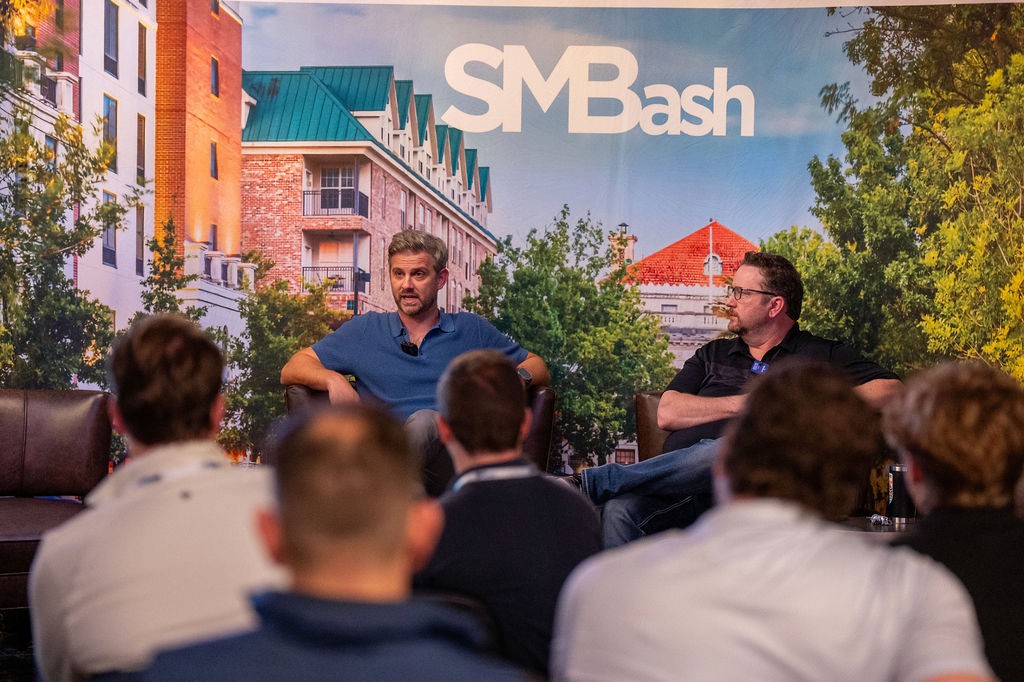
Alright, I'm really excited about this next panel, titled Fraud or Finding Fraud. The idea is that after Clinton and Jackie got us through LOI, we now have an LOI accepted. We have to actually diligence the business in a more thorough and systematic way. We hear all the time, searchers, particularly people with investment banking or private equity backgrounds, want to do it themselves. That's fine. But we always recommend hiring a quality of earnings specialist like Mike. If nothing else, be a second set of hands on the transactions. There's a lot of nuance, especially in the SMB world with things existing sellers do. It's not always as clean, particularly if you're coming from a background in PE where you're dealing with larger companies. So really excited to introduce Mike Jerman of Holywell Partners. We're going to talk about quality of earnings, tell some stories, play a fun game, and then get into Q&A.
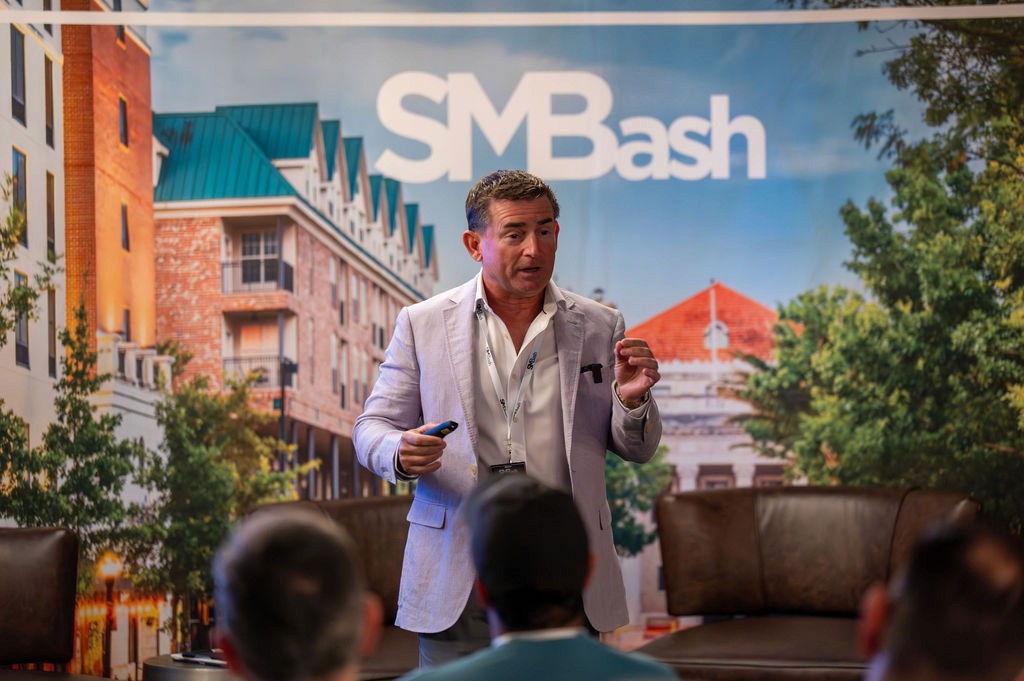
Alright guys, can everybody hear me okay? My name is Mike Jerman, founder and managing partner of Holywell Partners. We do two things: quality of earnings, which is a marketing term for financial due diligence for buy and sell side deals, both in the SMB space all the way through independent private equity sponsors, and accounting services, meaning everything from accounting manager through strategic private equity CFOs.
A couple things to level set. If anyone wants to make fun of my vest, it's my uniform, so I'm not taking it off. I am a former Air Force captain turned PwC director in the large transaction space, half billion dollar plus deals from public and private companies. Our SMB focus is about six years old now. I left PwC in 2019 to start Holywell. The long and short of it: my wife didn't want to move with PwC to Houston, which would have been our fifth move in 12 years. She was ultimately right. That leap for me was quite terrifying, but it was quite purposeful. I'm impressed by the searchers in the room. For anyone about to take that leap, good luck and congratulations.
Let's get into this. Quality of earnings is a marketing term for financial due diligence. A lot of you are about to expend quite a bit of time and money to look for deals and eventually close on one that may or may not be on the up and up. This is a panel, you can interrupt me at any time. I teach at university at my wife's school. She's a literature professor, so she has no idea what I do for a living. This will be as interactive as possible, knowing full well you guys are here to get pumped up and excited, and I have to rain on your parade quite purposefully to make sure you can be as comfortable with your deals as possible.
The idea behind this is you found a deal, you're getting to LOI, now you've got numbers in front of you. Anyone want to take a guess how many of the 115 transactions we did last year that actually had EBITDA at the SIM level or above? It's not zero, definitely not 30%. Two. And the reason both had above SIM EBITDA is because the SIM had a mathematical error on the add-backs. To put that in perspective, when you get a SIM, don't automatically haircut it, especially if you're using brokers like Jackie and Clint, they're going to do their homework on the front end anyway. But just give that a bit of perspective on the fact that it's not as shiny as you think it is. Sell side brokers have a different incentive than you do. Your job is to get a fair deal. Their job is to get as much money in their pockets as possible. Good and bad, that's just different goals.
What is a QoE? Is anyone in here a CPA or an accountant? There's attest level work, meaning what you see in audits and reviews when reporting season comes out. That's CPA level attest work. They have to sign an opinion that says the numbers are plus or minus materiality within a threshold. A quality of earnings, albeit nearly the same procedures whether big deals or small deals, does not have an official opinion to it. But it is very deal specific. We are going to get to the things, whether big deals or small deals, that you guys care about: revenue, EBITDA, the all-important adjusted EBITDA, and working capital. What a mind mess working capital is in the SMB space. It's hard to get your head around what is essentially just an estimate. It's literally what could happen in the next 30, 60, 90 days on AR, AP, and anything else in between. It's a timing difference, and there are very good ways to negotiate that. Don't make your working capital so specific in your LOI that it either scares people away or locks you into a pigeonholed aspect of it.
We do two types of diligence. QoE light was actually born out of a conversation with Sam Rosati 10 years ago. Sam and I go 14 years back. I like to say we worked together at PwC. He likes to say he worked for me, but that makes me sound a lot older. He asked, do you have a diligence package for smaller deals at PwC? I said, what's a small deal? Like five to ten million? No. He said, what's your template like now? I said, we'll just do this. It's not a big deal. It's only 200 pages plus appendices. He basically said, if you give that to anybody in my world, they're either going to cry or they're going to laugh at you. So we had to come up with this package, which we call QoE light. It's the same level of rigor we would give on a big deal, but on the P&L and working capital, because big deals just have stuff you guys don't care about. You're going to get the cash proof, we're going to do detailed revenue testing, we're going to recreate accrual based financial statements, we're going to give you the bookend ranges on working capital so you can figure out where you want to sit in that negotiation.
This is not a check the box exercise. We're going to find at least one yellow flag. And if we find red flags, please listen. You're about to expend all that time and money and you may have fallen in love with your deal, but try to come up with an investment committee. Even if you're a self-funded searcher, your family, your friends, your mentors, get somebody to weigh in on it. Warren Buffett likes to do pros and cons. He has people present to him on the pros of a deal and the cons, and he gives an incentive to whoever wins. There will be flags. There's hair on every deal.
QoE light averages about four weeks. We will not be the holdup. It depends on how fast the seller can turn documents in good shape to us. From the moment you start, we need rolling bank statements, P&L and balance sheets. I don't care if they're cash basis tax. Those are the minimums. Tax returns second phase. But if we don't prove out top line revenue, we're not going to feel comfortable, and you guys will never feel comfortable unless we get to that point. We're going to play a game which we'll call fraud versus error. Whoever wins, I'll buy drinks for tonight. Some of them are not what you think they are. These are real world examples and I've scrubbed the names enough.
QoE light, average of four weeks, can be longer, has been faster generally for service businesses because docs can be turned. 15 to 20 grand all in. That includes Q&A through to close with your stakeholders. We found a lot of purpose in this. At PwC when we did big deal diligence, you'd think people more or less cared about what we said. They cared. You think SMB searchers care about what we say? You're damn right. That is much more purposeful to us than some of the bigger stuff we do.
As a heads up, everyone usually asks about broken deal fees. If we find a red flag and you walk away from the deal, we're not billing the second half of the work. That's our commitment to you because we want to be with you on your next five or ten roll-ups, and frankly, we're terrible marketers, so we want you to come back and talk about us to your friends.
Big deal diligence is usually a lot more rigorous, has a lot more balance sheet intensity, a lot more inquiries. Think about it as QoE light on steroids. QoE light is usually broken into two phases. The bulk of the testing so we can find the red flags is phase one, because we want to tell you pretty quick. When we take over a deal in the SMB space, we offer sellers kickoff calls to walk through our request lists so there's no confusion. We make sure they know we're not here to get them, we can't share their information, and we will handhold them through this as constructively as they want. With that, we get to find out some of the tone at the top. How transparent are they going to be? How good is the documentation on the front end? If they're asking us good questions and letting us see stuff, that's generally a good sign on the deal.
Let's talk about the cash proof. You want to prove out the top line revenue number. All P&Ls start with revenue. So you take opening AR plus revenue received minus cash deposited equals ending AR. We tie the cash received to bank statements. Sounds simple, right? What do you think is in a bank statement of a company that does a couple thousand transactions a year? A bunch of stuff. We find a lot of red flags in bank statements, both error and fraud. During Covid, everyone was passing off PPP funding as revenue. That's a non-recurring item that goes right to the bottom. That's a one-to-one hit to EBITDA.
Here are some really good ones. When we see deposit only and it's in a different text than the rest of the bank statement, that's just literally fraud. How do we find it? We use our eyes to look at the PDFs. When we ask the seller, hey this doesn't really jive, can you just pull up your bank statement online and show us, they immediately fess up or they deny it and we walk away from the deal.
Next, off balance sheet risk. Legal issues, claims. We look at loss run reports from insurance providers. People are often hesitant to give that to us. Sometimes it's good, sometimes it's bad. Everyone's got slip and falls, everyone's got a history. But if they're not willing to give it to us, it's usually a sign there's some off balance sheet risk. Some contingency claims, even in an asset deal, are still risky. When you sign and fund, that's your baby. You now take over. You're dealing with the skeletons regardless of deal structure.
Taxes obviously will reconcile to the corporate tax return. Sales tax filings, we're going to check to make sure they've made all their filings. Even states like Florida, the DBPR, you have to click a button that says I don't have any taxes. Sounds stupid. If you don't file it, interest and penalties start to accrue. That stuff can come back to bite you. We check the industry and the standard, and we start calling their state agencies to make sure they made the filings. A really good ETA search profile is a retiring or aging out seller that doesn't remember how to even log into their stuff, so we can help with that. We can call, we can act as a proxy, or you can call with us.
Then obviously unsubstantiated add-backs. The private jet to and from meetings, that's probably a good add-back. We can fire 30% of people if we don't have to pay bonuses anymore. If that's true, how come you haven't done that already? That's a pretty glaring error.
Let's get into the game. First example, keep track of your own score, no one's getting a perfect score. Roofing deal, 14 million in revenue, big deal, sort of in that QoE light versus QoE full space. They went QoE full. The owner, on the very first kickoff call, says, well let me talk to you about something. We're going to give you our tax returns, but we're only going to show 11 million in revenue. You said 14 million in the last two years? Yeah, but I take 3 million of that cash and put it in my personal account every year. Fraud or error?
Let me tell you what really happened. He's a foreign owner, not a US resident, doesn't quite understand US tax law. A couple weeks down the road we looked at his tax returns. He's a high integrity individual, letting us see everything in the deal. Everyone on his team in Miami knew about it. Something's not right. This is too good of a deal for him to know. He's flat out committing tax evasion, which is an immediate red flag for most deals. He calls me direct and says, look, I don't know what all the fuss is. I put that 3 million through my personal taxes because I'm going to get taxed either way. I said, b******t. Sure enough, he sends me his personal taxes. He's got a separate line of other income that he willingly tells the IRS about every year. So fraud or error? Error. I don't even know if it's an error. I just had never seen that and never seen it to date.
Next one. Vendor management consulting practice. Everyone in here is pretty fearful of customer concentration, true? You don't want one customer dominating all your revenue. It's one of the few consulting groups we saw that didn't have customer concentration. It was so not there it was almost a red flag. It was fraud. The team member I had on it is a ridiculous bulldog. She calls me and says something's not right. I need to see the deep dive on their revenue GL detail. No one has 99% customer fragmentation in consulting. We asked for the detail. They said, no, we've already given you the customer logs. We're like, no, just let us have access to QuickBooks. They said no. So we called their junior accountant who was none the wiser, who sent it to us. Turns out a lot of the customers had recurring same customer numbers. They had exported the detail, split up all the invoices for one customer into multiple customers that they flat out made up names for. Most providers wouldn't catch that. The buyer would've been fine with the customer concentration the way it was. They were just clearly manipulating it. Clearly an issue with the tone at the top, lack of integrity, and they walked away.
Sell side deal. We had a payroll issue in a big division, big deal, about half a billion in revenue. Transportation and logistics construction company. They built trucking depots, marinas, loading docks. Very cool company. We noticed COGS was absolutely terrible in what we considered to be their highest performing or most specialty division. Fraud or error? It was fraud. COGS was spiking with these guys. Construction is a complicated set of books, WIP is tough to get your head around. They had a jerk manager in charge of this division, completely terrible to people, toxic culture. The team found out that if they got with their field super, who also didn't like the manager, and manipulated their overtime, they could get paid more. How many hours are there physically in a workday? 24 if you don't sleep. When you see payroll reports with overtime at 40, 45 hours a day, that's a red flag. The control says field supers have to sign off on all payroll reports prior to payment. They're following the control, but they colluded between the field super and the team. The problem was that team was awesome. They were so p****d off, the morale was so bad. Had they just taken it a level above, they probably would've gotten paid anyway. Everybody got fired. The manager was coached out. As buyers you'd love it, because that would've been efficiencies day one.
Audience question: How do you select a provider, what kind of judgments do you make? Make sure you ask the question. If you're going after healthcare, which we just don't touch, probably don't choose Holywell. But if you want Northeast construction experience, all of us teach construction accounting at PwC to this day, probably pretty good at it. Make sure they have an accounting pedigree. Most of my team are big four moms that don't want to go back to their firms, that have all done SEC audit. That's a group you want bulldogging your practice. There's a lot of good providers in this space and there's plenty of work to go around. Just make sure they're doing procedures, not just giving you a shiny report.
Home services. HVAC company, bank statement issue, fraud or error? Fraud. The deposits looked legit but were always rounded. How many people send bills out that are always rounded to the zeros? Not a thing. They did so many transactions per year, this was a high volume maintenance and install shop in the Southeast. Something didn't feel right. They wouldn't show us the deposit slips. These were manual deposits, not automated payments, which is already a red flag. Finally they said, look, we get it. Those aren't revenue. I was infusing cash of my own in the bank to pass it off as revenue. Are you going to get us in trouble? Did you think that was a good idea? Did you think that wouldn't have come out? They didn't close. You guys might have just spent eight grand or $7,500, which I know hurts in the self-funded search world, that you just saved yourself millions in headache from having closed on a deal that for a one-for-one headache to EBITDA was like a 25% miss. You're walking into a deal with one to two million in EBITDA, let's just say it's two, and you're really walking into a deal with one and a half. What do you think your bank's going to say? And the bank's going to look at the tax returns too. All of this looked right, because it looks like revenue and they're paying taxes on their own cash infusions. That's how deep that fraud was.
Another home services business, tree service business in the Midwest. Their payroll expenses didn't jive with taxes. Fraud or error? It was fraud, but not the kind of fraud you think of. You're going to run into a lot of industries that pay people under the table, try to 1099 everybody. That takes it off your plate. The problem was we knew it. His 941s, the quarterly payroll reports, weren't tying to the payroll expense in his files. Clearly there were under the table payments. That wasn't the issue, we know the industry. Try to 1099, make sure you take credit for it in your books as an expense. Clearly he wanted to get his taxable payments down but was clearly paying people under the table. It took him three weeks to finally admit that, and the buyer said, look, if you'd just told us that on the front end, we would've kept this deal going, we'll 1099 everyone after to be in compliance. Just being open and transparent can be a yellow and red flag on its own.
Last, professional services firm, sell side. Very complicated. They had a payroll reimbursement issue. Fraud. A lot of you are going to jump into your businesses and implement controls right away, which usually include an approval matrix. I can approve everything up to 5,000, your directors can do everything up to 10. A number of their managers had gotten together and realized that the owner only approved expenses over 10 grand. We ran a Boolean journal entry check. They were clever. They didn't just submit approvals for 9,999. It was 9,998, 9,875. But there was such a band of payroll reimbursements in that 9,000 to 10,000 range, way above what the standard deviation should have been. They all fessed up. The owner was super p****d, didn't necessarily fire a bunch of people because he needed them for the sale. Clearly would've been a morale issue had you stepped into that business. The deal did close after some very direct conversations.
Question: A lot of these were really dumb errors. Is that that common? It is. One out of five deals now do not get past our diligence because of a red flag. These are dumb errors and dumb frauds and they can lead to more time ahead.
Question: You also do fractional accounting work. How do you reconcile the seller's intent to lower taxable income? When you guys own the business, your goal will be to get taxes down as low as you can via PPA allocations to depreciable assets. Most people do it through running as much personal expense through their business that's legally allowed: hiring their kids as models, the section 179 and 280 deductions. The Augusta rule is awesome. It literally was written by the guys who lived around Augusta who wanted to rent their houses out during the tournament. They're so ingrained in the IRS code, they got the federal guidelines changed for themselves. All of you should be doing it. As long as we can substantiate those, feel good about them, that shows the seller is doing good legal tax avoidance and shows the potential buyer this is what they're doing in practice.
Follow up: With SBA, you have to reconcile that. Materiality matters. The crates of muffins you're buying for your house probably aren't material to the bank for your QoE. We're happy to help you post-close with accounting and finance. What I don't want to do is tell you that we're going to make that as part of your engagement for QoE. I don't want you to think we're skewing your deal to close to get follow-on work. As long as we can substantiate and tie to invoices for things they deem personal and non-personal, we're usually okay. Where it gets complicated is when people use HoldCo and OpCo structures and transfer pricing. Those are usually big deal issues, but small deals can have very sophisticated people too.
Question: For pre-LOI searchers, how can they prepare to avoid sunk costs if there's a potential error right in front of them? You can't spot fraud in a SIM or error necessarily, but you can find those mathematical errors. I'm happy to provide our request list with you. Send that to your broker. They're not going to give you everything on the list, but they'll give you some of it so you can start combing through this. If anyone wants the request list, just ping me. We'll help guide you pre or post.
Question on personal expenses like vehicles: Let's say you are a transportation logistics company. This has happened where they try to pass off half of their dump trucks as personal automobiles. Does anyone in here personally drive a dump truck? No. For a CPA firm where the big PE money is coming in, the Jaguar or the extra Beamer they bought for their spouses, we can substantiate invoices through the name of the transaction. We will dig into those weeds. Ultimately we'll assess all the actions they tried to take credit for and tell you whether or not we think this is substantiated.
For sell side, will you get referrals where the seller needs services? It's hard to get an unsophisticated seller to see the value, but when we tell them, look, you might be in a year or two long close because they're going to find all the red flags in the buy side QoE. If you do a sell side QoE, we will rebut or help answer questions from the buy side through to close as part of our fixed fee.
Question: Is there a certain size where you see more fraud? Not really. We see fraud from mom and pop shops through big deals. I cannot caution you enough. We see husbands rob wives and vice versa, kids rob their parents, churches rob their boards. It's more prevalent than you want it to be.
Question on sell side engagements: Is fraud more owner driven or employee driven? More owner driven, because they're the ultimate stakeholder in the sale.
Question: Does fraud decrease when there are audited financials shared on the front end? Yes. The problem in this space is you won't get a lot of audited or reviewed financials. If you have a bank involved already, there are usually reviews or at least compiled financials. Fraud definitely comes down and it's usually a feather in the deal's cap. Remember though, those are CPA level financial statements. They're not necessarily deal driven, so layer on to make sure you get the deal metrics you care about.
We've done quite a bit of franchise work in roofing and professional services spaces. They've generally been pretty good deals. Make sure you get your leases negotiated contemporaneously or prior to close, and make sure your franchise agreements are truly saleable. We've had headaches where the franchise agreement says it cannot be sold without approval from the franchisor. It can be added expense or kill the deal if they say no.
Question: What level of EBITDA discrepancy justifies a purchase price adjustment? If EBITDA comes out a little lower than the SIM, this is your data, we don't share it with the seller or their broker. If it comes out a little lower, that just means you're paying a fraction more on the multiple side. If it's still within your band, it's probably a good deal. If we happen to find that it's above the assumed EBITDA, don't ever share that. There are other ways to make sure you have downside protection: earnouts, holdbacks, the way you set out your working capital. The lawyers are very good at helping you negotiate that.
Question: What diligence items not on the financials do you key in on? Of the 26 items on our QoE light list, only four come from the financials or the QuickBooks or Sage or NetSuite. The other 22 are bank statements, loss runs, insurance docs. When we see a 2019 claim for half a million still not settled that you didn't tell anyone about, that can be a trip out. We do a representative sample of their transactions back to contracts, invoices, payment support and service tickets, depending on the industry. We find a lot of revenue recognition issues, especially in tech or ISPs or construction. That can be a one-to-one hit for EBITDA if they're not recognizing revenue right.
Related party transactions come up a lot with leases. A lot of times the business owner owns their own real estate and leases to themselves. We ask about that on the front end. You're about to enter into an agreement where you may not get the real estate if that lease isn't negotiated now. We do inquiries with all management and as many people as we can talk to through discretion advised, because not everyone knows about the deal.
Question on working capital negotiation in LOI: I like leaving it open-ended that it will be negotiated as part of diligence. Working capital is tough if they're not willing to share things. Be flexible in the negotiation. Don't go below your floor of what you will accept, and if they're willing to give you more, don't say no to that either. We'll give you the bookended ranges. We think you should be walking into the business with both an overly prudent perspective and a realistic perspective, and then let you negotiate from there. We see a lot of deals fall because egos get involved. Let's figure out what really needs to happen over the next 30, 60, 90 days to make sure you're comfortable.
Closing remarks: listen to your advisors. We're here to help. You can find me at Mike Jerman, Holywell Partners, and I'm on Twitter, begrudgingly, at JermanMichael.