PLAYLIST PRESENTED BY

Practical AI for Real Small Businesses (Not Tech Bros)
Description
Jon Matzner breaks down how operators running real businesses, from towing companies to law firms, can use AI today to drive customer intimacy and operational efficiency. Covering voice-to-task workflows, lightweight data analysis, content creation, and how AI fits into a leverage stack with global talent, this is a practical playbook for searchers and operators in the entrepreneurship through acquisition ecosystem who want to compete on margin and speed.
Recent Videos
Transcript
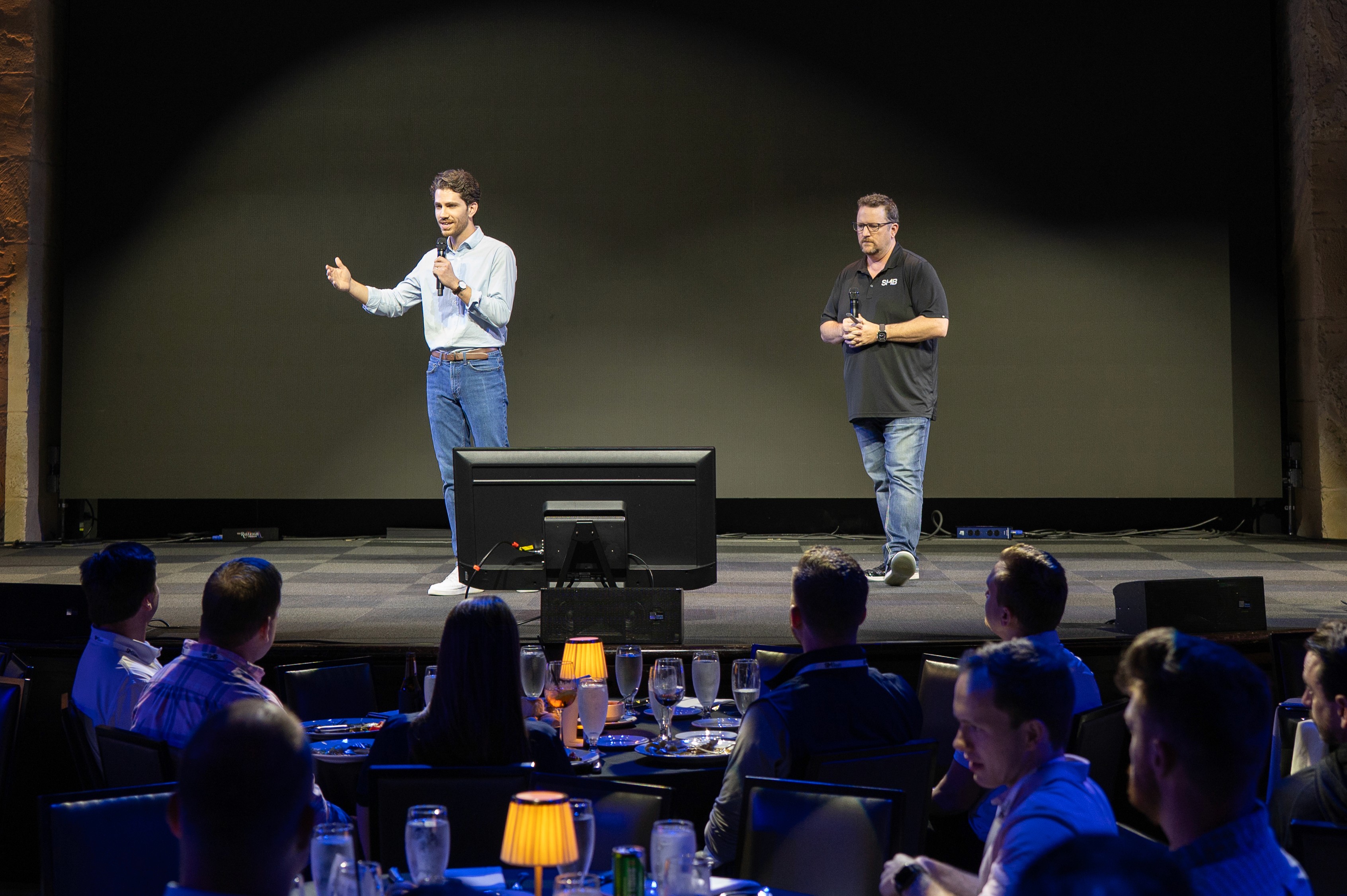
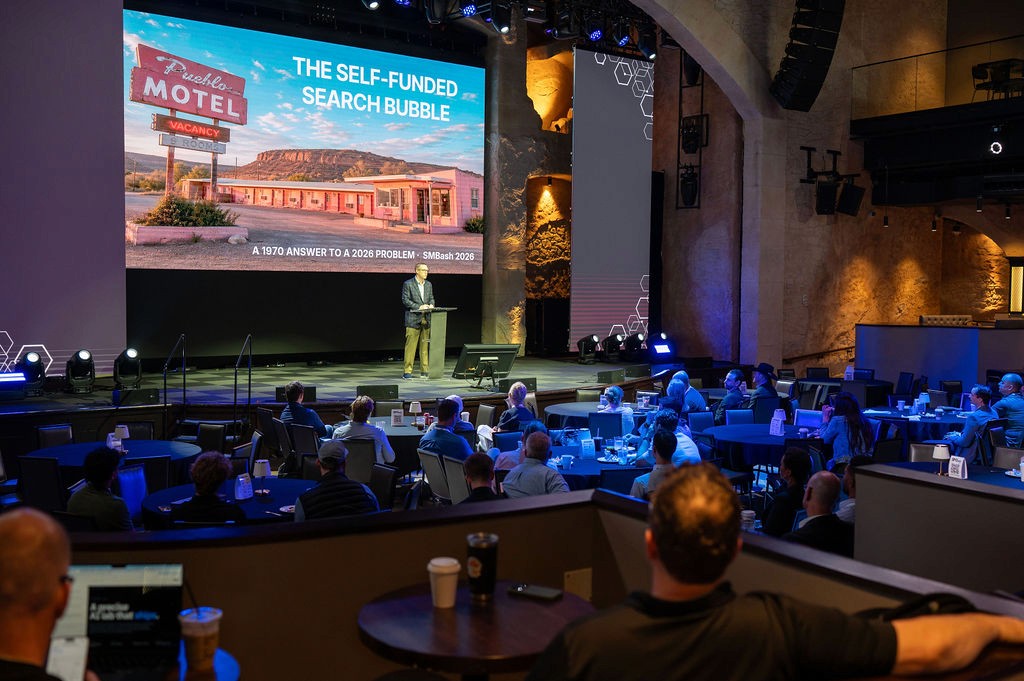
I'm going to talk for 20 to 25 minutes, maybe less. The format is: I'm going to show you why I think this matters, then three ways you can start using AI today in your business, then Q&A.
When I wrote this, I didn't want to write a WeWork tech bro SaaS VC AI conversation. I wanted to write it for Mike, who owns a towing company. Mike, you're in a dogfight to make payroll every month. How should you be using AI? Not pie in the sky stuff.
The two drivers of my obsession with AI: First, I like the idea of being a pirate. I never had any money. I left the government making $41,000 a year. Entering business, I had to be a pirate. I didn't even know you could raise money. So I got obsessed with trying to be more clever. A lot of the stuff we'll talk about, if I had a $225,000 junior analyst, I wouldn't have to do any of this. I was buying small companies. I can't underpay people and still have really good people, so I had to adopt a scrappy, knife-fighty mindset. Second, I'm terrifically lazy. I don't like working that hard.
The theme of everything we'll talk about is leverage, using Naval Ravikant's definition. If you haven't read How to Get Rich Without Getting Lucky, despite Naval, it's an incredible story. He talks about four forms of leverage. Leverage in this case is not debt, it's lever arm: small input, big output.
Two old school forms: labor leverage (hire a bunch of people) and capital leverage (this is how JP Morgan made his money). Two new school forms are permissionless leverage. The characteristic of permissionless leverage is no marginal cost of replication. The first form is code, which in the way I use it is automation, no-code, Zapier. I build it once and it makes me money forever. The second form is media. I write one tweet and whether 10 people read it or a million, no marginal cost of replication.
AI and automation, which aren't interchangeable but I'll use them interchangeably today, are a form of code leverage. If I teach an AI to do something, no marginal cost of replication.
My perspective: I don't know anything about actual AI. In my old job they taught me Arabic. There's high Arabic, Quranic Arabic, and then low Arabic, which is what everybody actually speaks. Same thing in German, hochdeutsch, academic German versus practical German. I'm really good at low AI. I don't know anything about ones and zeros. I was an international relations major. But I think I'm really good at practical AI: how to actually use it today to make money or save money. If somebody comes up to me and says, I've got a new language model, I have no idea what they're talking about. But if somebody says, I'm using this in my epoxy floor company to cut down my overhead, I'm interested.
Second, AI is a leveler. My favorite model for AI is that it makes everything B+ right now. I've been writing my whole life. In its raw form I'm an A writer. I'm not as good as Nick, but I'm an A writer. But for an entry-level white collar worker at a small business, AI is three grades above the way they write. So I think of AI as a leveler. It's not necessarily taking my top tier and making it better. I think of it as a guy who's speaking in a second language, or global talent, being able to write me drip emails that are pretty good. They're not Ogilvy, not copywritten emails, but better than nothing.
Why it matters. The people who made money with refrigeration weren't the refrigeration guys, it was Coca-Cola. Did Amazon invent the internet? No, they just learned to use it better than everybody else. We're going to talk about applications of AI in order to create advantage in a competitive marketplace, drive margins, not as an end in itself. Over time this will all get competed away, but for 10 years, no tree trimming companies are using AI. There are still companies now that don't use the internet. So there's a window.
Disruptive innovation, Clayton Christensen stuff. There's a reshuffling when new technology enters the marketplace. The same players get disrupted. Three ways to create long-term competitive advantage: customer intimacy, product innovation, and operational efficiency. Forget product innovation. But think: if I was able to offer a custom profile report for every new client of an SMB law firm, a long essay about their wants and needs taken from the kickoff call, I know my customer better than my competition because I'm using technology better. That's the first way: use it to better serve your customers. You can take a picture of a garage, upload it into AI, and show what it'll look like with a new epoxy floor.
The second way, which I do a lot of, is use it to trigger price. If I can create the same outputs with a more operationally effective structure, I can slash prices. Example: somebody just started an SBA loan writing business. You all had to write business plans for your SBA loans. They cost about two grand at market. If I wanted to create an SBA loan writing service, I could do them for $399 with a little AI. It would take a couple days to build. I'd whack the market with my pricing and rampage before the old guys figured out what I was doing, because they're paying Americans $48 an hour and I've got a little AI creating an analogous output.
So I think about AI as customer intimacy or operating efficiency. That's how it could drive your business next week.
This is a Notion page. Every member of our global talent team goes through basic AI training. If you have somebody in the Philippines, English is their second language. I don't want them ever writing anything that doesn't go through AI, because AI is a better writer. It takes someone writing in their second language and now they write like a community college graduate, perfectly passable.
Now, Matzner's Hierarchy of Leverage, a play on Maslow's Hierarchy. All things being equal, two companies in the same industry. 94% of lawyers in the world run their business with just the owner doing everything. Most businesses bought through ETA are some mix of owner and local staff. Smarter businesses are doing it with owner, local staff, and global talent. The smartest businesses add AI and automation underneath. Which company do you think is worth more? Which is more scalable? More of the work is done by predictable machines and low-cost people who are easy to find and retain. Where do you command a higher multiple? Who has better margins?
Counterintuitively, who can provide better service to customers? Because I get to use my local staff only on the real stuff, not categorizing files uploaded to Dropbox. John Seifer says everybody plays at the top of their game, including the global talent, including local staff, including the owner.
Your goal as a business owner is to drive things down through systemization. Systems are how you make sure quality doesn't degrade. Five years ago if I wanted to write a memo, I wrote it by hand. Then I had Bob at the front desk take dictation. Then I sent a WhatsApp voice recording to Jermaine in the Philippines, who was $20 an hour less than Bob. Now I use the Whisper API and it perfectly transcribes instantly. That's one task that's moved from the top all the way to the bottom.
Not everything makes it to the bottom. If I get served with a lawsuit, that's never going past the owner. But categorizing photos of installs and cross-posting on social platforms, maybe it starts at global talent with a remote social media manager, then eventually gets done with AI. The fatter the bottom tiers are, the more fun the company is to own. What's more valuable, SaaS or a one-man brokerage? It's how the work gets delivered.
I took our friends at SMB Law and looked at outputs. Tense negotiations on Zoom: global talent's never going to do that, AI's never going to do that. The principal of the firm does that. But the principal is also checking the mail and bills out $500 an hour. How much would it cost to have global talent check the mail?
Three specific examples of how I'm using it today. First: voice. That's me hiking in the French Alps with my son in the backpack, and I'm working because I'm writing voice notes.
This is Zapier, automation software. Every time I upload a voice note to Dropbox, it transcribes it, runs a prompt against the transcription, creates a title, then creates a task in ClickUp. ClickUp is like Notion or Trello. I'm walking and going, hey I need to do this, hit stop, upload to Dropbox, and through the magic of AI and the internet, it pops out in her inbox as a perfectly organized task. She gets confirmed receipt and moves it to in progress, then ready for review.
The prompt I use is task, purpose, end state, which I stole from the military. It's a very effective way to delegate. Read this transcript and look for task, purpose, and end state and output it in labeled sections. You don't need to train it on what those are.
Version 2.0: same workflow, but it creates memos. It looks at the text, determines which of my companies it applies to, dates it, gives it a title, listens for a team member's name, pulls it out, puts them in a spreadsheet, and creates a document. So I uploaded into my memos folder and it knows automatically this is newsletter content. I'm walking with my kid on my back and I'm working, because that's when I do my best work, walking with my voice.
Imagine doing this with your tow truck drivers. Every time they finish a job, send a voice note in this Slack channel and it's automatically transcribed and summarized into a post-tow report you have to file with the city. How much time did you just save?
Second: data. I took our last 75 hires through our company and Passport, uploaded them all into AI, and got hires in the last 30 days by job category. Basic data analysis extremely rapidly. They were PDF forms through our web form. I exported them, put them in one file, uploaded to AI, and said make a chart by role type and quantity. A year ago I would've sent it to the Philippines or South America. Five years ago I would've sent it to my California-based W2. 10 years ago I would've done it myself.
Another example from a tree trimmer. He exported all his calls from his soft phone system because he asked, do I need a new CSR? Am I missing calls? You have to play with it, say no, get rid of this field, have a conversation with it. Heat map of missed inbound calls as a percentage of inbound calls. Now you can quickly figure out where he needs to put a CSR. Historically he would've paid a data analyst five grand to do this in Excel.
Imagine if you're doing this and your competitors are. Average job sale per salesperson. I used to do this in our garage upgrade company to see who my weak reps were. Export the data from the calendar, compare to close rates. ChatGPT, $20 a month, you can upload files. For data, ChatGPT works great. For writing, I find Claude better.
Third: content creation. This is Claude. My prompt was: write a short essay in the style of Seth Godin about what cargo cults were in the Pacific, then talk about how there are cargo cult business people on social media, all performing. Cargo cults: in the Pacific during World War II, planes with supplies would land on islands. After the war ended, locals built air traffic control stations out of tree branches and coconuts because they wanted the planes to come back. It was correlation, not causation. A lot of stuff we see on social media is performative. Cold plunge every morning. That's correlative, not causative. You make money in business by buying low and selling high.
I had Claude write a short essay. That's my Twitter, 28,000 views. But here's what's important: I changed about 50% of the text. I didn't just cut and paste. I asked AI to make me a list of the differences between the original and my edit, so I could understand what stylistic elements I changed.
AI gives you boneless skinless chicken and it's your job to dress it up, especially when it comes to writing. Out of the original 20 sentences Claude gave me, half were nearly unchanged and half I rewrote.
The way I think about AI for writing: the first 10% has to be me, the middle 80% can be AI, and the last 10% has to be me. The first 10% is the original idea, like running a tech firm is like herding cats. Only you can see that connection. Then have AI write the post. Then I take it and polish it. Don't post the raw output and don't ask AI to come up with ideas, it's very dumb at that.
My newsletter is called Lazy Leverage, where I talk about global talent, AI, and automation.
The last thing about the business opportunity: for the next 10 years, people will pay you human prices for AI outputs. I'll say it again because it's so important. For the next 10 years, people will pay you human prices for AI outputs. I can still charge two grand for an SBA business plan with charts and data. Guess how much it costs me? A buck in API costs. The market does not know how powerful these tools are.
If you're looking for product lines, innovation, or a side hustle: learn how to use Midjourney image generation and you can do unlimited graphic design subscriptions for $399. Train somebody overseas to use Midjourney well. Your margins are 100% because you have no marginal cost.
Human plus AI, or human wrapper. Put a human on top of the technology and you can charge a human price. There's a ton of money to be made for the next 10 years before everybody realizes writing five emails isn't worth two grand. But there's a million businesses right now who will pay two grand. You behind your little desk with no money and a $20 AI subscription can write bomb emails for local businesses, business plans, immigration applications.
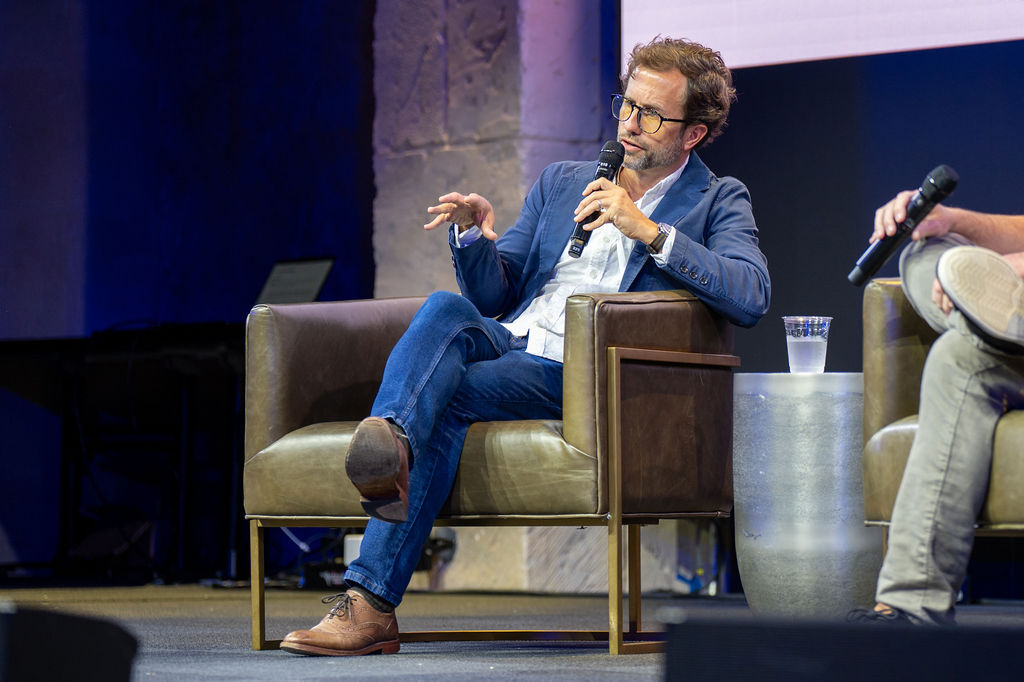
Q&A with Nick:
Where do you start? My favorite thing is to steal concepts from manufacturing and apply them to white collar work. In lean manufacturing, the principle is: fix what bugs you. We don't get back to customers fast enough, start there. We don't make enough content, start there. We don't follow up for reviews and referrals, start there. Fix what bugs you, because you have the energy to figure out a solution. Same with global talent.
The first thing I automated was taking recorded sales calls and distilling those into follow-up emails, which I hate doing. I'd record sales calls over Zoom, take the transcript, take the language from my website, put it all in AI and say: this is my product, this was our conversation, write the follow-up email.
A silly tip: researchers have found if you get robotic output from AI and you just write 'that was lame,' it will literally improve the writing. Talk to it like you'd talk to an intern. That was lame, a little dorky, stop using so many big words. And it'll dial it down.
If you want to improve its writing, look for someone who's written a lot on the internet between 2018 and 2020, when most of the model was trained. Seth Godin has written a daily blog about business, his tone is all over the internet, the model is trained on it. Same with Gary Vaynerchuk, David Ogilvy. For direct response, I use Dan Kennedy and David Ogilvy.
How did you get up to speed? Mostly playing around to solve something that bugs me. We have about 150 active hires right now in our global talent hiring. I wanted to stop hiring screeners. We built with automation and AI a way that when we get 500 applications, we can grade their accent, skills, on-screen presence, and give them a grade in our applicant tracking system.
It has to be pain to motivate you, not novelty. Not 'here's a haiku about an epoxy floor company.' Start playing around with ChatGPT. For the next 10 or 20 years, if you learn how to use this piece of gear, whether you're an SBA loan broker or whatever, you can develop a wicked advantage.
TikTok has incredible AI and automation people. Surprisingly, follow some TikTok accounts on automation. It creates brain space.
One thing I've started using ChatGPT for is to help me know how to use ChatGPT. The voice memo thing: I'd say, I want to record a voice memo, upload it to Dropbox, and have that create a note in ClickUp. Tell me a step-by-step process. It will spell it out for you. You can even take a picture of a slide and upload it to ChatGPT and say, I want to copy this workflow. It can interpret images now.
If I can't figure it out, my next source of leverage is global talent. I'd find a $12 an hour person from Argentina who knows Airtable and tell them what I want.
How do you recognize opportunities that aren't causing you pain? Twitter for many people. I think of myself as trying to get a lot of touch points. I'm trying to ingest random YouTube and let new pathways form. Cross-discipline thinking. Everybody in SEO right now is using AI generative content. Nobody in tree trimming is. Maybe the answer is you look at what the SEO guys are doing. They're ranking on Google Maps with generative AI based on competitor keywords. I'm not that smart, I just pick good games. Take something working really well in one space and apply it. Everybody in Google PPC is using data mapping. Nobody in law firms is.
Will adoption be fast or slow? If anybody's interacted with a business broker or law firm, there are still companies that don't use the internet correctly. It depends on drivers within the industry. Property management was an early adopter of global talent because the majority of profits are driven by remote-possible positions. There's just as much use case in HVAC, but that's not what pays the bills there.
The cards are being reshuffled. It's like streaming versus DVDs. You think Blockbuster's got it, but Netflix went all the way in and ate their lunch. The old guys say, if they're not in the office I don't manage them. Game on. I can charge 50% of what you do when I steal your market share. The people who embrace this methodology wind up at the top of the heap, and they're probably different than the ones who won over the last 10 years.
On Chesterton's Fence: don't change a system until you know why it's there. If a junkyard is using a fax machine, maybe their customers also use faxes. Or if there's a recession and you have a bunch of SaaS bills on top of your company, you can't make payroll. So just be a little humble going into the situation.
On AI agents: I don't use AI agents, my AI agent is named Jermaine and she's in the Philippines. I think of global talent as the Netflix DVDs in the mail of AI. Right now it's a little janky if you push everything through AI, but I can get someone in Argentina who can do it by hand for 12 bucks an hour. Once the tools get better, we push it deeper down the triangle. Two years ago you would've had to hire someone in Florida for $29 an hour. I think a lot of global talent is a transitionary technology. That's why we're making investments in automation and AI. It's the successor to global talent.
In the next 12 months, I think agents will get to the point where they can do exactly what you described: pull a list, write emails, follow up. I'd outsource the architecture of those agents. People can figure it out. With small businesses, we're not enterprise people with clean data in an ERP. We're scraping Crexi listings in Florida with a big Excel sheet. AI agents aren't quite there yet to deal with edge cases or murkiness. You're better off having a lower-skilled, lower-paying person watch the machine.
For PowerPoint design, Beautiful AI and Gamma are decent. But I'd rather get a graphic designer from South Africa for $13 an hour. For competitor analysis where the info is online, global talent.
Walking through how I write a Twitter post: Has everybody read Getting Things Done by David Allen? I'm obsessed with GTD, been doing it for 15 years. The single best book ever written. I walk around with an inbox in my pocket, my Apple Notes. I'm constantly capturing ideas. I have an Ideas for Twitter folder and a Newsletter Ideas folder. When I'm planning my newsletter or thinking about something to write, I open Claude, which does better creative writing. I look at Nick's most-used post format, like 'six things I wish I didn't do,' and combine it with my idea. I iterate until I get a version that's 80%. Then I punch it up. A lot of times when I modify AI writing, I put things in all caps and I curse, because then it sounds like me. I use a lot of ellipses, just little 1% touches.
You can also use a vector database, basically a huge library of everything you've ever written. Then you say, using this library as an indicator of my voice, write something about X. The shortcut is to find a public author who writes like you do. Just say 'write like Seth Godin' and add personal touches. The model is already trained on that author, so you don't have to uniquely train it.