PLAYLIST PRESENTED BY

How Paws and Rec Sold to a Pet Services Holdco and Kept Building
Description
Taylor Wallace shares the story of building Paws and Rec from a single dog daycare into a four-unit operation, then selling to Pet Resort Hospitality Group while staying on as a platform leader and equity holder. Independent sponsor Azar joins to break down the deal structure, rollover equity for key employees, and what makes a roll-up thesis work in a fragmented service industry. A candid look at partnership, the second bite of the apple, and life after a sale for entrepreneurship through acquisition operators.
Recent Videos
Transcript
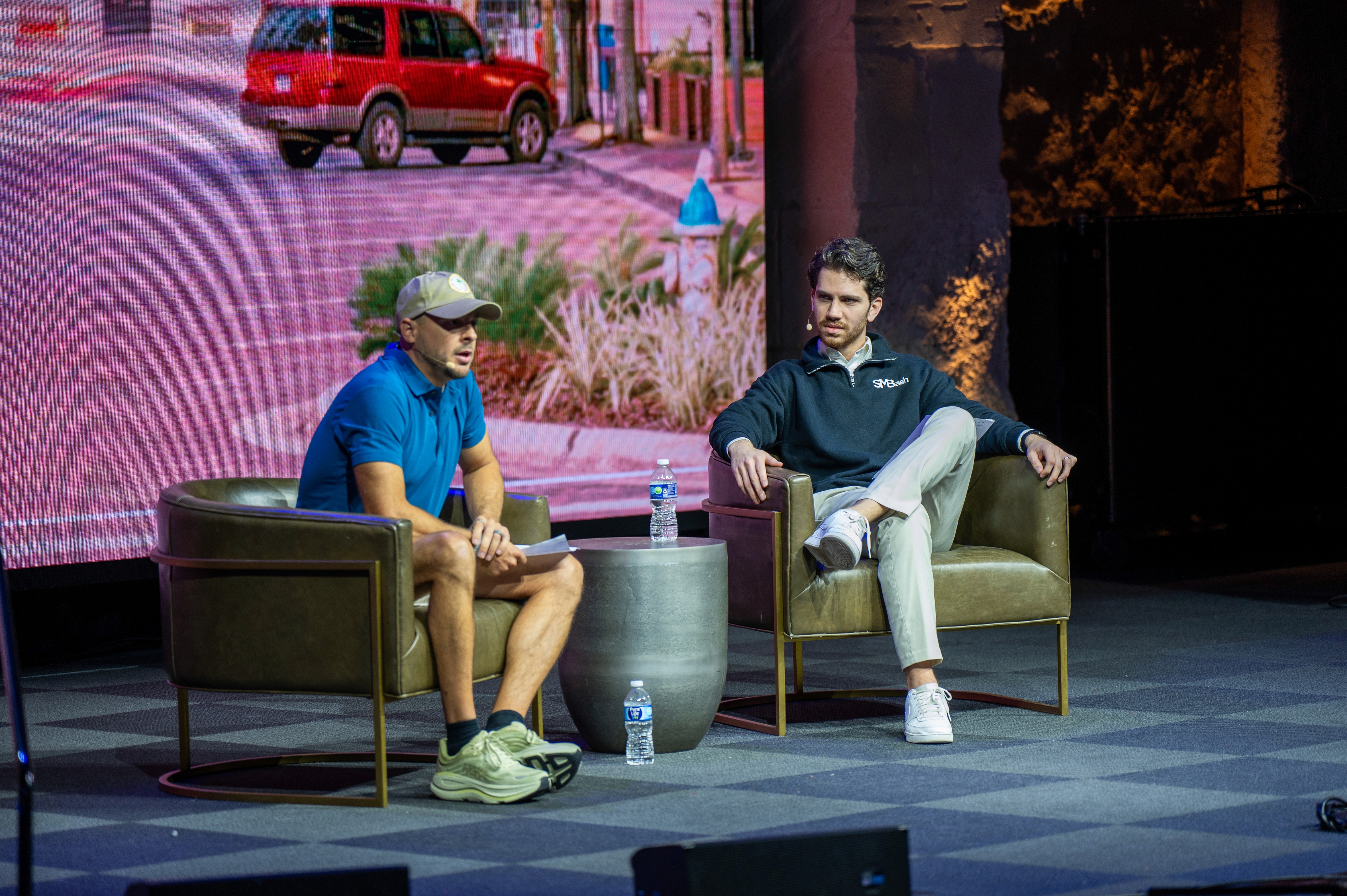
**Host:** Taylor is an entrepreneur, capital E, and he has gone through something a lot of us dream of. That's why we venture into ETA: to sell the business that you built or bought. We were supposed to have Mike Pock here to tell his story, but he had something come up. So we have a really interesting fill-in: Azar, who is part of the group that acquired Taylor's business back in October. We're going to give you a little insight from behind the screen. Taylor, do you want to start us off with background on you and Paws and Rec?
**Taylor Wallace:** Sure. I'm Taylor Wallace. Paws and Rec is a dog daycare, boarding, and grooming business. I was an English lit major. I thought I was going to grow up and be a poet, and apparently poetry doesn't pay real well. So I fell in love with technology and the internet, got involved in tech right out of school, and started a software company when I was 22. Did the whole venture thing for a couple years, eventually left, and worked for startups all over the world. Did the digital nomad thing and was working for an incredibly well-funded augmented reality company in 2020 when COVID hit.
I got laid off and was at an inflection point. I'd been doing the tech merry-go-round for 10 years and didn't feel like I was making much impact. A couple years prior, I had gotten sober, and my best sober buddy had taken a job scooping poop in a doggy daycare. He turned that doggy daycare around as the GM, managed it for years working for an absentee owner who was making all the money while he did all the work. We were roommates: I was running the software business, he was running the doggy daycare. We said, someday we should do this together.
So in 2020, I get laid off, he's ready to do his own thing, and we said, let's do a dog business together. I had no idea what search was. I was a tech guy. My first thought was, let's start one from scratch. We found a small local independent that was for sale. We bought in the fall of 2020, doubled revenue in six months, so we bought another one. Doubled revenue in that one in six months, so we bought another one. We also built a de novo during that time. We were up to four units when we met Azar.
**Azar:** I'm Azar. I'm from New York. I grew up thinking I was going to be a doctor and ended up doing other things. I worked on Wall Street for several years, then the financial crisis hit. I started a company called Convene, a real estate services business. Went back into the investment side, then got tired and basically became an independent sponsor, which is effectively a cousin of the search fund world, a little different but similar in many regards.
Some of the deals we did included buying a company called Hair Cuttery, the fourth largest hair salon in the US, out of bankruptcy. We also built a veterinary roll-up platform that we sold to NVA, the largest veterinary business in the United States. After we sold it, my partner, who was head of business development, went over to NVA and started doing business development for the non-veterinary side, including pet boarding, daycare, and pet services. He got really frustrated working at a big organization, called me up, and said he wanted to do this over again, but in pet services.
In 2022, we incubated a holding company called Pet Resort Hospitality Group. The intent was to buy high quality businesses in the pet services space, but not the way NVA and others did it, where the founder leaves. The idea was to find high quality entrepreneurs like Taylor and partner with them. This was not meant to be the final end to their journey. It was meant to give them the resources they needed: capital, strategic guidance, real estate help. One plus one equals 10, where the benefit of joining forces could 10x our mutual goals.
We started in 2022. We did six acquisitions in 2023. We have 17 locations across eight states and nearly 700 employees. We have leaders like Taylor who have sold their company but are shareholders alongside us and have moved up to be part of the C-suite to lead what we think could be the number one platform in pet services in the United States.
**Host:** A year ago, Taylor wasn't actually thinking about selling. Where were you a year ago?
**Taylor:** A year ago we had two units and had been working on a de novo for a year that had become an absolute bear of a project. We were about to be on our LOI with our third acquisition. We got approached by a different private equity group, did the song and dance, really liked them, and got excited about working with a growth equity partner. My partner and I were both very hungry. The existing investors we had were temperate with how quickly they wanted us to move. They said get another unit or two under your belts and then figure out how to go bigger. We wanted to go bigger now.
We spent time with that other group, and they came back with a deal we weren't excited about. So we decided to heed our existing investors' advice and put our heads back down. Then Azar's partner Al called. I had actually met Al a year prior after we bought our first unit. We went to the big doggy daycare conference, and I knew they were the biggest buyer in the space. I went up to their booth and said, hey, I just bought a doggy daycare, I'm coming for you. He liked that and kept calling me. He called and said, I started something new, I think we can do something interesting here. We said we just did this, it's got to be pretty interesting for us to consider it. They came back with an offer we were excited about. We went under LOI in June after me beating Azar up for two months.
**Host:** You went LOI in May and closed in October. You didn't run a traditional process. How did you come to the conclusion you would entertain a sale? You get into this thinking you'll do it for 20 years, and here you are a few years later selling.
**Taylor:** We were super clear up front with PRHG that we want to keep doing this. We're having a blast. We love what we're doing. The only way we want to do this is if we're really involved at the platform level, and you see a spot for us in that capacity. If you just want to buy our business and have us keep running it without growing it, or you don't want us here anymore, we're not interested. They were clear from the beginning that they didn't really have operators yet and needed to build an executive team to grow this thing.
One of the first meetings we had with the private equity firm working with Azar on the deal, Trive Capital, the partner asked me point blank: do you want to do this for the next 10 to 15 years? You want to be the CEO of a doggy daycare business? I immediately was like, oh. He said, well then we probably need to find a CEO for the platform. That was a moment of, oh, we might do this deal and I might not be the CEO of the company I built.
We went through a process of really trying to understand: is this something we want to do? My partner and I had endless chats. Azar and I spoke at 6 AM many times. For me, business is this big grand adventure, the most interesting thing I can do with my time. This felt like the next phase of the adventure, the next level in the game. I really wanted the learning experience of building a bigger business. Six months into this thing, being surrounded by Azar and our new CEO, who are phenomenal, and seeing the experience they have building bigger companies, we could not have gotten to 17 units in six months on our own. We have another three or four deals under LOI right now. The pace was what we were really excited about. The deal had to really feel like a partnership.
**Host:** Azar, what was your perception of Taylor and Mike and their approach to selling? And not all sales of a business look the same. There's minority, majority recaps. Tell us more.
**Azar:** As far as perception of Mike and Taylor, we really liked his ponytail that day. Kidding. I've been around some excellent operators who have built really big companies. The attributes that define success are sense of urgency, integrity, transparency. We didn't even feel like a buyer and they felt like a seller. The negotiation was a conversation, multiple dialogues, getting to know each other, really seeing what we're driven by, what we want to accomplish.
What we saw in Taylor and Mike were pieces of a puzzle to build the dream team of 1992 of the pet boarding and daycare space. The admiration I have for him and his partner is paramount. We saw young, hungry, motivated folks who can develop the best-in-class platform. That's what we were willing to pay up for. We knew it, they knew it. We went straight to what's non-negotiable for each of us. Let's start there. What's non-negotiable, how does it work, where are the edges where things won't work, what happens if we disagree on stuff. We laid our cards out pretty quickly.
As far as deal structuring, we wanted the operators, the entrepreneurs, to be bought in, and not only them, but their talented employees. The structures included rollover equity at the holding company so we are all aligned. I have equity, Taylor has equity, Taylor's partner has equity, and a lot of Taylor's key management has equity that they didn't have before. We have 10 key leaders who got an equity chunk at close within the holding company.
For someone who is 22 or 20 years old who invested $5,000 or even $2,000, we gave them a four-to-one match in the form of a non-recourse loan so they could buy additional stock. So someone who is 28 years old who hasn't had this experience, it's $10,000 worth of PRHG stock that could be worth $100,000 five years from now. They can use that to buy their home, do stuff like that.
There was a lot of operational independence. We didn't set this up to be a big firm that says, okay, you guys are gone. That was not the intent. We realized this business is local and operationally intense, where we need talented operators to be our partners, not employees, to drive value.
**Taylor:** The other thing I'll share: my partner and I met in recovery. We've got some skeletons in our closet. I talk about being sober on Twitter. So at our first meeting, we said, we need to be upfront about this. We sat down with Azar at Starbucks and said, listen, we need to tell you this before we get too far. You're going to run background checks. There's probably going to be some stuff that pops up. It was a long time ago. Azar said, cool, I'm actually invested in a recovery center, will you guys look at the deal? That level of trust we built up over six months. We were like, we're going to put all our cards on the table, and they're either going to like the way we smell or they're not. If they don't, we had a good business. We didn't need to sell.
**Audience question:** I'm trying to place the characters in the roles. You're no longer the CEO. What is your role in terms of strategy?
**Taylor:** We're building our executive team. The CEO started in mid-January. I'm leading marketing and strategy, which is more my background, for all the brands. I'm legally the president of PRHG. Paws and Rec LLC, my partner is one of the clear operations leaders across the business. We're working closely with five or six other executives to build the entire business. What's cool is my equity is in the holdco, so it's in my best interest to make sure the five resorts we own in New Hampshire are doing as well as my business in Florida.
Day to day, I've been over the last couple years slowly working myself out of the day-to-day at our business in Florida, and so has my partner. He's a little more in it, but we're trying to get him out as well. I'm managing the brands for all six of our businesses and helping develop the broader platform strategy.
**Audience question:** How does the real estate get factored into the deal?
**Taylor:** We didn't own any real estate. We'll buy the real estate as part of a deal. We'll do sale-leasebacks immediately. Our thesis is not to own real estate.
**Azar:** We started the holdco, my partner and I. The idea was to do a series of acquisitions we had identified, and we brought in a capital partner, Trive. They're the control-oriented partner, but the relationship is very fluid and open. It doesn't feel like a private equity firm. I've been on the other side, I've worked at private equity firms. This is a true partnership. They've deployed a lot of capital to make this happen.
**Audience question:** What sector is next? What are the characteristics of a successful roll-up strategy?
**Taylor:** I have no idea on the sector. I'm focused for the next five to however many years on pet services. I tell people all the time, if you don't have a guy like my partner Mike who wants to scoop poop all day and train 22-year-olds how to play with dogs, I don't recommend getting into the doggy daycare business. It's a tough business.
I'm not a finance guy. I was a poet. You have to have some joy, some passion, some love for what you do. I have a ton of love for my partner and got into the business because it was his area of expertise. I wanted to do joyful work, something hospitality-related where we could mentor young people in a fun business with good customer care.
We accidentally stumbled into a business that private equity was interested in. There's a recurring revenue component with daycare. The growth of pet in the US has been very explosive. If I was going to look for another sector, I'd want something with recurring revenue, good growth rates, but also that I'd have fun with. There are a lot of landscaping guys out there, and I don't own my own lawn. I can't use a hammer. I'm a poet. I'd rather do something with dogs.
**Audience question:** How are you standardizing the deal structure as you approach each individual seller?
**Azar:** Yes, ideally, but each seller had different desired outcomes and was in a different stage of life. Some sellers like Taylor and Mike were hungry, motivated, wanted to keep going. There were sellers more at the tail of their life who wanted to transition out. Deal structures included rollover equity into the business and additional capital to grow more units. We've tried to standardize our LOIs and purchase agreements as much as possible. It's an ongoing iterative process. We did six acquisitions last year, we're probably going to do 10 to 15 this year, probably double that next year. You want to keep it systematized and have a repeatable playbook.
**Host:** One word: why did you buy your business?
**Audience answers:** Absentee. Freedom. Freedom. Freedom.
**Host:** Most of us get into this because we want autonomy. Did you give up autonomy by selling your business?
**Taylor:** In some respects, I'm golfing less on Tuesdays than I was before. Freedom was a motivator when we got into it, but freedom is a double-edged sword. When you become a small business owner, you've got debt service to pay, you've got to manage all these people. The illusion of freedom can pop very fast in SMB. On the flip side, financial freedom: I have way more financial freedom after doing a private equity deal than I did six months ago.
I got to a place where I really loved the business, and the fastest way to accelerate my learning was to do something like this. So I was willing to give up control for that.
**Host:** Is that part of the strategy on the other side, to give that autonomy?
**Azar:** Yes. The workload has increased, but the intensity, that's because we're all playing to win.
**Taylor:** This is not the norm. There are sponsor-backed buyers who are not that way. They're going to have a heavier hand. Knowing what you're looking for is something I'm dealing with right now on a potential process.
I've been obsessed with Arthur Brooks recently. He's a professor at Harvard Business School and his specialty is happiness. He's a neurologist and behavioral economist. They've done research on what makes people happy at work. They tried to figure out: is it your job site, your skill set, how much money you make? They couldn't figure out a correlation. They finally realized that what truly makes people happy at work is love: love for their coworkers, love for the job, working for their family.
On the flip side, there are these four horsemen of success: money, power, fame, and pleasure. Anyone in this room, one of those four if not all four is driving you to be successful. You're probably also doing some of your work for love. It's a constant balance. For me the main driver is money. How much of it is about money versus love?
I spent a lot of time sitting with the deal trying to understand: am I just doing this for money, or is this the best thing for the people I care about in the business? Can it be both? I really felt like the further we got in the deal, it can be both. If you just make it about the money or the power, that becomes meth. The more you smoke it, the more you want to smoke. I want to continue to enjoy the work and not be consumed by it.
**Host:** You both could be CEOs of a sizable business. Why have you chosen not to be platform CEOs?
**Azar:** I came to the conclusion early that I'm not a CEO. I'm more of a coach than a player. You have to be self-aware. I've been around a lot of successful CEOs. The CEO role can be very difficult emotionally, mentally, physically. Given my interests and having a number of portfolio companies, the CEO role wasn't what I'd be doing best service in. I'd be doing best service as a coach.
**Taylor:** When I heard Azar say that, I thought, oh, it's okay to not want to be the CEO and still be really involved in the ecosystem. That stuck with me as I sat with the fact that I probably wasn't going to be CEO of PRHG. Since we brought on a CEO and saw what he's done in the last 90 days, there's no way I could have done that. I don't have big company experience. I've managed small teams my whole career. Seeing him bring together a team of essentially 600 people and get us all motivated rolling in the right direction, I wanted to learn how to do that, but I didn't know how yet. I don't think I would have been anywhere near as effective as him in this period of time.
**Host:** What is the difference in that role versus running four units in Tampa Bay?
**Azar:** You're constantly thinking about and battling fires. You're managing the entire ecosystem of partners: employees, landlords, shareholders, the board. It's a different skill set you need to know you're getting into if you want to be a CEO. Some of it's babysitting, to be honest.
**Taylor:** I was talking to someone outside who was like, I'm really good at building revenue, send me on a mission, I'll get it done, I'll burn a bunch of bridges and not care. When you have a team of six different ownership groups, many of whom are twice my age, our CEO Jason is unbelievably good with people and getting them motivated. I would just be like, get out of my way and let's get this done. That's not what's called for right now with what we're building. I'm becoming the guy he says, go figure that out, don't piss off this guy over here.
**Audience question:** How did you double revenue twice at those acquisitions?
**Taylor:** No fabulous answer. It was good operations and better marketing. We were generally buying businesses where the owners were tired. Dog daycare is kind of like self-storage: you have similar square feet, you can put so much stuff in it, you can sell the space for that much. We'd look at these businesses and the owners would say they have 70 dogs a day in this building and can't fit more dogs safely. My partner had been doing it so long, he was like, I can fit 175 dogs in here, no problem. And I was like, I can get you 175 more dogs every day.
**Audience question:** What are the unit economics of the facility?
**Taylor:** Camp Bow Wow is a brand that's pretty well known. They're usually 10,000 square feet of indoor space, generally light industrial warehouse, with 2,500 to 10,000 square feet of outdoor play space. A good Camp Bow Wow will do between $2 and $3 million in top line revenue and about a 30% EBITDA margin.
**Audience question:** How common is this structure, and how would somebody find someone like you and vice versa?
**Azar:** Elements of the structure are starting to become more common. The concept of private equity firms buying companies but not buying 100%, allowing sellers to roll over and get the big second bite of the apple, where the second bite could be multiples of the first bite, that's becoming more common, particularly in fragmented service-oriented businesses. We're seeing a lot of that in other roll-ups we're pursuing.
**Taylor:** We're going to throw a QR code up. Azar, Sam Ryan, and a couple others have been toying with this idea: an investor network for small business deals. If you have a deal and are looking for investors, we're building a portal where you can connect with investors and investors can check out deals and learn from each other.
A lot of searchers who get into this are deathly afraid of not finding the money to close. We came at it from a self-funded searcher approach, but the same issue exists for traditional searchers. The dirty secret is half the time the investor group says no, and they have to fill the gap. Independent sponsors by definition don't have a fund to back them. So there's this whole demand side, and then there's people like Azar who wants to put money to work and would like more high quality opportunities with the right kind of entrepreneurs running them. We're going to try to play matchmaker.
**Audience question:** What's the ultimate angle as far as how many locations before maybe a second sale?
**Azar:** There's enough white space for us to quadruple where we are. The largest player in the space has about 175 locations. This is an industry with 128,000 pet services businesses focused on boarding, daycare, grooming. It's still really early, but it's very difficult because the businesses are small. You've got to create a system that can acquire quickly, integrate quickly, and grow. That was our approach from day one.
We certainly have ambitions that are 10x and beyond where we are today. As far as how big can it get to be interesting, we're not thinking about it that way. There's some of us who think we can go 10 years doing this. In 10 years, I can see us being the number one platform in the United States in pet services boarding and daycare. That's what's exciting.
**Taylor:** When my partner and I started this, people asked, what's your exit strategy? We said, let's just build a really great company and we'll have exit optionality. That came faster than expected, partially because we built a really good business. We're carrying that thread through. The core group building the business is really focused on how we build a best-in-class pet services company. Our options for an exit someday are going to be awesome. The score will take care of itself.
**Audience question:** Are you intending to do de novos or franchising?
**Taylor:** We're aggressively pursuing de novos. On top of the maybe 10 deals we'll do on the acquisition side this year, we'll lay plans for at least another five de novos. On franchising, we've toyed with the idea. The challenge with franchising when you have a big operating company is you essentially have to build two teams. You have to have a franchisor team that's doing something quite different than running your operating business. We're also running a distributed brand strategy with six brands, consolidating to five soon. The idea is to keep the brands local. Which one do you franchise becomes a question. Maybe we buy a franchisor at some point in the pet care space and pull that in. Quality control is also a concern.
**Audience question:** How are you sourcing a bench of operators?
**Azar:** Great question. For PRHG, we're lucky we have operators in there. For new platforms, like a commercial roofing platform we're looking at to do a roll-up, I think about it all the time. Half the time I'm interviewing, talking to people, asking for introductions to people who know the space, trying to find an incentive pathway where we can partner together to build something special.
In every industry I've been in, I've had an operating partner who knew the space. In hair care, I had an operating partner who was a former CFO/COO of a hair care business. We teamed up to buy a large platform. There's no one answer. One thing I've been thinking about is how do you create an operator factory? How do you work with folks who have interest in a specific area? Part of the reason I'm personally investing in search fund deals or self-funded search fund deals is to iterate on that concept.
**Host:** What was your buyer's thesis on the industry?
**Azar:** Highly fragmented industry where consumer spend is growing at double GDP per annum and will continue. 23 million pets were adopted during COVID. One in five American households have a pet. Per capita spend per pet has increased to a level where it's now more per pet than per kid. I saw this firsthand from being in the veterinary space. This space is going to keep growing because the number of pets and daycare and boarding was still a small fraction of the entire pet expenditure space.
Once we looked at the unit economics of the boarding and daycare business, we said, you can invest in this space and close your eyes, in 10 years you'll make money. Then we looked at the ecosystem of who's doing it. Everybody was doing it in a way that didn't make sense. They were buying out 100% and the owner sometimes left or transitioned out. There was no integration, no concept of brand or local brand support, no support if somebody wanted to grow more units. So we said let's take the best of what we know and what we've seen others do wrong and put it into this space we know is going to continue to grow above 2x GDP per year.
**Host:** What is it about the ETA self-funded community that has somebody like you, an experienced investor, interested? Is it the economics, the entrepreneurship?
**Azar:** I've been impressed with some of the deals I've done with self-funded operators. A lot come from the military. I'm affiliated with 51 Vets. A lot of them have experience flying combat, and this seems a little more interesting to them. Some of it for me is mentorship. The calls we've had with searchers who come to us, it's cool to talk on a Sunday about, hey, I'm thinking about buying this business, how would you structure it? You always learn from these different industries. I'm just curious about business and passionate about different industries. That got me more interested than just the financial side. The financial side is great. There have been studies on the returns of self-funded searches and ETA being better than venture on a risk-adjusted basis, better than investing in index funds.
Long term, what I'm thinking about is potentially being an exit for some of these self-funded searchers I end up investing in. Selfishly, that'd be great if I could help a guy get from $1 million to $3 million in EBITDA and he wants to monetize, I can do the exit. It becomes a flywheel.
**Host:** One last one. You've come full circle. You were in tech, then bought and built an SMB. What is life like on the other side? Does it allow you to chase shiny objects?
**Taylor:** I did the transaction knowing the next three to five years would be very heads down on this. I'm trying to keep my eye on the prize, as you remind me, because I do have shiny object syndrome. The SMB investing we're working on, long term I'd love to be more in an investment capacity where I'm coaching, mentoring, and investing in deals more. I'm starting to dip my toes in the water there. I'm taking it one day at a time.
**Taylor (closing):** A year ago I didn't know Azar at all. The money's been awesome, doing a deal has been super fun, but it goes back to the love thing. I've made two really great friends and a couple more throughout this process. For me, that's what it's all about. If you think about partnership in any capacity, do it with great people you want to continue having a life with. Thank you guys for being my life.
**Azar (closing):** I really appreciate our friendship and some of the stuff that's come about. We've had some 'that's cool' moments. If you do this, you can do it for money, and the money's great, but you want to do this to have 'that's cool' moments. A short story: we bought Hair Cuttery, the fourth largest hair salon in the United States, at the height of COVID when the world was shutting down, through a bankruptcy. We ended up buying the company and bringing back 6,000 American jobs that were going to be completely lost. These were salon workers working paycheck to paycheck.
The day we bought it, my name was in the press because of the bankruptcy. I got a message on LinkedIn from a salon worker, a stylist. You could tell English wasn't her first language. She wrote, thank you for saving our jobs and thank you for doing what you did. I turned to my wife and said, that's cool. I don't care about the money. To have someone track me down and say, thank you for what you did, I wish more people could have that moment. That was awesome. Thanks guys.